
Representation at a record high at Sharks International 2026 in Colombo
The Save Our Seas Foundation was proud to support the Blue Resources Trust in hosting the 5th Sharks International in Colombo, Sri Lanka, from 4 to 8 May 2026. The first global shark and ray conference to convene in Asia, it was attended by more than 800 delegates, who talked all things shark and ray science, policy and management. With one-third of sharks and rays facing extinction, Asia is well placed to unite scientists, policy advocates and science communicators to translate knowledge into effective action.
Sharks International is the world’s single largest shark, ray and chimaera science conference. Started in Australia in 2010, it has been hosted in South Africa, Brazil and Spain. Now, for the first time, it was hosted in Asia. This year’s conference, held in Colombo, Sri Lanka, brought together researchers, early-career scientists and students, educators, practitioners, policy advocates and science communicators from around the planet, all with a focus on sharks, rays and chimaeras. The week was filled with keynote presentations, delegate talks, poster sessions, panel discussions, side events and workshops that inspired attendees to listen, network, develop new ideas, share knowledge and collaborate to drive effective change.
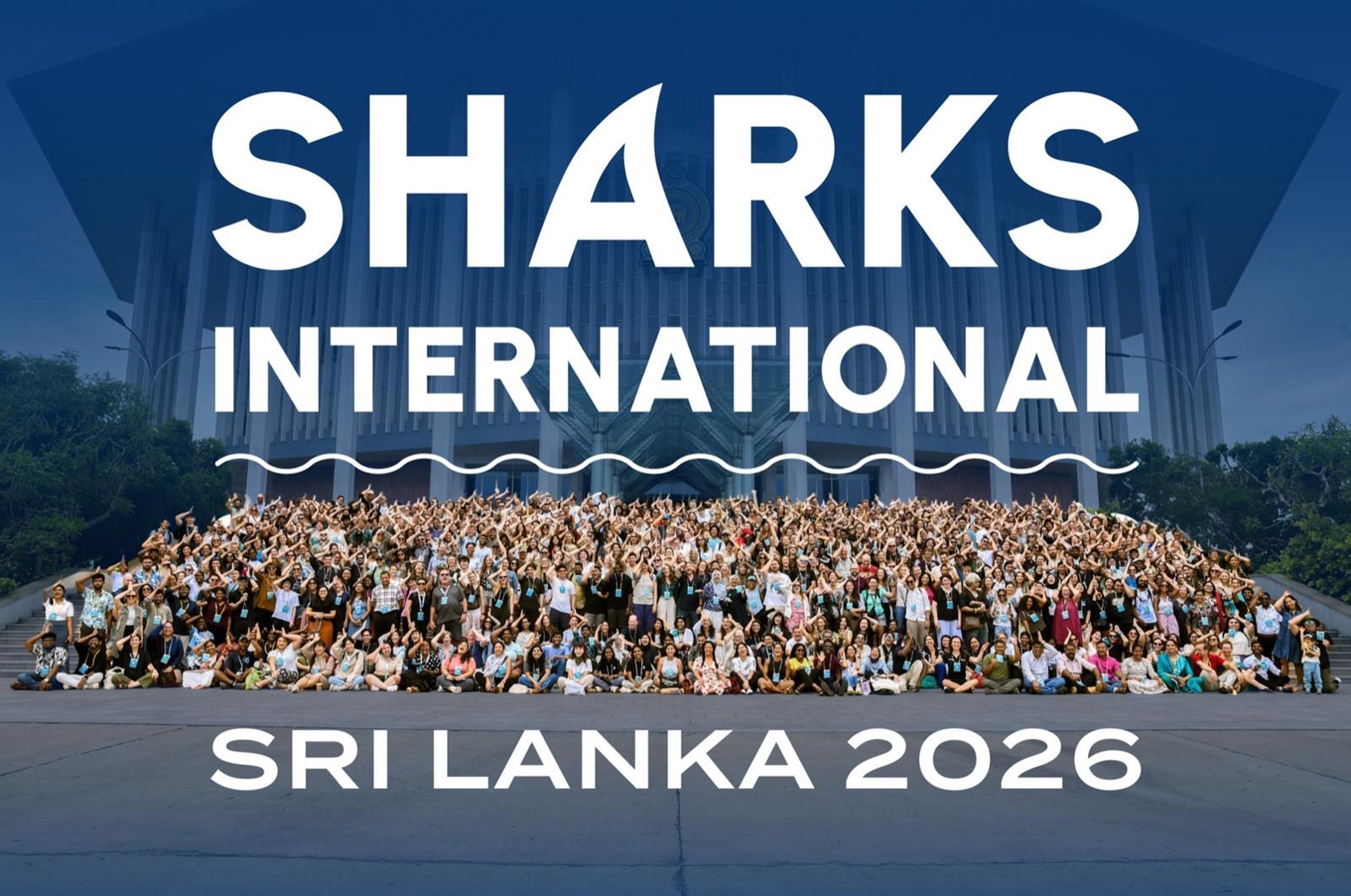
Researchers, students, conservation practitioners, policymakers, educators, and advocates came together to exchange ideas, build collaborations, and inspire action. Photo © Blue Resources Trust
Shark and ray science has diversified: more countries, more contributors, more concepts
More than 600 presentations and posters shared new information about shark and ray ecology, behaviour, taxonomy, biology and genetics. We learned about blue-spotted ribbontail rays, scalloped hammerhead sharks and spiny dogfish; shark immune systems, their microbiota, and their movement patterns. But what was overwhelmingly evident was how wide – and increasingly interdisciplinary – the scope of the research presented at this conference has become. Whole sessions were dedicated to taking action beyond the science: enforcing shark and ray listings on the Convention on International Trade in Endangered Species (CITES), taking data to policy, harnessing the power of citizen and community science, and leveraging Important Shark and Ray Areas (ISRAs).
Panel discussions asked hard questions and took stock of where we stand to ensure that populations recover, that fisheries and food security are sustainable, that ecosystems are resilient. Practitioners were asked to comment on progress from the International Plan of Action for Sharks and whether shark populations have benefited. Researchers were joined by customs officials and criminologists to investigate how best to enforce CITES for sharks and rays. Students and early-career scientists dived into new investigations into ethno-nutritional beliefs about shark meat consumption, the role of sharks and rays in food security, and re-thinking gender roles in some of the world’s biggest shark fisheries.
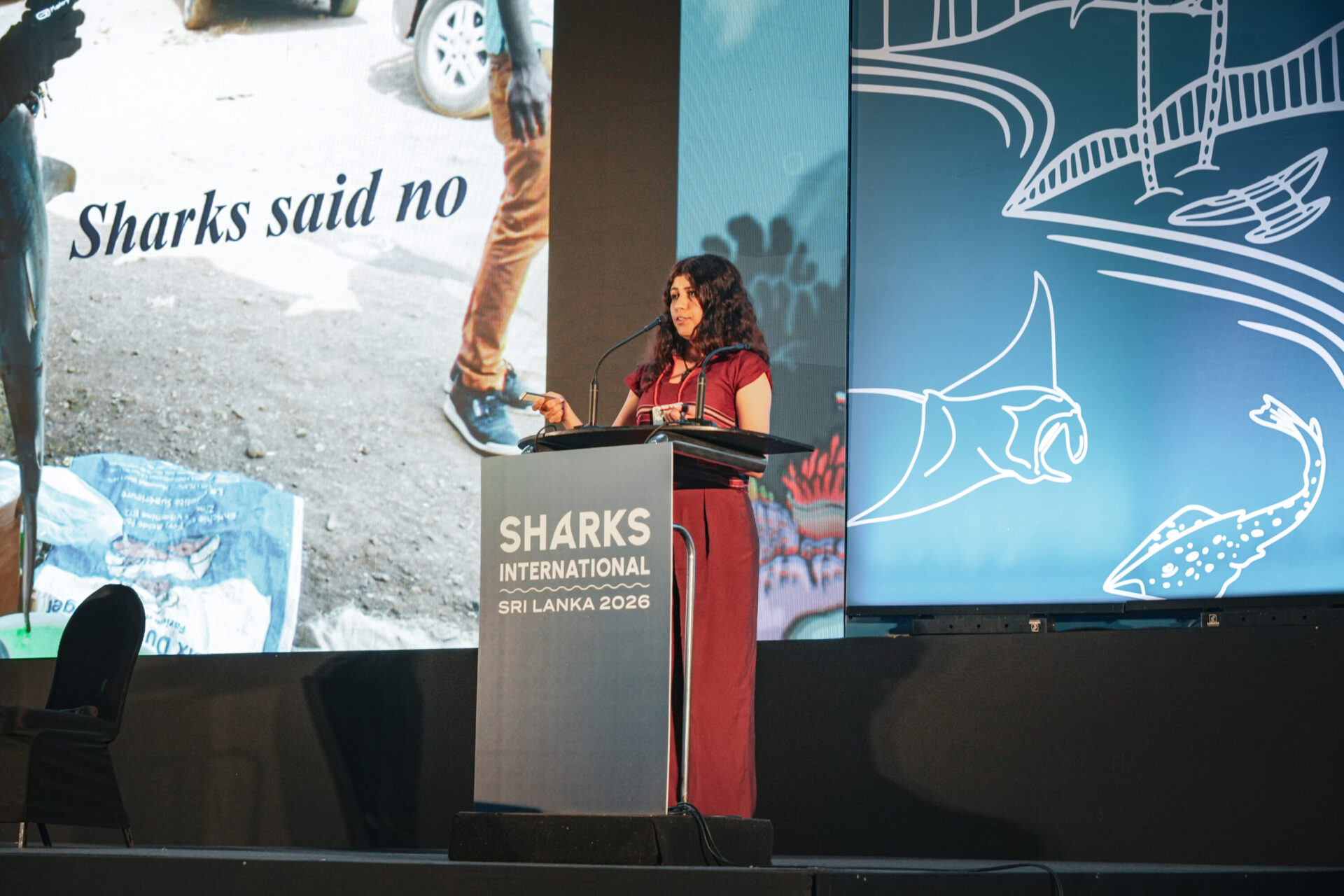
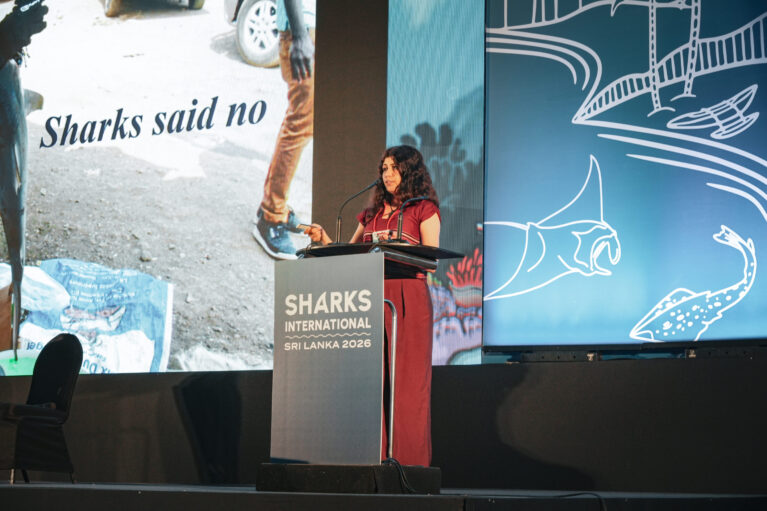
Keynote speaker, Ghofrane Labyedh, delivered the opening plenary, talking on 'A journey through small-scale fisheries and their impact on shark ecology in West Africa'. Photo © Kelsey Manners Dickson | Save Our Seas Foundation
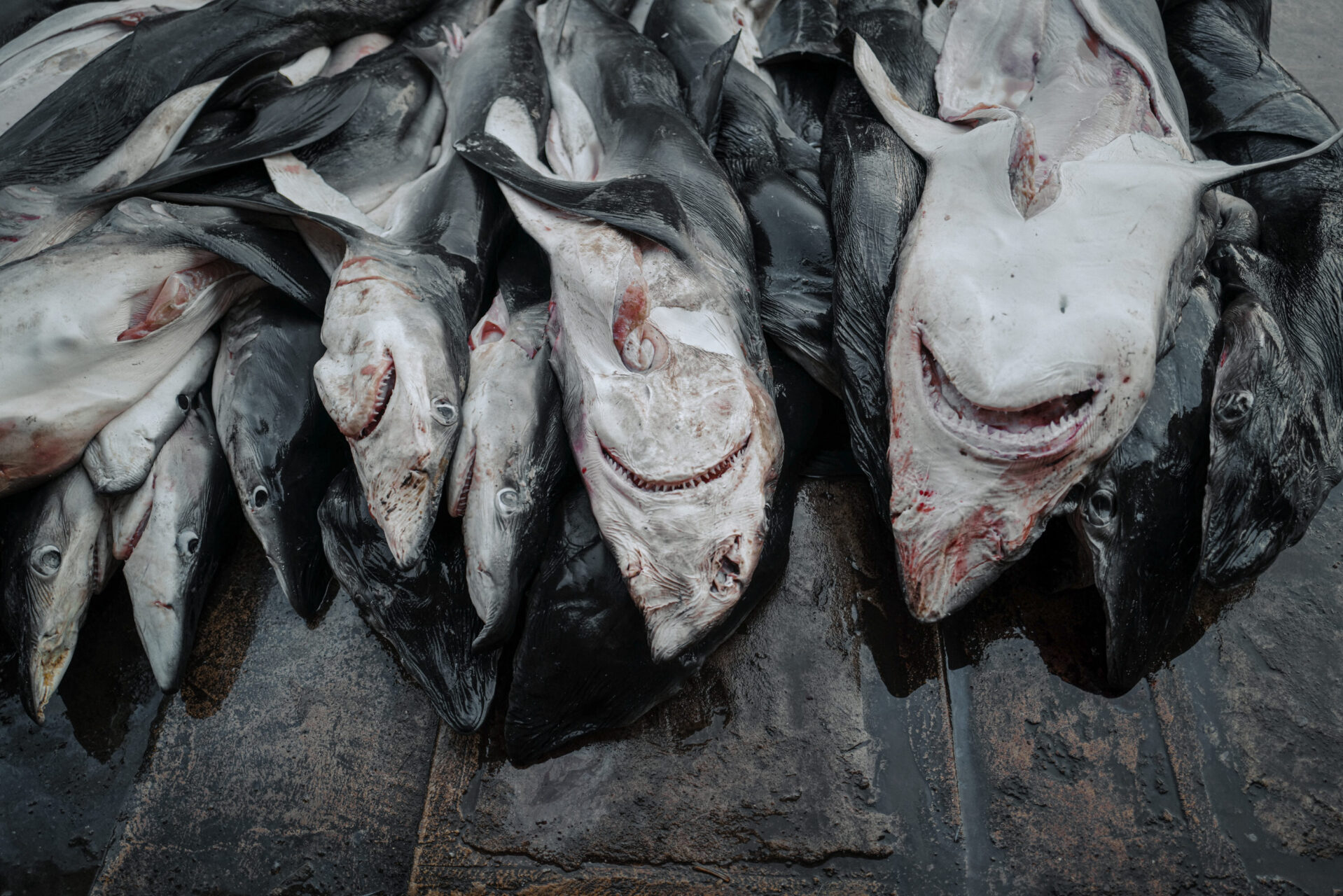
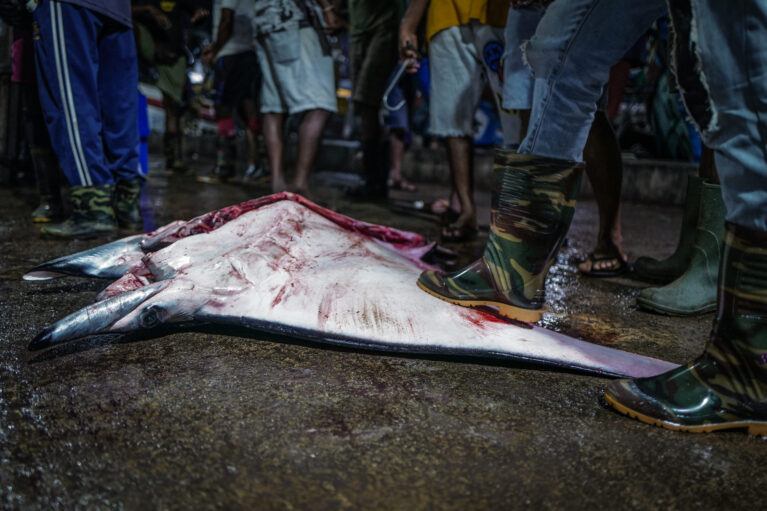
Our reliance on sharks, rays and chimaeras for our survival as human beings is ancient and complex – and continuously evolving. What we do know is that we will need to end the declines of sharks, rays and chimaeras to help us to navigate the climate and biodiversity crises. Photo © Kelsey Manners Dickson | Save Our Seas Foundation
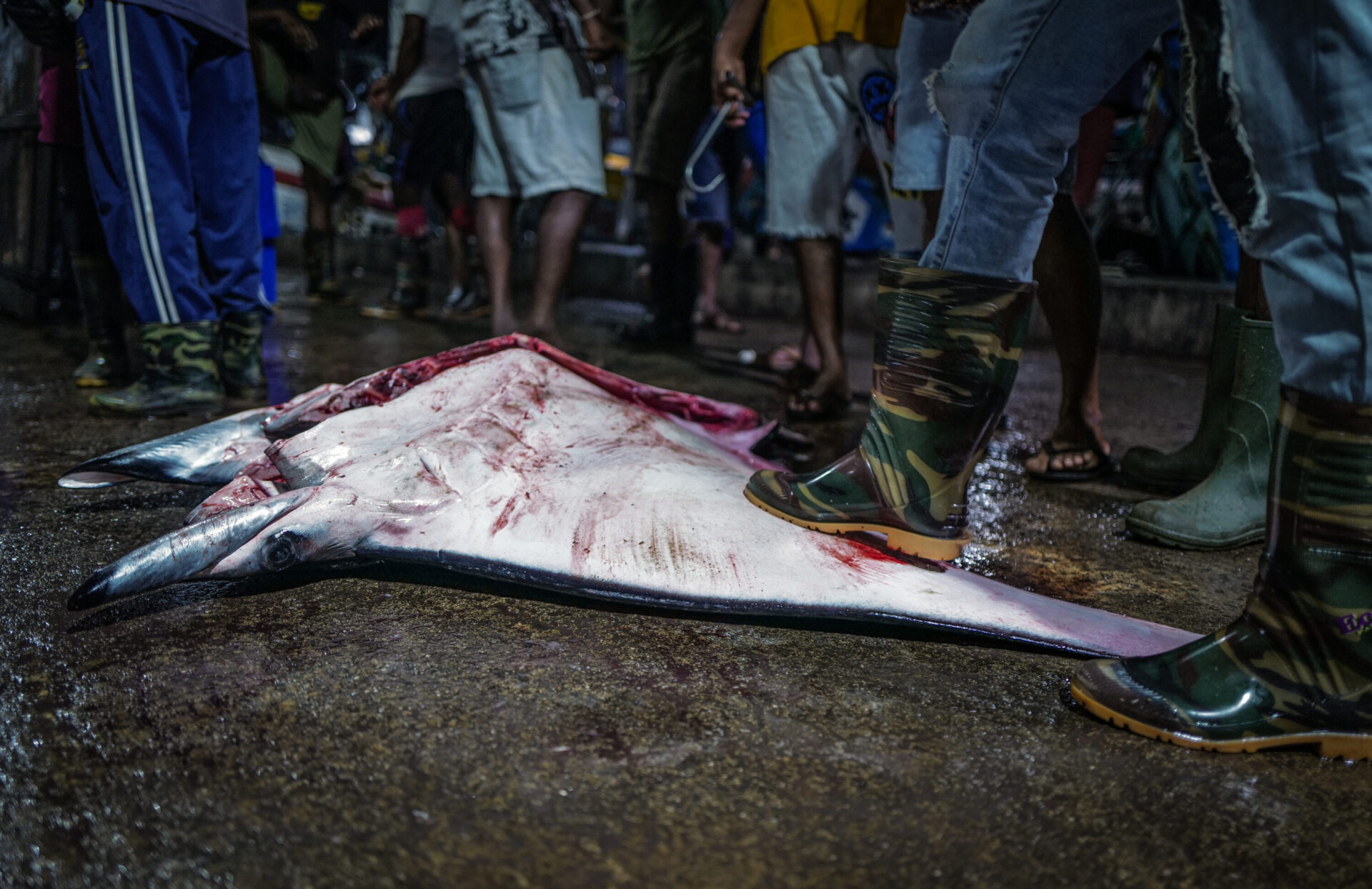
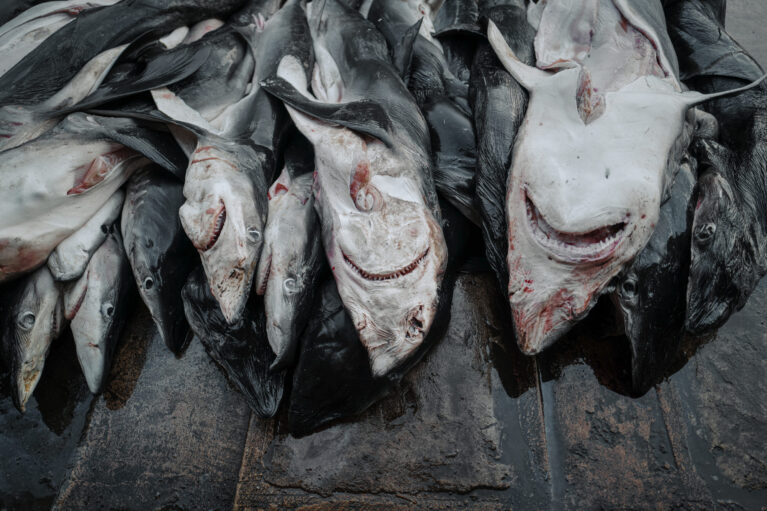
More than a third of sharks and rays are at risk of extinction, as their slow population growth rates make them highly susceptible to fishing pressure. Photo © Kelsey Manners Dickson | Save Our Seas Foundation
Key messages challenge us to make hard decisions
Panellists Rima Jabado, Sophy McCulley Phillips, Daniel Fernando, Elisabeth Fahrni Mansur and Hollie Booth pulled no punches in a final discussion, moderated by Rhett Bennett, on ‘How to save sharks’. Sharks and rays – and the communities that rely on their healthy populations – face many complex challenges, and hard decisions lie ahead. Meaningful engagement with, and long-term buy-in from, the artisanal and subsistence fishers who are part of shark and ray fisheries worldwide is an important part of managing the path forward. But, as an entire day’s session dedicated to the meat trade pointed out, shark and ray management and conservation is everyone’s issue – even (especially) for those highly resourced countries whose fisheries are deemed sustainable.
Aaron MacNeil pointed to the enormous contribution that the USA makes to the trade in rays and Chris Mull highlighted that a relatively small number of shark species are disproportionately represented in trade by major consumers that include Brazil, Australia, France, Spain and Italy.
And there are still urgent issues to catch up on and get ahead of. Rima Jabado pointed to the unmonitored and unmanaged trade in tropical stingray skins for luxury leather – ‘boat to boutique’, as she quipped – that is shifting rays off the list of incidental catch and into targeted catch and retention.
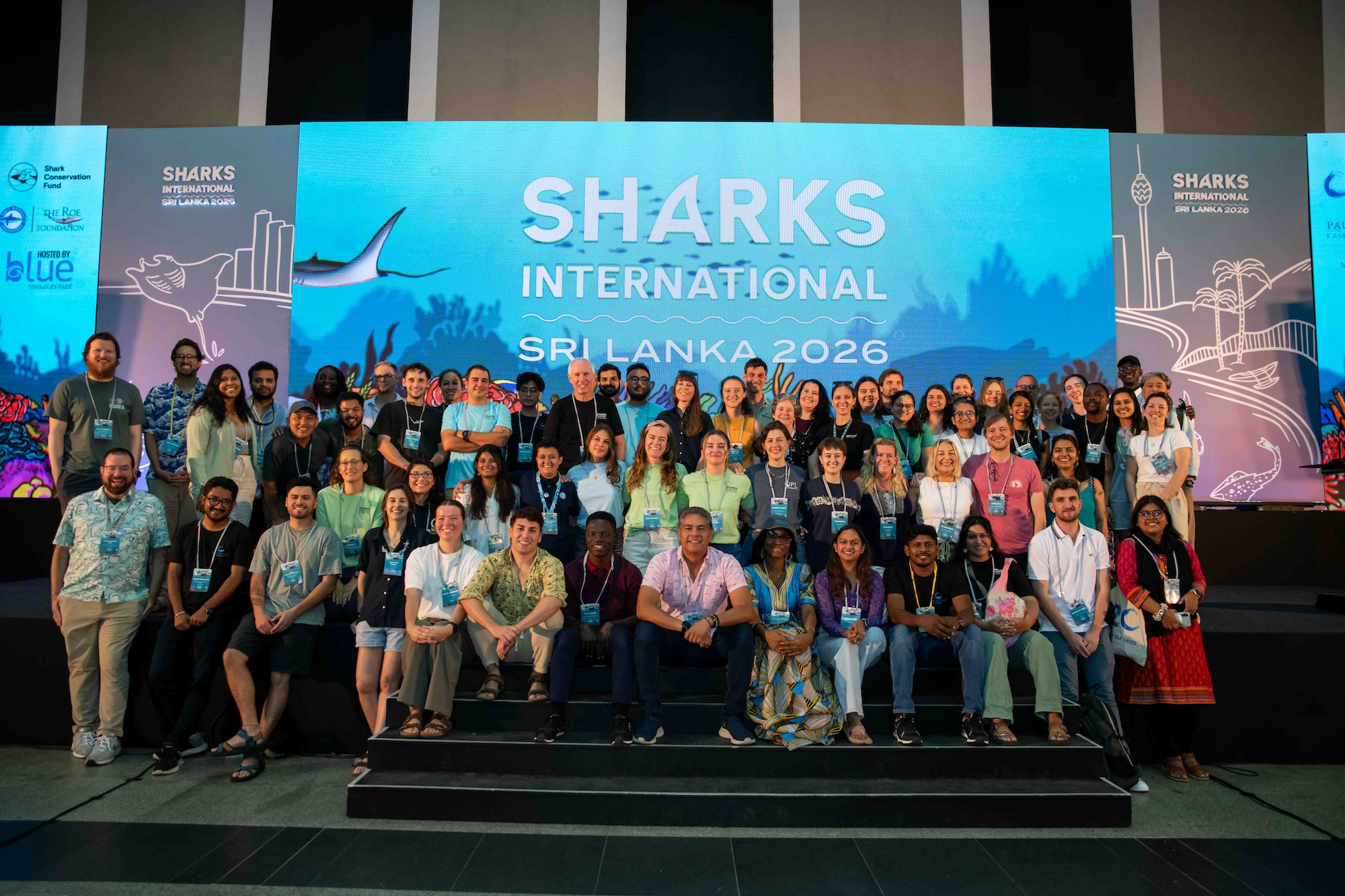
Save Our Seas Foundation project leaders past and present had the chance to connect in-person, with many presenting talks and posters. Photo © Blue Resources Trust
Project leaders past and present
More than 100 Save Our Seas Foundation project leaders were in attendance, with presentations and posters from the D’Arros Research Centre, Shark Education Centre and Shark Research Center teams. Established researchers and long-time project leaders were joined by an incredible force of early-career scientists: Fetra Metiegoum delighted delegates by recounting a first record of the Atlantic nurse shark in Cameroon, and Mina Hatayama encouraged participants to consider inviting fishers to provide narratives that would help to uncover underlying tensions in situations where sharks, fishers, tourism and legislation come to loggerheads.
The SOSF’s World of Sharks podcast host and science communicator Isla Hodgson shared lessons learnt from Scotland about how important it is to participate in the planning process for marine protected areas, and Nahla Kahn brought new findings about a Critically Endangered guitarfish in Bangladesh. Meghana Binraj won Best Student Poster for her work on engaging with and understanding fishers to protect sharks and rays in India. Dozens of presentations and posters represented the work by our small grantees, young project leaders and an emerging cohort of new conservation leaders and scientific experts – an incredible, and hopeful, sign that shark and ray science is alive, well and moving strongly into the future.
Ghana, Amazonia, Australia, Florida (USA), New Zealand, India, Indonesia, the Red Sea, the Mediterranean – representation spanned the gamut of regions, research topics and generations.
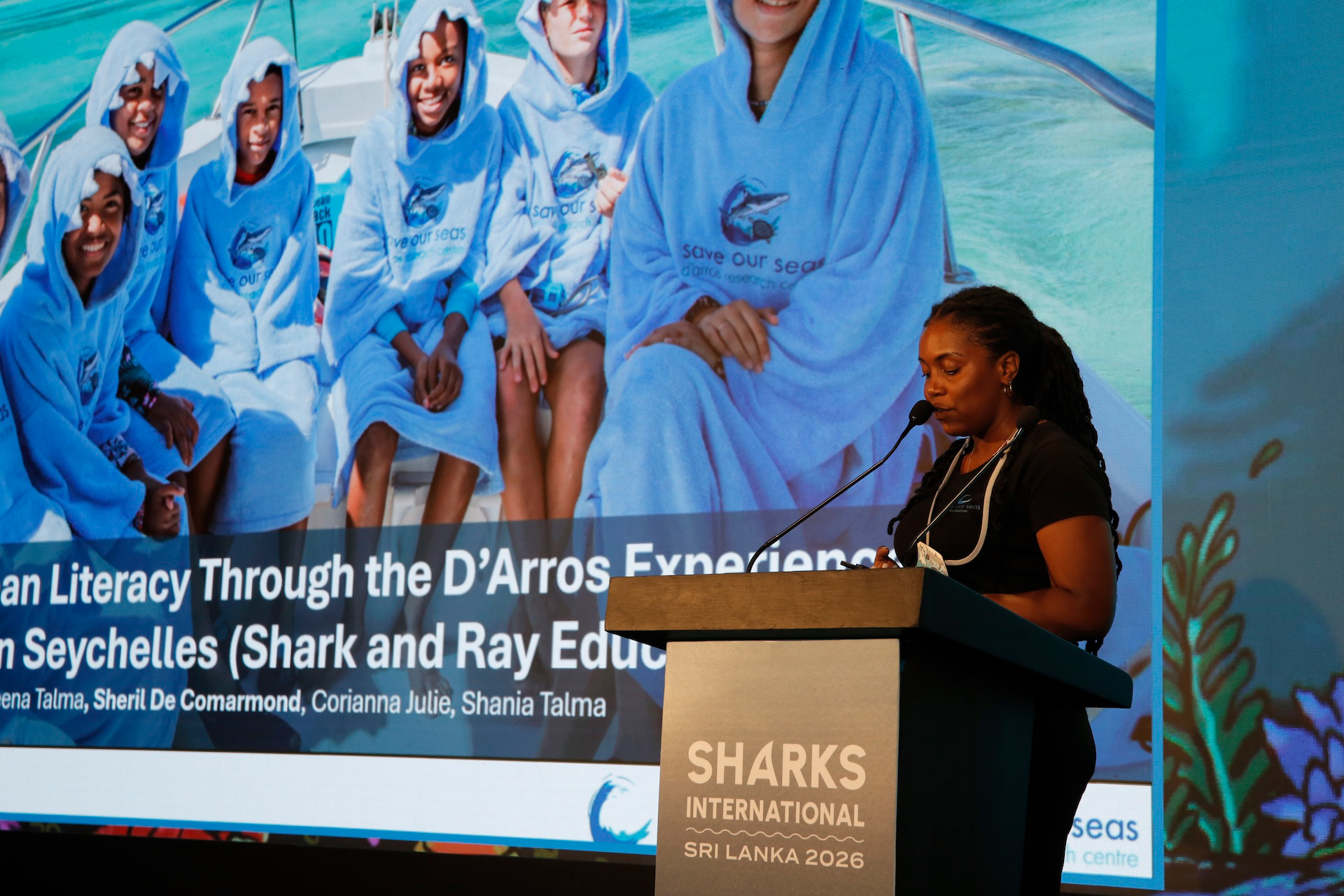
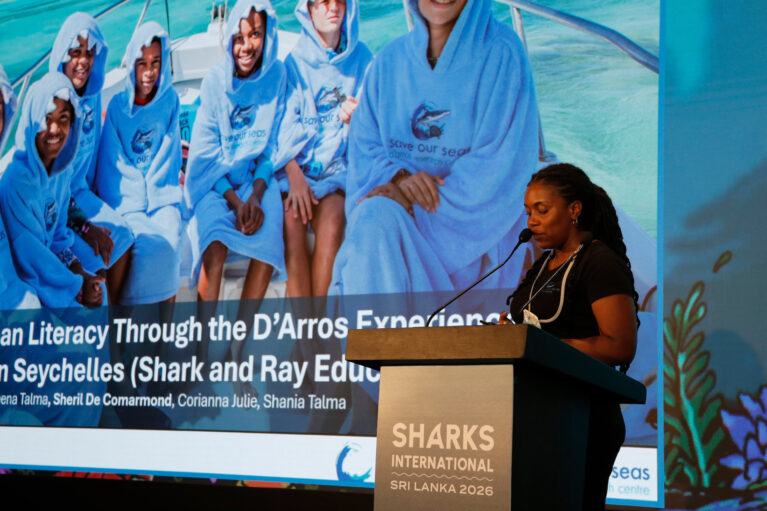
SOSF Island School Seychelles' Sheril De Comarmond presented a talk on 'Growing Ocean Literacy Through the D'Arros Experience Program in Seychelles (Shark and Ray Education)'. Photo © Blue Resources Trust
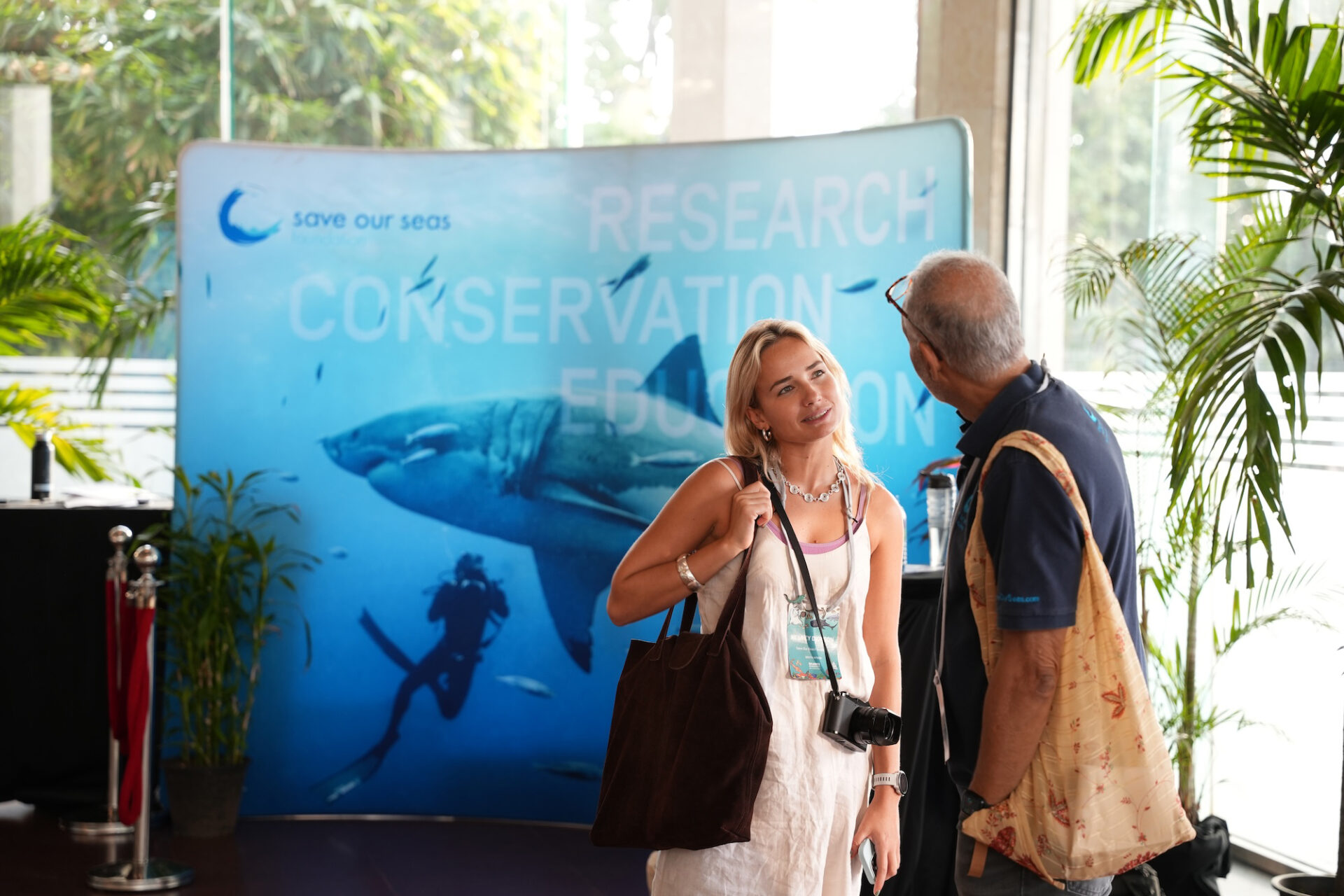
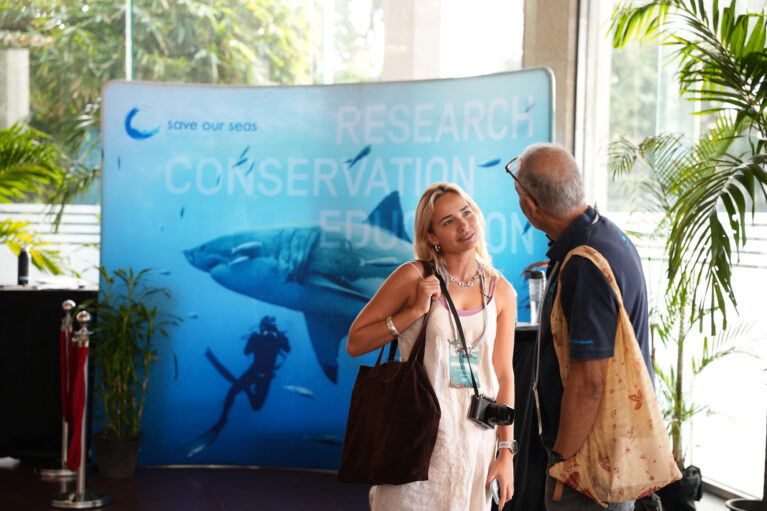
SOSF's Kelsey Manners Dickson chats with SOSF SRC's Director, Mahmood Shivji. Photo © Blue Resources Trust
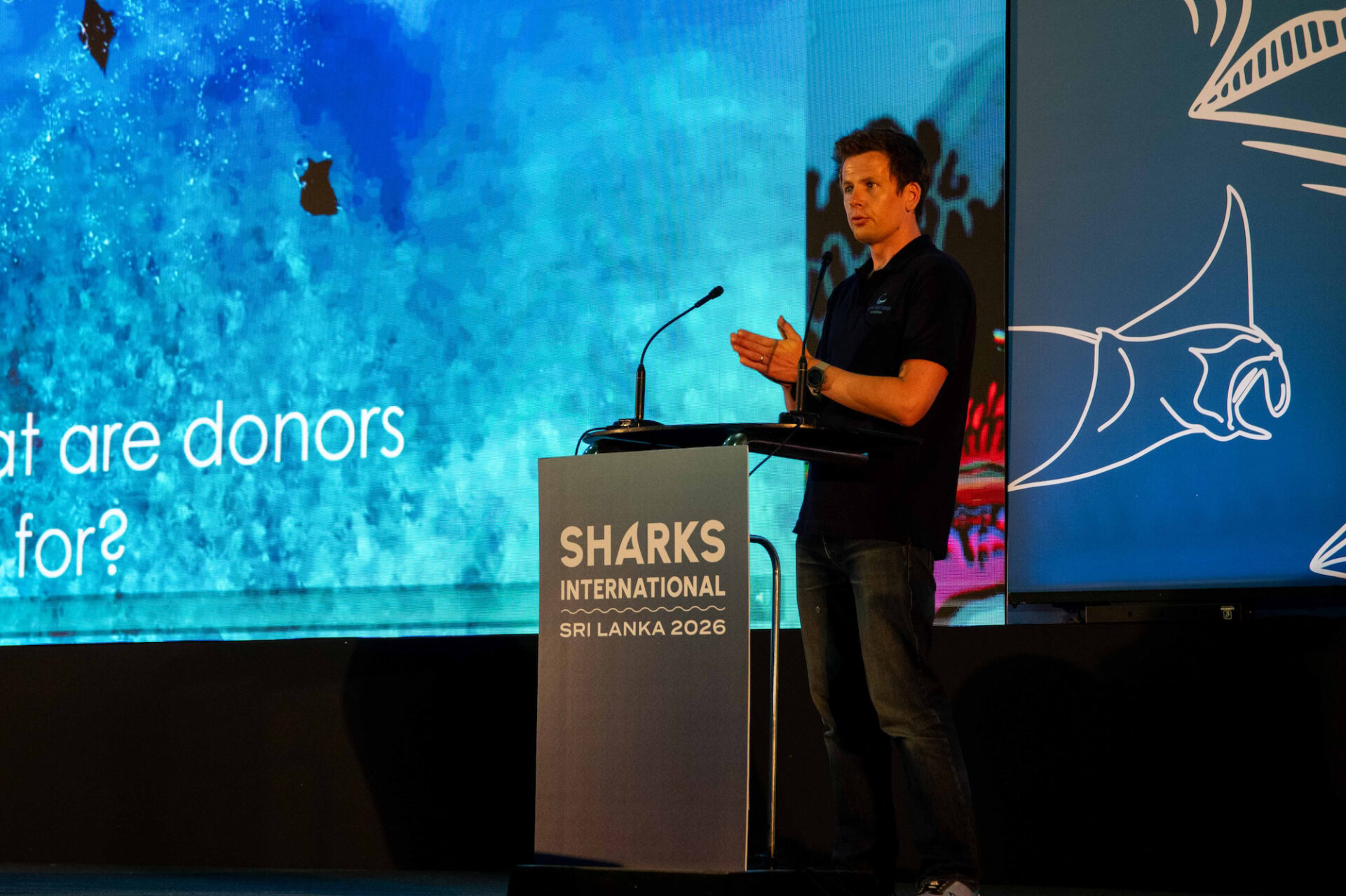
Presenting at a side event, SOSF's James Lea, alongside Marine Conservation Action Fund at the New England Aquarium and Shark Conservation Fund, shared a brief overview of grant programmes, and answered questions from the audience. Photo © Blue Resources Trust
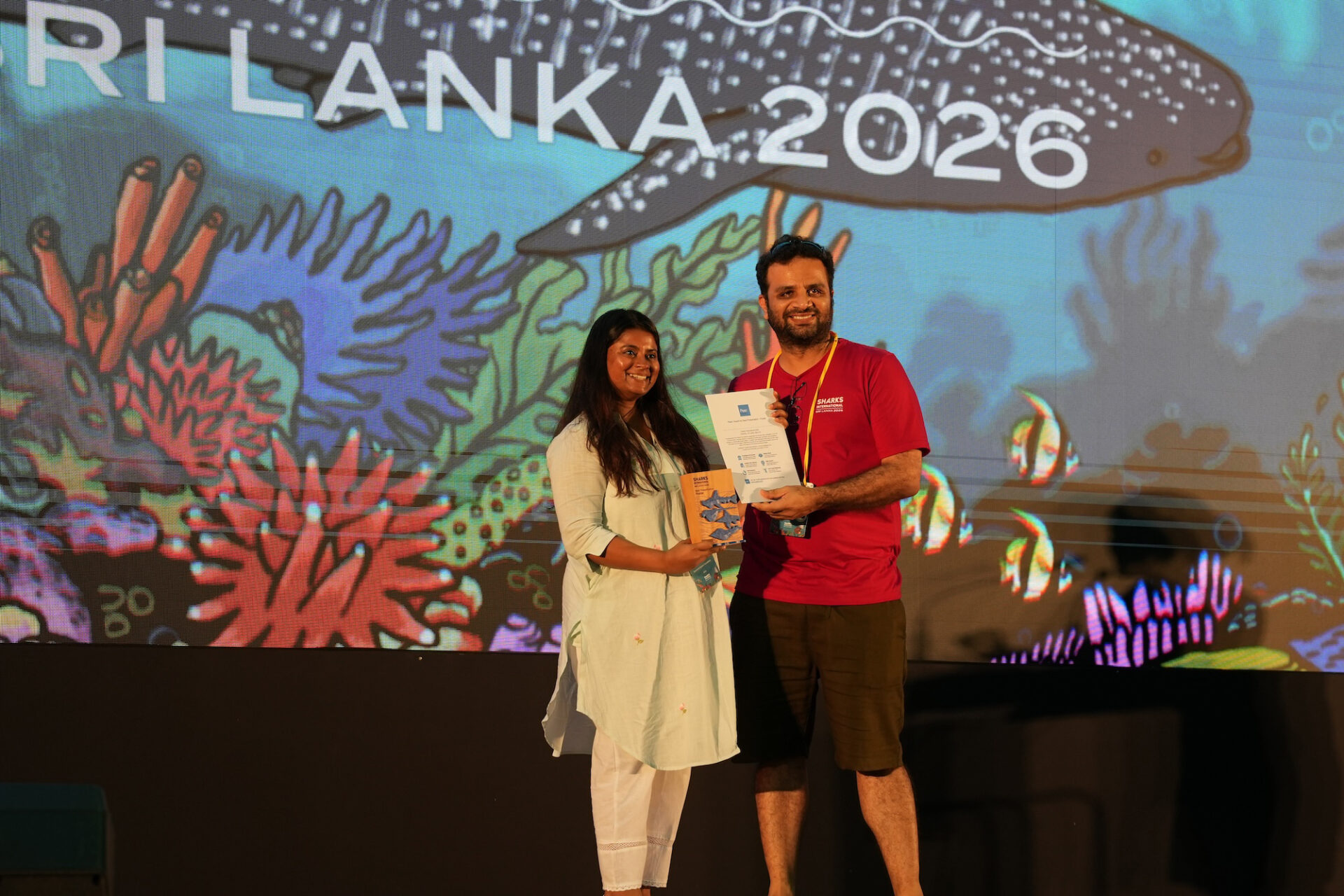
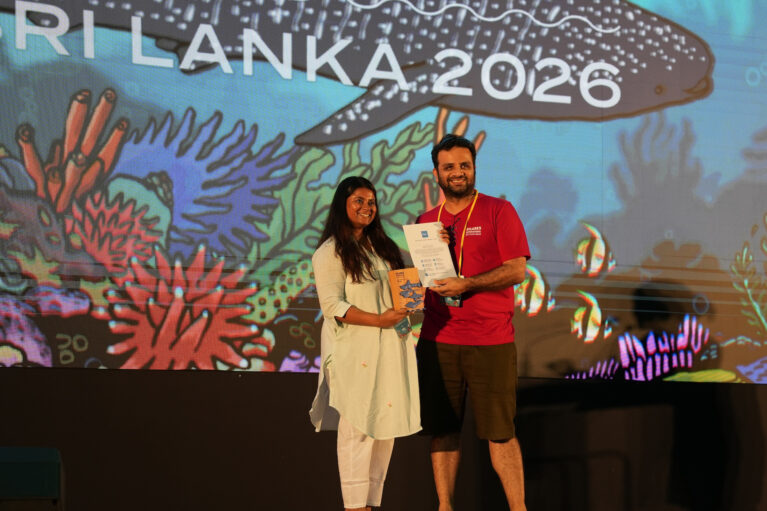
SOSF Project Leader Meghana Binraj was awarded the Best Student Poster Award for presenting 'Beyond the Landing Site: Understanding and Engaging with Fishers to Protect Sharks and Rays in India'. Photo © Blue Resources Trust
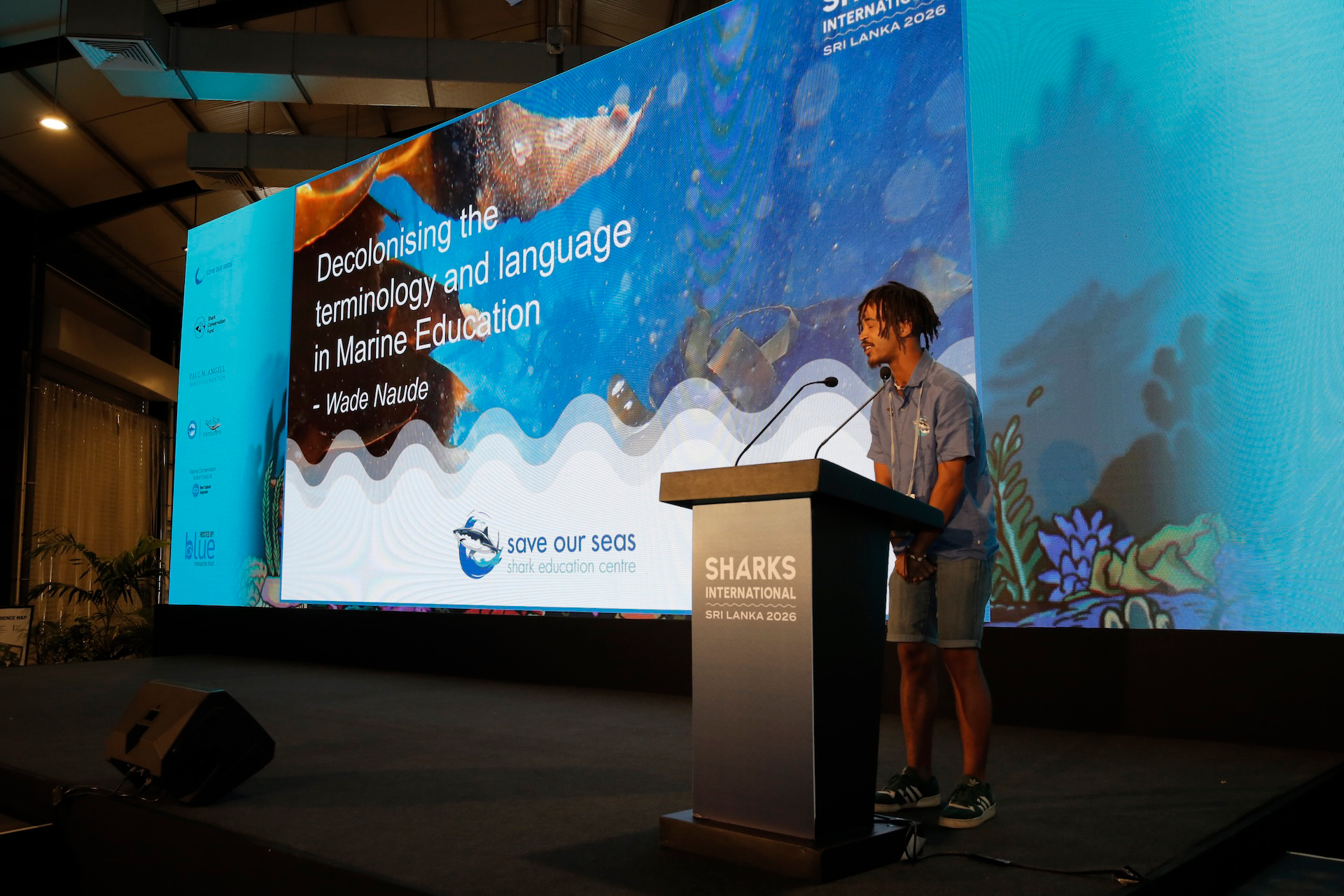
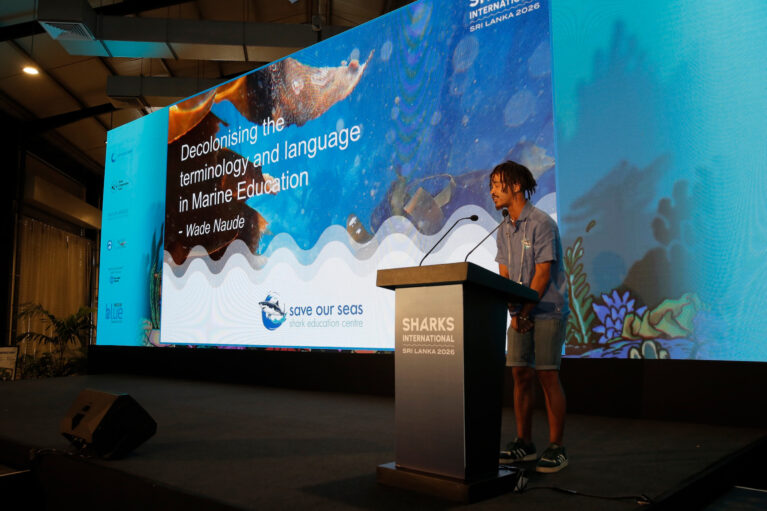
SOSF Shark Education Centre's Wade Naude presented a talk on 'Decolonizing the terminology and language in Marine Education'. Photo © Blue Resources Trust
Communication makes the leap
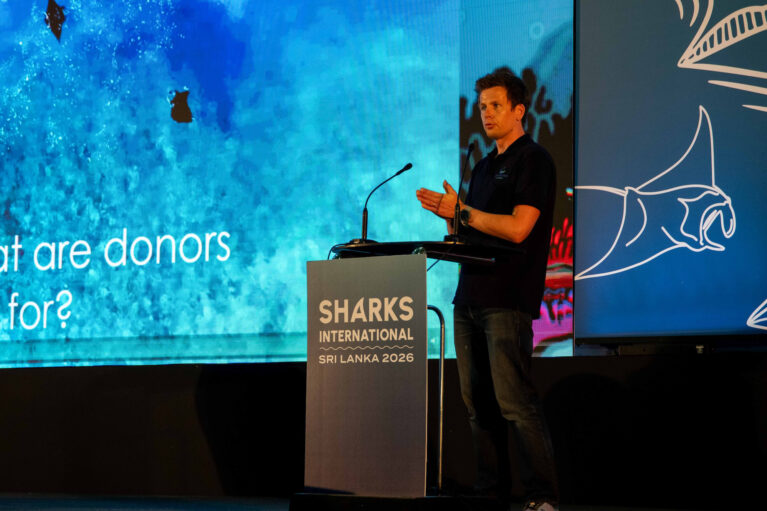
An entire session dedicated to science communication also brought the bridge-builders of the shark and ray world to the fore. Together, they presented insights into how to run effective campaigns, use science to tell stories and consider the language we use to communicate information to different audiences. It was extraordinary to see how many delegates also come from different backgrounds and bring a host of skills from art and design to photography, journalism, teaching, outreach and literacy to the shark and ray conservation sector. Without their serious inclusion, the knowledge shared at conferences never makes it into the wider world to have real impact.
Access, inclusivity and representation matter – and improve collective action
A strong focus of the Blue Resources Trust, supported by the funding organisations, lay in making Sharks International 2026 accessible and inclusive. Registration subsidies, 34 travel grants provided by the Save Our Seas Foundation (SOSF), and a host country that made visa accessibility feasible for more participants were part of an effort to increase participation from early-career researchers and delegates from the Global South.
The success of this initiative was evident throughout the week’s proceedings. In 2024, the International Union for Conservation of Nature (IUCN) Shark Specialist Group (SSG) Global Report on the Status of Sharks, Rays and Chimaeras highlighted just how many nations are collecting data on elasmobranchs.
Now Sharks International has disproved the flawed perception that data, capacity and competency are lacking in the Global South. By removing several of the major barriers to entry that have historically limited participation from a more diverse cross-section of scientists and students at global conferences, it enabled delegates from more than 80 nations to attend.
There is much work to be done over the next four years, before Sharks International convenes again, in Sabah, Malaysia. The challenges are huge, but so is the impetus behind knowledge-sharing, collaboration and global cooperation in this scientific and conservation community.
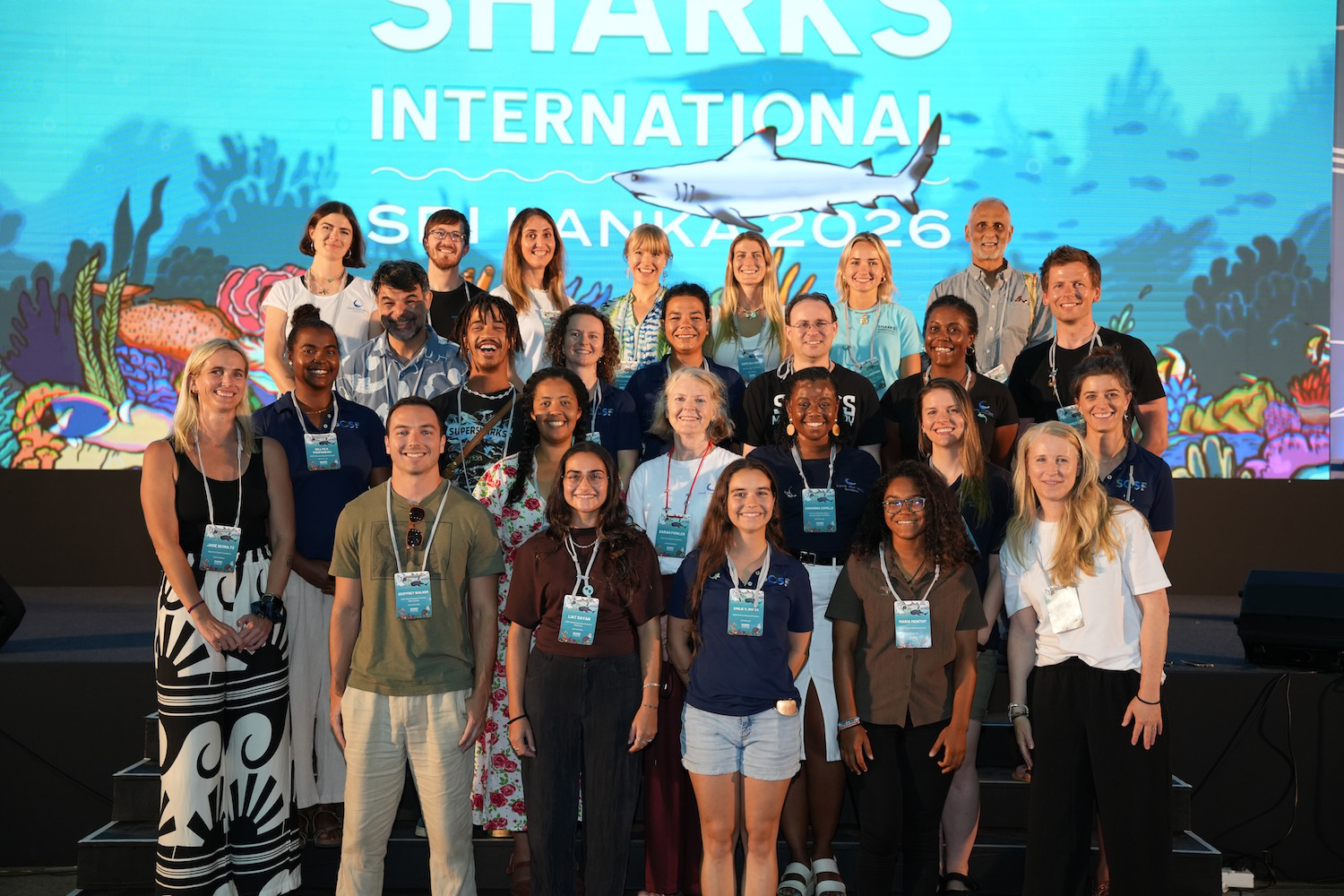
The Save Our Seas Foundation team connected from around the world at Sharks International 2026, with staff hailing from around the world. The SOSF D'Arros Research Centre (Seychelles), SOSF Shark Education Centre (South Africa), and SOSF Shark Research Center (USA), the Communications Team (South Africa and Scotland), our Swiss Head Office, and our scientific advisors were all in attendance. Photo © Blue Resources Trust