
Ocean Storytelling Photography Grant 2026
At the Save Our Seas Foundation (SOSF), we believe that storytellers have a powerful and unique role in generating meaningful change for our oceans. A single image can transform something distant into an experience we can see, feel and connect with, taking us into a world that is ordinarily hidden from our day-to-day lives. A good story can inspire empathy for creatures we have never met and motivate us to act on their behalf, in a way that facts and figures alone cannot.
We are therefore delighted to announce that applications are open for the 2026 Ocean Storytelling Photography Grant. Our Storytelling grants are dedicated to supporting early-career and emerging talent in conservation storytelling, and this year returns to a photography focus.
– Thomas Peschak
The photography grant is led by our own Director of Storytelling and National Geographic photographer Thomas Peschak, in collaboration with Kathy Moran, formerly the Deputy Director of Photography at National Geographic, and Jennifer Samuel, photo editor formerly at The Washington Post and National Geographic.
We are looking for visual storytellers who can blend eye-catching imagery with an impactful emotional narrative, offering diverse perspectives and unique insights into the ocean and the lives that depend upon it. While this call focuses on the marine environment, it is not limited to underwater photography. Applicants should think broadly; subjects can range from wildlife and habitats to fisheries and coastal communities.
Two successful grantees will each receive a fully funded assignment to shoot a conservation photo story on location (including day rate and travel) under the direct mentorship of the Ocean Storytelling Photography Grant Team.
We are committed to finding and supporting new and diverse talent in conservation storytelling. This grant has a particular focus on early-career and emerging storytellers; applicants must therefore have no more than five years of experience in a photography-related discipline. We also want to especially encourage women and gender-diverse applicants, as well as those from the Global South and from other communities that historically have been underrepresented in the field.
Find out more about the entry requirements here. (towards the end of the page)
Features from past grant winners
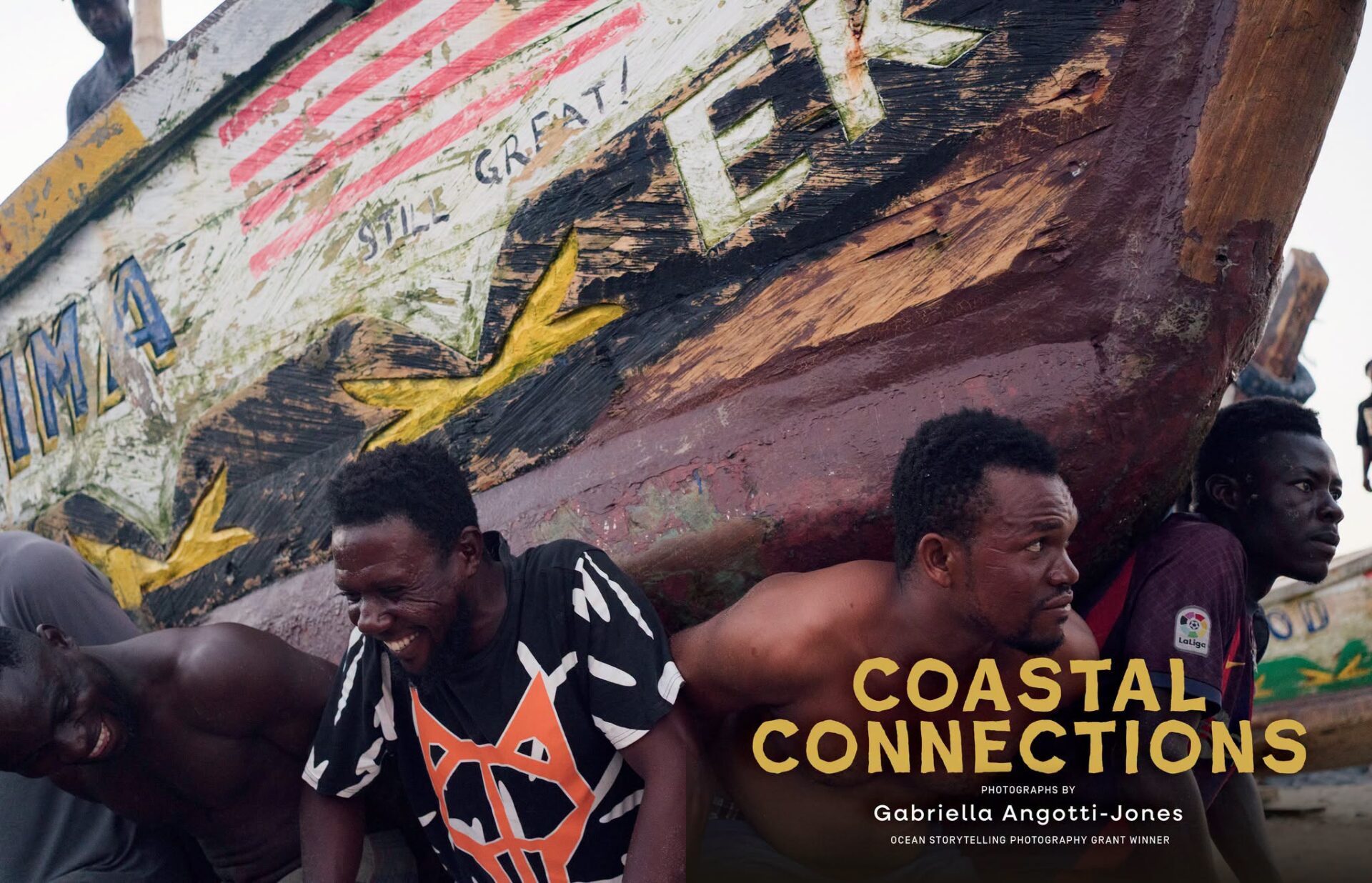
Coastal connections. Photo assignment by Gabriella Angotti-Jones
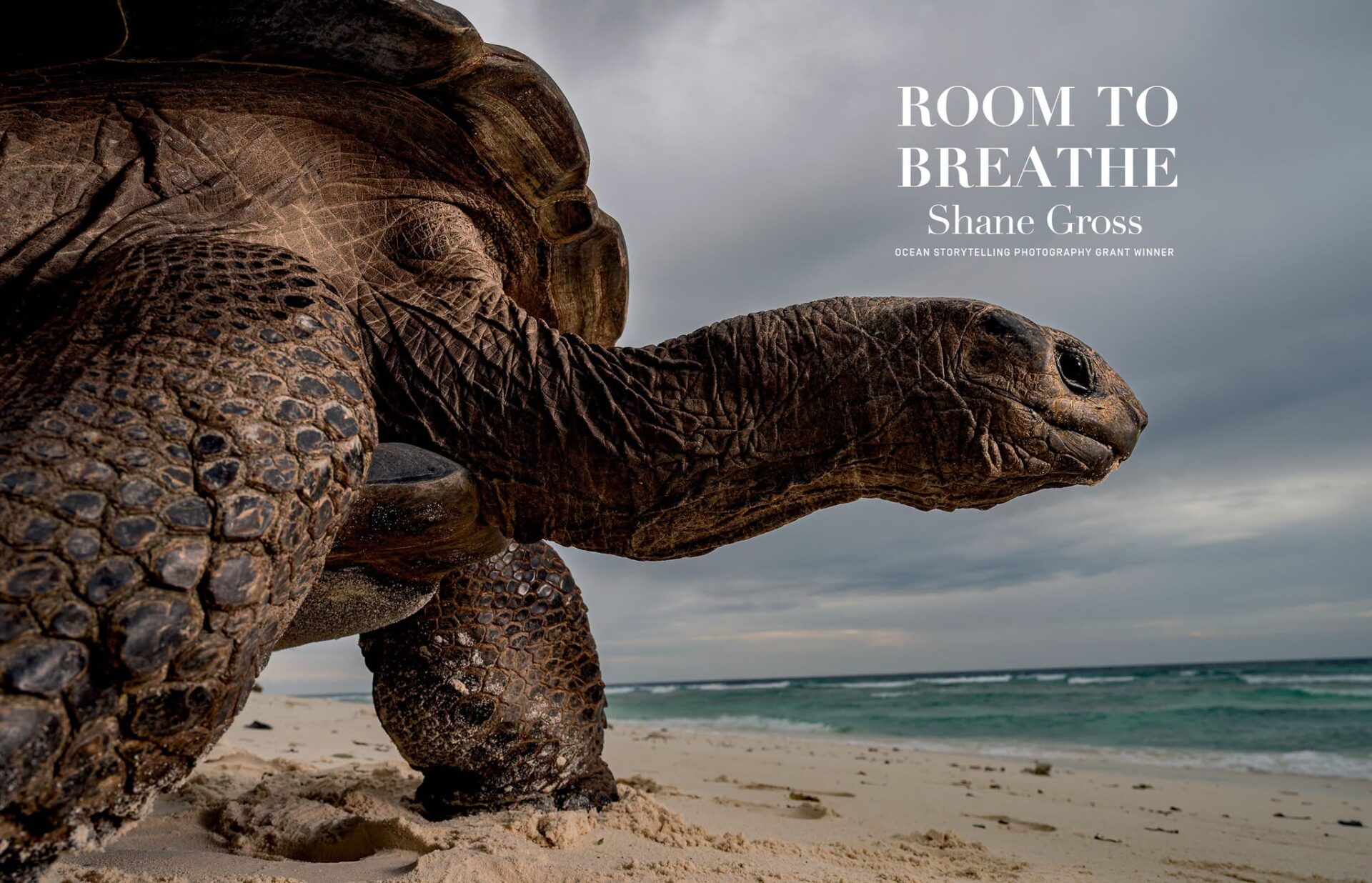
Room to breathe. Photo assignment by Shane Gross
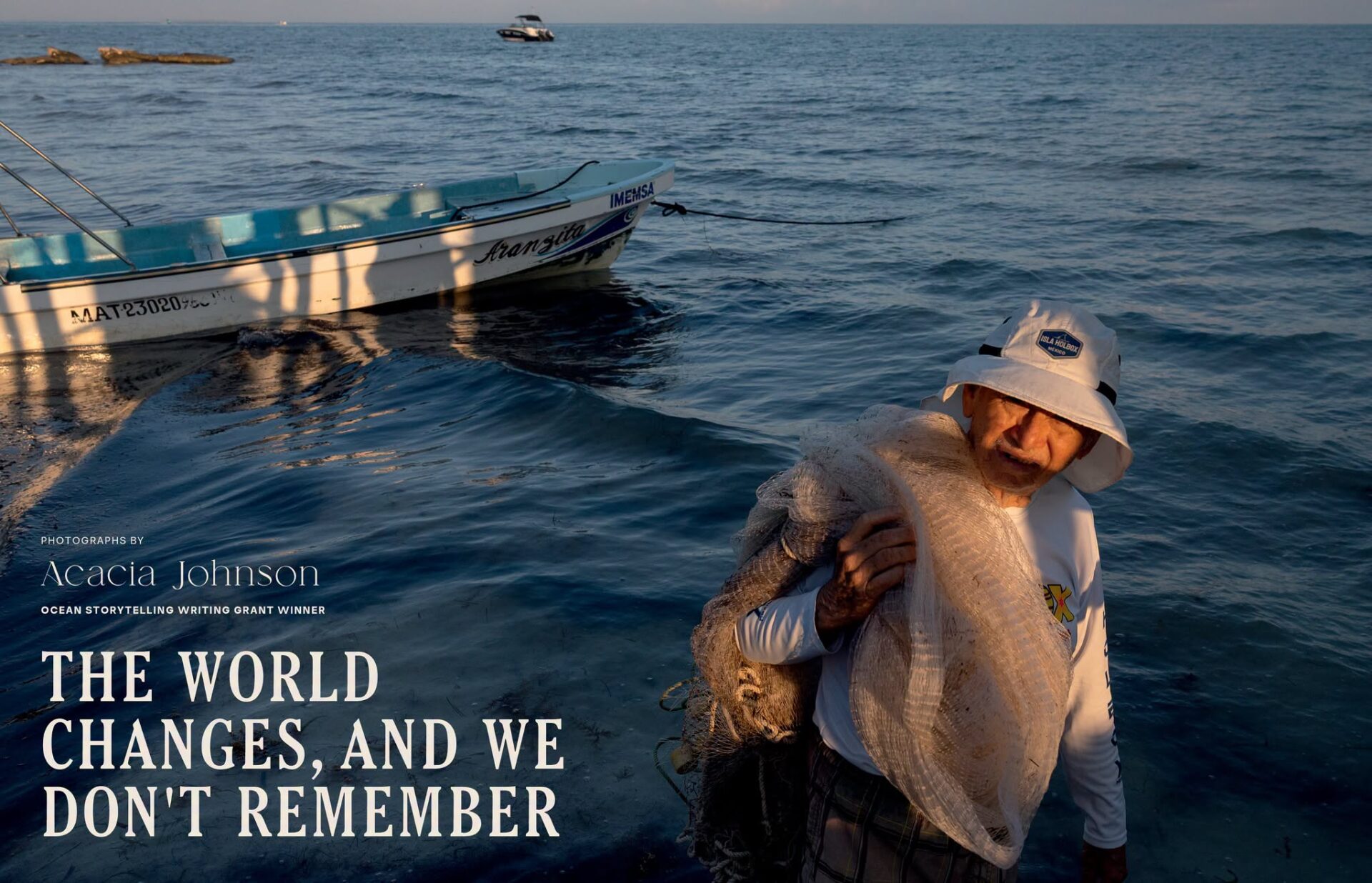
The world changes, and we don't remember. Photo assignment by Acacia Johnson
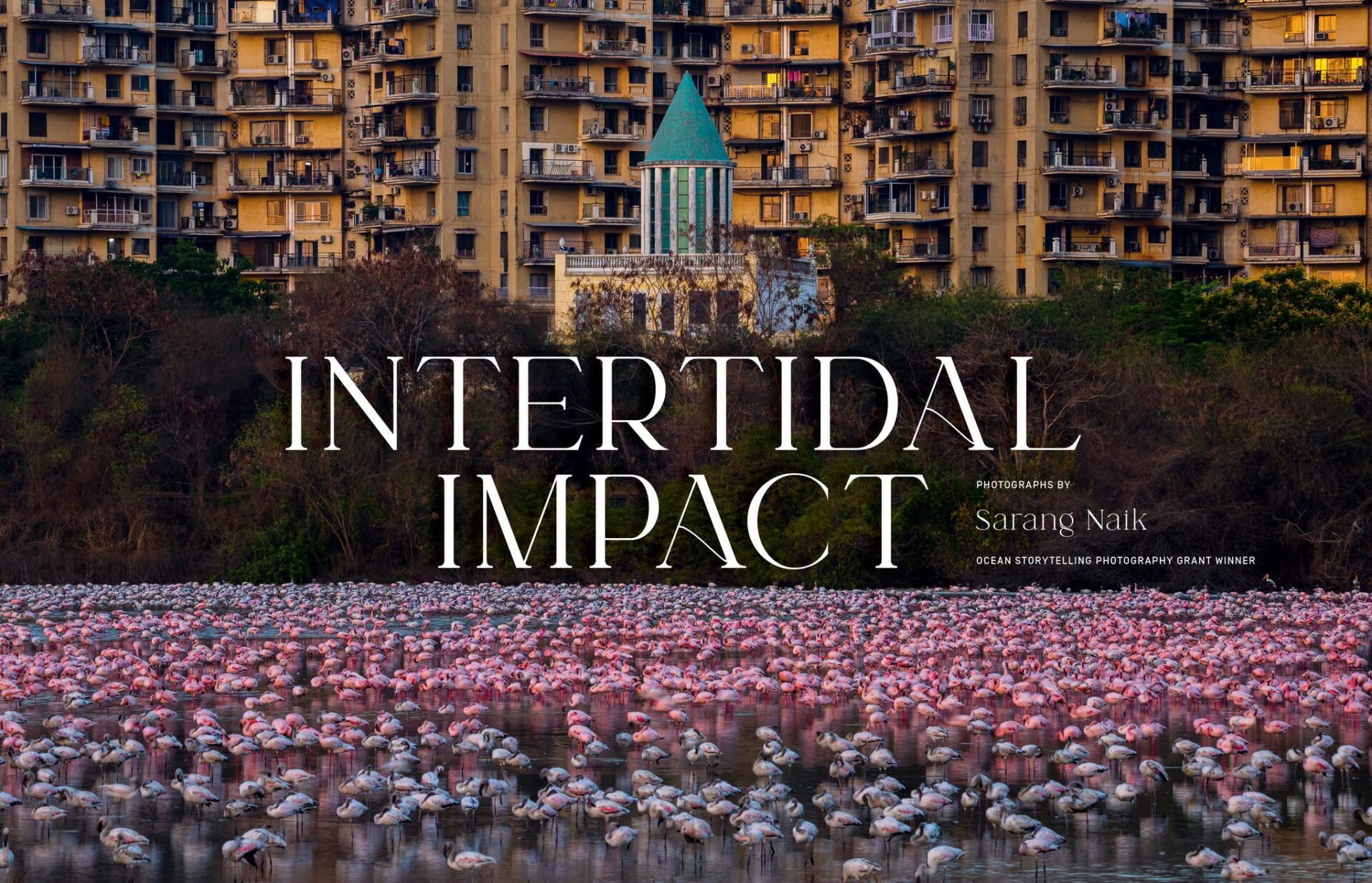
Intertidal impact. Photo assignment by Sarang Naik
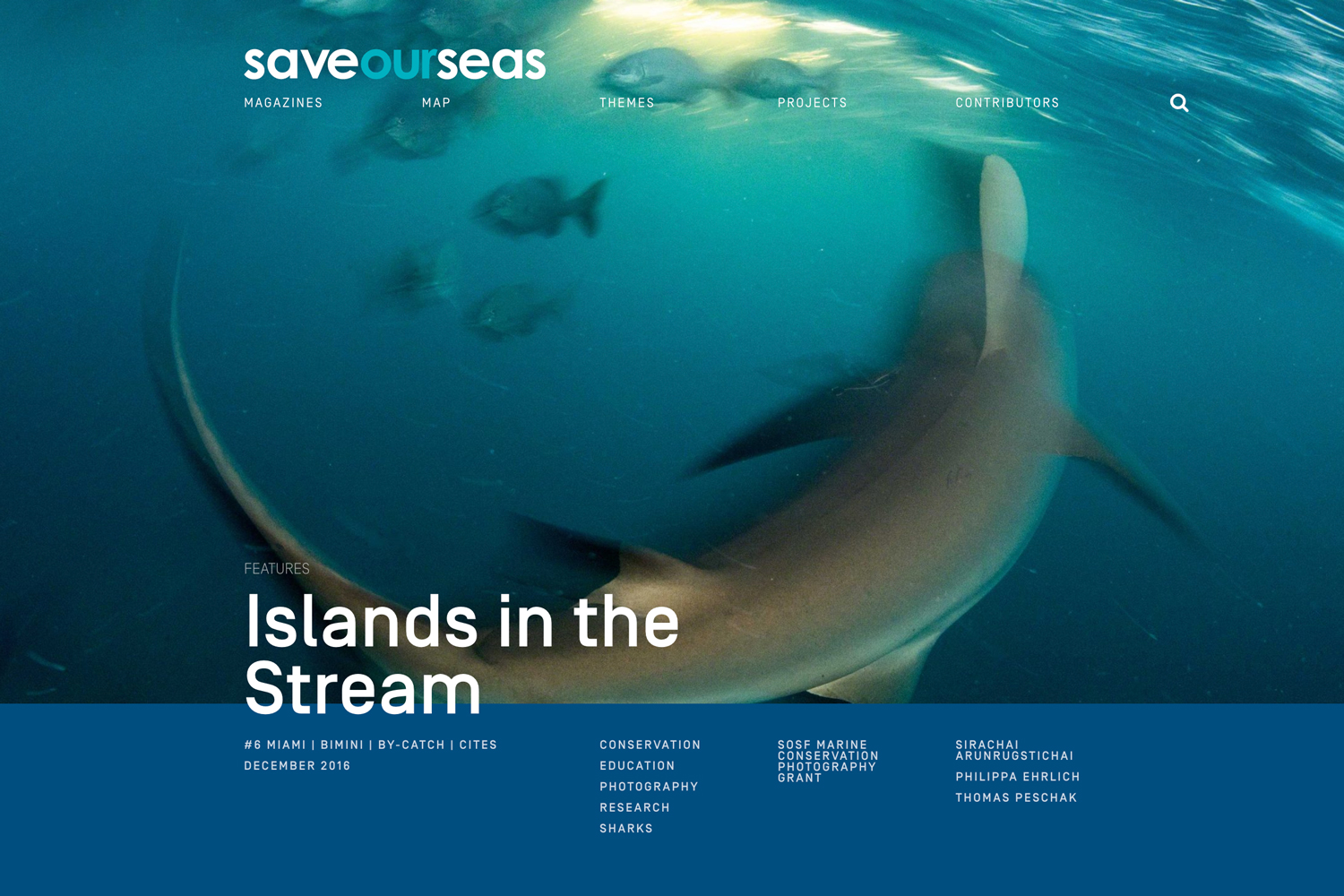
Islands in the stream. Photo assignment story by Shin Arunrugstichai

Urban Pioneers: Florida's Marine Wildlife. Photo assignment story by Justin Gilligan
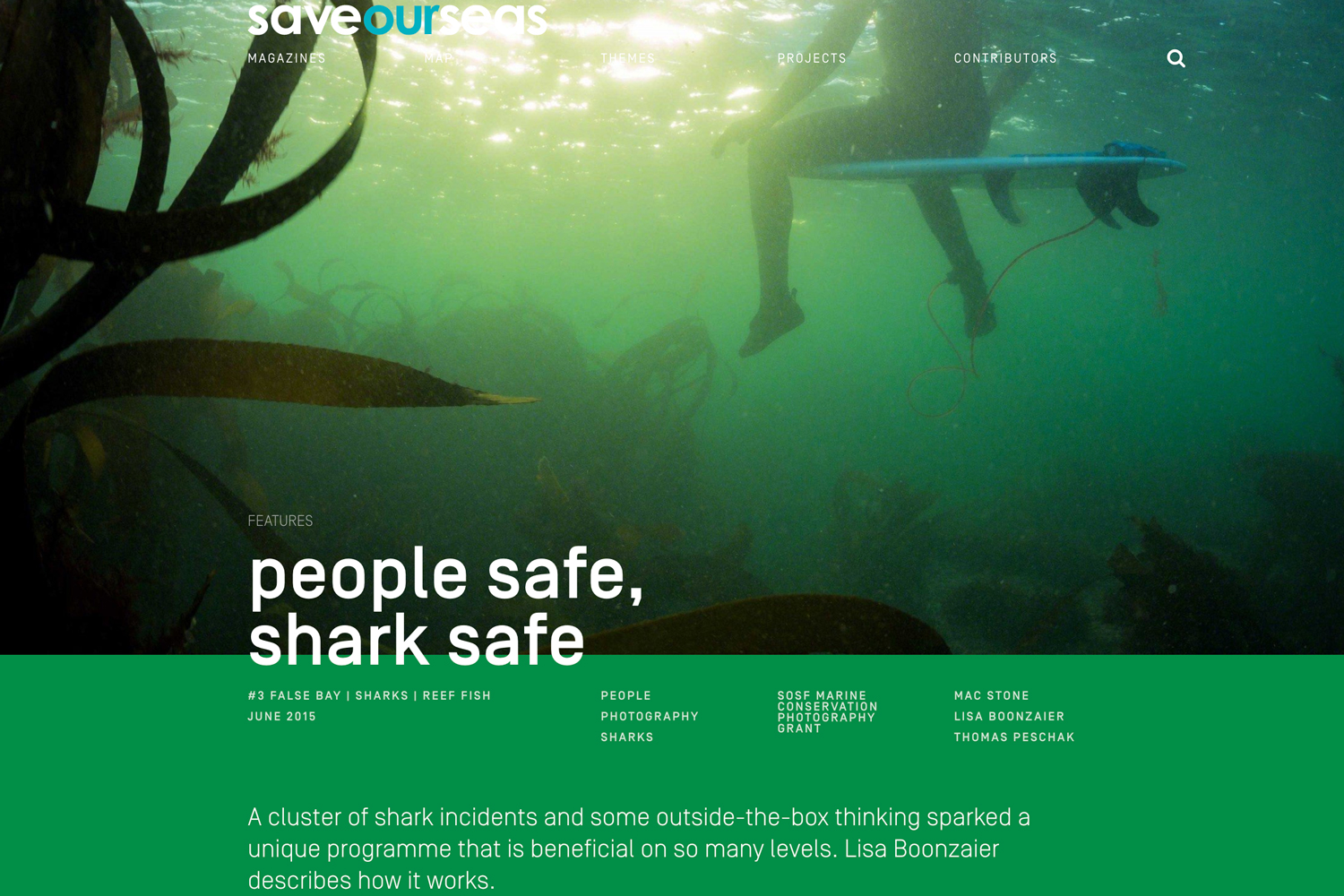
People safe, Shark safe. Photo assignment story by Mac Stone
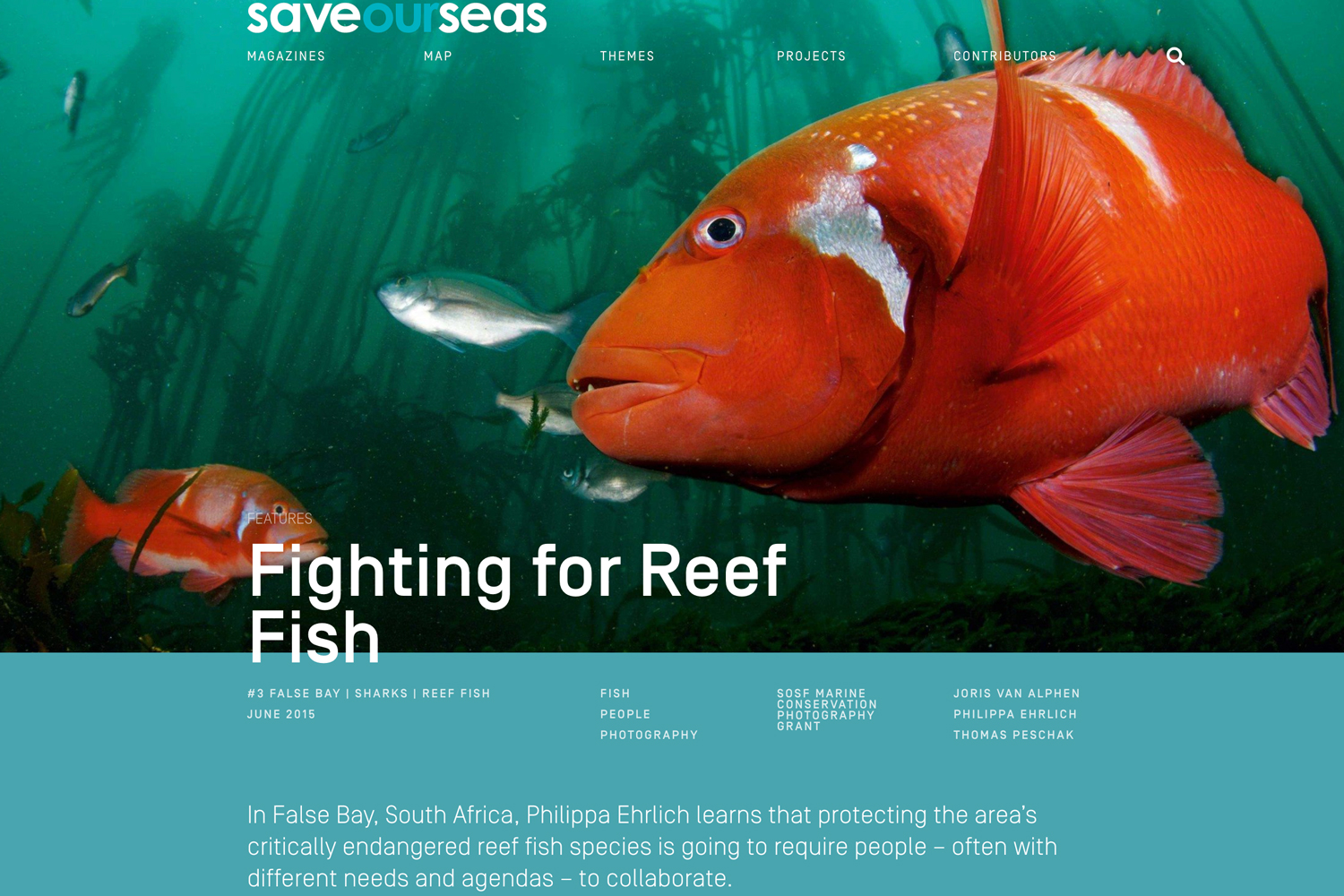
Fighting for Reef Fish. Photo assignment story by Joris van Alphen
Prizes
- Two winners will be selected.
- Each winner will receive a US$2,000 cash prize and will be given a paid three-week photographic assignment to document an SOSF-supported marine research or conservation project. The SOSF has funded more than 600 projects in more than 100 countries and the winning photographers will be assigned to tell one of these stories.
- Thomas Peschak, National Geographic photographer and Director of Storytelling for the Save Our Seas Foundation; Kathy Moran, former Deputy Director of Photography for National Geographic; and Jennifer Samuel, former International Photo Assignment Editor at The Washington Post, will mentor photographers throughout the process.
- All winners will be given the chance to showcase their work at an international conference or an exhibition.
- Each winner’s story will also be published as a photo essay for the Save Our Seas Foundation.
Application Process
- The Ocean Storytelling Photography Grant application process consists of a one-stage online application. The form consists of a few questions and requires the submission of a portfolio (20 images) and photo story (10 images).
- Only one application will be accepted from any one applicant.
- If an applicant has any other current SOSF grant, they cannot apply for a new grant.
- All applications will be reviewed by the Ocean Storytelling Photography Grant judging panel and require final approval from the Foundation’s Board of Directors.
- If successful, the SOSF Grant agreement between the Foundation and the applicant must be returned by the deadline. This agreement cannot be modified.
From left to right, fishermen Meco Andres Manuel Hernandez Ovando, Guadalupe Cruz Salejo and Zenon Hernandez Ovando pose for portraits in Cuidad del Carmen. Photos by Acacia Johnson | © Save Our Seas Foundation
Meet the judges
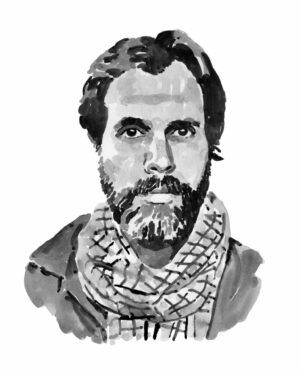
Thomas Peschak
Thomas Peschak is a National Geographic Explorer and photographer specialising in documenting the beauty and fragility of the world’s last wild places. Trained as a marine biologist, he embraced photography and storytelling after realising his photographs could have a greater impact than scientific statistics. Peschak has covered some of the most critical conservation narratives of our time, resulting in 21 feature print stories for National Geographic magazine. His images and stories have won 18 Wildlife Photographer of the Year and seven World Press Photo Awards. He was also recently awarded National Geographic’s Eliza Scidmore Award for outstanding storytelling, as well as the National Geographic Photographer’s Photographer Award, the latter voted on exclusively by his peers.
A veteran of over 50 expeditions to some of the most remote and extreme corners of the world, Peschak is a founding director of the Manta Trust, the director of storytelling for the Save Our Seas Foundation and a Senior Fellow of the International League of Conservation Photographers. He’s spoken at National Geographic Live events on four continents, and his 2015 TED Talk “Dive Into an Ocean Photographer’s World” has been viewed more than a million times. He is the bestselling author of 8 books including Sharks and People, Wild Seas and Amazon: A River’s Journey from the Andes to the Atlantic.
As part of the National Geographic and Rolex Perpetual Planet Amazon Expedition, Peschak recently completed a 396-day exploration of the Amazon River Basin, documenting its wonders and challenges from underwater and topside perspectives. This body of work was published in October 2024, making Peschak only the second person in National Geographic magazine’s 136-year history to photograph an entire issue.
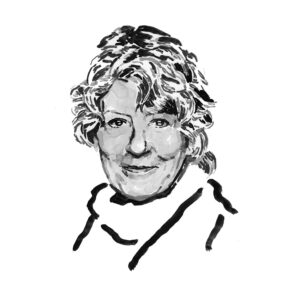
Kathy Moran
Kathy is co-founder of Moran Griffin, Inc. and works as a photo editor and project consultant. Previously, she was National Geographic magazine’s deputy director of photography. As the magazine’s first senior editor for natural history projects, she has produced projects about terrestrial and underwater ecosystems for the magazine since 1990. She was the project manager for the National Geographic Society/Wildlife Conservation Society’s partnership documenting photographer Nick Nichols and Dr Michael Fay’s trek across Central Africa. The resulting stories were the impetus for the creation of Gabon’s national park system.
Kathy was recently named the chair of London’s Natural History Museum’s Wildlife Photographer of the Year competition. She has also edited several books for the National Geographic Society, including Women Photographers at the National Geographic, The Africa Diaries: An illustrated life in the bush, Cat Shots and most recently Tigers Forever. She was the photo editor for two collections of wildlife photography – ‘100 Best Wildlife Pictures’ and ‘Wildlife, the Best Photos’ – and recently curated ‘50 Best Wildlife Photographs’, an exhibition for the society’s museum. She was named ‘Picture Editor of the Year’ for her winning portfolios in the 2017 and 2006 POYI competition and the 2011 Best of Photo competition.
Kathy is a founding member of the International League of Conservation Photographers and currently serves on the board. She lives in Arlington, Virginia, with her husband and three bad cats.
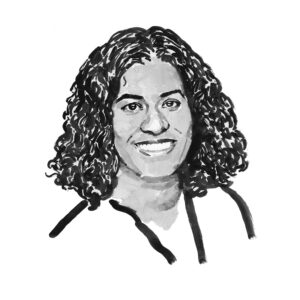
Jennifer Pritheeva Samuel
Jennifer Pritheeva Samuel is the former international photo assignment editor at The Washington Post, where she worked with correspondents across the Americas, Asia, Southeast Asia and Africa bureaus, assigning freelance and staff photographers to ensure strong visual reporting from these regions.
Prior to that, she was with National Geographic where she produced stories about culture and the human condition. She edited many of the stories in the magazine’s 2019–2020 series highlighting women as well as the 2018 series on race and diversity. In 2019 Jennifer took second place as POYI’s magazine media visual editor of the year. Prior to joining National Geographic, she oversaw public programming for Photoville and managed the Anastasia Photo Gallery and Hank Willis Thomas’ studio. She was a co-founder and curator of the Brooklyn Photo Salon.
Jennifer is an avid swimmer and ocean lover. She briefly considered studying marine biology, but quickly realised this was mostly because she wanted to be underwater all day. After studying anthropology and photography at New York University, she was a Peace Corps volunteer on the Caribbean island of Dominica. She received her Master of International Affairs from Columbia University’s School of International and Public Affairs, with a focus on economic development and media. Brooklyn, New York, will always be her home, but she currently resides in Washington, D.C.
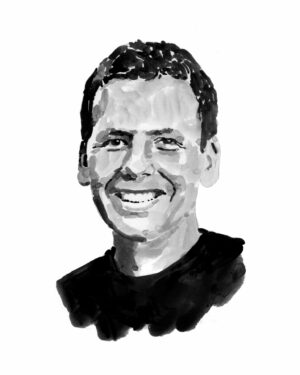
James Lea
James is a shark biologist and the chief executive officer of the Save Our Seas Foundation. Although his love for the ocean realm has taken his own career down a path of scientific research, this passion was inspired, and is maintained, by a deep affection for stories. From his grandfather’s tales of blue and porbeagle sharks, through the entrancing productions of Cousteau and Attenborough to the adventures of photographers (including our own Thomas Peschak) heard in an underwater camera store, stories have had a strong influence on him.
Indeed, James recognises the unique power they have to affect people’s world view. He is particularly excited to support emerging photographers to connect audiences with critical conservation issues through engaging storytelling – and in turn inspiring us all to be part of the solution and make a difference.
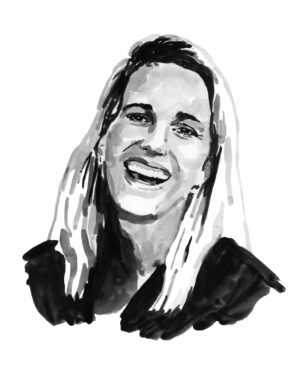
Jade Schultz
For over a decade Jade has been working with natural history images to engage audiences, raise awareness and tell conservation stories. As global communications manager for the Save Our Seas Foundation, she oversees the communication interface between the foundation and its audience and has witnessed at first hand the power of strong imagery as an aid to storytelling and science communication.
Under the mentorship of Thomas Peschak, Jade has learned how to discern between a good image and an image that will not only stand out and grab the viewers’ attention, but will educate and inspire.
In an age when people are bombarded with information and seem to only scan a page or timeline rather than read, a good image is an extremely powerful tool to have in your storytelling arsenal to engage the reader, elicit an emotional response and communicate an important message.
Jade is passionate about conservation and effective communication, as well as exploring the various mediums available to inspire others and hopefully drive conservation change. While it is always exciting to work on video, illustration and other multimedia projects, photography remains her passion.
Important Dates
D'Arros Island and St Joseph Atoll are a fish diversity hotspot, where more than 497 bony fish species (like these giant trevallies) have been recorded, as well as some 17 shark and ray species. This accounts for nearly two-thirds of all reef-associated fish in Seychelles. Photo by Shane Gross | © Save Our Seas Foundation
View the work of our past grantees
2014
Mac Stone (U.S.)
People Safe, Shark Safe
Joris van Alphen (Netherlands)
Fighting for Reef Fish
2016
Shin Arunrugstichai (Thailand)
Islands in the Stream
Justin Gilligan (Australia)
Urban Pioneers: Florida’s Marine Wildlife
2021
Gabriella Angotti-Jones (U.S.)
Coastal connections
Shane Gross (Canada)
Room to breathe
Acacia Johnson (U.S.)
The world changes, and we don’t remember
Sarang Naik (India)
Intertidal impact