
Coastal connections
PHOTOGRAPHS BY
Gabriella Angotti-Jones
Ocean Storytelling Photography Grant Winner
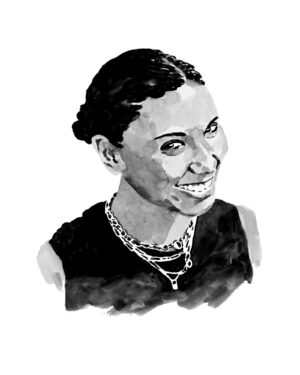
Photo by Gabriella Angotti-Jones | © Save Our Seas Foundation
WORDS BY
Lauren De Vos
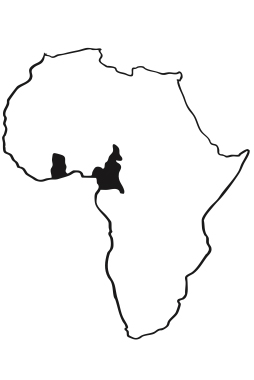
Gabriella Angotti Jones went on assignment to explore shark and ray fisheries, and the scientists keeping tabs on them, in Ghana and Cameroon. Her lens captures the human experience: in her frame, our shared silliness is as important as our sorrows.
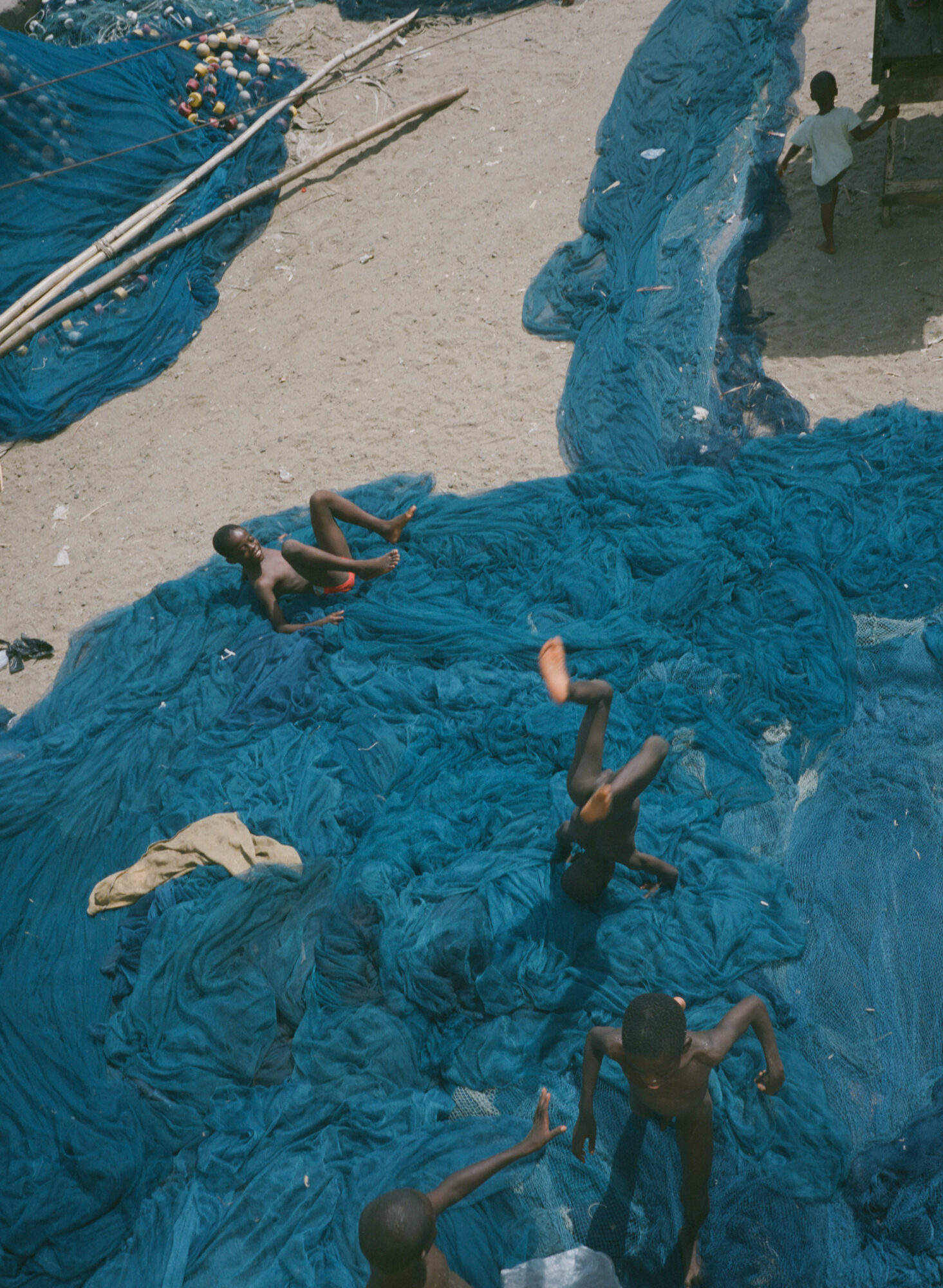
Kids play among fishing nets in Apam. Nets are handmade by boat crew members and can take weeks or even months to complete. They have been learning to make nets from as young as six years old. Photo by Gabriella Angotti-Jones | © Save Our Seas Foundation
‘There are so many stories to cover, and it feels like we’re on the cusp of something revolutionary. Young people want to know what’s going on; they’re on social media platforms re-looking at the world. I think that, in the end, we can all just relate to the human experience.’ Gabriella Angotti-Jones realised early that while her passion is for the ocean, and her identity is shaped by a life lived in love with the coast, her true skill lies in connecting unguardedly with people, observing, interpreting and understanding what binds us. Raised by an ocean-loving mother in a southern Californian beach town, this self-described ‘beach rat’ was quick to perceive that there were challenges to solve in our seas. But it was only later, as a photojournalist, that her unique abilities could take shape. Gabriella can divine what makes a story unique and what is simultaneously a universal theme that we can all connect to. What is most obvious is her unabashed capacity for finding joy. It weaves through her work, this connection between Californian surfers and Cameroonian fisherfolk. Joy is both resilience and resistance, and essential to our experience as human beings‘
‘We can’t talk about conserving animals without looping in the people who are directly connected to these animals,’ Gabriella begins, her voice full of passion. ‘You can’t talk about the conservation of sharks and rays without talking about fishers. Full stop. There’s a trickle-down approach that has often been used in conservation that ends up scapegoating people who are over-regulated, fined or restricted in the lifestyles they’ve been following for centuries.’
Women play a major role in shark fisheries and trade in Cameroon. Restaurants sell a local dish called “taro yellow sauce”; traders dry the sharks before cooking them. Photo by Gabriella Angotti-Jones | © Save Our Seas Foundation
The waters of West Africa are a treasure trove of biodiversity; the Gulf of Guinea accounts for some 90 species of sharks and rays. And thanks to work spearheaded by Dr Aristide Takoukam Kamla in Cameroon, we know that some 40 shark and ray species are caught in the country’s waters, 34 of which are threatened with extinction. In fact, sharks and rays represent 97% of the reported bycatch in Cameroon’s fisheries. They are sold and consumed locally. In Ghana, Dr Issah Seidu has shown that up to 80% of fishing income in some coastal communities comes from sharks and rays. In fact, the country is one of the region’s major shark- and ray-fishing nations and shark meat is a cheap source of protein for most coastal fishing communities.
But the region is also awash with foreign vessels: industrial trawlers and shrimp fisheries that compete with and encroach on artisanal fishers. There is a conservation issue here, and it is connected to the security of coastal communities and their culture, their livelihoods and the dignity of their future.
‘So that was my project: tap into the fishers and ask them what’s going on,’ says Gabriella. ‘Show how they live. Show how they’re using the animals and show how it’s important. I’m innately a beach person; a surfer and a water person. Having that connection with the fishers opened conversations about how experience is wealth and that their experiences on the water form part of their spirituality – something I know. I could go up and chat to them about how the water was that day – was it rough? – and then simply listen.’
Blue sharks are filleted on the shore at Dixcove in Ghana while fishmongers observe, dictating cuts and preferences. Photo by Gabriella Angotti-Jones | © Save Our Seas Foundation
Fishmongers sell the daily catch at the largest fish market in Douala, Cameroon. Photo by Gabriella Angotti-Jones | © Save Our Seas Foundation
‘West Africa is a paradox: it’s pluralistic, it’s straightforward and it’s not – it’s so many things all at once. There are many different influences colliding here: there are locals and foreigners; there are people coming for resources and there are people trying to give the resources to locals; there is the ever-present legacy of colonialism. And then there are surfers! There are fishers! There are beach-goers!’
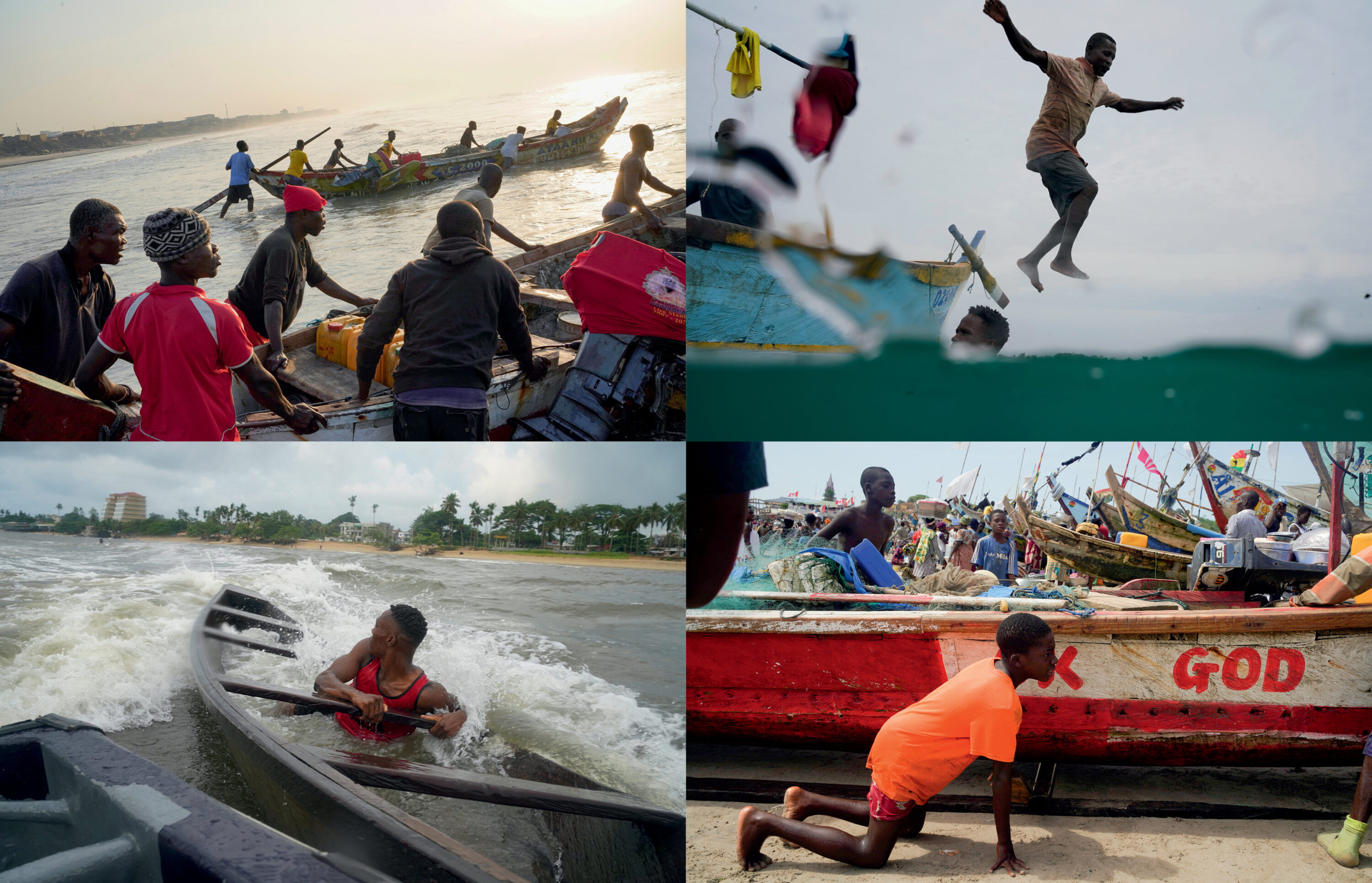
(Above) In Ghana, fishermen head out to fish and find joy in the sea. (Below) In Cameroon, fishers celebrate by racing during the Street Whale Festival, and young orphans often work for boat owners in exchange for food and a place to stay. Photo by Gabriella Angotti-Jones | © Save Our Seas Foundation
Gabriella pauses to take a breath before she exhales. ‘The only way I could process it was to use different formats because that placed me in different perspectives.’ Another West African voice, Nigeria’s writer and poet Chimamanda Ngozi Adichie, famously frames the pulse that Gabriella’s instinctively put her finger on as ‘the danger of a single story’.
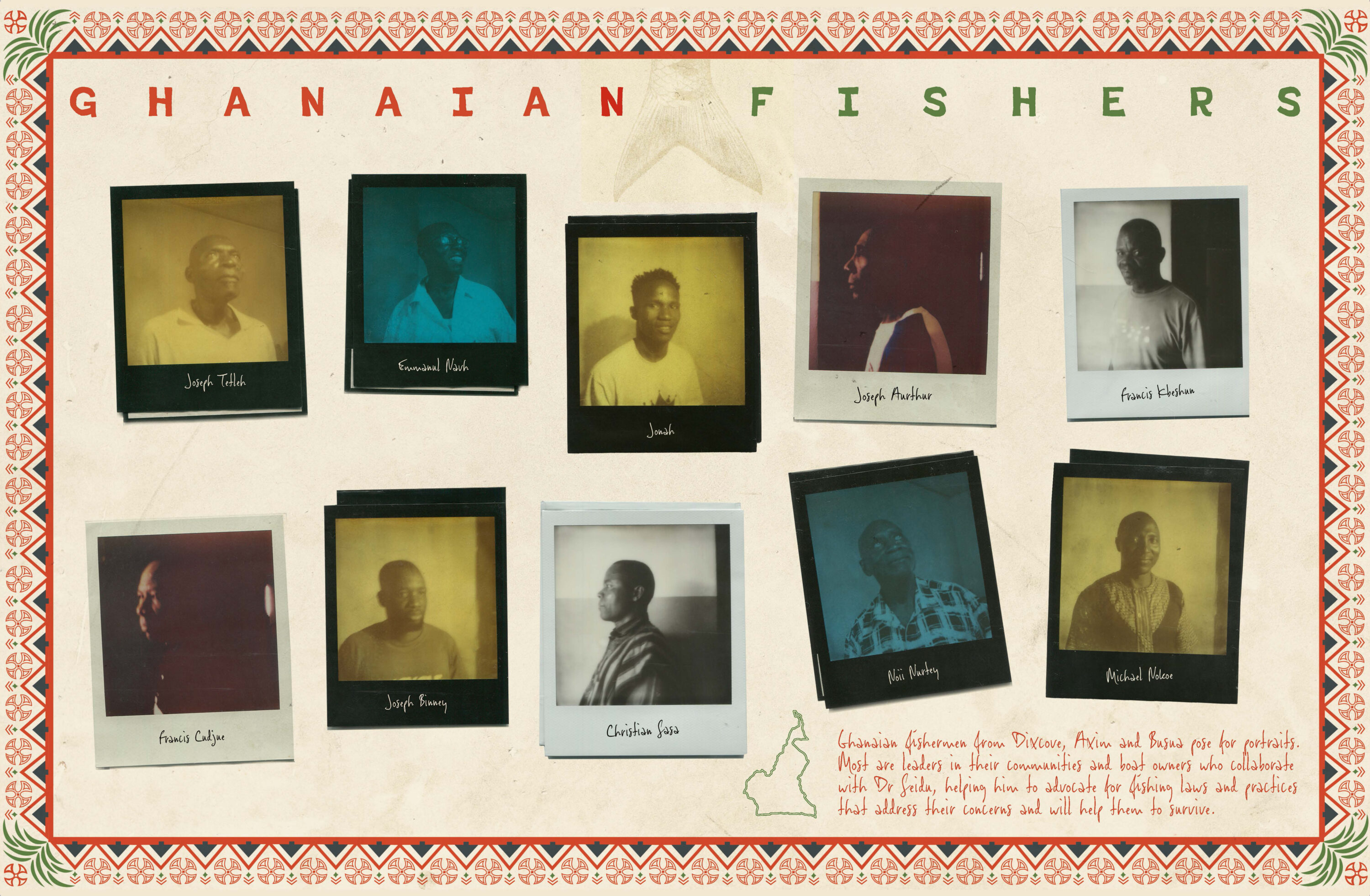
‘So when I picked up the digital camera, I was in my best National Geographic conservation research mode,’ she chuckles with delight. ‘And I would take technical, newsy images. But when I picked up my film camera, I felt like I was in my friend-making mode – I was there just having a good time. And when I picked up my Polaroid camera, I was there absorbing everything with my friends.’
Gabriella’s photographic journey through Cameroon and Ghana is a scattered marketplace of moments and memories; your eye is drawn to the cloth you came for but distracted by the glitter of other sellers’ wares. Each image vies for your attention – enticing, encouraging, exuberantly declaring its value in this magpie’s miscellany. But you’d be mistaken to think there’s no clear through-thread, that this was simply the inevitable echo of the clamouring, colourful chaos of wax-print fabrics and fish sellers and bikini-clad beach babes and brightly painted wooden boats. ‘Pay attention,’ the images grin, bargaining for your time. ‘Look deeply at what is here. These are people. Theirs is a story that cannot be contained in these frames and these pages.’
‘There seemed to be so much extraction happening,’ she continues, ‘and it doesn’t really leave room for the locals’ stories: their enjoyment, their stake in their resources, their connection to their coast.’ And in its colonial past, in parachute conservation and curation of media reporting, there seems little room left for the lived stories of local people.
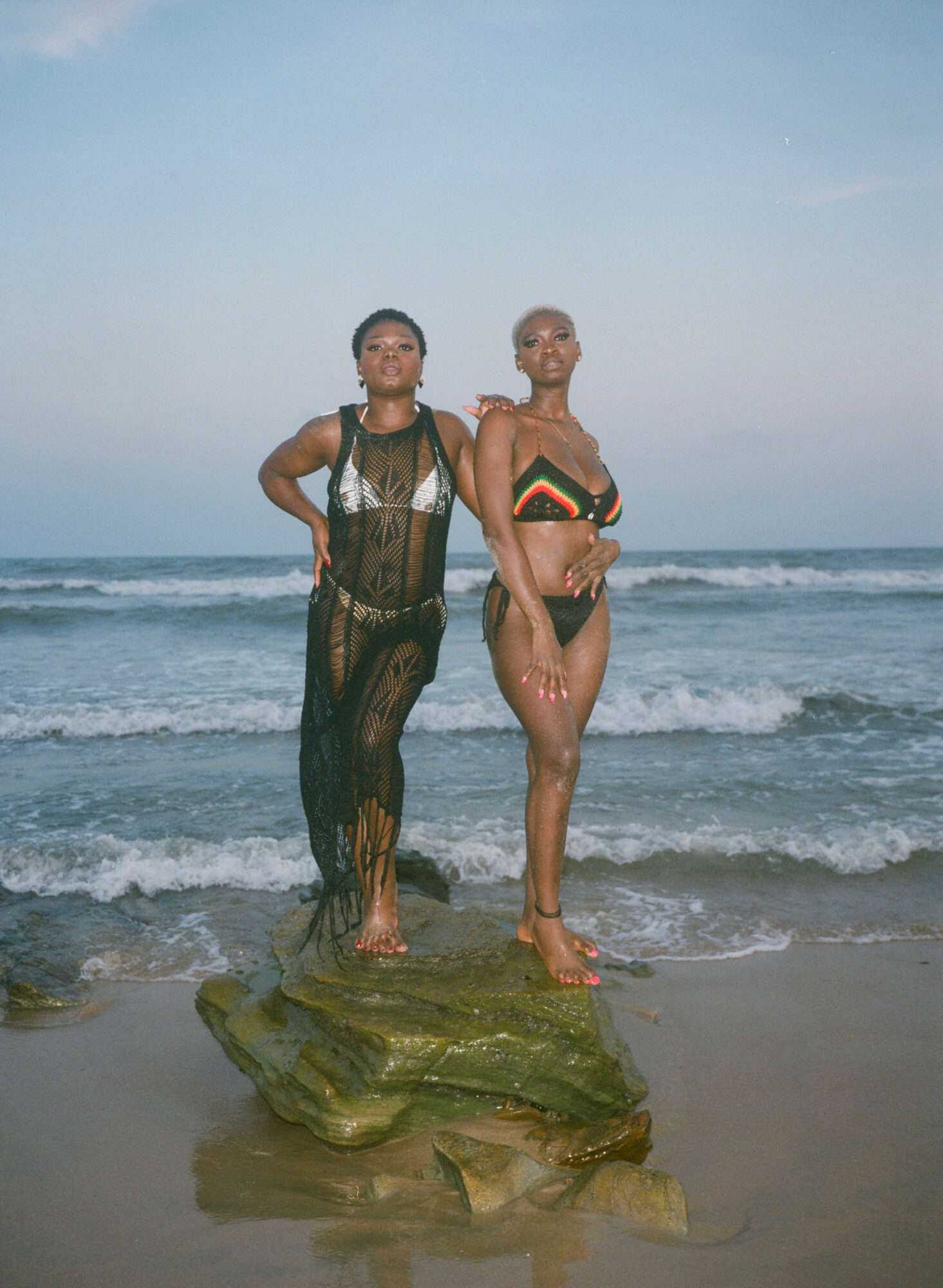
Two Ghanaian women pose for a portrait at one of Accra’s marine protected areas. Ghana is trying to expand its network of these areas as the country’s economy grows. Ify Ifunanya (left) was a musician filming a music video. Photo by Gabriella Angotti-Jones | © Save Our Seas Foundation
Chantal Ndokon-Youh (right) plays in the water with a friend in her village of Londji, Cameroon. Photo by Gabriella Angotti-Jones | © Save Our Seas Foundation
Gabriella’s images veer from research in action to the exuberance of children playing in an ocean of fishing nets. They show fire in the gestures of speakers in community meetings and the zen of surfers on the Gulf’s generous waves. West Africa is not just one thing. There is the holy morning light as fishers push their boat into the dawn and there is the desecration of a manta ray left dying in the shallows; there is the sass of a seaside Venus in a crocheted bikini and there is the familiarity of a coast-side football game.
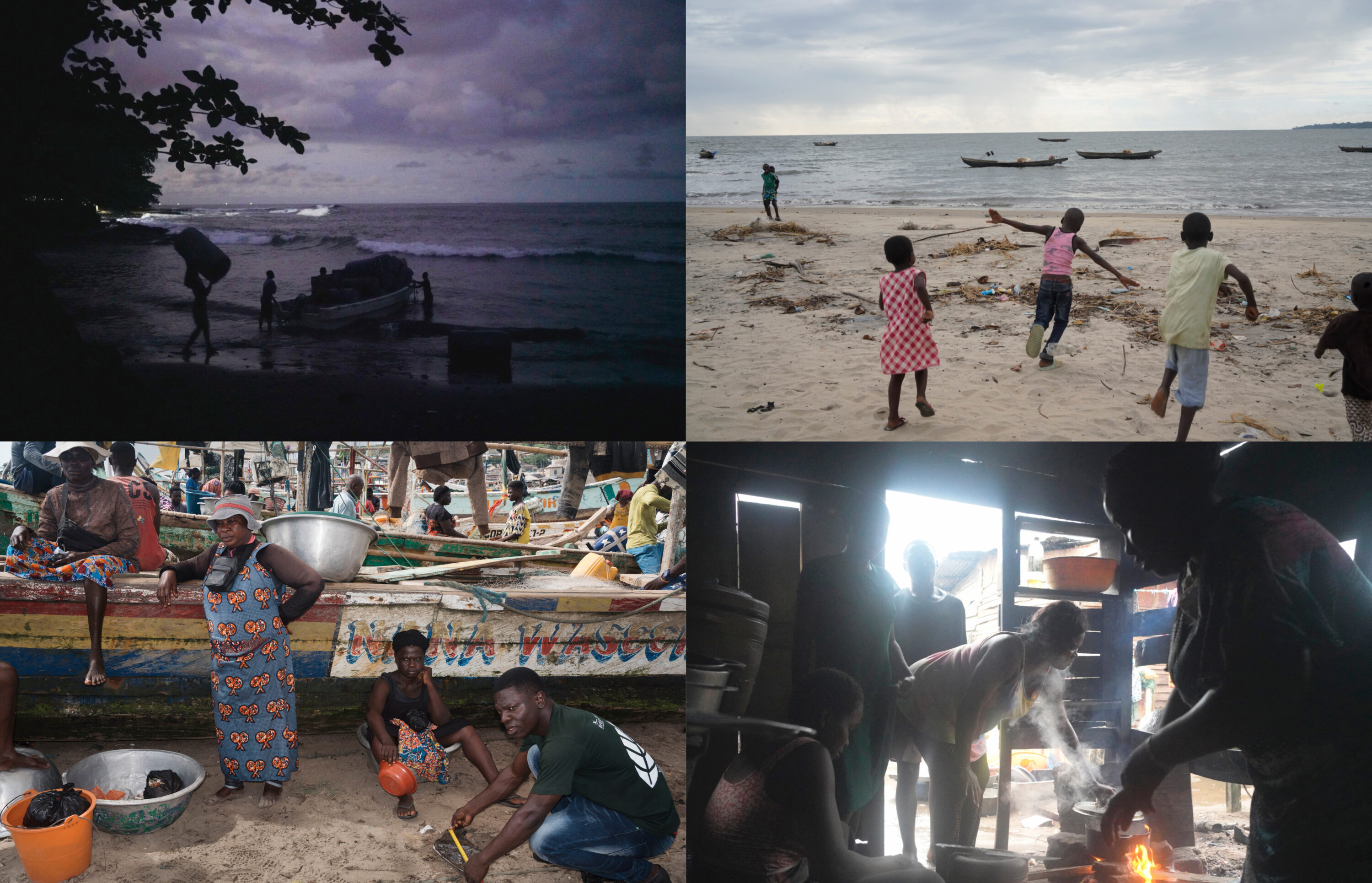
At least 40 shark and ray species are caught by small-scale fisheries in Cameroon, including 34 IUCN Red List threatened species. In Ghana, sharks are targeted for their fins and meat; the latter is a source of protein for local communities. Photo by Gabriella Angotti-Jones | © Save Our Seas Foundation
‘I want us all to pay attention and observe what’s really going on here. Just because we don’t understand something doesn’t mean we have to look the other way – or reframe it in our own understanding.’ And Gabriella’s natural inclination is to pay attention to where people are at ease, where their stories might be most true. In one frame, two fishers laugh, their eyes creased, shoulders hunched in a candid moment of shared comedy beneath the etched hull of their wooden boat. ‘I think I know the dynamics of beach culture and where the joy happens, so I’d go there. The images of joy or levity had been missing for me – and I find that hard to believe because we’re all human beings.
‘I don’t want to see pictures of dead animals anymore!’ Gabriella exclaims. ‘I want to see pictures of how people fit into how these animals are dying and how it fits together.’
Listening to music on his air pods, Isaac, a fisherman and one of Dr Seidu’s assistants, searches for sharks and rays as part of a market survey in Apam. Photo by Gabriella Angotti-Jones | © Save Our Seas Foundation
In her Polaroid photographs, Aristide and Issah are at once her now-familiar friends – young men with interests and goals and ideals – and scientists carrying the full weight of their coastlines so early in their careers.
Researcher Ghofrane Labyedh greets a fisherman who has been helping to identify sharks, rays and sea turtles for iNaturalist in collaboration with the African Marine Conservation Organization (AMCO) in Limbe, Cameroon. Photo by Gabriella Angotti-Jones | © Save Our Seas Foundation
Gabriella’s work captures something of the human spirit and experience, but she challenges us to honour those experiences and grasp why they are important.
‘I’m so excited to see the research coming out from West Africa, because I think when it’s paired with the images, it’s going to make a lot of sense.’ Indeed, the hard numbers paired with the emotion, context and connection that good storytelling can bring is the manifestation of that convincing argument for change she ardently believes in.
A local fisherman expresses the fishers’ needs during the fuel crisis of March 2023 at a meeting of local fishermen, chiefs, boat owners and former fishermen during Dr Seidu’s presentation in Axim. Photo by Gabriella Angotti-Jones | © Save Our Seas Foundation
Pierre Ndokon-Youh (left) fixes a fishing net with his son, Samuel, in Londji, Cameroon. Pierre doesn’t want his kids to become fishermen and is helping them to learn English and French and to focus on school. Photo by Gabriella Angotti-Jones | © Save Our Seas Foundation
13. A member of Surf Ghana catches a left at Busua near Dixcove. Surf Ghana has been instrumental in creating an equitable surfing community, and kids are learning how to compete in contests and shape boards. Photo by Gabriella Angotti-Jones | © Save Our Seas Foundation