
The world changes, and we don’t remember
PHOTOGRAPHS BY
Acacia Johnson
Ocean Storytelling Photography Grant Winner
On Mexico’s Holbox Island, fisherman Miguel Humberto Zapata Jimenez wades into the sea to gather bait fish for a day of corvina fishing. Photo by Acacia Johnson | © Save Our Seas Foundation
Este reportaje de revista está disponible en español aquí.
WORDS BY
Lauren De Vos
After the Second World War, Mexico pushed to populate its coastline and build some of the world’s biggest fisheries. But the science to monitor this development was slower to follow. Ilse Martínez-Candelas and Nadia Rubio are two shark scientists who have recognised the invaluable information stored in the stories of the old fishers who migrated to the coast and whose tales of giant sawfish, enormous rays and shark nurseries reveal glimpses of an ocean already gone.
Photographer Acacia Johnson went on assignment to capture the essence of a coast and its people, who are adapting to a fast-changing world. She found a story that asks us to honour the past so as to re-imagine the future.
Andres Julian Balan Rodriguez displays a recently-caught eagle ray in a fishing harbor in Ciudad del Carmen, Mexico. Photo by Acacia Johnson | © Save Our Seas Foundation
Isla Aguada fisherman Yamil Pantil Lopez with his brother Angel Andres pulls in a Caribbean whiptail stingray in Términos Lagoon. Photo by Acacia Johnson | © Save Our Seas Foundation
‘If you can find young fishers here on the coast, they will tell you – the sharks are huge!’ Ilse Martínez-Candelas spreads her arms and her fingers splay to encompass the bulk described to her by Mexico’s shark and ray fishers. ‘They will tell you that they weigh up to 60 kilograms (132 pounds)!’ If you didn’t know better, it would make for an impressive fishing boast. ‘But then you visit the old fishers and they will tell you the sharks were up to three metres (nine feet) long and weighed 120 kilograms (265 pounds)!’ Ilse recounts how disgruntled the shark-fishing elders feel now.
This gradual dulling of our collective memory of the environment, this slow acclimatisation to a degraded state that is accepted as normal, is so commonly encountered that fisheries scientist Daniel Pauly termed it the ‘shifting baseline syndrome’ in a 1995 essay. Our perception of the ocean changes; we quickly overlook what a place once was and live with our imaginations limited by this dilution of abundance.
‘Young fishers aren’t as connected to the ocean any more,’ explains Ilse. ‘They’ve been born into this degraded system, so they think that’s simply the way it is.’ Working with the fishers of Términos Lagoon in Campeche on the Yucatán Peninsula, where the history of fishing dates back to the Mayans, she has been interviewing coastal fishers to fill in the gaps in an otherwise data-poor shark fishery. ‘My dream was to be a marine biologist who dived coral reefs – I never dreamed about growing up to talk to people!’ she laughs. ‘Then, when I was monitoring coral reefs, I visited a coastal community once a week. And the fishers would tell me their stories…’
In a Ciudad del Carmen fishing harbour, fish and sharks are loaded onto a motorcycle to be taken to market. Photo by Acacia Johnson | © Save Our Seas Foundation
Realising that these fishers’ experiences could offer the understanding that was missing, Ilse started baking batches of cookies to offer during interviews to glean more insights. ‘They were terrible cookies! I’m an awful baker!’ she giggles. ‘But before I knew it, I had started enjoying my time with the fishers more than my time monitoring coral reefs. I was learning about sharks, but also gaining these fascinating insights into people’s lives. It made me realise that our science could be better. People are not only information sources; these fishers are, to me, another kind of scientist.’
With some 217 species of sharks and rays, Mexico is home to 18% of all species in the world. At the same time, it’s an important shark- and ray-fishing nation, with an average yearly landing of shark and ray catches that places it fourth globally after Indonesia, Spain and India. Mexicans also consume shark and ray meat, to the extent that they even import it. But, like many fishing nations the world over, many fisheries in Mexico are considered data-poor. Key to addressing overfishing is adequate information and government scientific monitoring started only after many species were already in decline. ‘There was not a lot of shark science; official government monitoring started in the 1970s,’ explains Ilse. ‘Of course there were the archaeologists: shark fishing has been in the culture of Campeche for millennia. But between Mayan archaeological records and the start of scientific monitoring in the 1970s lies a huge gap in our knowledge.’
Birds flock to collect fish guts on the beach at Holbox. Once a sawfish nursery frequented by fishermen, this beach is now dominated by beach clubs, hotels and restaurants. Photo by Acacia Johnson | © Save Our Seas Foundation
When the reference point is set in an already degraded system, the scientists’ perception of what constitutes ‘healthy’ has already shifted – they are led by the shifting baseline syndrome just as the young shark fishers are. So Ilse began investigating how to integrate local ecological knowledge into shark and ray fisheries management. At various stages after the Second World War, the Mexican government had promoted the development of the fishing sector, and the ‘March to the Sea’ populated the Mexican coast. ‘The government actively supported people to take up fishing from about the 1950s onwards. Many of the fishers who are here in Campeche today migrated from inland,’ says Ilse. ‘Among the experienced shark fishers in Campeche, the average age was at least 70 years.’
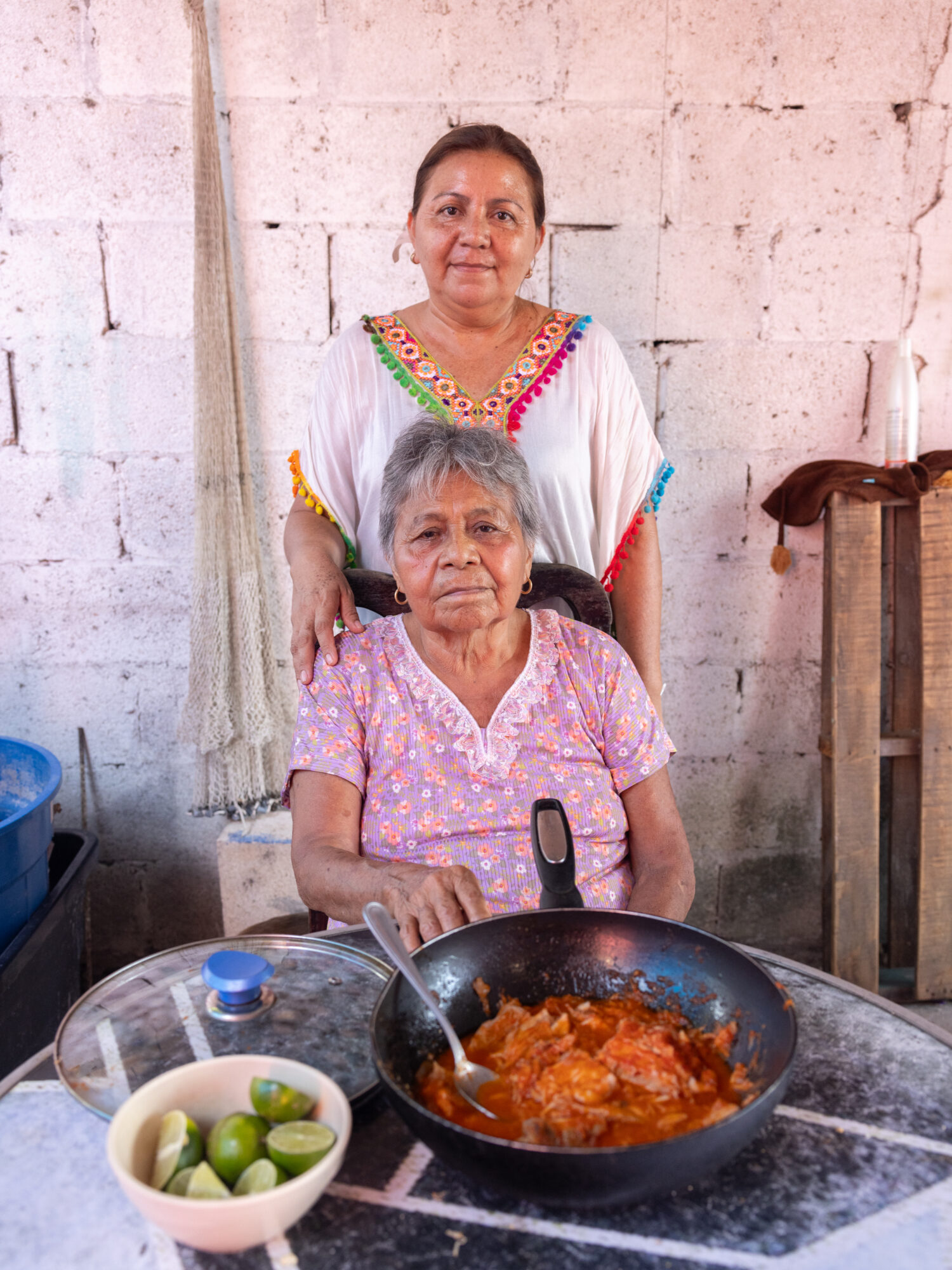
Leydi Calderón Hidalgo, daughter of shark and ray fisherman Don Calderón, serves a traditional ray dish with her mother, Trinidad Hidalgo Sanchez, during a family dinner in Isla Aguada. Photo by Acacia Johnson | © Save Our Seas Foundation
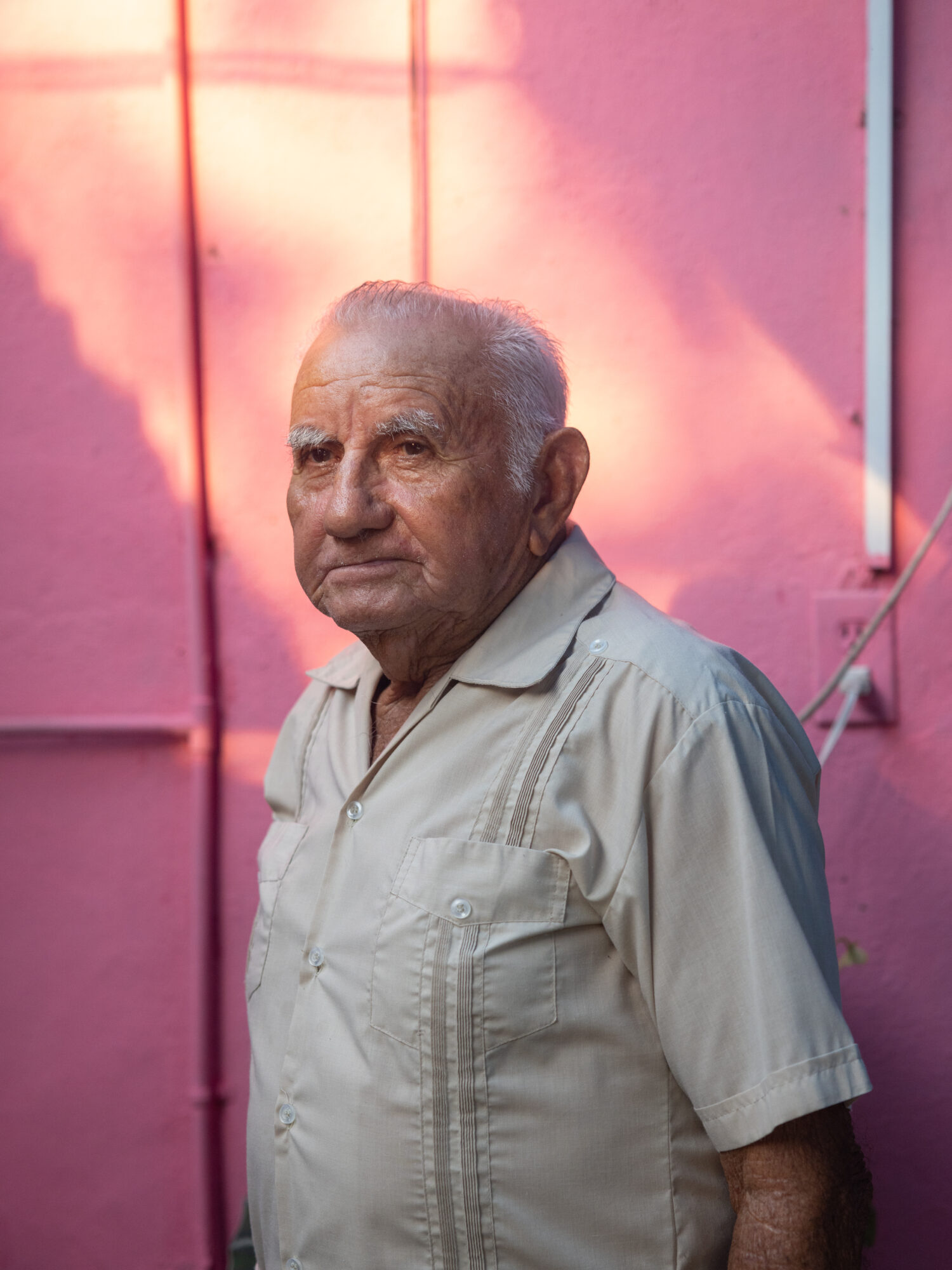
Don Calderón outside his house in Isla Aguada, Mexico. An active shark and ray fisherman for more than 70 years, he is a local legend for the rays he has caught in Términos Lagoon. Photo by Acacia Johnson | © Save Our Seas Foundation
The data Ilse has collected is changing the way we perceive the state of Campeche’s coast and the status of its sharks. ‘For instance,’ she explains, ‘the official records in fisheries monitoring account for nine lemon sharks. But when we started this project, after a single year of working with fishers we increased that to more than 50 records. I think that this way of doing science, where we partner as equals with fishers, is the way forward – and may even get better results.’
Lemon sharks were common along the Campeche coast 40 years ago. The fishers knew where the females would go to bear their pups. But there are now only two communities in Campeche that have seen lemon sharks in the past decade; the rest stopped seeing them in the late 2000s. ‘The knowledge of lemon sharks is fading,’ adds Ilse, soberly.
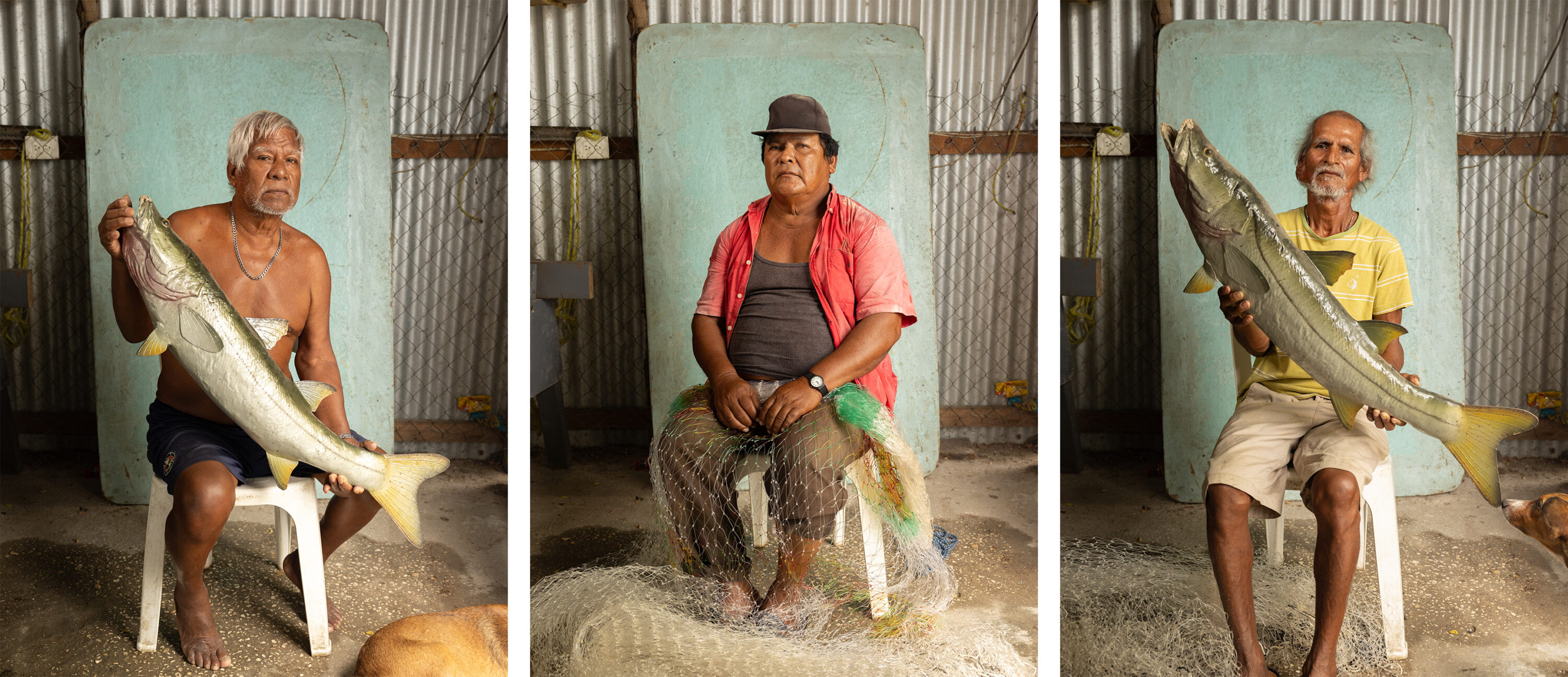
From left to right: Fishermen Meco Andres Manuel Hernandez Ovando, Guadalupe Cruz Salejo and Zenon Hernandez Ovando pose for portraits in Cuidad del Carmen. Photo by Acacia Johnson | © Save Our Seas Foundation
‘The younger fishers do not even recognise the species. This ecological knowledge that shark fishers developed over decades is being lost.’
Upon finishing a procession through town, men carry an statue of Mary and Jesus to a church plaza in Isla Aguada, Mexico, during Fiesta de la Santa Cruz - an annual catholic festival celebrated in honor of El Señor del Pescador (Lord of the Fisherman). After being honored at a church service, the statue will be carried to the waterfront, where it will lead a procession of decorated boats into the waters around Isla Aguada. Photo by Acacia Johnson | © Save Our Seas Foundation
During la Fiesta de la Santa Cruz in Isla Aguada, a raft of fishing boats ferries an icon of the Virgin Mary and Jesus, Lord of the Fishermen, into the waters of Términos Lagoon. Photo by Acacia Johnson | © Save Our Seas Foundation
The love for the ocean, even in its state of flux and degradation, is a pull still felt by the oldest fishers. ‘Take Don Calderón for example,’ Ilse grins. ‘His kids sold his fishing boat because he was so determined to go to sea – even though he was in his eighties – that he used to escape from his house to take his boat out all on his own!’ Despite their passionate identity and history, fishers are increasingly struggling to make ends meet. ‘Being a fisher before the 1990s meant that you could buy a car and a house,’ says Ilse. ‘But now fishers don’t want their kids to become fishers; they want them to go to college.’ She mulls over the idea of alternative livelihoods. ‘I love Términos. But compared to other regions, there are few of the alternatives that have allowed those places to transition to ecotourism. The poor water visibility means that snorkelling and scuba diving are not viable.’
Men cast nets for small fish in Isla Aguada, a town of about 6,000 people on the coast of Términos Lagoon. Photo by Acacia Johnson | © Save Our Seas Foundation
More than 600 kilometres (370 miles) away, in the extreme north-east of the Yucatán Peninsula, lies Chiquilá in the state of Quintana Roo on the Gulf of Mexico. Here, landlocked farmers also moved seaward to settle and fish the coast. Dr Nadia Rubio has been gathering local ecological knowledge from the fishers here and on Holbox, a barrier island off the northern coast of Quintana Roo. Holbox is influenced by currents from the Gulf of Mexico and the Caribbean Sea and receives rich upwelling from the north-eastern shelf of the Yucatán Peninsula. This upwelling – the cycling of plankton from the depths to the surface –sustains large aggregations of whale sharks, which has helped the fishers of Holbox transition to ecotourism. In many respects, it’s the idealised conservation success story.
More than 600 kilometres (370 miles) away, in the extreme north-east of the Yucatán Peninsula, lies Chiquilá in the state of Quintana Roo on the Gulf of Mexico. Here, landlocked farmers also moved seaward to settle and fish the coast. Dr Nadia Rubio has been gathering local ecological knowledge from the fishers here and on Holbox, a barrier island off the northern coast of Quintana Roo. Holbox is influenced by currents from the Gulf of Mexico and the Caribbean Sea and receives rich upwelling from the north-eastern shelf of the Yucatán Peninsula. This upwelling – the cycling of plankton from the depths to the surface –sustains large aggregations of whale sharks, which has helped the fishers of Holbox transition to ecotourism. In many respects, it’s the idealised conservation success story.
Girls ride a motorbike in Chiquilá, Mexico. This quiet town of about 2,300 people is the departure point for ferries to Holbox Island, which has exploded in popularity in recent years due to whale shark tourism. Chiquilá, meanwhile, has not seen as much development. Photo by Acacia Johnson | © Save Our Seas Foundation
Save Our Seas Foundation researcher Ilse Martinez offers magnets to an Isla Aguada fisherman during an interview, asking him to choose his favourite elasmobranch species. Photo by Acacia Johnson | © Save Our Seas Foundation
But the relationship between people and the environment in a changing world is always complex. ‘The value of fisheries changes,’ explains Nadia. ‘So while many of the oldest fishers had fished for sharks and rays, the fishery had evolved as value dwindled and they began to fish for lobsters and groupers too, adapting as resources declined and market values fluctuated.’ Fishing is still a part of life on Holbox Island, but like Campeche and Términos Lagoon, it is becoming harder. Fishers can travel up to 70 kilometres (43 miles) a day off the coast to seek catches. So tourism, where it can be done successfully, is an attractive alternative.
In her work with the fisher elders of Holbox, Nadia has identified more than 100 important fishing areas that were once considered highly productive. One such area is Cabo Catoche. This ‘Eden’, say the oldest fishers, was filled with groupers, turtles, lobsters, sharks and rays. Today, Cabo Catoche forms part of the Yum Balam Natural Protected Area and tourists flock here to snorkel among sea turtles and sea grass. Their boat operators and snorkel guides are local fishermen. Many fishers have formed tourism cooperatives, electing to become tour operators as a more sustainable alternative to fishing.
Whale shark guide Vicente Cáceres (foreground) and boat captain Carmelo Sabatini depart from Holbox Island in search of whale sharks. Photo by Acacia Johnson | © Save Our Seas Foundation
And today at least 5,000 tourists are ferried from Chiquilá to Holbox Island daily at the height of the summer holiday season. For an island that until recently counted only 1,400 permanent inhabitants, the sudden success of tourism is a double-edged sword. Water, electricity, waste disposal and sanitation are embattled services as the island’s infrastructure takes enormous strain, and over the busy summer months water and electricity shortages occur. Space is valuable and contested, and plastic pollution pockmarks Holbox’s loveliness.
‘Fishers are very aware that things have changed in the ocean,’ says Nadia. ‘They know that the big groupers, snappers and big sharks have been lost. They are also aware of illegal fishing and environmental degradation.’ And it’s this deep-seated knowing from decades of observation that Nadia and Ilse are pushing to have included in management decisions and policy overviews. They know that as the world changes, we must remember. Without the fishers’ stories, we risk accepting an ocean that – as Pauly cautioned in 1995 – is set to a reference point that continually shifts towards decline.
An upscale bar faces a main street in Holbox. This former fishing community has experienced a dramatic increase in tourism and development, primarily on account of its whale shark tourism. Photo by Acacia Johnson | © Save Our Seas Foundation
In 2019, after working on Holbox for four years, Nadia moved to Cozumel. She’d pushed to have the natural history of Holbox, Chiquilá and coastal Mexico, as told to her by the fishers who knew it best, considered equal to scientific research. But the latter’s findings, attained only after the coast was already in decline, were given greater credence and Nadia, disillusioned, was close to giving up science altogether. ‘I worked on tourist boats and I would dive every day and see the fish and sharks that the Holbox fishers had described to me – and I would cry,’ she says. ‘The fishers in Holbox used to tell me about these “turkey lobsters”, as they called them. Huge things that hid in the cuevons – small caves that used to be crammed with groupers and lobsters. I never saw them there. But in Cozumel, I’d phone these old fishers I’d met who were still in Holbox and tell them “Today I saw a lobster as big as a dog!”’
A gelato stand in Holbox, Mexico. This former fishing community has experienced a dramatic increase in tourism and development, primarily on account of its whale shark tourism. Photo by Acacia Johnson | © Save Our Seas Foundation
A motor taxi passes beneath a flowering tree in Chiquilá. This peaceful town of about 2,300 people is the departure point for ferries to the popular Holbox Island. Photo by Acacia Johnson | © Save Our Seas Foundation
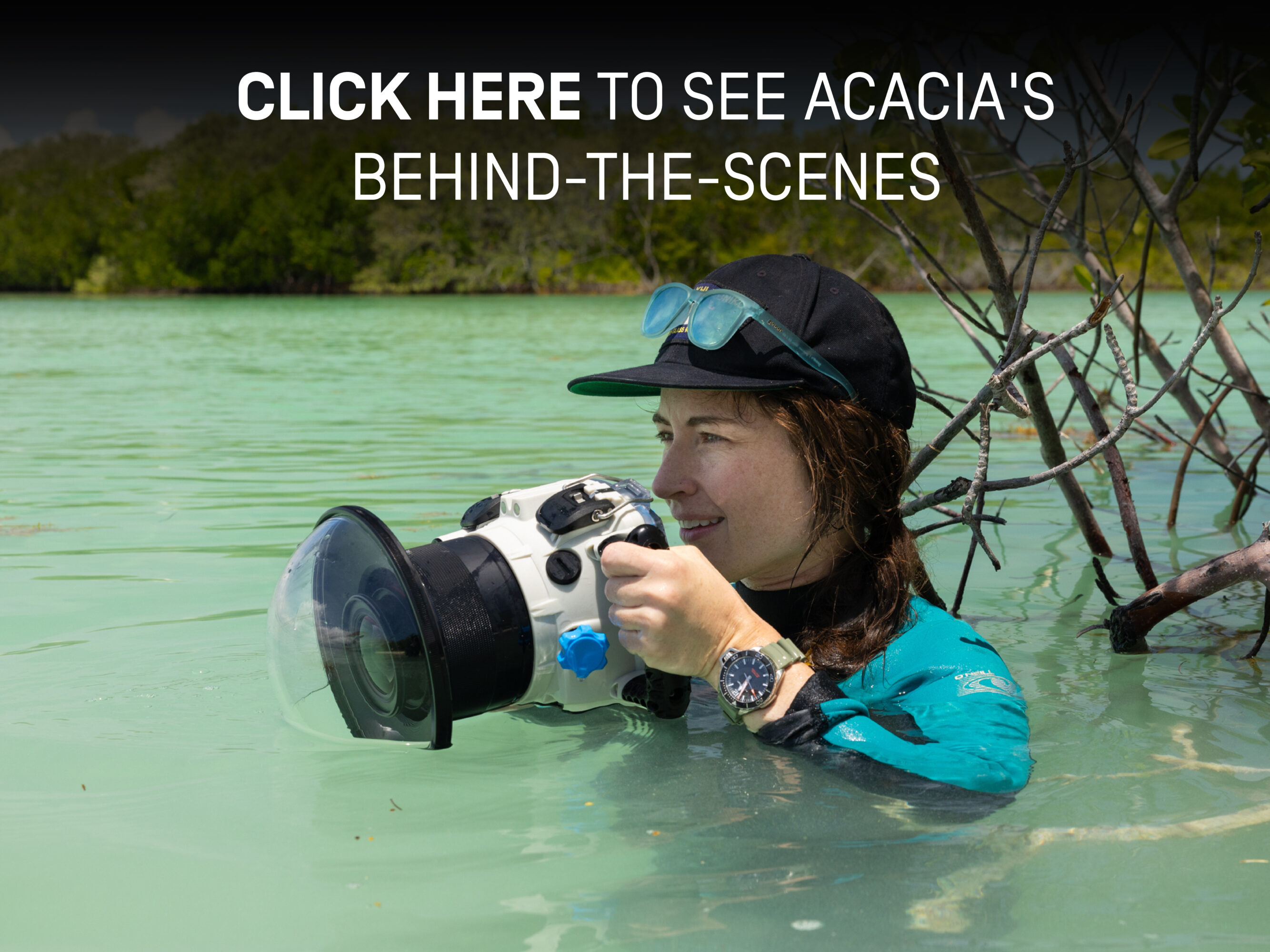
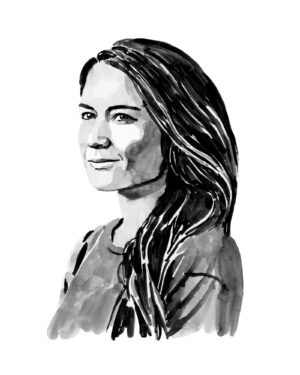
Photographer Acacia Johnson poses for a photo in a mangrove channel along the eastern tip of Holbox Island, Mexico. Photo by Acacia Johnson | © Save Our Seas Foundation
This magazine feature story is available in Spanish too!