
Steep learning curves and deeper dives: Learning to track scalloped hammerhead sharks beneath the surface
Going Beyond the Camera Lens
In my last blog, I wrote about my experience analyzing stereo-video surveys to study reef sharks and other fish – identifying, counting, and measuring species while also noticing plenty of fishy behaviors along the way. Since then, those hours of video footage have turned into published studies! We showed that oceanic island Marine Protected Areas in the Eastern Pacific host some of the highest shark numbers on the planet, and the scalloped hammerhead shark (Sphyrna lewini) is the key driver in the differences in fish communities between seasons at the northern Galapagos Islands. These studies highlight just how powerful stereo-video surveys can be for understanding sharks that live in, or at least regularly visit these coastal habitats.
The Fish Movement Gurus
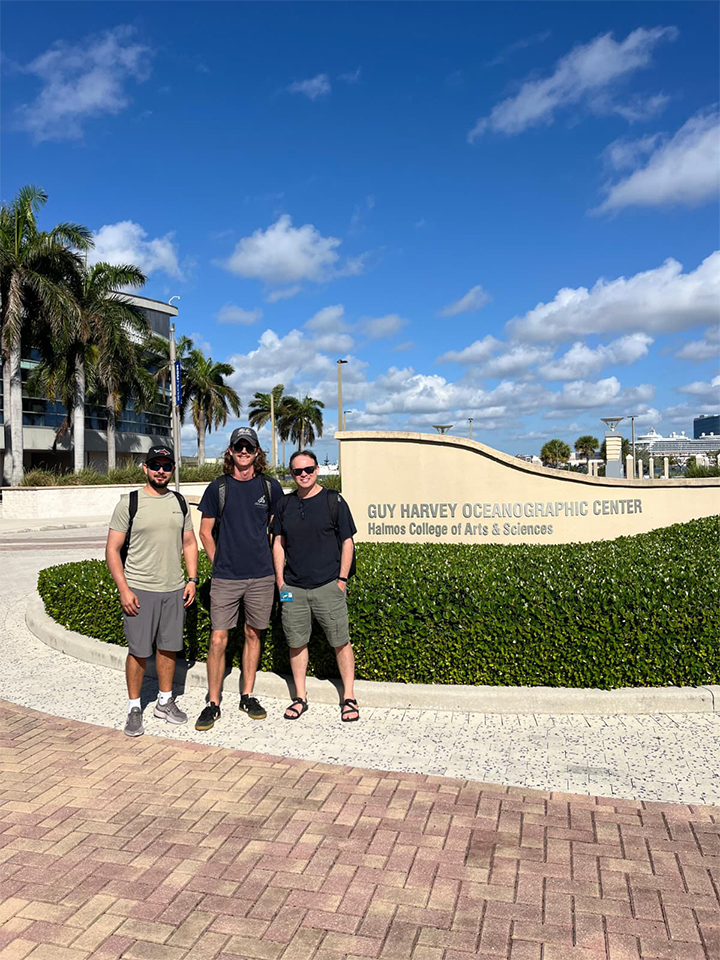
Fresh faces on Day 1 at the Guy Harvey Research Institute and SOSF-SRC right before diving deep into shark tag data. From left to right, Carlos Robalino (CDF), Simon McKinley (CDF) and Dr. Jeremy Vaudo (SOSF-SRC). Photo by © Simon McKinley
During my week at the SOSF-SRC, Jeremy guided me through the two main types of tags our project uses to study shark movements: Smart Position or Temperature (SPOT) tags and Mini Pop-up Archival Transmitting (miniPAT) tags. SPOT tags transmit locations to satellites whenever a shark breaks the water’s surface. They allow us to track sharks with high accuracy, embark on astonishing long-distance migrations, which often include a large amount of time outside Marine Protected Areas. But my primary focus now is analyzing miniPAT tag data.
Diving Beneath the Surface
MiniPAT tags[SM1] constantly record depth, temperature, and light data, which we can analyze using fancy movement models to also study where sharks are travelling. But their strength is in revealing things that SPOT tags do not: what sharks might be doing when they dive beneath the surface.
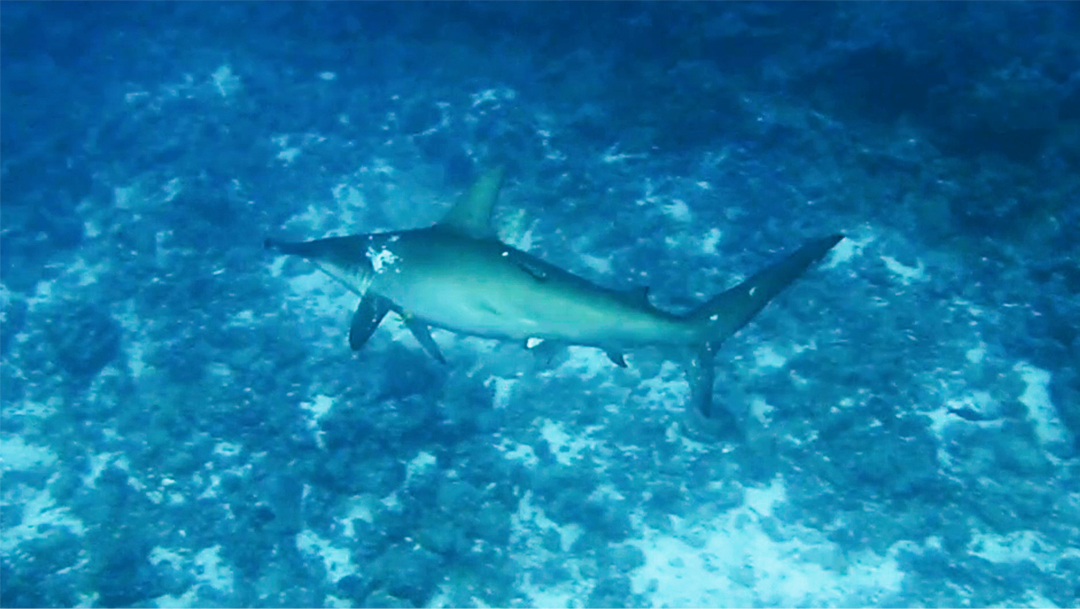
MiniPAT tag on a hammerhead shark. Photo by © Simon McKinley
Using miniPAT tag data collected from scalloped hammerheads tagged at Darwin and Wolf Islands in the northern Galapagos Marine Reserve during different phases of the El Nino Southern Oscillation (ENSO) cycle, Jeremy taught me how to begin exploring the hidden underwater lives of these iconic ocean predators to answer questions like:
How deep are they diving? Do they behave differently during the day and night? What temperatures are they swimming through? Do their diving habits and the temperatures they experience change under different ENSO conditions?
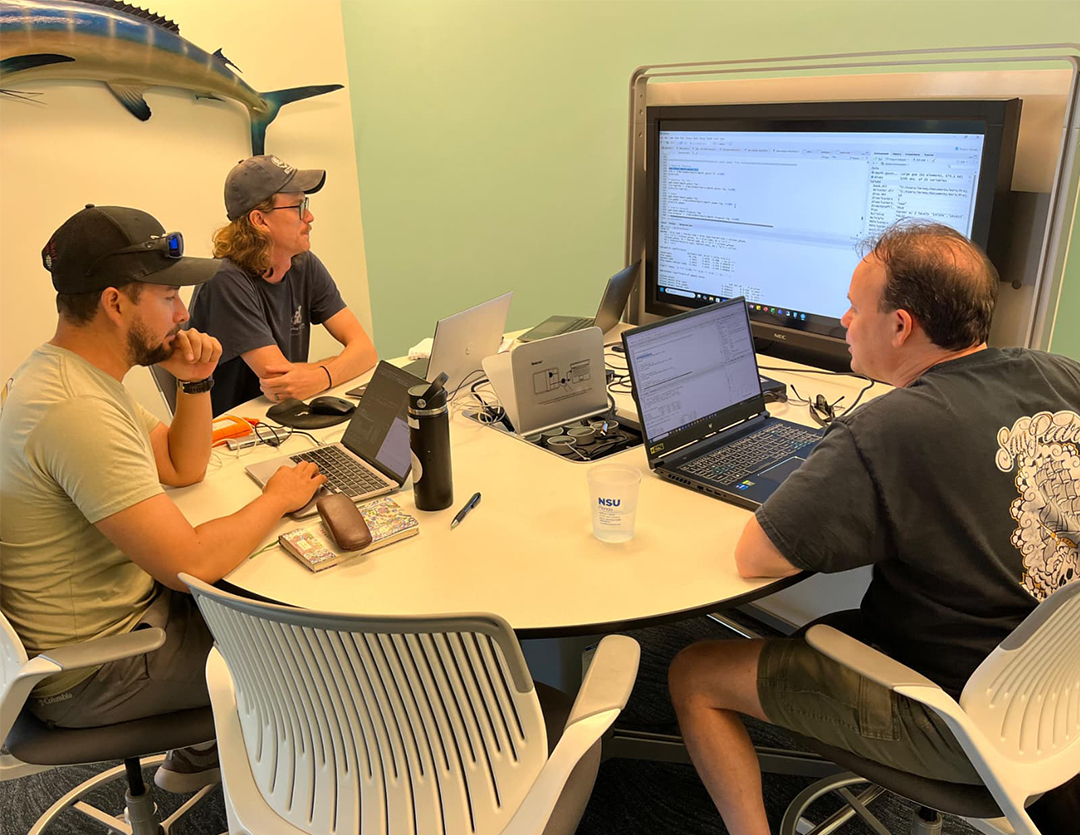
Diving deep into the code to analyze the incredible amount of information collected by miniPAT tags. Photo by © Simon McKinley
I can provide only a small teaser for now, but exploratory analyses are already showing these sharks making regular dives to depths exceeding 700 meters – often multiple times within short periods – into temperatures as cold as 5°C!
Once I’ve dived deeper into the data, I will be able to shed more light on what else these incredible sharks are doing when they are not in front of our video cameras.
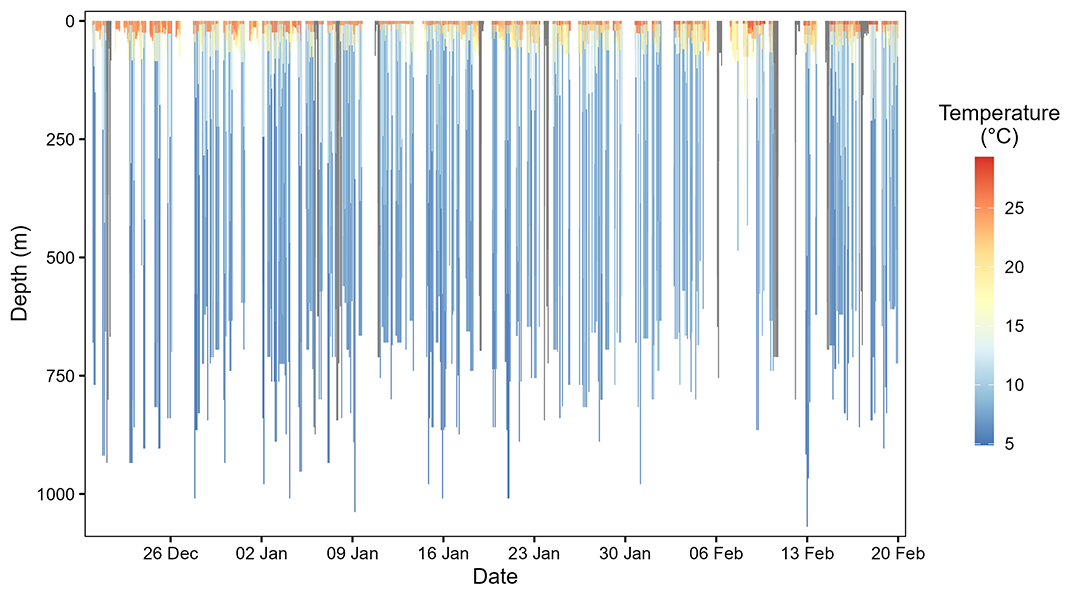
Two-months in the life of a scalloped hammerhead as told by its miniPAT tag. Photo by © Simon McKinley
Why This Matters
Studying shark movements across and below the ocean surface helps us better understand the ecology of these critically endangered sharks, while also strengthening the scientific case for greater protection across their migratory routes. By understanding where these sharks travel, how they use different ocean depths, and when they spend the most time in surface waters where they are vulnerable to capture by fishing gears, we can better inform future conservation and management efforts across the Eastern Pacific Ocean – helping ensure these remarkable animals can continue making their long-distance migrations and return to Galapagos reefs for generations to come.
My visit to the SOSF-SRC, and collaborations like this, were made possible thanks to the support of the co-PI of the Shark Ecology and Conservation Project at the Charles Darwin Foundation, Dr. Pelayo Salinas-de-León.