
Rays in Angola: Sustaining Communities and Ecosystems
In Angola, small-scale fisheries capture a diversity of elasmobranchs, with rays among the most frequently landed species. They form a substantial part of local catches and serve not only ecological functions but also as a vital source of protein for coastal communities, particularly where alternative animal protein sources are limited.

Local fishers unloading a cownose ray at a small-scale landing site in Angola. Photo © Ana Lúcia Furtado Soares
Traditional Preservation Practices
Species such as Myliobatis aquila (common eagle ray) and Raja parva (African brown ray) are commonly seen in large quantities drying under the sun at landing sites. Drying is a key preservation method used by fishers to store rays for consumption or sale, compensating for the lack of refrigeration and other preservation infrastructure in many coastal areas. This traditional practice ensures food security while maintaining connections to long-standing culinary and cultural traditions.
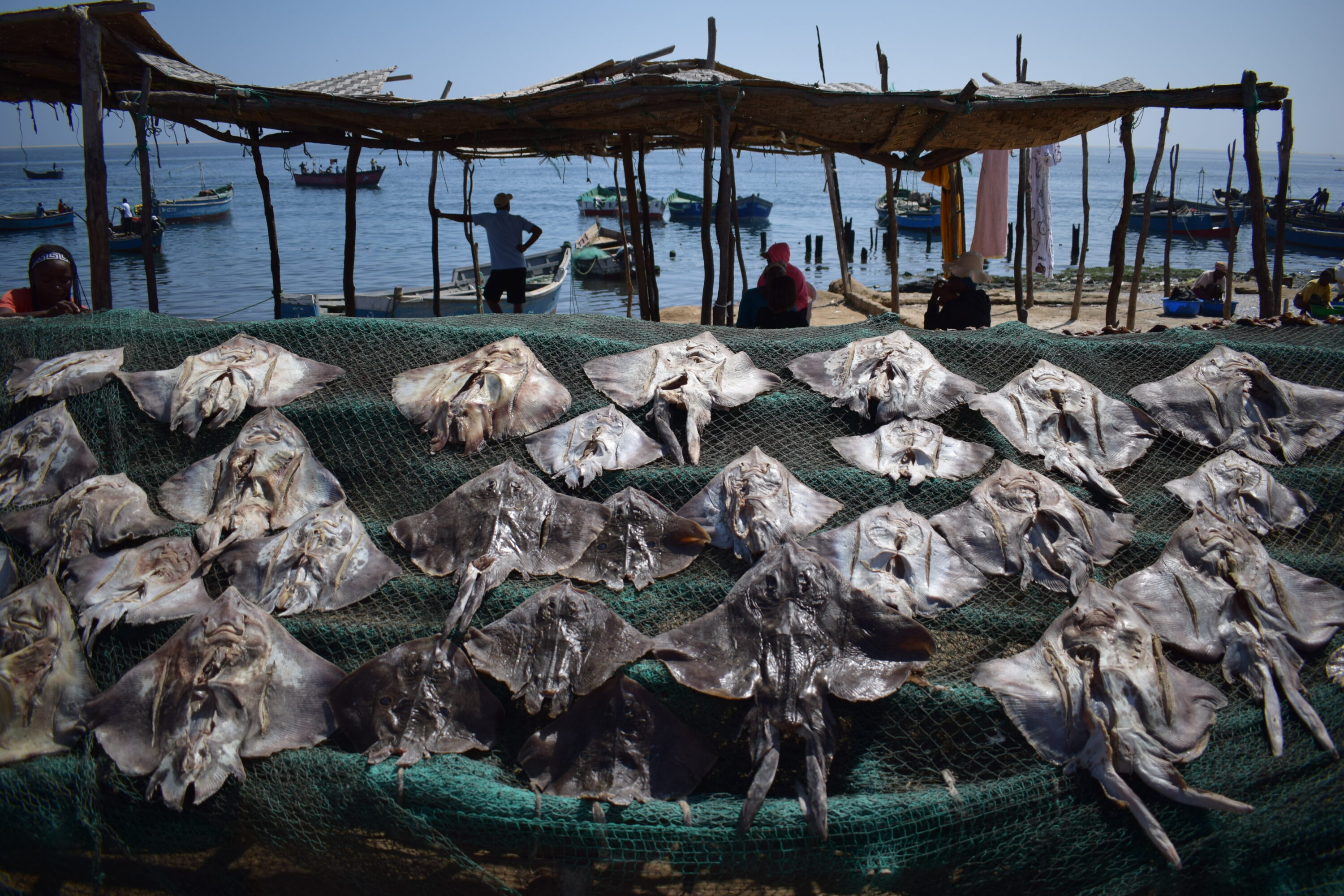
Skates drying under the sun at a coastal landing site, preserving food for local communities. Photo © Ana Lúcia Furtado Soares
Ecological Importance of Rays
The heavy exploitation of rays carries significant ecological implications. Rays play a critical role in benthic ecosystems, influencing sediment turnover, prey populations, and overall ecosystem balance. Removing large numbers of these species can disrupt these functions and potentially alter the structure of coastal marine habitats.
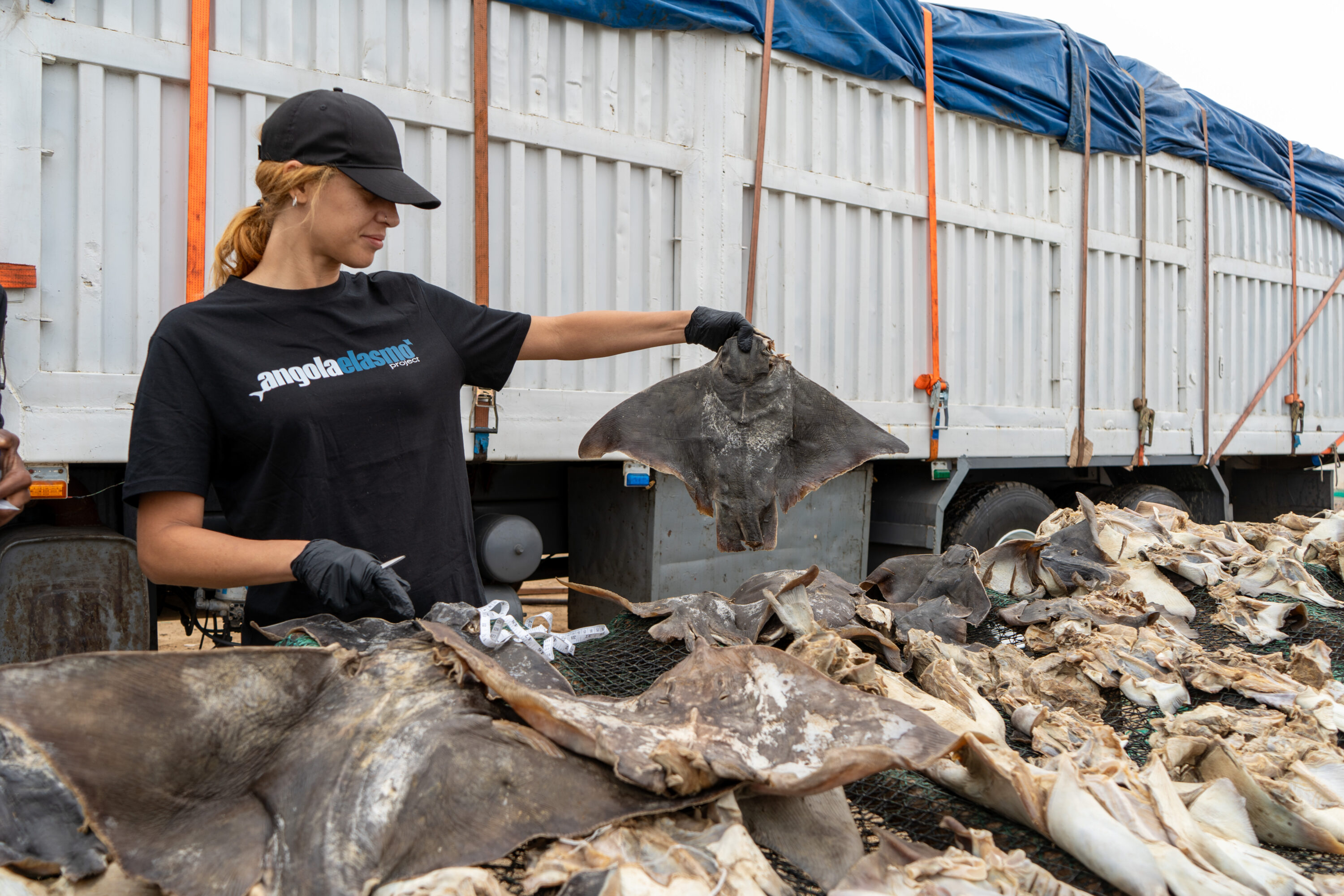
A common eagle ray (Myliobatis aquila) drying in a stall. Photo © Bernardo de Abreu Cotrim
Balancing Conservation and Livelihoods
Angola’s fisheries sector operates under minimal regulation and limited monitoring. Small-scale fishers rely almost entirely on these resources for income and sustenance, while industrial and semi-industrial fleets, including foreign vessels, further increase pressure on these populations.
Local ecological knowledge provides key insights for sustainable management. Older fishers often recognise declines in elasmobranch stocks and understand the ecological importance of these species, while younger fishers tend to view conservation measures as potential threats to their livelihoods. Integrating this knowledge into awareness campaigns and fisheries management is essential to balance conservation objectives with social and economic realities.
Rays: More Than Bycatch
Rays in Angola are far more than bycatch. They are a vital protein source, a cultural tradition, and a cornerstone of coastal ecosystem function. Sustainable management, combining traditional preservation practices, fisher engagement, and ecological monitoring, is essential to protect these species while supporting the food security and livelihoods of coastal communities.

Large numbers of rays spread out under the sun at a landing site, illustrating the substantial volumes caught and their importance to local communities. Photo © Bernardo de Abreu Cotrim
**Reference
Soares, A. L. F., & Jabado, R. W. (2024). Fisher perceptions of catch and trade of sharks and rays in Angolan small-scale fisheries. Aquatic Conservation: Marine and Freshwater Ecosystems. https://doi.org/10.1002/aqc.4168