
From Fish Markets to Genetic Blueprints: Building Bahrain’s First DNA Library for Sharks and Batoids
After completing Bahrain’s first environmental DNA (eDNA) surveys in the hottest sea on the planet, one question lingered quietly behind the science: How do we know exactly who we are detecting?
eDNA allows us to detect life without seeing it. But for eDNA to truly work, it needs a reference, a genetic database that links DNA fragments in the water back to real species that inhabit these waters. Since we didn’t have this database, this year, we took a critical step towards building it.
Through a year-long programme of weekly fish market surveys, our team along with the help of citizen scientists successfully collected 329 tissue samples, creating Bahrain’s first DNA reference database for elasmobranchs (i.e., sharks and batoids).
The science behind the stalls
Fish markets are not often thought of as research spaces. However, they offer something invaluable: direct insight into which species are being landed, traded, and consumed including those rarely encountered underwater.
Between December 2024 and December 2025, we documented 577 individual elasmobranch specimens, confirming the presence of 30 shark and ray species in Bahraini waters. From these specimens, we carefully collected tissue samples suitable for DNA barcoding, ensuring each species could be genetically verified. These samples are now being sent to a specialised laboratory, where they will be sequenced and used to enrich global and regional eDNA databases. This means that when DNA is detected in Bahrain’s waters in the future, it won’t remain anonymous. It will have a name.
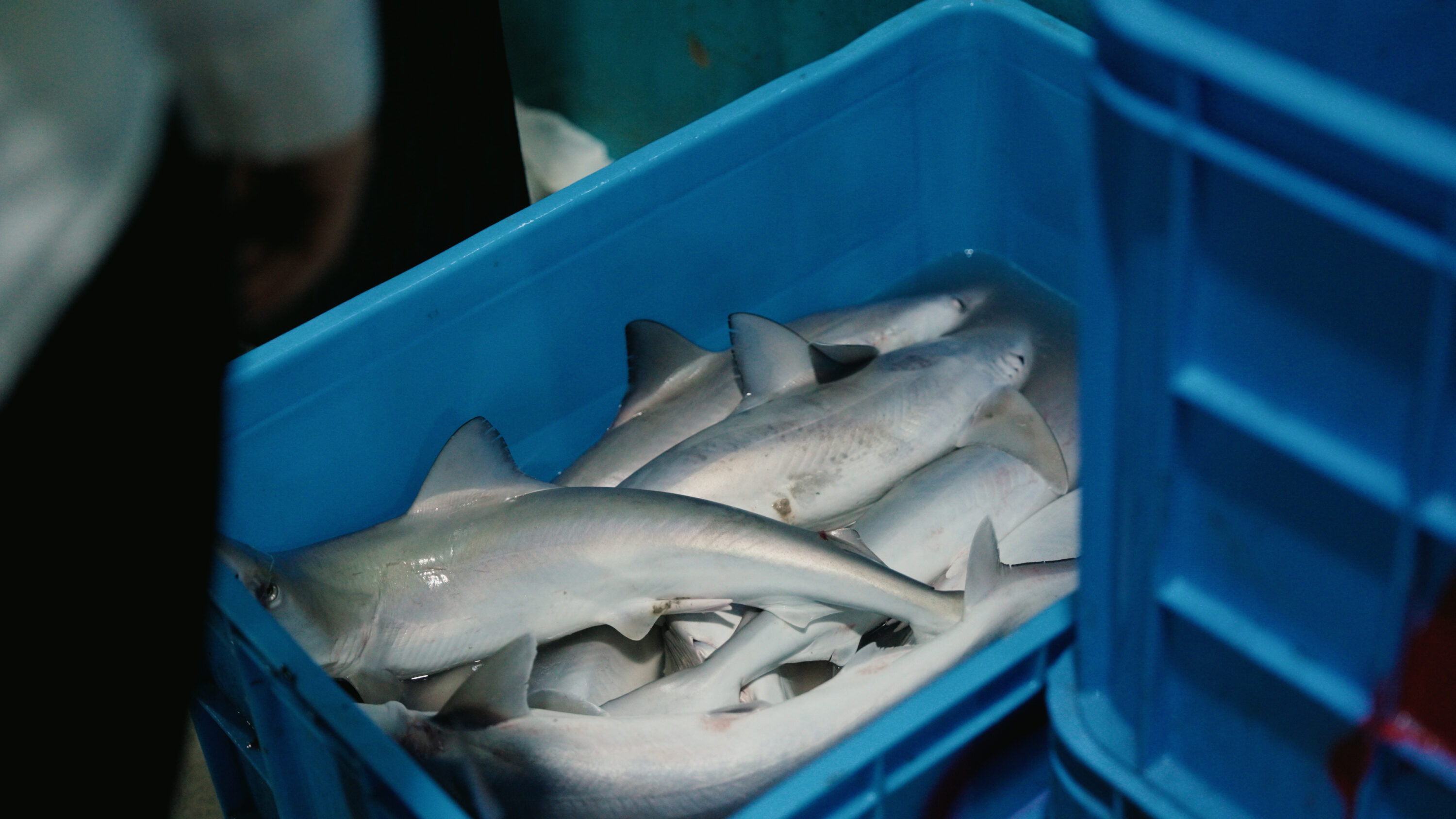
Shark species being sold at a market in Bahrain. Photo © Anwar Zaki | Nuwat for Environmental Research & Education
Why this matters for eDNA
eDNA is only as powerful as the reference libraries it relies on. Without locally validated genetic sequences, eDNA surveys can miss species especially in regions like the Arabian Gulf, where biodiversity has been historically underrepresented in global databases.
By building this DNA reference library in the region, we are:
- Strengthening the accuracy of Bahrain’s eDNA programme
- Creating a national genetic baseline for sharks and rays
- Enabling long-term, non-invasive monitoring of threatened species
- Ensuring Bahrain’s biodiversity is visible in regional and global science
In a rapidly warming sea, this kind of monitoring is no longer optional, it is essential.
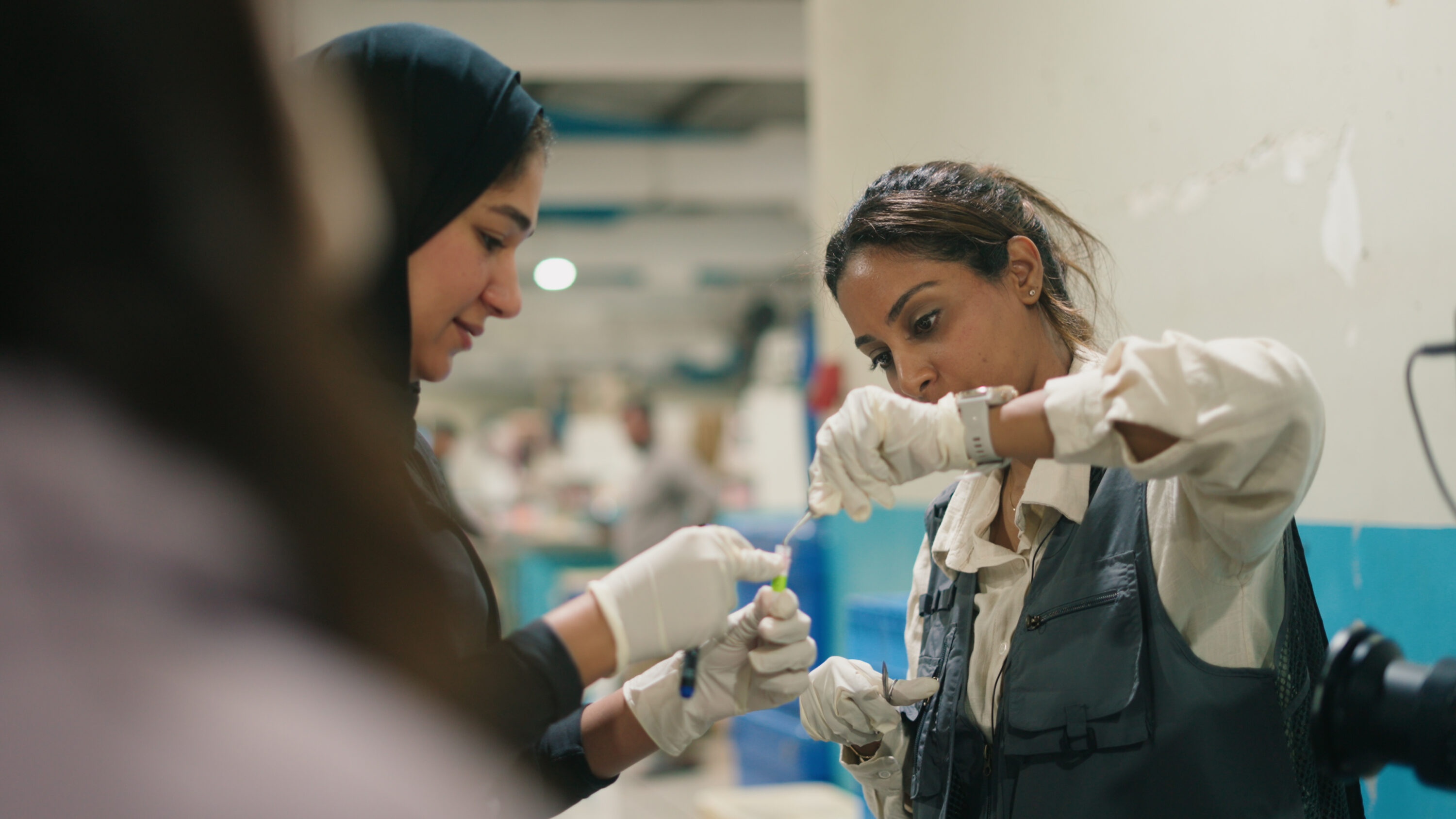
Collecting tissue samples for DNA barcoding to build Bahrain’s first elasmobranch reference library. Photo © Anwar Zaki | Nuwat for Environmental Research & Education
Consistency, trust, and collaboration
What makes this achievement especially meaningful is not just the number of samples collected, but the commitment behind them. Weekly surveys over an entire year required trust, collaboration, and mutual respect between researchers (including our citizen scientists), fishers and vendors who welcomed us into their spaces.
Much like our eDNA work at sea, this effort was built on local knowledge, patience, and consistency, the quiet ingredients of meaningful conservation.
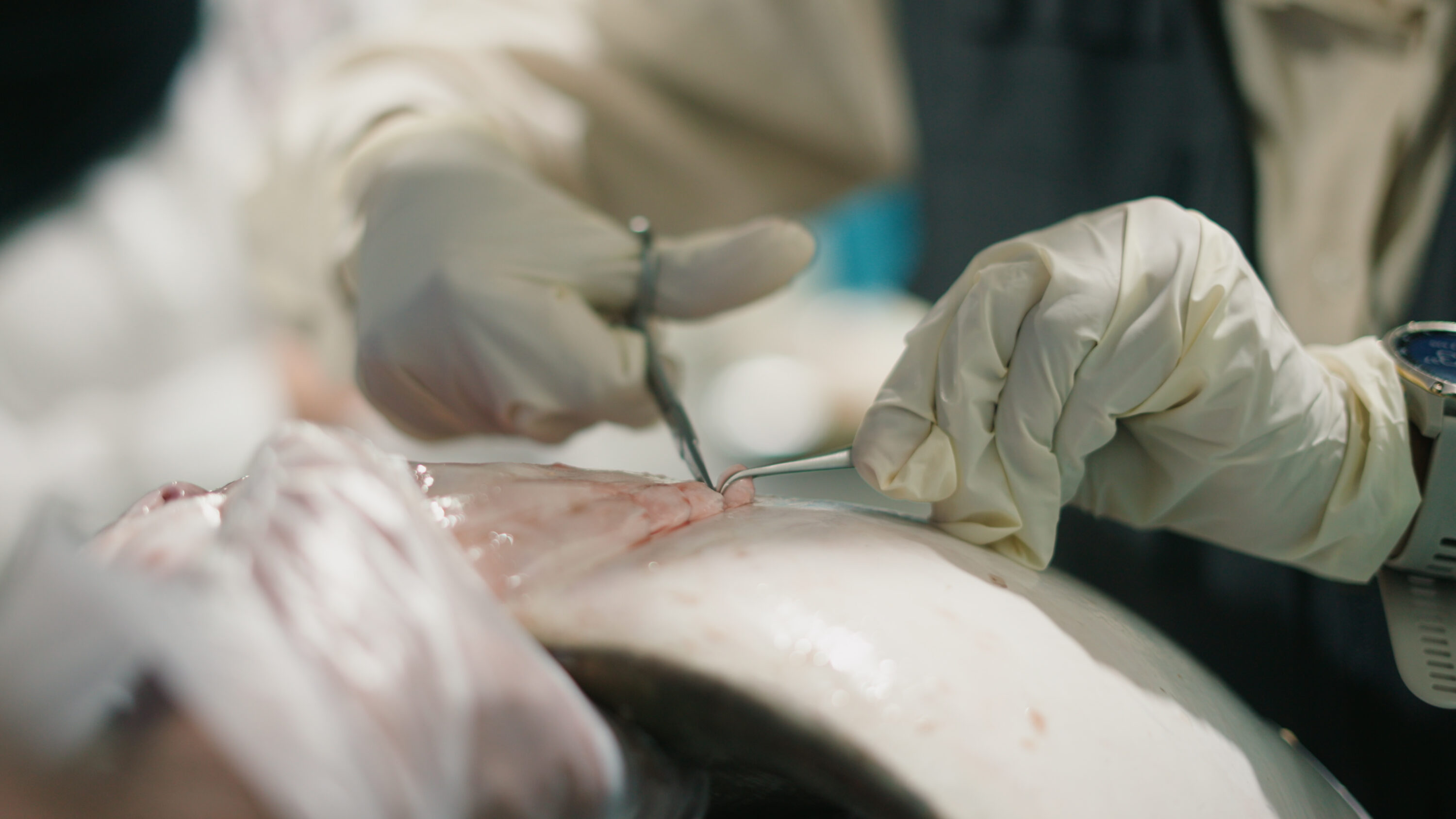
: Recording species identity, size, and condition during weekly surveys. Photo © Anwar Zaki | Nuwat for Environmental Research & Education
Looking ahead
Together, our eDNA surveys and DNA reference library form two halves of the same story which is detection and identification plus presence and proof.
By combining these tools, we are laying the groundwork for evidence-based conservation of sharks and rays in Bahrain ensuring that these species are not just present in our waters, but recognised, documented, and protected. Bahrain’s seas continue to surprise us. And step by step, gene by gene, we are learning how to listen and acknowledge.