
Fisher Collaboration Transforms Shark Research
Imagine getting an evening call: a boat is due in Port at 22:00hrs with a very large shark. The skipper has called in and a mutual colleague has passed on the information. You change into your work gear, grab your equipment and head to the dock. This is the reality of collaborative shark research in Seychelles, where partnership between fishers and scientists is yielding unprecedented insights into the artisanal shark fishery — one, often midnight, measurement at a time.
For most shark species landed at Seychelles’ fish markets, identification is far from straightforward. The majority arrive already “dressed” (heads, fins, and intestines removed), with larger specimens often sectioned into multiple pieces. Through accumulated years of handling these carcasses, identification has become possible by examining skin colour, texture, the presence/absence of an interdorsal ridge, and the quality of the meat itself. The monitoring program has documented 25 shark species in the artisanal catch to date, including 2 wedgefish species. The project simultaneously trains Fisheries Authority technicians in species identification, ensuring monitoring capacity extends beyond any single project.
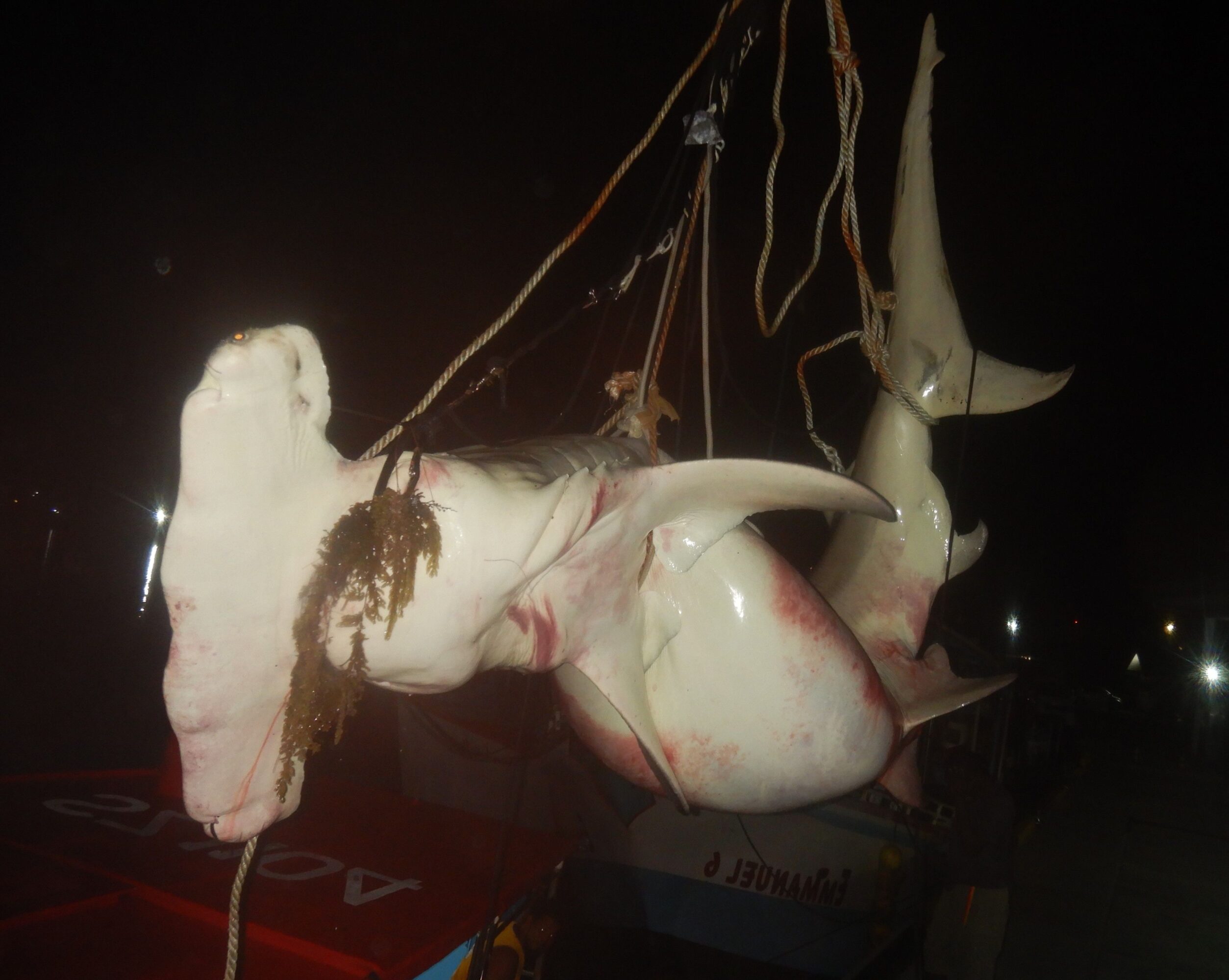
Large great hammerhead (Sphyrna mokarran) being landed at Port Victoria 23:00hrs. Photo © John Nevill
The Challenge of Incomplete Specimens
Even when a shark species can be confidently identified from a dressed carcass, the available data is limited. The key measurement, in these circumstances, is the interdorsal space (IDS) — the distance between the two dorsal fins, which can still be measured even after fin removal. Morphological models developed for the more common species enable the extrapolation of IDS to total length and weight. These models are remarkably robust, with regression analyses showing r² values typically ranging from 0.95 to 0.99 — meaning nearly every dressed carcass contributes meaningful data to the catch database.
However, intact specimens remain the gold standard, particularly for rare species where morphological models are less robust. Obtaining these measurements requires something that cannot be purchased with research funding alone: genuine cooperation from fishers. This is where the challenge — and opportunity — lies.
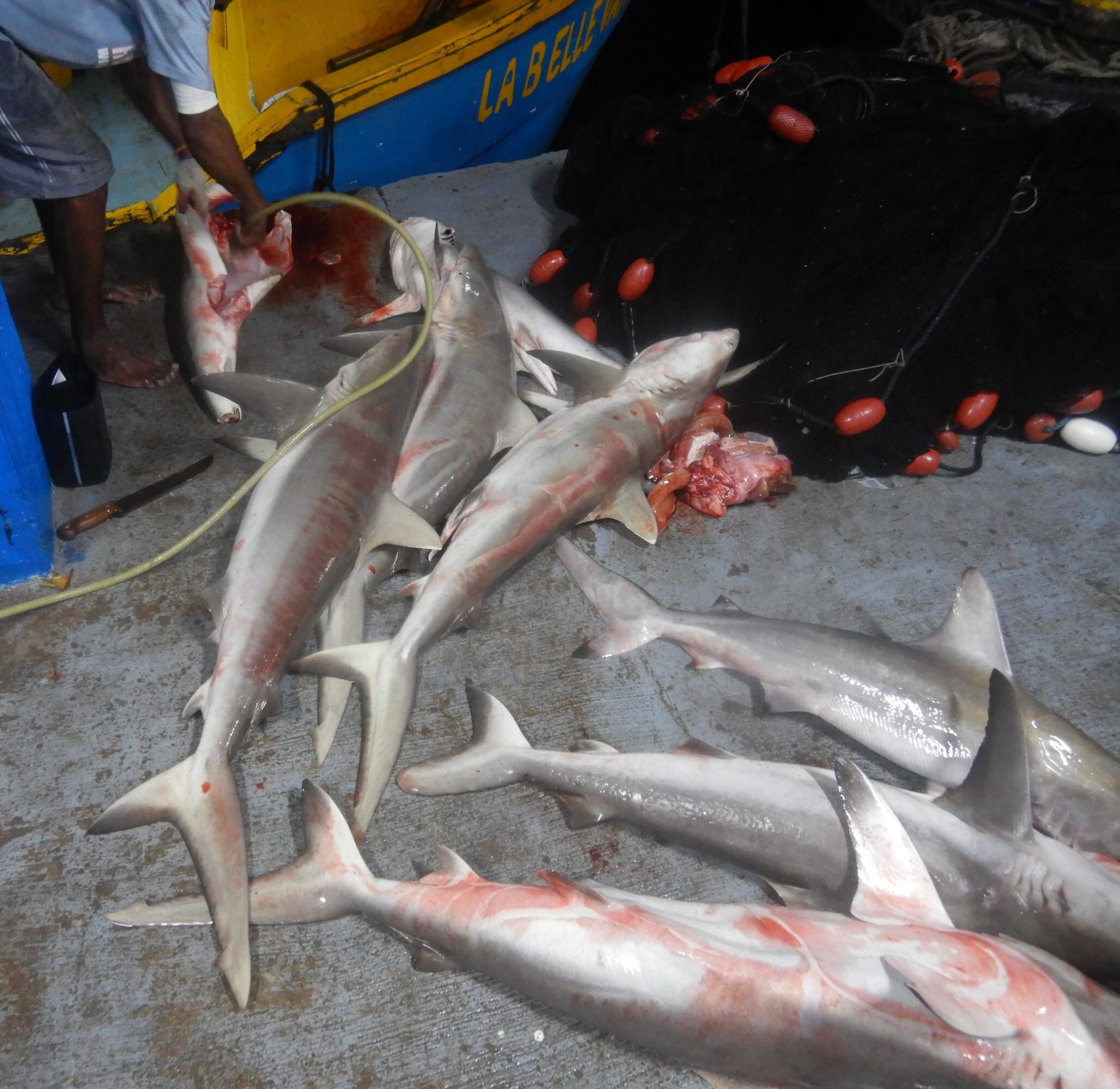
Night time catch monitoring at Bel Ombre. Photographed here are grey reef and blacktip sharks. Photo © John Nevill
Building Trust, One Catch at a Time
Over years of consistent presence at landing sites, relationships have been built with specialist artisanal shark fishers — those who actively target sharks and derive 30% or more of their annual income from shark catches. When these fishers land something rare or unusual, they now often make that phone call before processing the catch, providing a window to collect complete morphological data.
Collecting data on the whole catch, however, delays market delivery and the fishers from their next task. Recognising this, the monitoring project compensates fishers for their time when they allow researchers to examine their intact catch before processing. This often requires middle-of-the-night trips to landing sites, as vessels frequently unload after midnight. The effort yields remarkable results: detailed measurements of a large great hammerhead (Sphyrna mokarran) in Port Victoria in September 2025 — a critically endangered species now rare in Seychelles waters — along with large grey reef, bull, blacktip and lemon sharks at Bel Ombre, and comprehensive data on hammerhead sharks and rays landed on northeast Mahé.
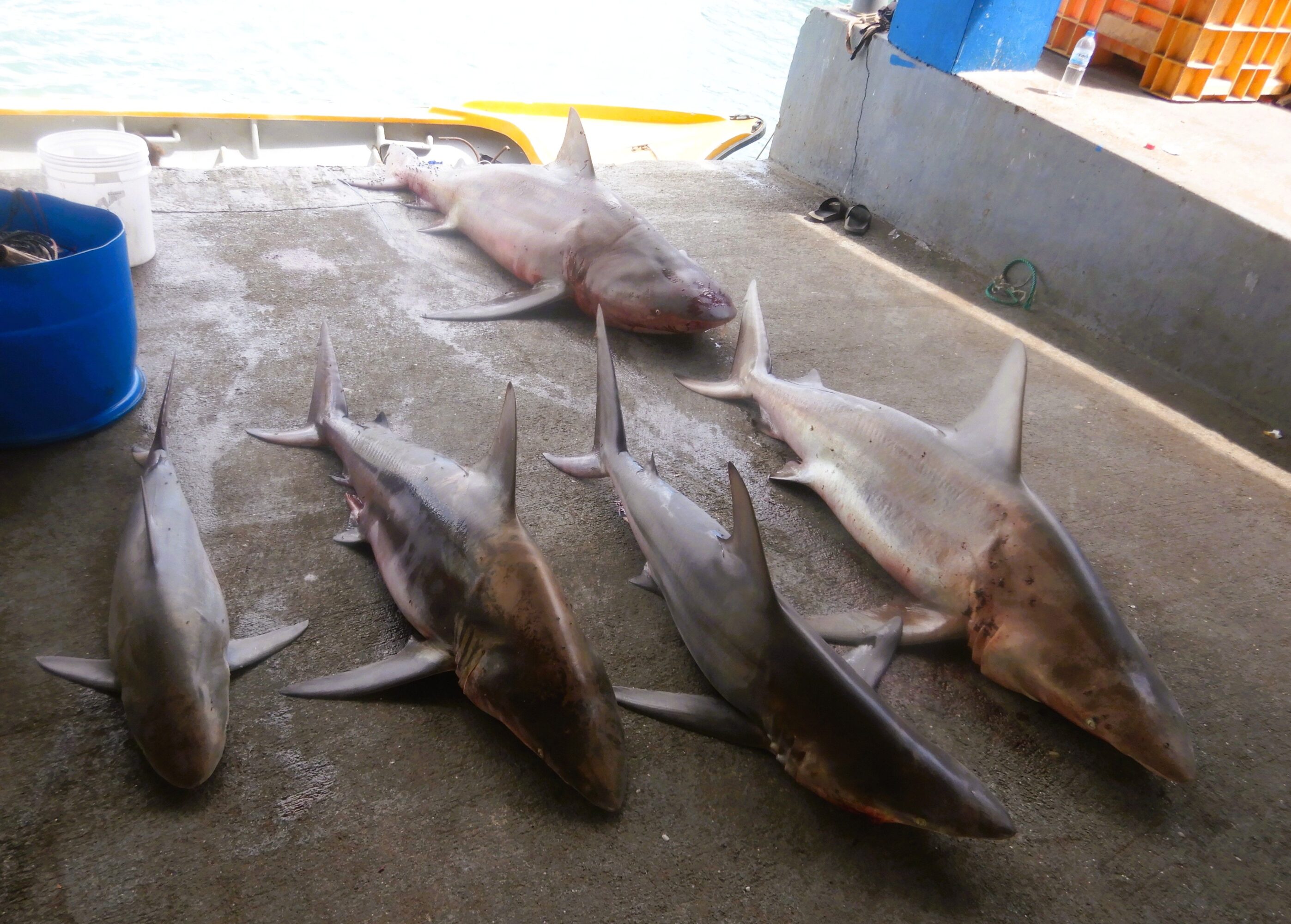
Bel Ombre Large bull, blacktip and spottail sharks. Photo © John Nevill
The Conservation Impact
This collaborative model builds trust between fishing and scientific communities, increases confidence in data methodologies, and provides the basis to inform future sound management decisions.
Accurate species-specific catch data enables assessment of population trends, identification of vulnerable stocks, and evaluation of fishing pressure.
Effective fisheries management need not be adversarial. When researchers meet fishers where they are — at landing sites in the middle of the night — and compensate them fairly for their time, the result is better science, better relationships, and ultimately, better conservation outcomes.