
Eyes on the sea: how one Facebook post changed everything
It started with a photograph.
In 2018, a diver reached out with images of some unusual sharks he’d photographed in Libyan waters. Three flat-bodied creatures, half-buried in sand, staring up at the camera with those distinctive eyes. I didn’t know what they were at first. I had to ask a friend in Greece.
“Mediterranean angel sharks,” he told me. Then he said something that changed the direction of my life: “I can’t believe they’re still there.”
That’s when I learned that these sharks—the “shakatli” or “safen”, as our fishers call them, were supposed to be gone. Functionally rare or almost disappear across most of the Mediterranean. Critically Endangered. Yet here they were, swimming in our waters, and nobody knew.
The Tool I Had
I had no funding. No formal research partnerships. No lab equipment. What I had was a phone and a Facebook account.
So, I started posting. I asked fishers to share photos when they caught angel sharks. I asked divers to report sightings. and began connecting with fishing communities along our 1,770-kilometer coastline.
Something unexpected happened. People responded. Not just a few dozens of fishers began sending me pictures, locations, stories. Some shared photos from years ago that they’d kept on their phones. Others started watching for angel sharks specifically, knowing someone finally cared.
One day, a fisherman named Ali contacted me. He’d caught an angel shark in his trammel net, but instead of selling it, he’d released it back into the sea. Why? Because he’d read what I’d written about them.
That moment, that message convinced me we could make a real difference.
55 Sharks, 55 Stories
Through our citizen science network, we’ve now collected 55 verified angel shark records from social media alone. Each one represents a person who took the time to photograph, report, and share. Trawl fishers in Misrata. Spearfishes in Sirt. Someone’s uncle who remembered catching one twenty years ago.
These aren’t just data points. They’re evidence that Libya’s coast might be one of the last refuges for these animals in the entire Mediterranean. They’re proof that ordinary people, armed with nothing but their phones and their observations, can contribute to science that matters.
When I presented this data at an international workshop, researchers were stunned. The sharks they’d given up on in their own waters were alive and well in ours.
What Fishers Know
Here’s what surprised me most: every single fisher we interviewed during the field survey could identify angel sharks on sight. They know the shakatli (squatina Squatina ). They know the spotted shakatli (S.oculata) and the thorny shakatli (Squatina aculeata). They’ve been catching them for generations.
This knowledge isn’t written in scientific papers. It lives in the harbors of Tripoli, Benghazi, and Misrata. It’s passed down from father to son, from captain to crew. And it’s exactly this kind of traditional ecological knowledge that can guide conservation if we’re willing to listen.
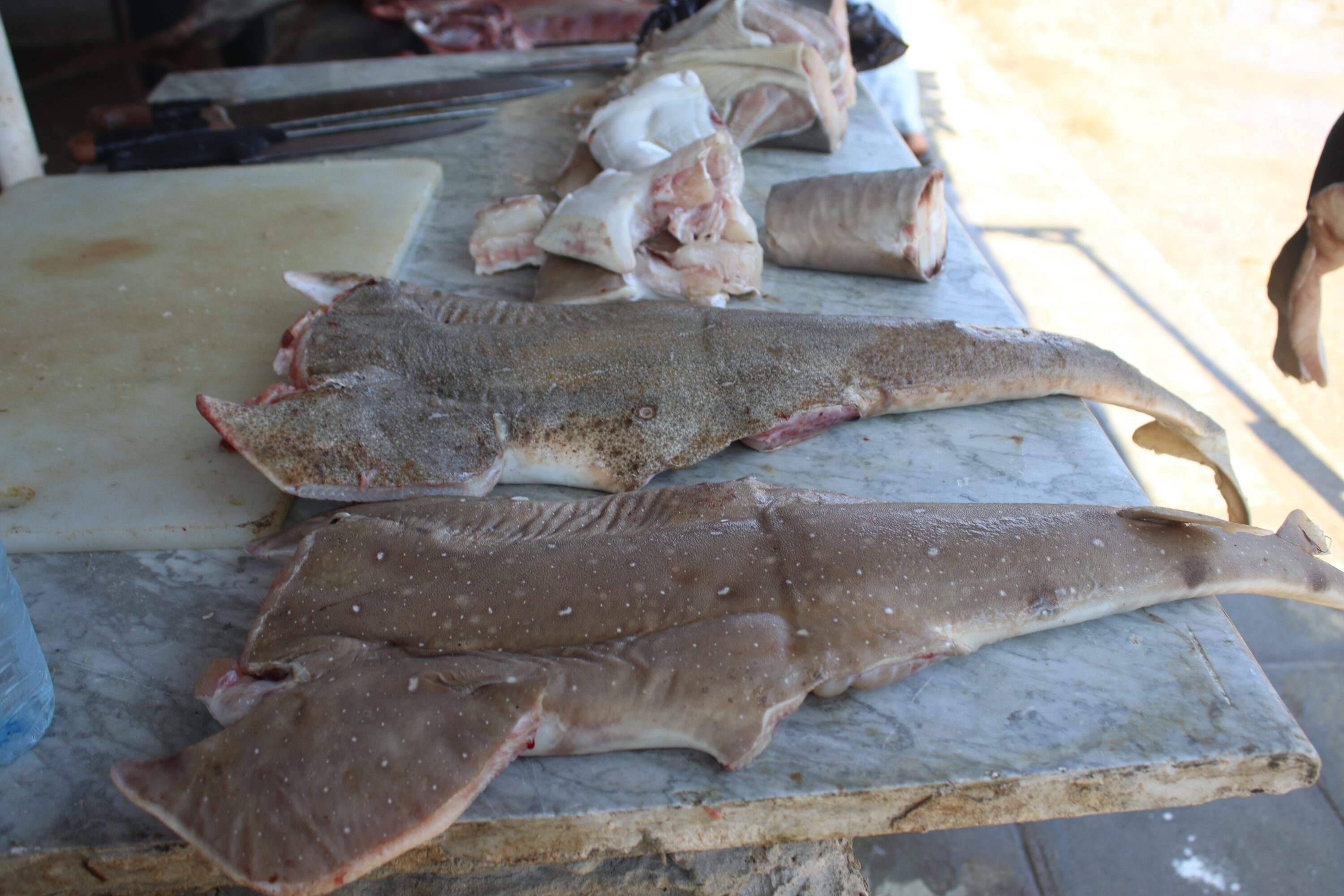
Angel sharks landed in Benghazi. Photo © Abdulghani Elkalosh
You Can Help
I still remember what it felt like to receive that first photograph. The thrill of realizing that I wasn’t alone in this, that there were eyes all along our coast, watching the sea, willing to share what they saw.
Conservation doesn’t always require expensive equipment or fancy degrees. Sometimes it starts with one person paying attention, one photograph shared, one fisherman who decides that today, he’ll let the shark go.
If you’ve seen an angel shark alive, dead, in a market, in your net we want to know. Your observation could be the one that changes everything.
Report on your sighting to the Angel Shark Project. Be part of the story.