
Conservation begins at the landing site: monitoring sharks and rays in Angola
The landing site: where science meets daily life
Along Angola’s coastline, fishing landing sites are critical hubs for monitoring shark and ray populations. These sites provide researchers with direct access to freshly caught specimens, enabling the collection of species composition, abundance, size distribution, and other biological data. Daily fishing activities, landing, sorting, and processing catches, intersect with ecological patterns, offering unique insights into species occurrence, seasonal trends, and habitat use. Beyond their economic role, landing sites serve as natural observation platforms, allowing systematic data collection that informs conservation strategies and improves understanding of Angola’s rich marine biodiversity.
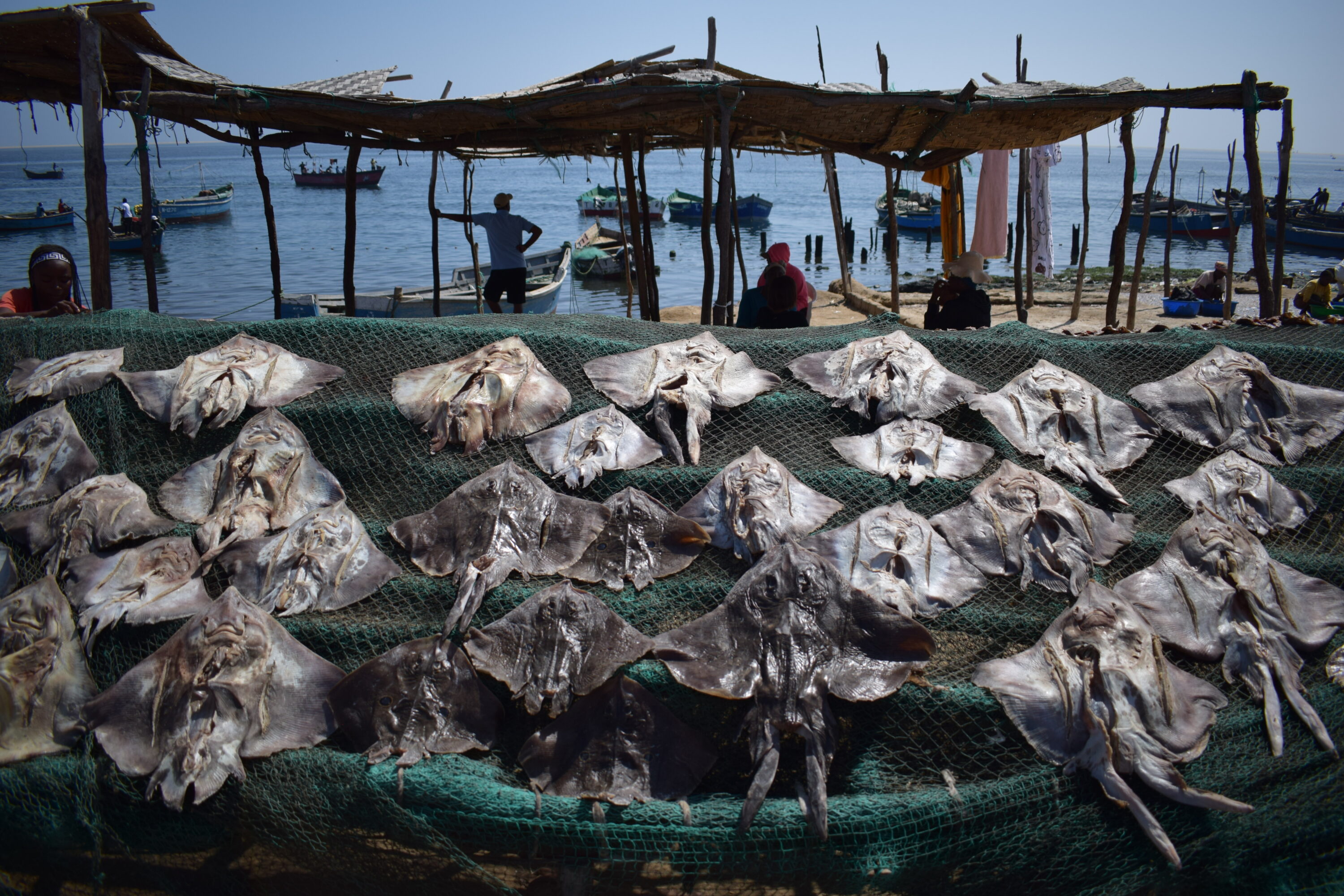
Rays drying in the sun at a local landing site. Photo © Ana Lúcia Furtado Soares | Angola Elasmo Project
A biodiverse hotspot
Angola’s waters support an impressive variety of elasmobranchs. Iconic sharks such as hammerheads (Sphyrna spp.) and shortfin makos (Isurus oxyrinchus) share these waters with diverse rays, including guitarfishes (Rhinobatidae), stingrays (Dasyatidae), butterfly rays (Gymnuridae), and mobulid rays (Mobulidae). Landing sites often reveal this remarkable diversity, providing snapshots of both common and rare species that are difficult to monitor through conventional surveys. The Namibe region is one of the most productive and biodiverse coastal areas in Angola.
Engaging local knowledge
In 2024, the Angola Elasmo Project focused on working closely with small-scale fishers to document traditional ecological knowledge. Through workshops, interviews, and field observations, we recorded species identification, seasonal trends, and spatial catch data. Fishers contributed firsthand observations of species behavior, abundance, and distribution information that is often impossible to gather through scientific surveys alone.
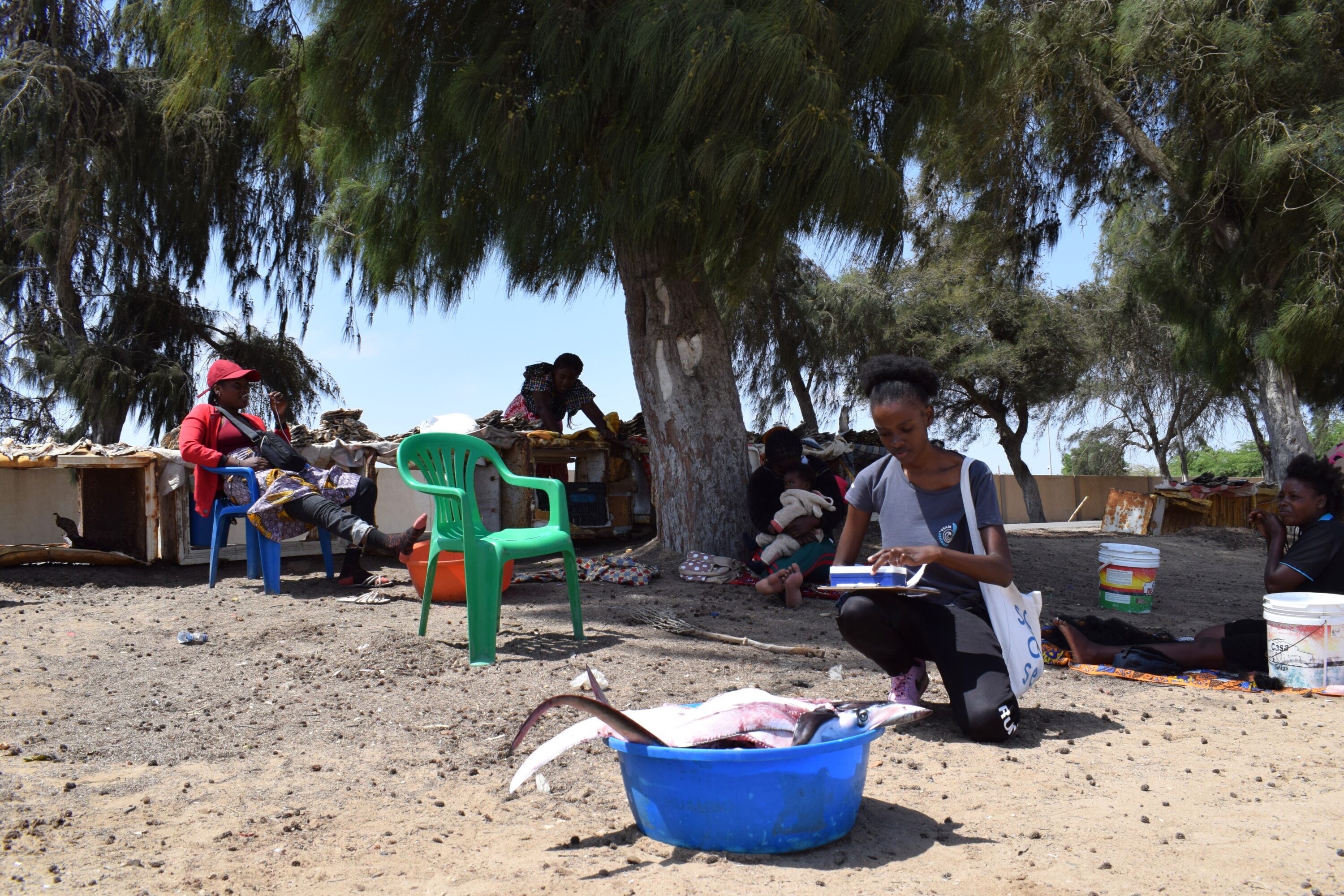
A dedicated volunteer gathers vital biological data from a Mobula mobular (Spinetail devil ray). Photo © Ana Lúcia Furtado Soares | Angola Elasmo Project
Supporting sustainable practices
Landing-site engagement also provides an opportunity to promote sustainable fishing and raise awareness of marine conservation. Practices that appear “unsustainable” often reflect limited knowledge of species protection rather than disregard for the environment. While marine conservation laws exist in Angola, their effectiveness depends on awareness and understanding. Fishers possess a wealth of local ecological knowledge and involving them in monitoring and decision-making can foster stewardship that benefits both communities and the environment. Awareness campaigns help ensure that scientific recommendations and future legislation translate into real, long-term conservation outcomes.
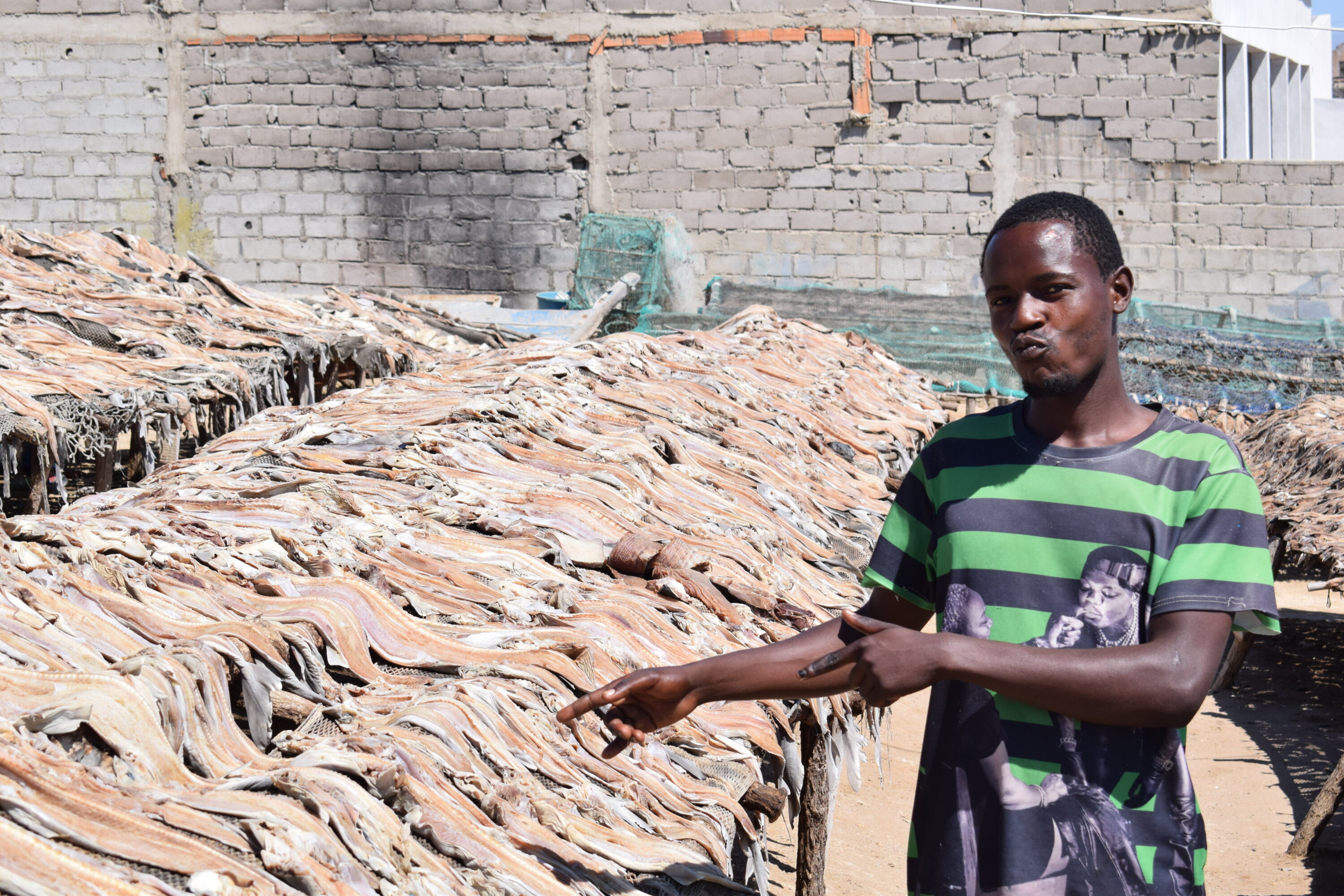
A fisher proudly poses with his catch: hundreds of dried sharks, highlighting both the scale of local fisheries and the challenges for sustainable management. Photo © Ana Lúcia Furtado Soares | Angola Elasmo Project
Conservation in action
Through participatory research, landing sites become living laboratories, demonstrating that effective shark and ray conservation relies on both scientific rigor and local collaboration. By engaging communities where fishers work and species congregate, the Angola Elasmo Project transforms conservation into a shared responsibility, protecting sharks, rays, and the livelihoods that depend on healthy coastal ecosystems.