
Completing the fishery management cycle
I have spent much of the last 12 plus years monitoring the elasmobranch catch of the Seychelles artisanal fishery. This has enabled the elucidation of the species composition, relative abundance and seasonality and provided a baseline for the development of management measures. The shark database to date contains nearly 34,000 specimens of sharks (including 2 species of guitarfish).
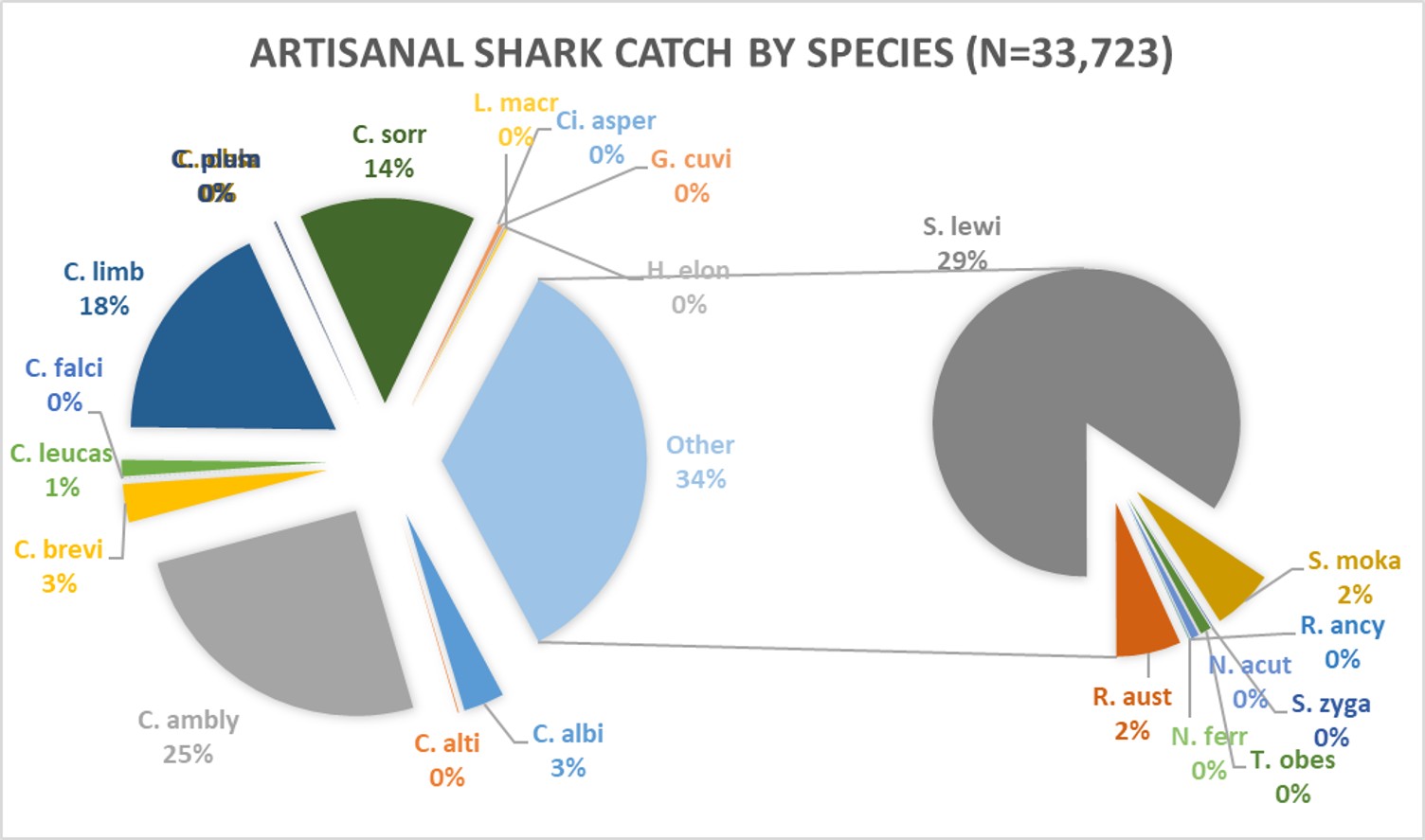
Artisanal Shark Catch by Species (2012-2025) (n= 33,723). Figure © John Nevill
The data gathered formed the basis for the formulation of Seychelles’ National Plans of Action for the Conservation and Management of Sharks (NPOA) 2016-2020. The Government of Seychelles has recently moved to legislate protection measures for various elasmobranch species both under the Seychelles Fisheries and Aquaculture Act (2025) and the Wildlife Protection Bill (2025). The Fisheries Act seeks, through regulations to be promulgated, to bring Seychelles up to date with its commitments under the Indian Ocean Tuna Commission this includes measures to protect mobulid rays (Mobula Spp) and the oceanic whitetip shark (Carcharhinus longimanus). It not only prohibits the fishing of elasmobranchs with nets it also forbids the retention of any elasmobranch caught in a net. The Wildlife Protection Bill seeks to, inter alia, to protect hammerhead sharks (Sphyrna spp) and wedgefishes (Rhina ancylostomus and Rhynchobatus australiae).
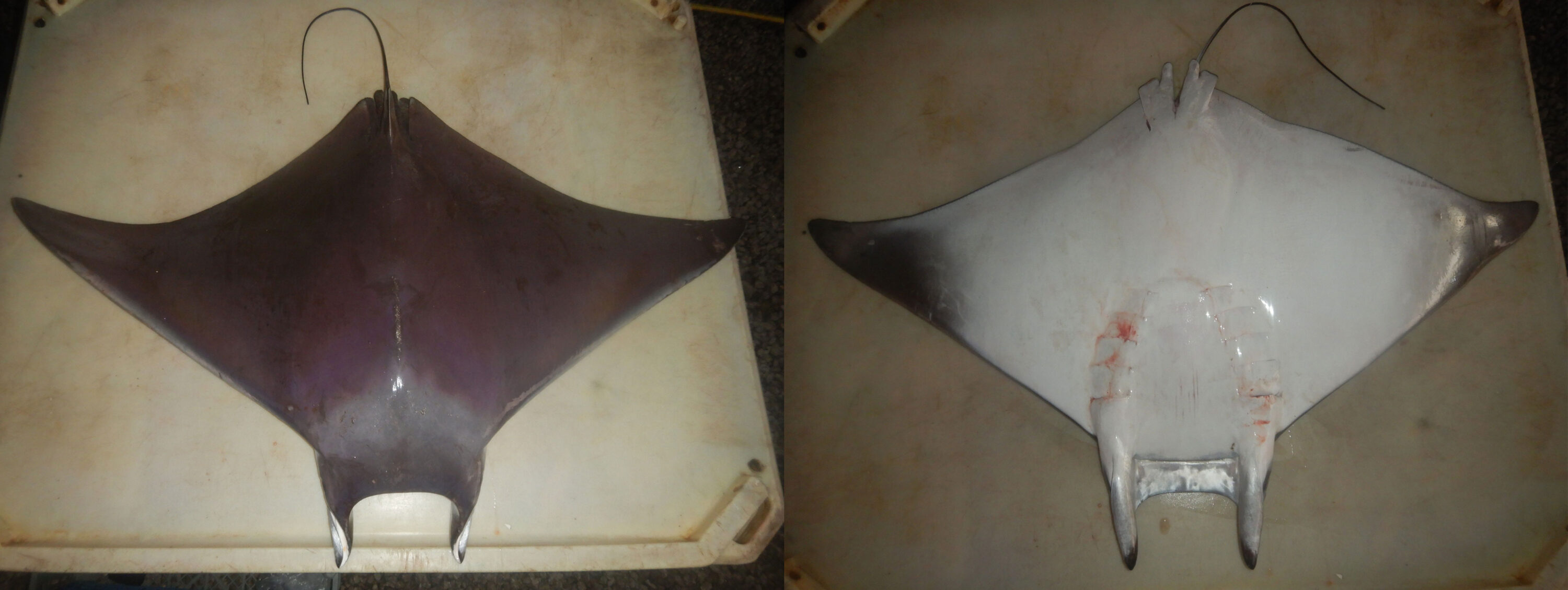
The shortfin pygmy devil ray (Mobula kuhlii) is one of the mobulid species to be protected a) dorsal and b) ventral views. Photo © John Nevill
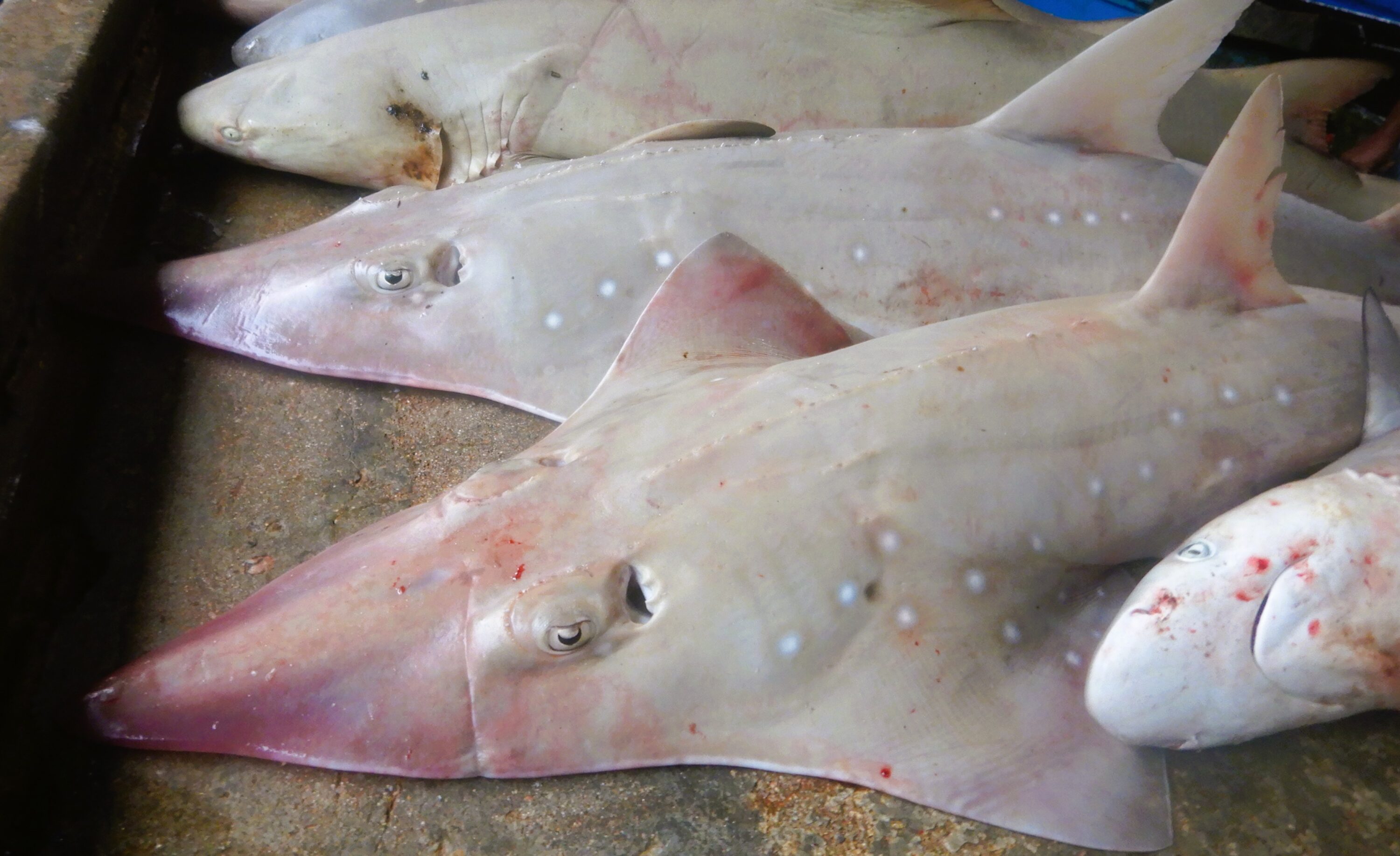
The bottlenose wedgefish (Rhynchobatus australiae) is targeted for its high-quality meat. Photo © John Nevill
This project will monitor the artisanal fishery through the period of this legislative implementation and assess the change in catch relative to the extensive established database to determine efficacy and potential consequences of the new legislation. The project has since mid-February recorded nearly 2000 elasmobranchs in the catch from 14 species of shark and 4 species of ray.
This is the first time that species-specific measures for the protection of fished elasmobranch species[1] will be brought into force in Seychelles. It represents a critical opportunity to put elasmobranch populations on the Seychelles’ banks on a path towards recovery and sustainability. It also provides an opportunity to realise the practical benefits of systematic, sustained catch monitoring and complete the shark fishery management cycle with research providing the basis for and directly influencing the implementation of regulations.
The project is scheduled in its second year raise public awareness of these changes. It will also make recommendations, after 2 years and at its completion, to authorities on how to optimise implementation of the legislation.
[1] The Whale shark (Rhincodon typus) was protected in 2003 but was not subject to fishing in Seychelles’ waters.