
Bridging the Science – Policy Interface: How UN Conventions such as CMS can strengthen Scalloped Hammerhead Shark Conservation
Operationalising the “science–policy interface,” particularly within an environmental policymaking context, has become more pertinent than ever in light of the growing threats posed by the triple planetary crisis of climate change, biodiversity loss, and pollution. The science–policy interface (SPI) emerges when scientific knowledge is effectively integrated into policymaking, enabling environmental policy to act as a catalyst for transformative change (UNEP, 2025). At its core, the SPI allows science to function as a knowledge broker, bridging complex relationships and information gaps, to supporting informed decision-making for environmental governance. Whilst formalised mechanisms such as the Intergovernmental Panel on Climate Change (IPCC) and the Intergovernmental Science-Policy Platform on Biodiversity and Ecosystem Services (IPBES) play an indispensable role in promoting science-policy coherence, this function must extend beyond specialised bodies and become embedded across all environmental decision-making processes.
My early experience facilitating the United Nations (UN) International Maritime Organisation (IMO) Secretariat on diverse and complex marine pollution matters, underscored the importance of science in shaping environmental negotiations. This, in turn, fueled my commitment to work within the science–policy nexus at the Charles Darwin Foundation (CDF), where I help translate and amplify research on the ecology and conservation of Critically Endangered Scalloped Hammerhead Sharks (Sphyrna lewini, SHH) in the Galápagos and wider Eastern Tropical Pacific, into policy-relevant input for Multilateral Environmental Agreements (MEA) such as the Convention on the Conservation of Migratory Species of Wild Animals (CMS).
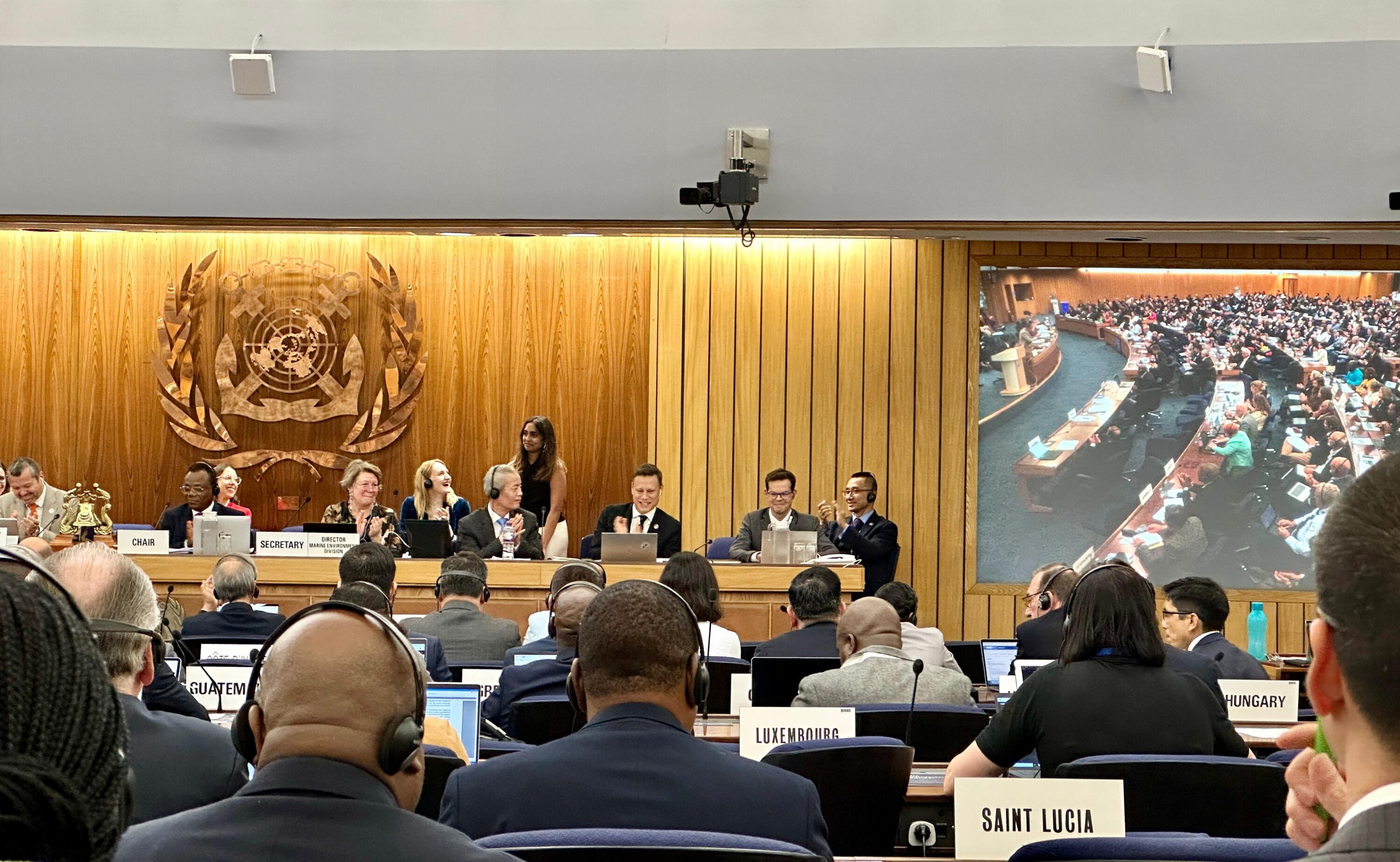
The final chapter of my time facilitating the IMO Secretariat in multilateral climate negotiations during the 82nd session of the Marine Environment Protection Committee (MEPC 82) at IMO Headquarters, London. Photo © Pelayo Salinas de León
CMS, also known as the Bonn Convention, is the only UN MEA dedicated specifically to the conservation of migratory species across taxonomic groups. It is distinct from other environmental governance regimes, such as Convention on International Trade in Endangered Species of Wild Fauna and Flora (CITES), in that it enshrines an ecosystem-based approach, recognising that effective species conservation must occur through the dual protection of both species and their habitats, particularly in light of the ecological importance of transboundary movements (Clobert et al., 2012). CMS functions primarily through two Appendices that provide differentiated levels of protection proportionate to conservation need: Appendix I lists endangered migratory species subject to strict protection and binding obligations on Range States; while Appendix II includes species that would benefit from enhanced international cooperation.

Scalloped Hammerhead Sharks are highly migratory species, connecting oceanic islands and coastal areas of the Eastern Tropical Pacific (ETP). Photo © Pelayo Salinas de León
In this context, Ecuador has recently tabled a proposal to move SHH from Appendix II to Appendix I (or commonly referred to as uplisting) for consideration at the upcoming CMS CoP15, the Convention’s triennial Meeting of the Parties where such proposals are debated. The critical examination underpinning this proposal is based on demonstrating SHH’s cyclical, predictable and transboundary migratory behaviour documented in the ETP by CDF’s scientists, alongside its critically endangered status as per IUCN Red List assessments, with population declines exceeding 80% over recent generations (Rigby et al., 2019a). This proposal underscores the relevance of CMS as a uniquely suited legal and policy framework for addressing the conservation challenges and threats faced by highly migratory marine species such as SHH.
CMS also operates through subsidiary cooperative instruments, such as action plans, concerted actions, and Memoranda of Understanding (MOUs) as conservation measures. A notable mechanism for strengthening synergies within shark conservation is the Memorandum of Understanding on the Conservation of Migratory Sharks (Sharks MOU), under which SHH is included in Annex I. As a soft-law instrument adopted under CMS, the Sharks MOU promotes international shark conservation through collaborative action aimed at restoring a favourable conservation status for migratory shark and ray species. Rather than relying on species-specific action plans, the Sharks MOU is implemented through a global Conservation Plan addressing fisheries management, bycatch mitigation, habitat protection, research and monitoring. Its implementation is strengthened through increased stakeholder engagement by Signatories and Cooperating Partners, including non-governmental organisations. Recognising CDF’s potential as a transformative intermediary for bridging the science–policy gap in shark conservation, I led the efforts to formalise its designation as a new Cooperating Partner to the Sharks MoU – an important milestone that creates new shared opportunities for disseminating technical expertise and co-developing conservation activities for effective and coordinated international SHH conservation.
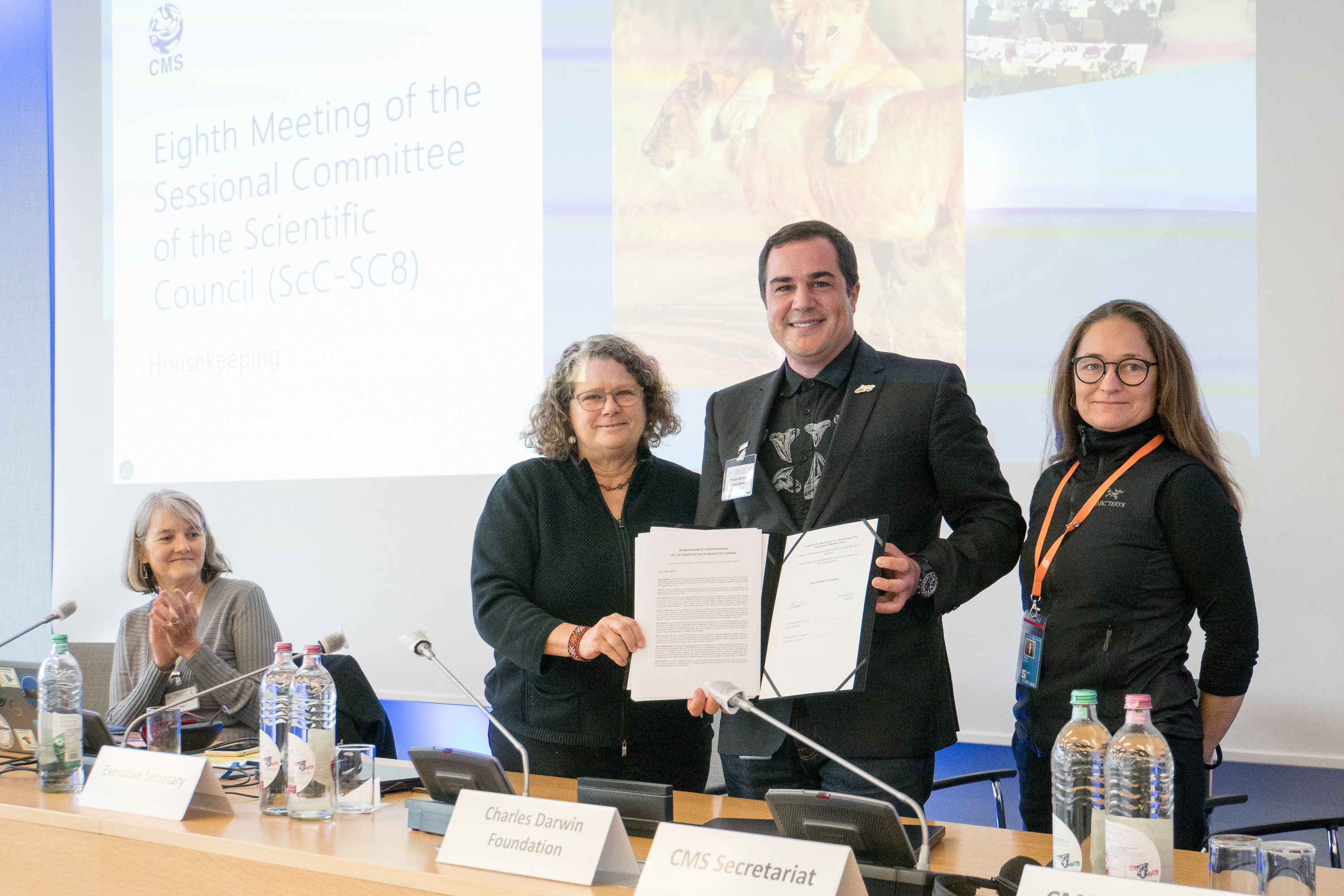
CDF becoming Cooperating Partners to the Sharks MOU in December 2025 during the Eighth Meeting of the Sessional Committee of the Scientific Council (ScC-SC8) in Bonn, Germany. Photo © CMS Secretariat Photo by Aydin Bahramlouian (CC BY-NC 4.0)
References **
Clobert, J., Baguette, M., Benton, T. G. & Bullock, J. M. (2012). Dispersal Ecology and Evolution. Oxford University Press
Rigby, C. L., Dulvy, N. K., Barreto, R., Carlson, J., Fernando, D., Fordham, S., Francis, M. P., Herman, K., Jabado, R. W., Liu, K. M., Marshall, A., Pacoureau, N., Romanov, E., Sherley, R. B. & Winker, H. (2019). Sphyrna lewini. The IUCN Red List of Threatened Species 2019, International Union for Conservation of Nature (IUCN)
United Nations Environment Programme (UNEP). (2025). Science-Policy Interface (SPI). UNEP. Available at: https://www.unep.org/topics/environmental-law-and-governance/environmental-policy/science-policy-interface (accessed 23 January 2026).