
An Entire Lifetime in a Single Sound: The Breath of 79 Humpback Whales
The smell of percolating coffee filled the cabin as the sunrise leaked through the windows. There was a quiet rhythm to the morning — footsteps on the deck, the shuffle of rain gear, and the soft chatter of preparation. We packed the Elemiah and set out for Verney Passage and Bishop Bay, unaware that the next nine hours on the water would feel like an entire lifetime in a single breath.
In reality, the day was split into multiple line transect surveys in the two areas, followed by hours of photo-capture for the later identification of the humpback whales present. In memory, though, it was one continuous feeling — breaths of seventy-nine humpback whales moved through the air, through the sea, and somehow, through us. Their cohesion seemed to meld the day into a single heartbeat.
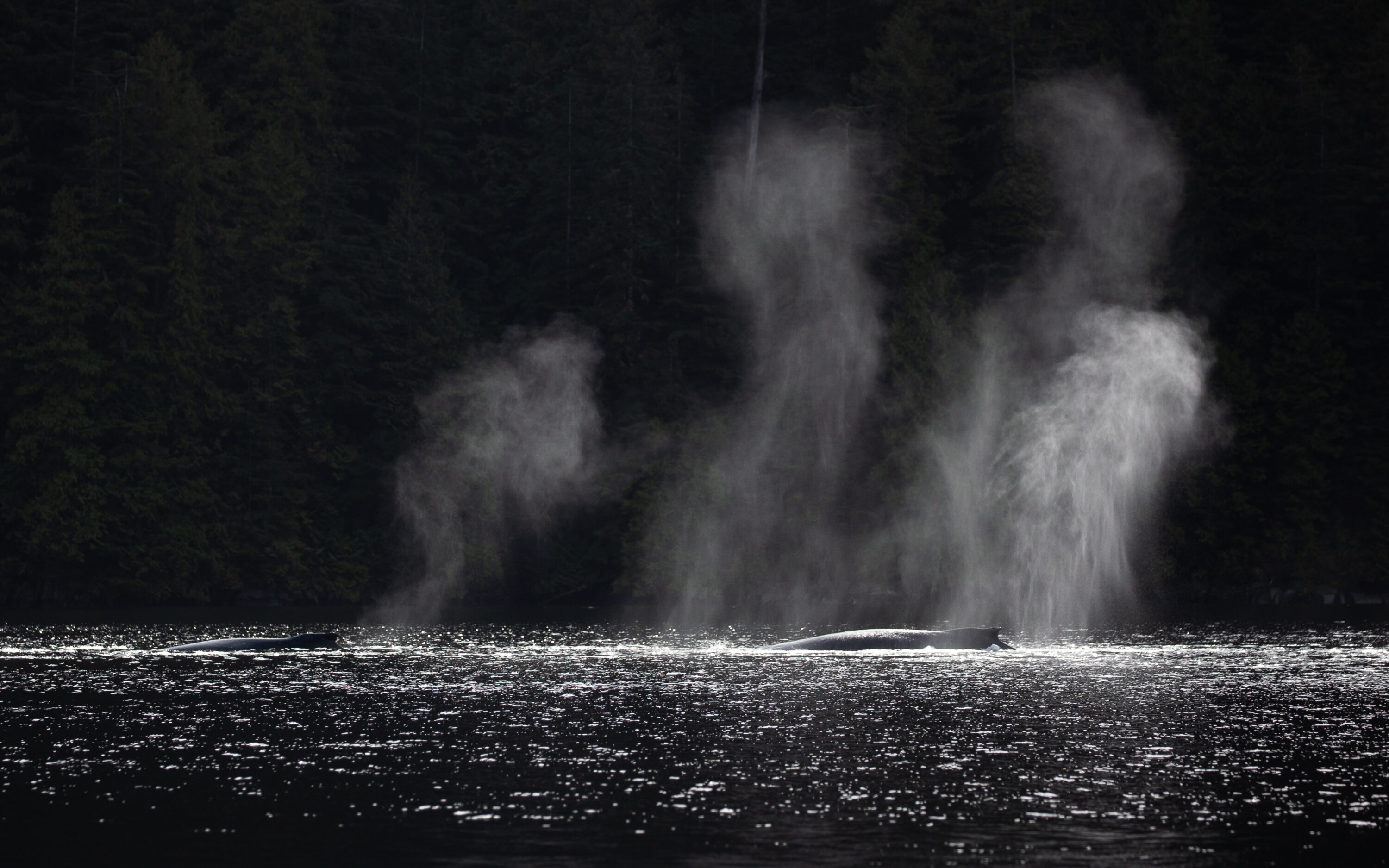
Humpback Blows in Bishop Bay. Photo © North Coast Cetacean Society
We began our photo-identification efforts deep inside Bishop Bay, focusing on what we thought was a small sub-group of the whales present. Every fall, whales congregate in these waters. Through photo-identification, we gain insight into the overall culture, trends, and changing population of humpback whales. The underside of each fluke has a distinct pattern — a signature that allows us to recognise and follow the individuals over time. New marks, scars, and injuries add to these patterns, sharing stories of their journeys outside of our waters.
As Grace steadily navigated us while Kendle and I each took up a camera, the sounds around us softened — the hum of the slow engine, the click of the shutters, and the steady chorus of blows across the water filled the air. The bay was glassy and still, mirroring the trees draped in lichen and the rocky shoreline dotted with seabirds.
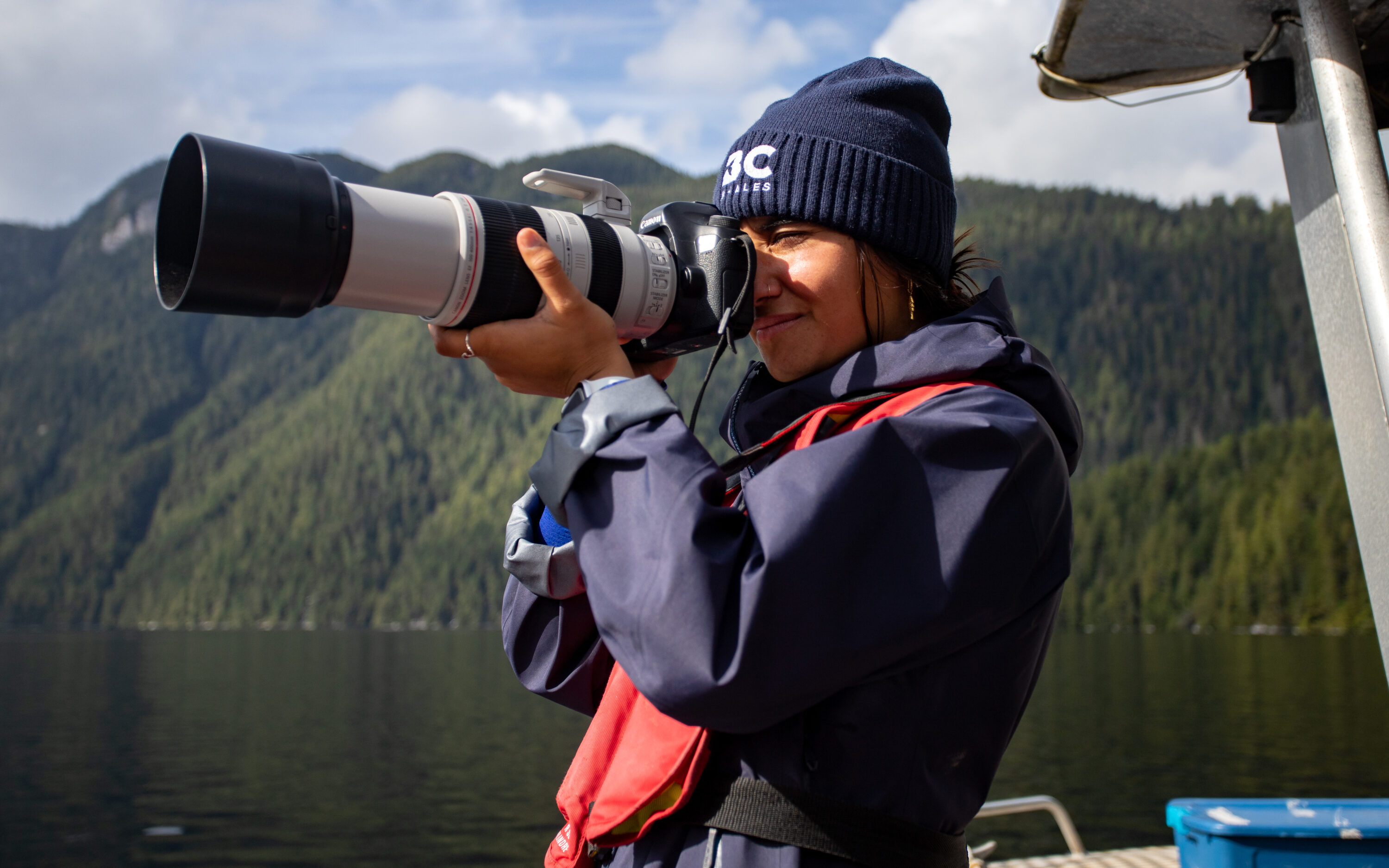
Yasmine taking photo identification of humpback whale. Photo © North Coast Cetacean Society
After some time, we realised that the group before us was not a sub-group at all. Every whale was part of one large, connected gathering — socialising and feeding together in the calm of the bay. The sunlight caught the mist of their blows, turning each exhale into a shimmer of particles shooting above the water. Their movements were effortlessly coordinated — diving, surfacing, and turning together, as if an underwater murmuration.
As the focus and awe settled in, the three of us spoke very little out loud, but exchanged looks and expressions that read like dialogue. Other than the occasional “fluking on your left/right!” to ensure no individual went unphotographed, words felt unnecessary for what was happening around us. As we sank into our surroundings, our breathing seemed to match that of the whales at the surface — inhaling and exhaling with the rise and fall of their bellowing blows. It was as if the boundary between us and them had softened, and we were all connected as one.

Grace and Yasmine taking marine survey notes surrounded by humpback whales. Photo © North Coast Cetacean Society
Once we felt confident that each fluke had been photographed and would be identifiable in-lab, we slowly began to angle the boat towards home. Then, the whales turned too. Over the course of multiple surfaces and turns, what felt like a coincidence began to feel intentional — the whales were moving with us.
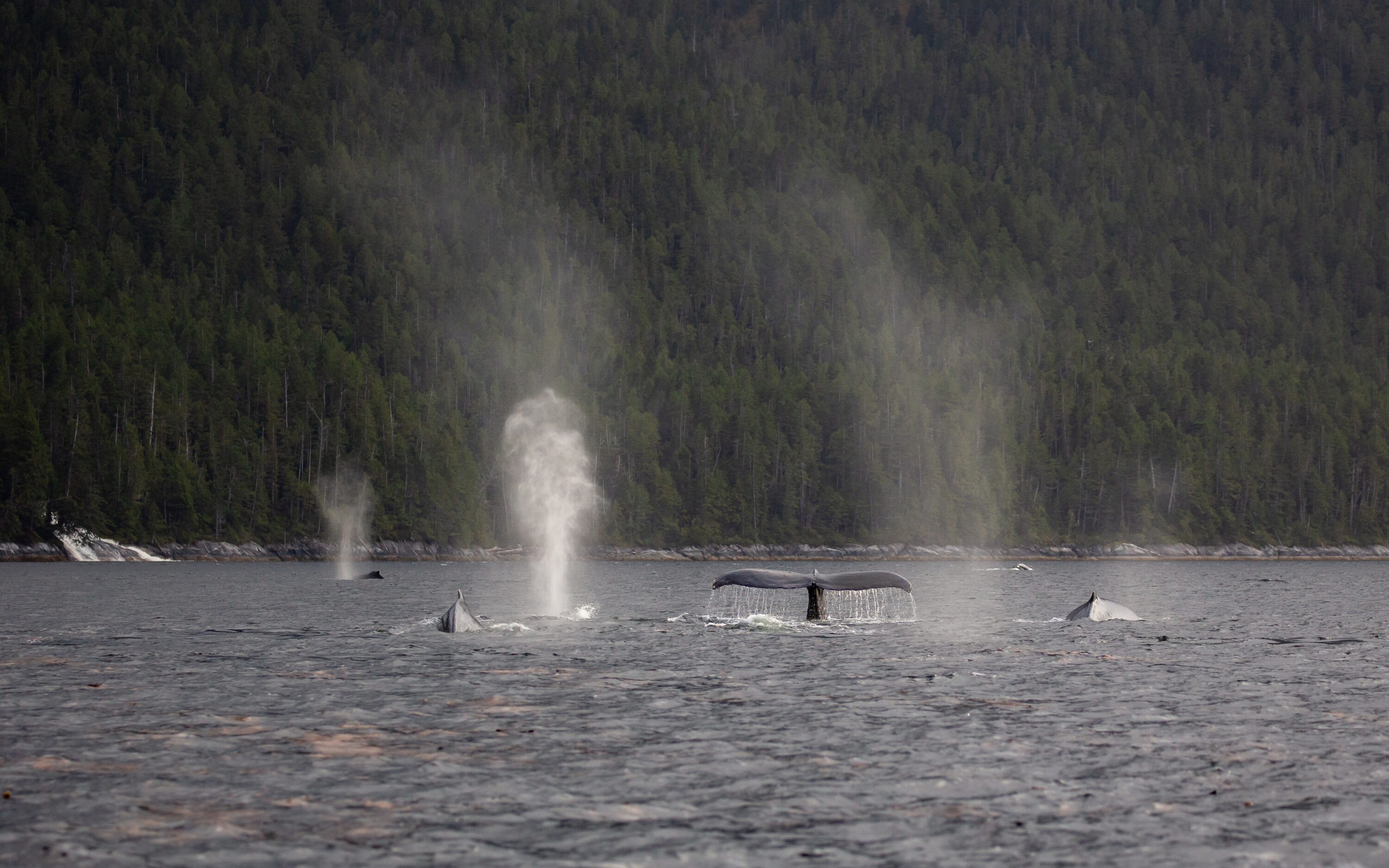
Multiple humpback whales socialising in Verney Passage. Photo © North Coast Cetacean Society
We do not know why they shifted their movement to align with us, or why they seemed to follow us as we left.
We do know that in this moment, it felt as though we were all a part of something together, learning about and from one another.
Feeling so small and insignificant in the most beautiful way will stay with us forever.
We were floating along by the breath of the ocean, with the gentle giants that moved within.