
A Sight for ‘Saw’ Eyes. Sawfish Stories – Part 2
The year was 1929. The location? Cairns, a small city in northern Queensland, Australia. Three locals were out fishing in the bay directly off the Cairns waterfront, when, at approximately 11 pm, something became caught in their nets. It was so large that as it tried to escape the nets, it began to drag their boats across the bay. One of the locals, a man named Eddleston, became entangled in the nets and was pulled overboard, quickly vanishing beneath the surface of the murky water. In the moments to follow, fate may well have been smiling on Eddleston, because he managed to free himself and made it back aboard safely, seemingly no worse for wear.
As the sun rose the following day, so concluded the battle. The creature, which had towed the boats across the water for nearly the entire night, had exhausted itself. The locals rowed their catch back to shore, to a part of Cairns known today as the Esplanade. When they went to inspect their catch, they found a female green sawfish, 4.9 meters long, accompanied by two pups.
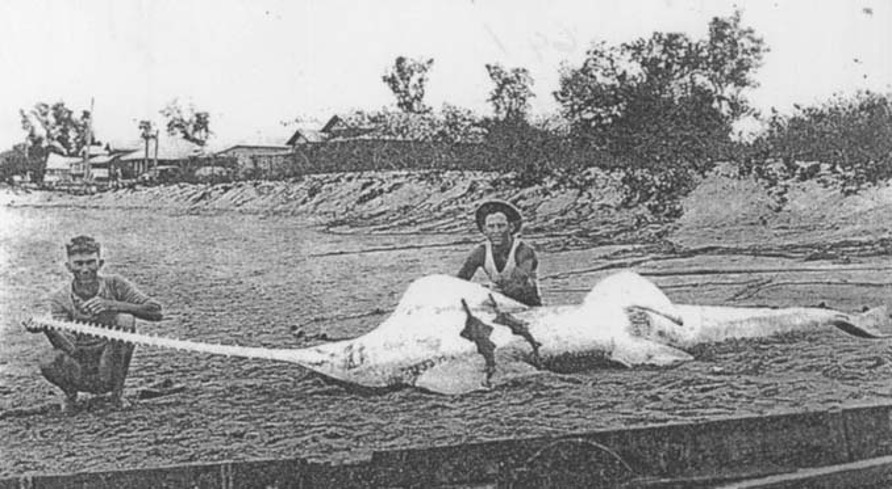
A 4.9-meter green sawfish (Pristis zijsron) and pups caught in 1929 near Cairns, Queensland. Photo © Eddleston and company
At the time, Eddleston’s catch was likely celebrated as an act of triumph – a testament to human strength and perseverance. Today, it feels more akin to an early warning – the first sign of a species beginning its long and silent fall towards extinction.
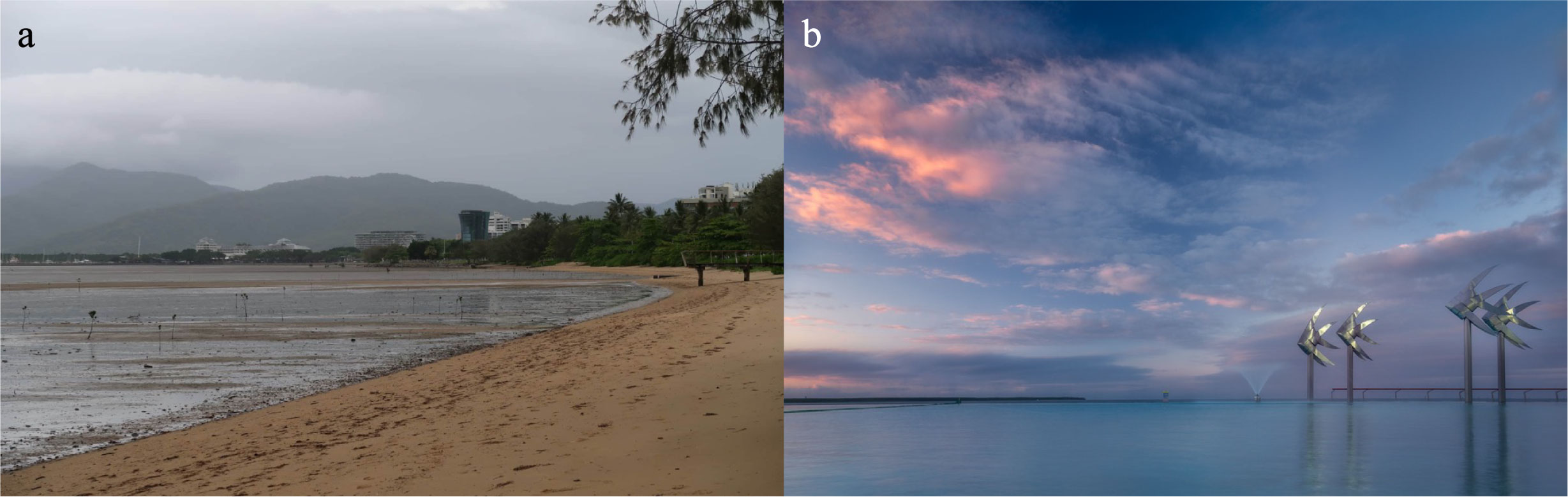
Modern views of the Esplanade in Cairns, one of Australia's major tourist hubs. Photos © (a) Albert Wetterling and (b) Didier Tartare
I first became aware of this story a few months ago when my colleague, Barbara Wueringer, one of Australia’s leading sawfish experts and a co-investigator of the Kinship in the Kimberley project, shared it on social media. It’s been nearly a century since these events took place. In that time, sawfish populations have declined so dramatically, primarily because of overfishing, that it seems most people I run into nowadays have never even heard of these iconic rays.
Today, the IUCN Red List of Threatened Species – the most comprehensive threatened species list in the world – classifies the green sawfish as Critically Endangered, a designation reserved only for the world’s most threatened, extant species. These days, it’s rare for a green sawfish to be encountered anywhere, period, let alone off the beach of one of Australia’s major tourist hubs, like the one caught by Eddleston and company.
Of course, this presents a major challenge for researchers. After all, how do you study an animal so notoriously difficult to find? So far, our best solution has been to conduct sampling in nursery areas, where sawfish abundances tend to be highest.
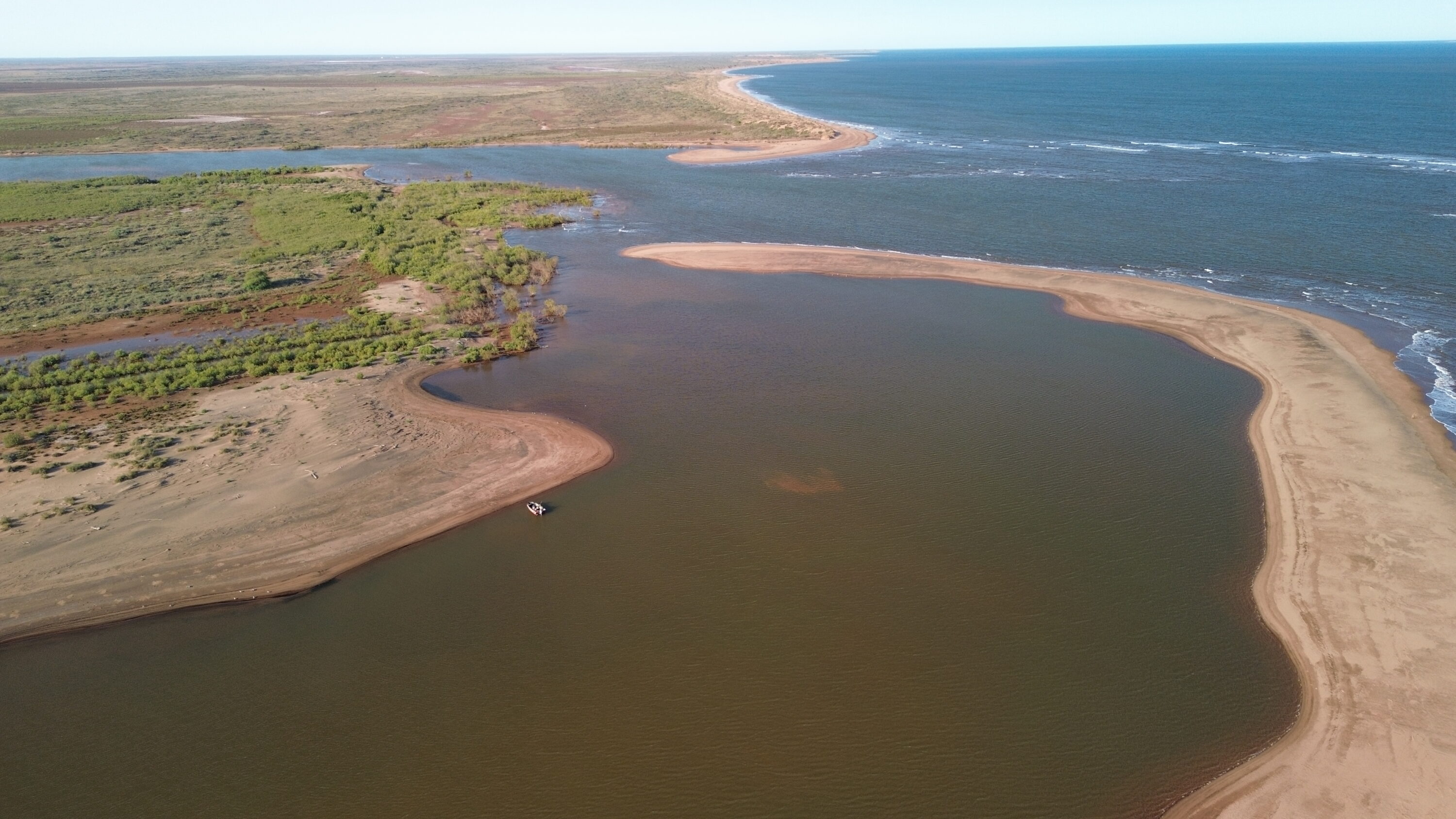
River mouths, estuaries and tidal creeks, particularly those characterised by mangroves, can serve as important nursery habitats for sawfishes. Photo © Jack Ingelbrecht
Even in nurseries though, it’s not uncommon to go days or weeks at a time without encountering a single sawfish. During a recent field trip, however, I saw something that gives me hope… hope that we might once again see green sawfish return to the waters around northern Australia’s major cities, and not just in isolated areas that have remained relatively unaffected by fishing pressure.
The date was October 21st, 2025. We were conducting routine drone surveys, to identify optimal sampling areas, when we came across a rare sight. On the drone controller’s digital monitor, we saw a screen filled with green sawfish pups, swimming in the shallows of a remote tidal creek near Onslow, Western Australia. David Morgan, a man who has dedicated his career to sawfish research and a mentor of mine, posted a photo of the encounter online, calling it “a sight for saw eyes”. Even now, I can think of no better way to describe it.
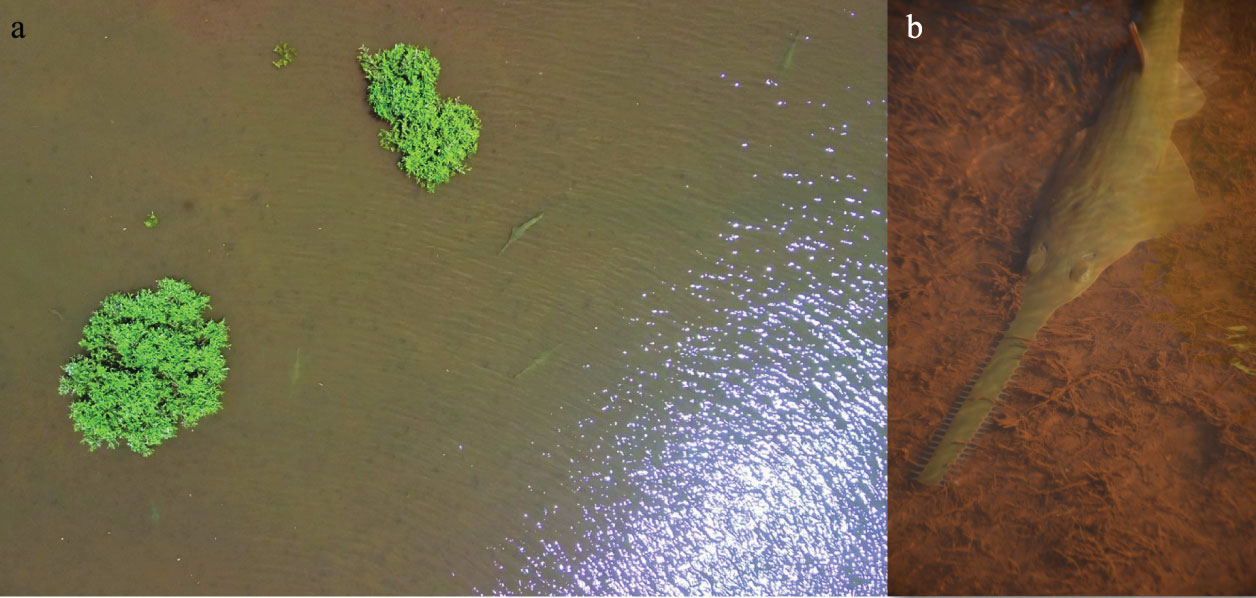
A 'sight for saw eyes' indeed; green sawfish pups spotted near Onslow, Western Australia, in October 2025; and (b) a close-up of a juvenile green sawfish. Photos © Jack Ingelbrecht and David Morgan
In 1929, Eddleston’s battle with a sawfish lasted a single night. The battle for sawfish conservation will take much, much longer and it won’t be easy. Make no mistake, sawfish are the most threatened fish group in the world. With the right research though, and the right conservation strategies, maybe, just maybe, it’s a battle that can be won.
Footnote: This work would not be possible without the many people and organisations that have contributed to sawfish research, past and ongoing. To them, I extend my appreciation.