
Shark bycatch solutions by small-scale coastal fishers in Palawan
In Palawan, the Philippines’ ‘last ecological frontier’, fishers operate on a small scale and with open access, working from motorised boats and using gears such as gill nets, hand lines and fish corrals. At San Vicente, where most fishing grounds are close to shore, hundreds of households depend on these fisheries for daily food and income, making them essential to both survival and culture. Overfishing, declining catches and the accidental capture of vulnerable species like sharks and rays all threaten local fisheries. Raymart is detailing the first account of shark and ray bycatch at San Vincente, working with the community to co-design approaches to reduce shark mortality and promote sustainable fisheries.
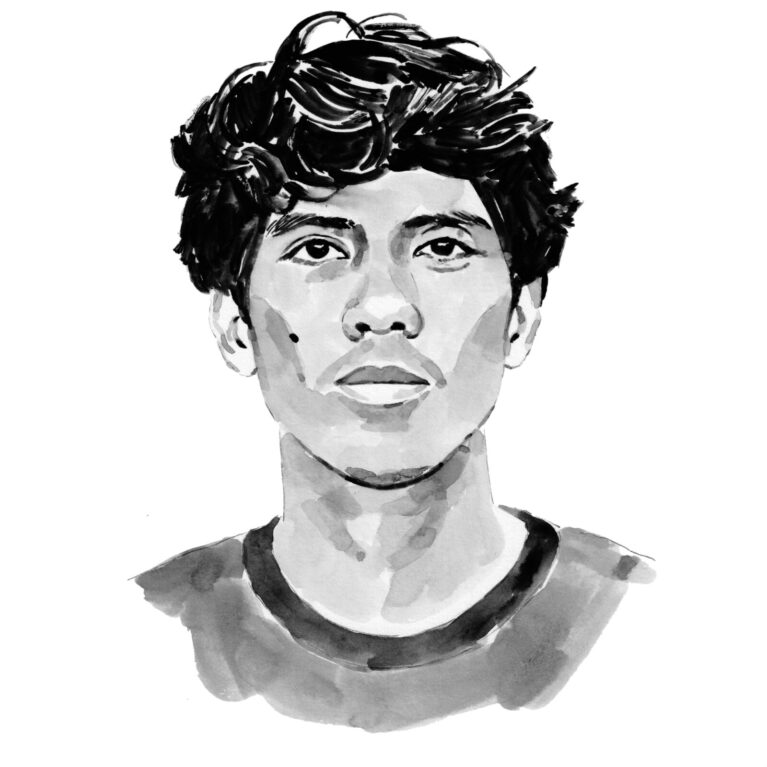
Raymart Cacacha
Born and raised in Palawan, an archipelago in the Philippines, I have a deep connection to the sea, which has always been part of my island’s culture and identity. Although I didn’t grow up in a fishing community, the ocean was been a constant presence in my life through family trips, the stories told me by friends, and the people I knew who depended on it. As I got older, I began to notice not only the beauty and richness of our marine environment, but also the struggles faced by local fishers, from declining catches to the relentless...
Thousands Lost: Community-Led Solutions for Endangered Shark Bycatch in Palawan’s Small-Scale Coastal Fisheries
The primary objective of this project is to understand and reduce shark and ray bycatch in San Vicente, Palawan, by documenting its scale, identifying high-risk gear and areas, and working with local communities to develop practical solutions.
Sharks and rays are among the most threatened marine vertebrates, yet many small-scale fisheries land them in high numbers as bycatch. In San Vicente, this issue threatens both marine biodiversity and the sustainability of local livelihoods. By collecting the first reliable data on elasmobranch bycatch, mapping hotspots and collaborating with fishers and local government, this project provides the knowledge and community-driven strategies needed to protect these species while supporting food security.
Shark and rays are among the most threatened marine animals, and the Philippines is a hotspot for their catch and consumption. As an archipelagic nation, the country relies heavily on the sea for food and livelihoods, but small-scale fisheries continue to grow under an open-access system. With many fishing grounds already overfished, shark and ray populations are increasingly at risk.
Palawan, often called the country’s ‘last ecological frontier’ and designated a UNESCO Man and the Biosphere Reserve, also faces growing pressures. Between 2018 and 2024, our team carried out a rapid bycatch assessment across six provinces in the Philippines. In San Vicente, more than 2,000 bycatch incidents were reported from just three villages. A pilot project to monitor landings later recorded over 300 sharks and rays in less than five weeks, many of which were juveniles and endangered, threatened and protected species. Fishers often see these animals as a nuisance, yet declining catches and economic pressure push them to keep what they land. This shows the need for awareness, practical solutions and livelihood strategies.
Following the rapid bycatch assessment, this project conducts landing monitoring in Alimanguan, San Vicente, to generate the first detailed dataset of elasmobranch bycatch in Palawan. Working with the community, we aim to design strategies that reduce shark mortality while promoting sustainable fisheries – an approach that, if successful, can be replicated across the Philippines.
- To document shark and ray bycatch in San Vicente by conducting regular landing surveys and monitoring fishing vessels.
- To identify high-risk gear and bycatch hotspots by combining catch data, fisher knowledge and spatial mapping.
- To develop community-based mitigation strategies by sharing findings with local fishers and government, and agreeing on feasible measures such as adjustments to gear, seasonal closures or the protection of nursery areas.