
Conserving Malaysian rhino rays with communities, BRUVs and genetics
The east coast of Johor is one of the few sites on the Malay Peninsula where the bottlenose wedgefish and giant guitarfish still co-occur. These ‘rhino rays’ are listed as Critically Endangered on the IUCN Red List, but little is known about their key habitats, limiting meaningful spatial protection. Amanda is interested in recent social media sightings and field surveys that suggest these species persist in fragmented distributions. She is integrating a range of approaches to generate critical data about rhino ray distribution, population structure and habitats while empowering local communities to take part in conservation.
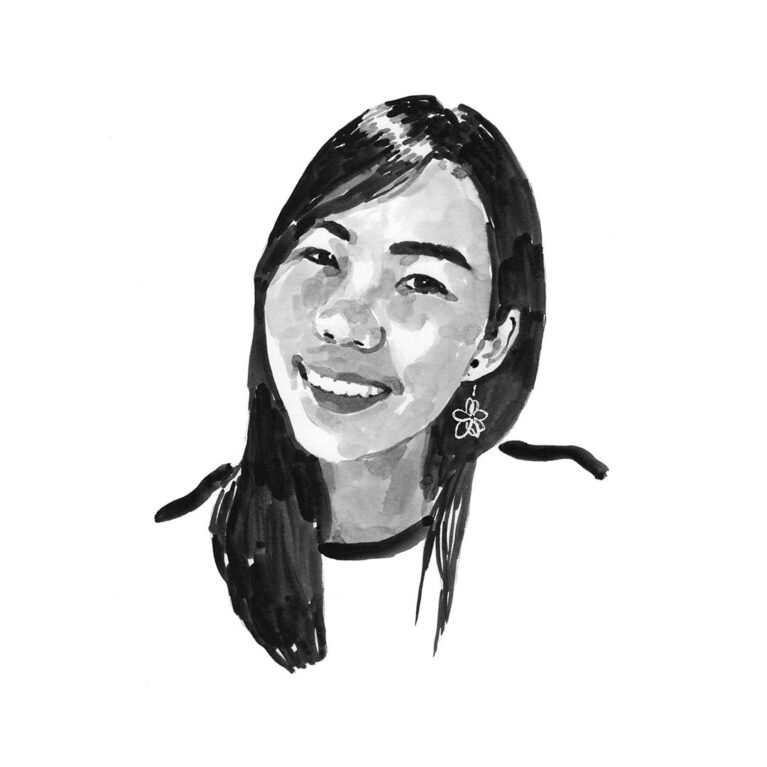
Amanda Jhu Xhin Leung
I grew up in Kuala Lumpur, the capital of Malaysia and a city far from the ocean, but I have been fascinated by marine life for as long I can remember. That interest really took off when I was 12, during my first visit to Underwater World Langkawi, an aquarium in Malaysia. Seeing sharks and rays up close was an eye-opening experience that sparked a passion and it has stayed with me ever since. This led me to pursue a BSc in aquatic resource science and management at the University of Malaysia Sarawak, where I built a...
Integrative Conservation of the Rhino Rays in Malaysia, using underwater videos, genetics, and community-based approaches
The primary objective of this project is to enhance the conservation of rhino rays in Malaysia by combining BRUVS surveys, genetic analyses and community engagement to generate critical data on their distribution, population structure and habitats while empowering local communities to take part in conservation.
The east coast of Johor is one of the few places in Malaysia where both the bottlenose wedgefish and giant guitarfish are found. Yet sightings indicate that populations are fragmented and threatened by fishing and coastal development. With no project so far focused on rhino rays here, research and conservation on Johor’s east coast are needed. This project will be the first to focus on rhino rays in Johor, providing essential knowledge for their conservation.
Rhino rays, including wedgefishes (Rhinidae) and giant guitarfishes (Glaucostegidae), are among the most threatened elasmobranchs globally, with life-history traits such as slow growth, late maturity and low fecundity leaving them highly vulnerable to overfishing. Their close association with shallow coastal habitats further exposes them to a wide range of fishing equipment, while coastal development and habitat degradation continue to erode suitable habitats. As a result, species such as the bottlenose wedgefish Rhynchobatus australiae and giant guitarfish Glaucostegus typus are now classified as Critically Endangered on the IUCN Red List, with populations reduced to small, fragmented refugia. The lack of information about their key habitats constrains the development of meaningful spatial protection.
The Indo-West Pacific, including Malaysia, is the global centre of rhino ray diversity, with 11 species recorded across four families: Rhinidae, Glaucostegidae, Rhinobatidae and Pristidae. On the east coast of Johor, one of the few sites on the Malay Peninsula where the bottlenose wedgefish and giant guitarfish still co-occur, recent social media sightings and field surveys suggest that the latter is targeted by recreational anglers and persists in fragmented distributions. The coastline also features sandy substrates, mangroves, sea-grass beds and coral reefs – habitats that may serve as nurseries or feeding grounds. Community-based engagement, such as working with local fishers and recreational anglers, will be crucial for generating knowledge, raising awareness and supporting conservation measures. This project seeks to achieve this by combining biological data with local knowledge to inform evidence-based protection strategies.
This project aims to support the conservation of rhino rays in Johor through science-based research and community engagement. The specific objectives are:
- To assess habitat use, relative abundance and the composition of shark and ray communities by using BRUVS surveys, with a focus on rhino rays.
- To determine the population genetic structure of bottlenose wedgefish and giant guitarfish.
- To build local capacity by conducting citizen science workshops with fishers and anglers to increase awareness and encourage community participation in rhino ray conservation.