
Guy Paulet
Who I am
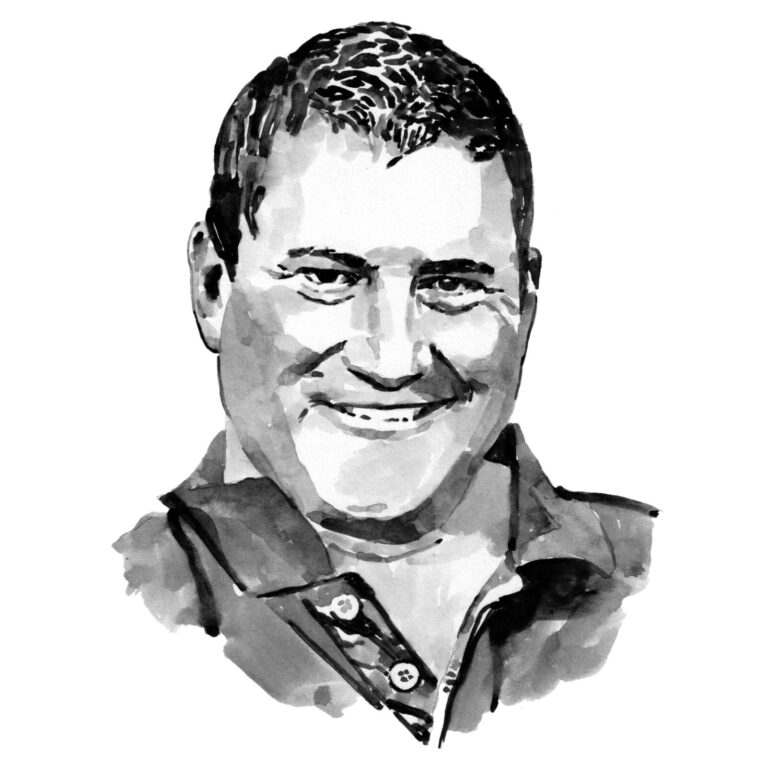
As an experienced fisheries scientist, aquaculture specialist and conservation leader, I am dedicated to advancing marine conservation and responsible resource management. For nearly two decades I have been professionally involved in marine and freshwater resource management across Africa and now, as managing director of the South African Shark Conservancy, I oversee all research programmes, operational functions and strategic direction of the organisation. This work builds on several years of progressive leadership roles within the conservancy, including operations manager, programme manager of the Shark Academy and field operations manager.
I am also a director of AirMark Technologies, a company specialising in spatial data representation, and a research associate at Rhodes University. My academic background is grounded in ichthyology and fisheries science, and I have a BSc degree in microbiology, biochemistry and zoology, a BSc Honours in ichthyology and fisheries science and an MSc in fisheries science, all from Rhodes University.
Over my career, I have developed a broad portfolio of expertise that spans research, applied aquaculture, environmental consulting and project management. I previously served as a research officer at Rhodes University, supervising students and contributing to various long-term programmes in fisheries science. As a consultant since 2002, I have delivered specialist studies, environmental impact assessments, biosecurity plans and technical reviews for leading environmental firms and agencies throughout Africa.
Where I work
This Stereo-BRUV (Baited Remote Underwater Video) project focuses on two of South Africa’s ecologically significant marine protected areas: the Table Mountain National Park Marine Protected Area (TMNP MPA) and the West Coast National Park Marine Protected Area (WCNP MPA). Together, they encompass a diverse range of coastal and offshore habitats, providing an ideal natural laboratory for studying fish communities, spatial biodiversity patterns and long-term ecosystem condition.
The TMNP MPA, situated along the Cape Peninsula, spans a complex mosaic of temperate marine ecosystems influenced by the Benguela and Agulhas currents. Characterised by extensive kelp forests, rocky reefs, deep offshore pinnacles and dynamic coastal zones, the area supports high levels of endemism and is known for its ecological productivity. Its varied bathymetry and exposure regimes create distinct ecological niches, making it a priority site for monitoring the responses of fish assemblages to spatial protection measures. Stereo-BRUV deployments within the TMNP MPA provide high-resolution, non-extractive data on species composition, abundance and size structure across multiple habitat types.
Further north, the WCNP MPA encompasses part of Langebaan Lagoon and adjacent coastal and offshore environments. This region is strongly shaped by the nutrient-rich Benguela upwelling system, giving rise to cold-water reef communities, sandy benthic habitats and sheltered lagoon environments that differ markedly from those of the Cape Peninsula. The WCNP MPA is particularly important for assessing gradients in species diversity, biogeographic transitions and the ecological functioning of protected cold-temperate ecosystems. Stereo-BRUV sampling here enables consistent, comparable observations across habitats with contrasting exposure, turbidity and productivity.
By analysing video datasets from both marine protected areas, the project establishes a robust comparative framework to evaluate spatial protection efficacy, monitor long-term biodiversity trends and inform adaptive marine management strategies across South Africa’s temperate coastline.
What I do
The Stereo-BRUV project is entirely desktop-based, focusing on the processing and analysis of video datasets collected within the TMNP MPA and the WCNP MPA. All the field work is completed by SANParks and the South African Shark Conservancy’s role is centred on converting raw footage into high-quality ecological information that can support marine management and conservation planning.
Daily work begins with organising incoming video files, metadata and deployment logs to ensure that sampling events are accurately tracked. Analysts review each Stereo-BRUV deployment using specialised software capable of calibrated length measurements, species identification and frame-by-frame annotation. A significant portion of the routine involves carefully watching video sequences to identify fish species, record MaxN values and capture size estimates, ensuring that all observations follow consistent taxonomic and methodological standards.
Throughout the day, analysts cross-reference uncertain identifications with field guides, reference imagery or internal species libraries, maintaining high accuracy in the dataset. Quality control is performed continuously, including verifying calibration files, checking measurement precision and validating species codes across deployments and habitat types. Data are entered into structured databases, followed by routine data cleaning and error checking. Preliminary analyses, such as summarising species richness, relative abundance or size-frequency distributions, are conducted to track progress and ensure the data are complete. The team often meets to discuss methodological issues, resolve taxonomic uncertainties or refine work-flow protocols. Additional tasks include maintaining data backups, reviewing previous studies for contextual insight and generating progress reports or visual summaries for internal review. The project demands careful attention to detail, strong taxonomic skills and consistent data management practices to produce reliable, scientifically defensible outputs.
Through this systematic daily routine, the project transforms raw underwater footage into meaningful ecological datasets that support the monitoring and management of South Africa’s key marine protected areas.