
Building a beautiful future for all: meet the 2026 Small Grant project leaders
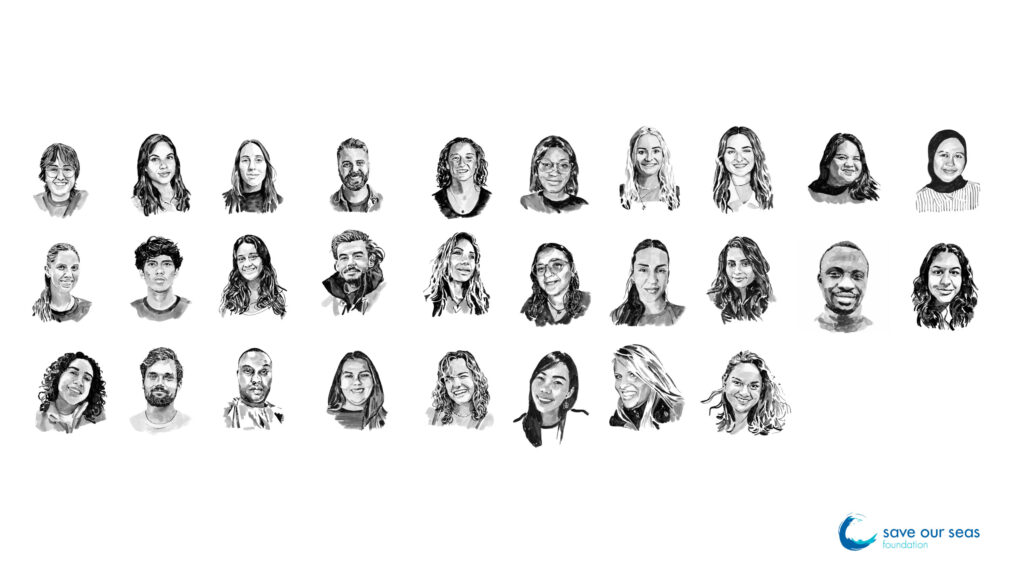
We are thrilled to announce the 27 recipients of our Small Grants for 2026. These scientists, educators and conservationists hail from 23 countries around the world and they include young researchers starting out, experienced conservationists with hard-earned insights, and change-makers thinking critically about how to achieve the change we need. Together they make up a cohort of world-builders taking action to mould a fairer, healthier future for us all, a future in which people and the ocean thrive.
Nature writer Robert MacFarlane reflects in his book Underland: A Deep Time Journey, ‘As we have amplified our ability to shape the world, so we become more responsible for the long afterlives of that shaping. The Anthropocene asks of us the question memorably posed by the immunologist Jonas Salk: ‘Are we being good ancestors?’’
It’s a question that weaves through every research project, education programme and conservation initiative: what world are we shaping? For our not-too-distant future selves, but mostly for the people – our children, our grandchildren – who will come after us. In a media climate where bad news is big news and where our attention is a priceless commodity, publishing the work being done by people who are shaping a beautiful world – with joy, respect and innovation – is a critical counterpoint to the narrative that we’re powerless to create a future that truly benefits us all.
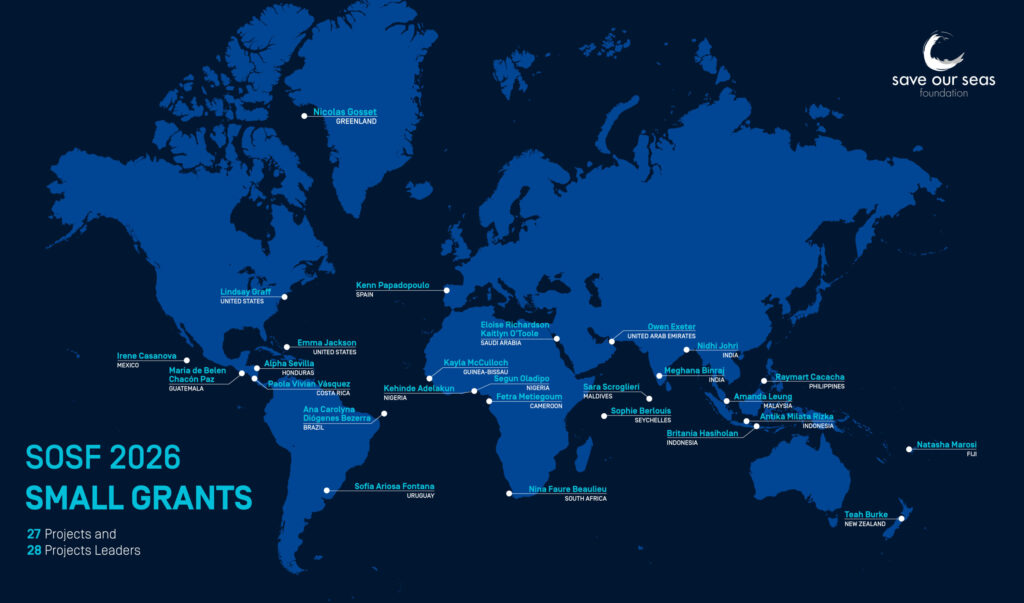
Illustrated by Julia Dufour | © Save Our Seas Foundation
In Nigeria, Kehinde Adelakun is combining science with local knowledge to monitor catches, map critical habitats and test safer fishing methods to protect the Seret’s butterfly ray, and in doing so is helping to secure the livelihoods of coastal communities that depend on healthy seas.
Alpha Sevilla is assessing practical monitoring tools to help understand fishing impacts and support effective management to protect shark populations in Honduras.
On the east coast of Johor, one of the few sites on the Malay Peninsula where the bottlenose wedgefish and giant guitarfish still co-occur, Amanda Jhu Xhin Leung is integrating a range of approaches to generate critical data on rhino rays.
Ana Carolyna Dióegenes Bezerra wants to understand how lemon shark populations at Fernando de Noronha (an oceanic island), Atol das Rocas (the only atoll in the South Atlantic) and Abrolhos (a continental archipelago with Brazil’s largest coral reef system) might be connected.
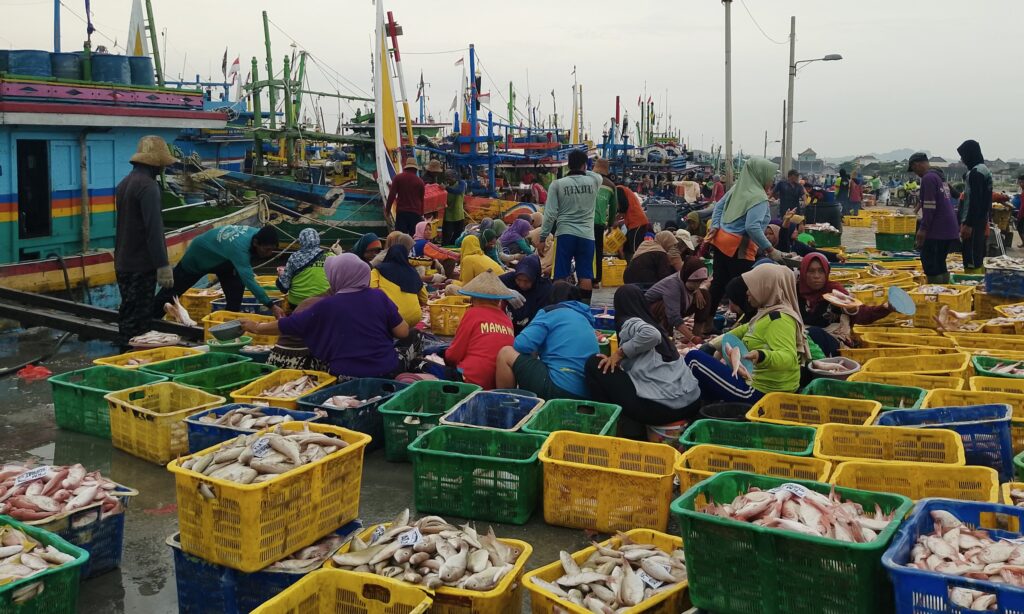
Fishing activity at a bustling pier in Indonesia. Photo © Antika Milata Rizka
In Tuban, East Java, Antika Milata Rizka is mapping critical habitats for wedgefish, monitoring catch trends and promoting safe release practices to reduce mortality and support stronger management.
Britania Hasiholan is using underwater camera traps and passive acoustic recorders to document diver–shark interactions at Shark Point and Halik Reef, two highly frequented dive spots in an Indonesian marine protected area, to create evidence-based recommendations that will support sustainable tourism.
Eloise Richardson wants to understand how temperature extremes and coastal development affect the health, behaviour and reproduction of Critically Endangered Halavi guitarfish in the Al Wajh lagoon in the northern Red Sea.
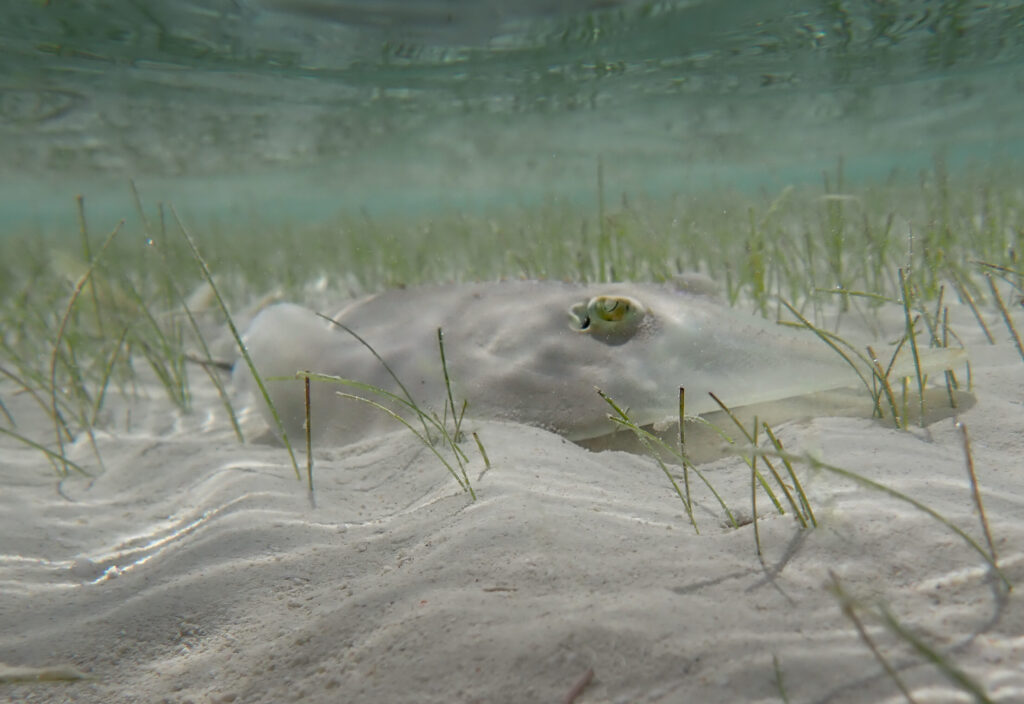
A guitarfish in the Al Wajh lagoon. Photo © Eloise Richardson
Emma Jackson is applying the DODAT, a non-lethal, minimally invasive sampling tool, to detail bull shark diets in the coastal waters of Florida’s Crystal River and the Crystal River springs systems.
Fetra Metiegoum’s project will train Cameroonian fishers in safe handling and live-release practices, map nursery habitats and create the country’s first shark and ray reference collection to support education and conservation.
Irene Casanova is using shark-safe hormone analysis and ultrasonography to improve our understanding of connectivity between populations of silky sharks in Revillagigedo and coastal regions of the Mexican Pacific.
Kayla McCulloch is searching for sawfish in the Bijagós Archipelago of Guinea-Bissau using a cost-effective duplex eDNA assay.
Kenn Papadopoulo’s NEOBLUE project will use underwater video surveys to gather the first systematic data on neonate blue sharks in the Ría de Vigo on Spain’s Galician coast.
In the New York Bight, intensive recreational fishing activity overlaps with seasonal aggregations of juvenile sand tiger sharks and habitat for dusky sharks. Lindsay Graff is measuring how capture stress affects survival, focusing on the rod-and-reel recreational fisheries whose impacts we know little about.
Maria de Belen Chacón Paz is researching how sharks and rays move through Guatemala’s fisheries and markets and strengthening community-led monitoring.
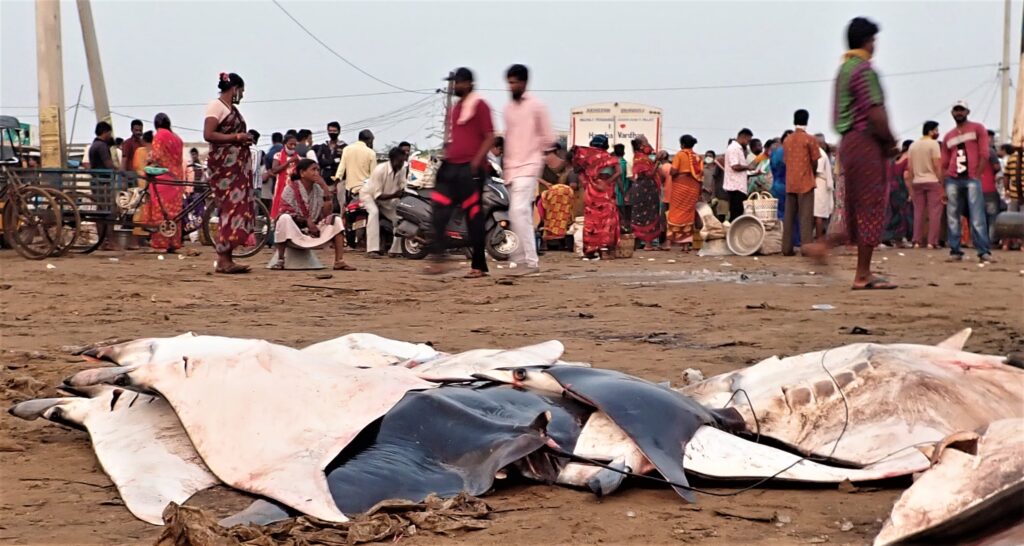
Rays landed at a site in India. Photo © Meghana Binraj
Meghana Binraj is using advanced imaging and anatomical visualisation to illuminate the hidden anatomy and species diversity of India’s small-bodied sharks, rays and chimaeras to place knowledge in the hands of fishers, students and educators who have historically been excluded from science.
Natasha Marosi is partnering with Fiji’s Ministry of Fisheries to determine whether the Ba Estuary and lower river still function as a nursery and aggregation site for shark and ray pups.
Nicolas Gossett is collaborating with Inuit fishers along Greenland’s west coast to quantify and identify ingested plastic debris in long-lived Arctic sharks and rays.
Nidhi Johri is analysing ray tissues and conducting community surveys, and sharing her results with fishers, consumers and policy-makers to raise awareness about the risks of consuming threatened species and to encourage a reduction in consumption.
Nina Faure Beaulieu is developing and testing a shark and ray monitoring protocol to be carried out by onboard observers in South Africa’s hake bottom-trawl commercial fishery.
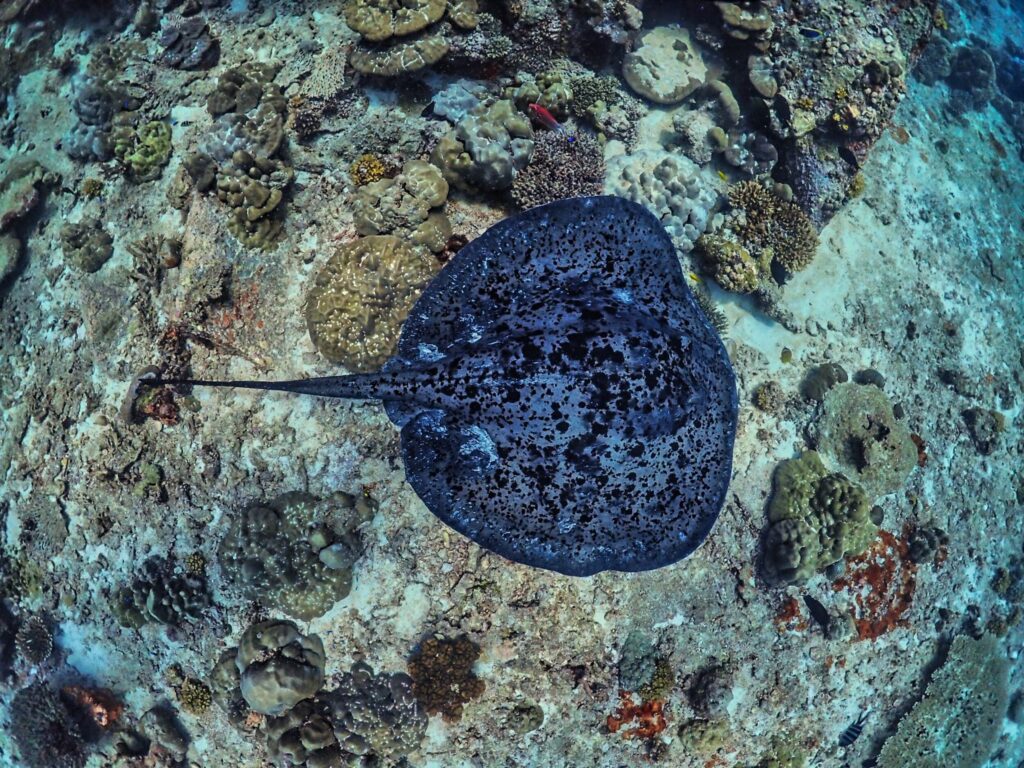
Round ribbontail ray. Photo © Owen Exeter
Using citizen science, baited cameras and environmental DNA, Owen Exeter aims to find out where priority species persist in the Gulf of Oman, and which areas are critical for their conservation.
Paola Vivian Vásquez is tracking leopard and starry round stingrays in El Jobo Bay on Costa Rica’s north-west Pacific coast.
Raymart Cacacha is detailing the first account of shark and ray bycatch in San Vincente, Palawan, in the Philippines, and working with the community to co-design approaches to reduce shark mortality and promote sustainable fisheries.
The Maldivian government introduced a nationwide shark fishing ban in 2010, affording gulper sharks nearly 15 years of protection. Sara Scroglieri is collecting baseline data on gulper sharks to create a standardised national monitoring framework.
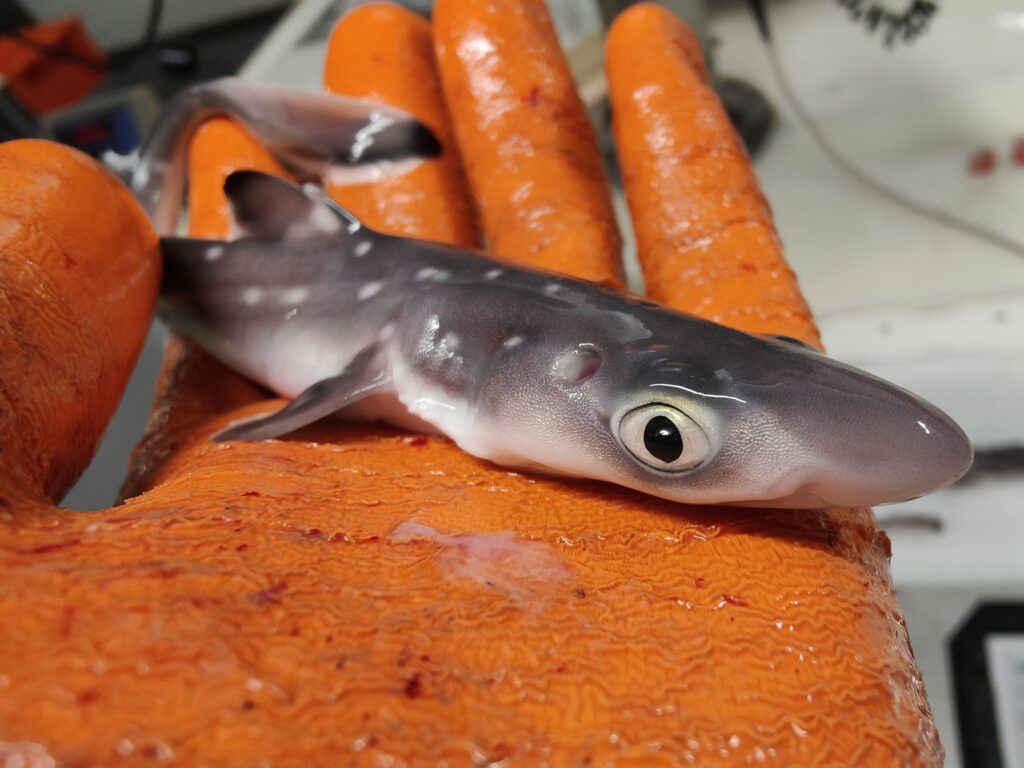
Deep-sea shark species. Photo © Teah Burke
Segun Oladipo is creating a genetic reference library for the Critically Endangered African wedgefish. Using small tissue samples collected at fish landing sites, he will help generate DNA ‘barcodes’ that can be used to identify an individual to species level even when it has been traded or processed.
Sofia Ariosa Fontana is updating and improving the availability of genetic information for the overfished narrownose smooth-hound shark, closing a critical gap in effectively managing the fishery.
Sophie Berlouis is starting an intensive 12-month monitoring programme on Seychelles’ traditional mackerel fisheries and their elasmobranch bycatch.
And Teah Burke is detailing the life histories of 30 deep-sea chondrichthyans on New Zealand’s Chatham Rise, a global deep-sea shark hotspot.
That’s 27 people making a meaningful impact in this year’s Small Grant cohort alone. Whenever you pause to wonder if one person really can shape the future, remember to count yourself among each and every change-maker – whose impact ripples outwards in the communities in which they live and work.