
You cannot save what you do not understand
The southern coastline of Cameroon did not teach me about sharks in the way a laboratory ever could. It did not begin with data sheets or tissue samples or underwater transects. It began with conversations, with long afternoons in fishing villages where the smell of salt and smoke lingers in the air, and where the story of every shark and ray starts long before it reaches a landing site.
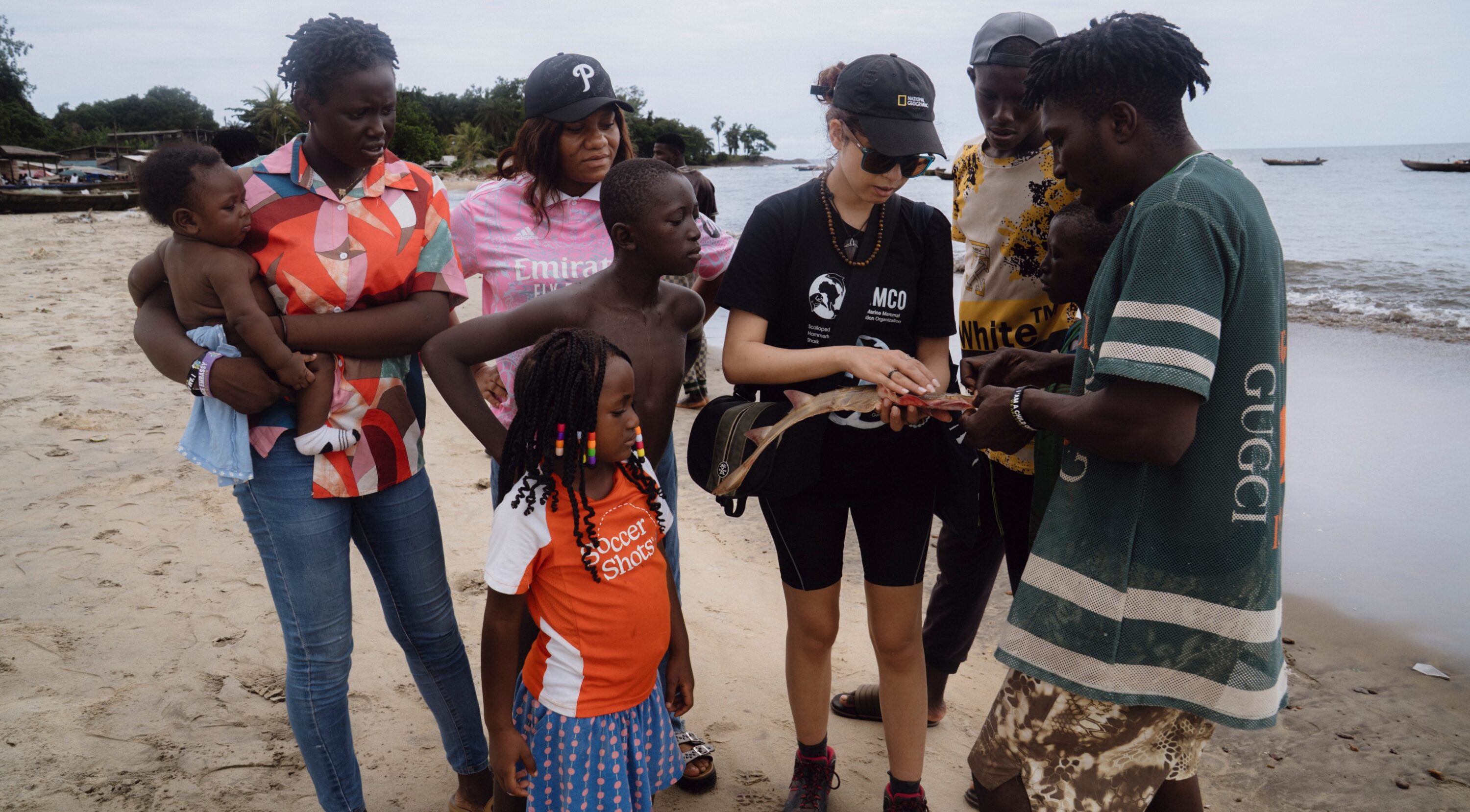
Raising awareness on sharks and rays of the coastal community of Londji village in Kribi, Cameroon. Photo © Gabriella Angotti
When I first arrived, I thought I was coming to study threatened species. I carried questions about population decline, bycatch rates, and conservation status. But the ocean had a different lesson waiting for me. Before a shark is caught, before a ray is pulled from the net, there is already a deeper story unfolding: there are fewer fish in the sea. The fishers told me this without graphs or statistics. They told me with tired eyes and smaller catches.
Most of them are not targeting sharks at all. They go to sea to survive, to feed their children, to keep life moving in villages where options are limited. Sharks, in fact, are often avoided. They are heavy, powerful, and capable of destroying small nets and fragile wooden pirogues. Rays are more tolerated, but sharks are rarely the prize. Nearly seventy percent of the sharks and rays brought ashore are caught accidentally, entangled in nets meant for something else. Conservation conversations often forget this simple truth: survival comes first.
When the boats return, the beach transforms into a living marketplace. Traders wait at the landing sites, scanning the day’s catch. The sharks and rays are quickly negotiated, bought directly from fishers, and passed along a chain of hands. Some are sold to restaurant buyers and local consumers. Others move through processors and middlemen, occasionally destined for foreign buyers. The life of a shark does not end at the shoreline; it enters an economy.
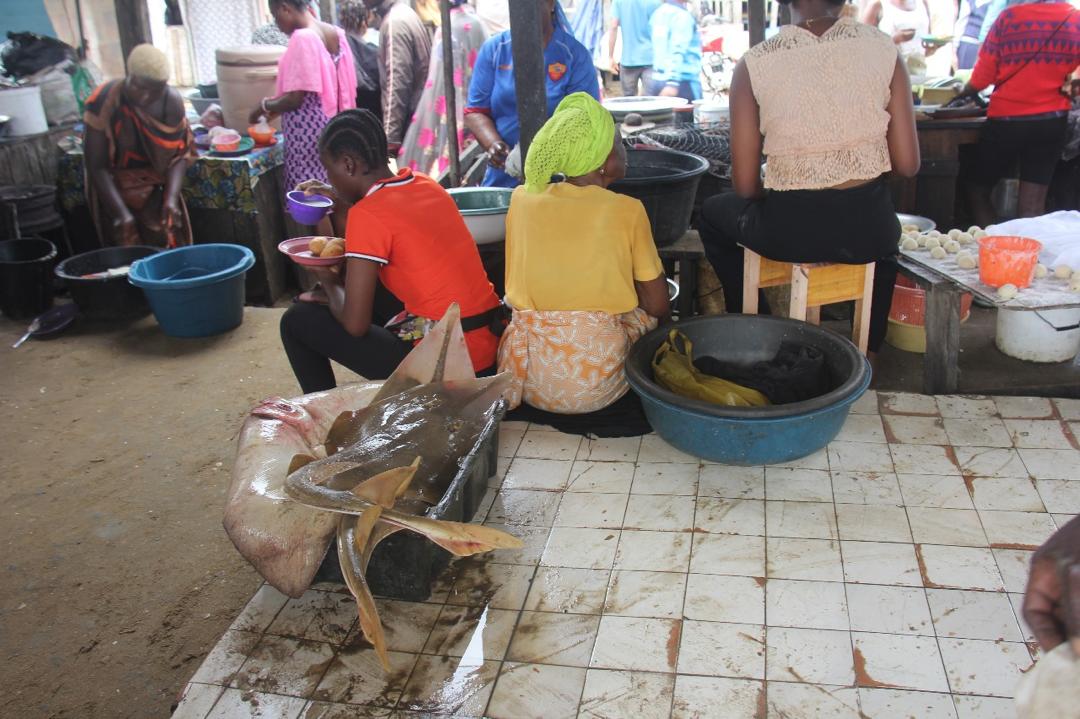
Fish market traders of Londji village in Kribi Cameroon. Photo © Ghofrane Labyedh
I was curious about what happened next. How were these animals handled? How were they cooked? In villages where electricity flickers or disappears for days, preservation demands creativity. Around sixty percent of the catch is smoked. Thick curls of smoke rise from wooden racks, preserving the meat so it can last without refrigeration. Some portions are braised and eaten fresh. Others are sun-dried. A fraction is frozen and transported inland to cities like Yaoundé and Bafoussam, far from the sea, where demand remains high.
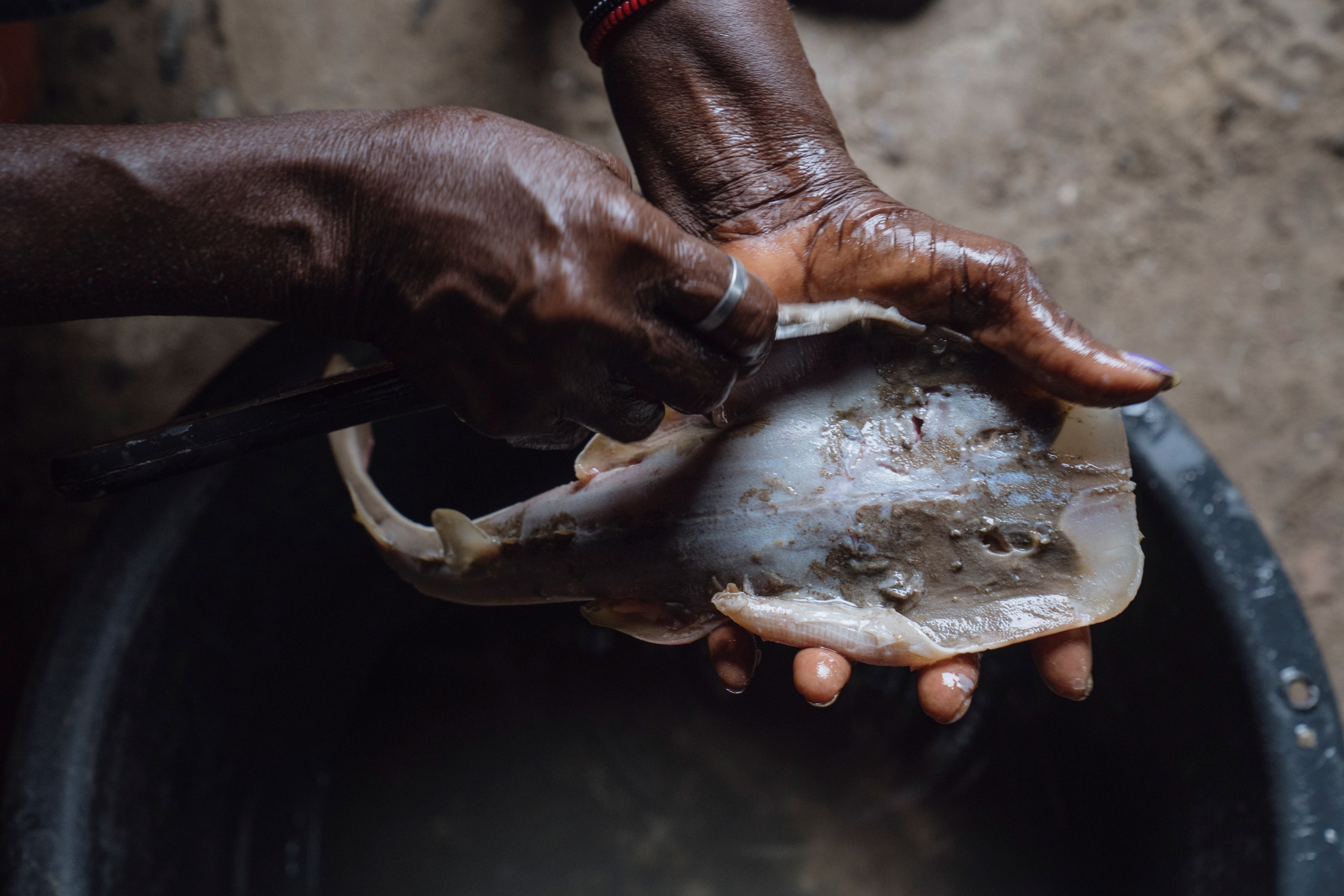
Smoking process of the blackchin guitarfish (Glaucostegus cemiculus) in Londji village in Kribi, Cameroon. Photo © Gabriella Angotti
Rays, especially, hold cultural weight. They are central to a traditional dish known as yellow soup, or taro with smoked ray, cherished particularly in the west of Cameroon. This is not simply food; it is memory, identity, and heritage served on a plate. Standing in those villages, watching women prepare and smoke the meat, I realised that conservation cannot arrive like a storm, tearing away what has existed for generations. You cannot tell a community to abandon a tradition overnight because a species is threatened.
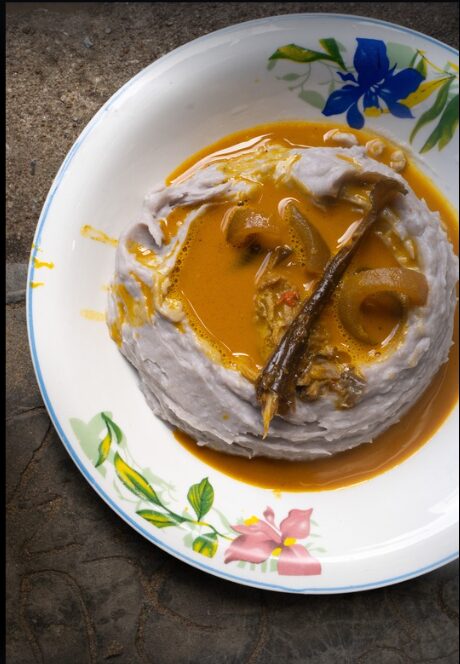
The yellow soupe (Taro / Achu); a traditional plate with smoked guitar fish in Londji, Kribi, Cameroon. Photo © Gabriella Angotti
Saving a species does not stop at science. It does not stop at data collection or laboratory analysis. To protect a shark, you must understand its ecology, yes — but also its economy, its cultural meaning, its journey through human hands. You must understand why it is caught, how it is sold, and what it represents to the people who depend on it.
What I learned along that coastline is that observation is more powerful than enforcement alone. When rules arrive without listening, conservationists become figures of fear. But when you sit, watch, ask questions, and return again and again, something changes. You begin to see pathways for alternatives: gradual reductions, different fishing practices, new livelihoods, awareness built on respect rather than accusation.
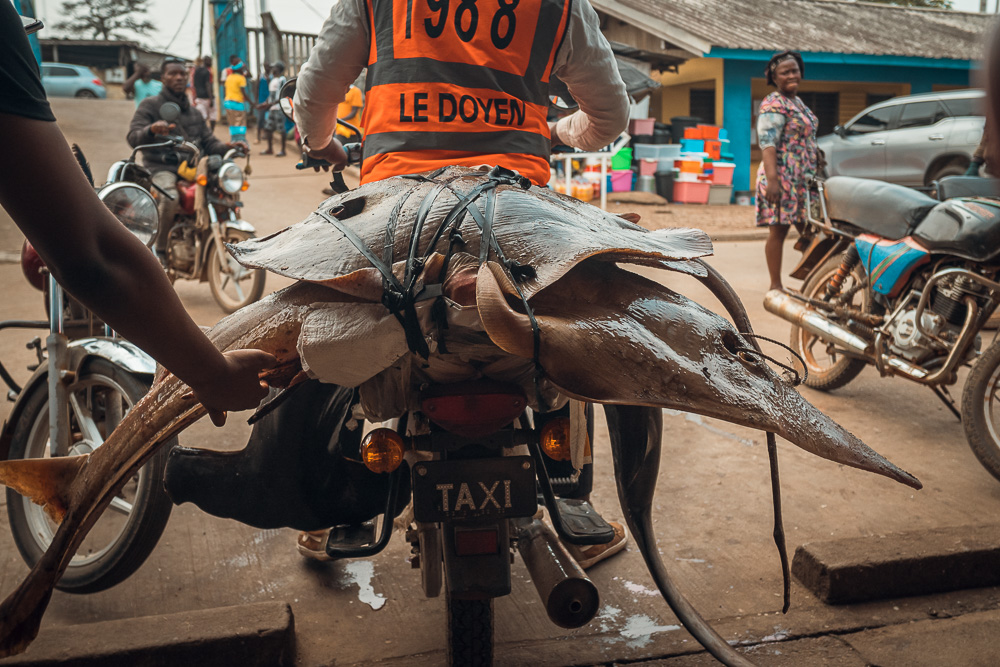
Shark and ray landings attached to motorbike for transportation from Mboa Manga fish market in Kribi, Cameroon. Photo © Gabriella Angotti
I went searching for knowledge about sharks and rays. Instead, I found a deeper lesson about people. Conservation is not about imposing limits from above. It is about standing within a community, understanding its rhythms, and working together toward solutions that protect both species and survival.