
Why Reproductive Biology Holds the Key to Saving Elasmobranchs in the Bay of Bengal
The Bay of Bengal is rich with marine biodiversity. Among them are elasmobranchs like sharks, rays, and skates, species that have existed for millions of years. Yet today, their future hangs in the balance. Increasingly targeted or caught as bycatch, many of these species, including the sharpnose guitarfish, are being pushed to the brink. In regions like the Bay of Bengal, where scientific data is scarce and exploitation of marine resources is widespread, understanding the reproductive biology of these species is not just important — it is essential for their survival. Without a clear picture of how these animals reproduce, effective conservation and recovery efforts cannot be developed.
The Unseen Vulnerability
Unlike bony fish that can release thousands of eggs in one go, elasmobranchs follow slower reproductive strategies. Some species lay eggs (oviparous), while others give birth to live young (viviparous or aplacental viviparous). These species often take years to reach maturity, have long gestation periods (or pregnancies), and produce only a handful of offspring per reproductive cycle. This means they simply can’t withstand the level of pressure that modern fisheries — both targeted and accidental — place on them.
During my fieldwork in Cox’s Bazar and Kuakata, I’ve collected biological samples of sharpnose guitarfish, conducting detailed examinations of reproductive organs to determine size at maturity, fecundity, and breeding cycles. Each sample tells a story. A juvenile caught too young, a pregnant female removed before giving birth—these stories are not just statistics, they’re warnings.
By understanding when and where elasmobranchs breed and give birth, we can map out critical habitats like nursery areas, and mating zones, that require urgent protection. This knowledge can guide marine protected area (MPA) planning or the timing of seasonal fishing bans. Imagine if fishers were informed about when peak breeding seasons occur and supported through compensation or alternative livelihood programs to avoid fishing during those windows—what a difference that could make.
Our findings already indicate that Glaucostegus granulatus has specific seasonal reproductive peaks. If we can align conservation regulations (such as gear bans or catch limits) with these windows, we could dramatically improve survival rates for the next generation.
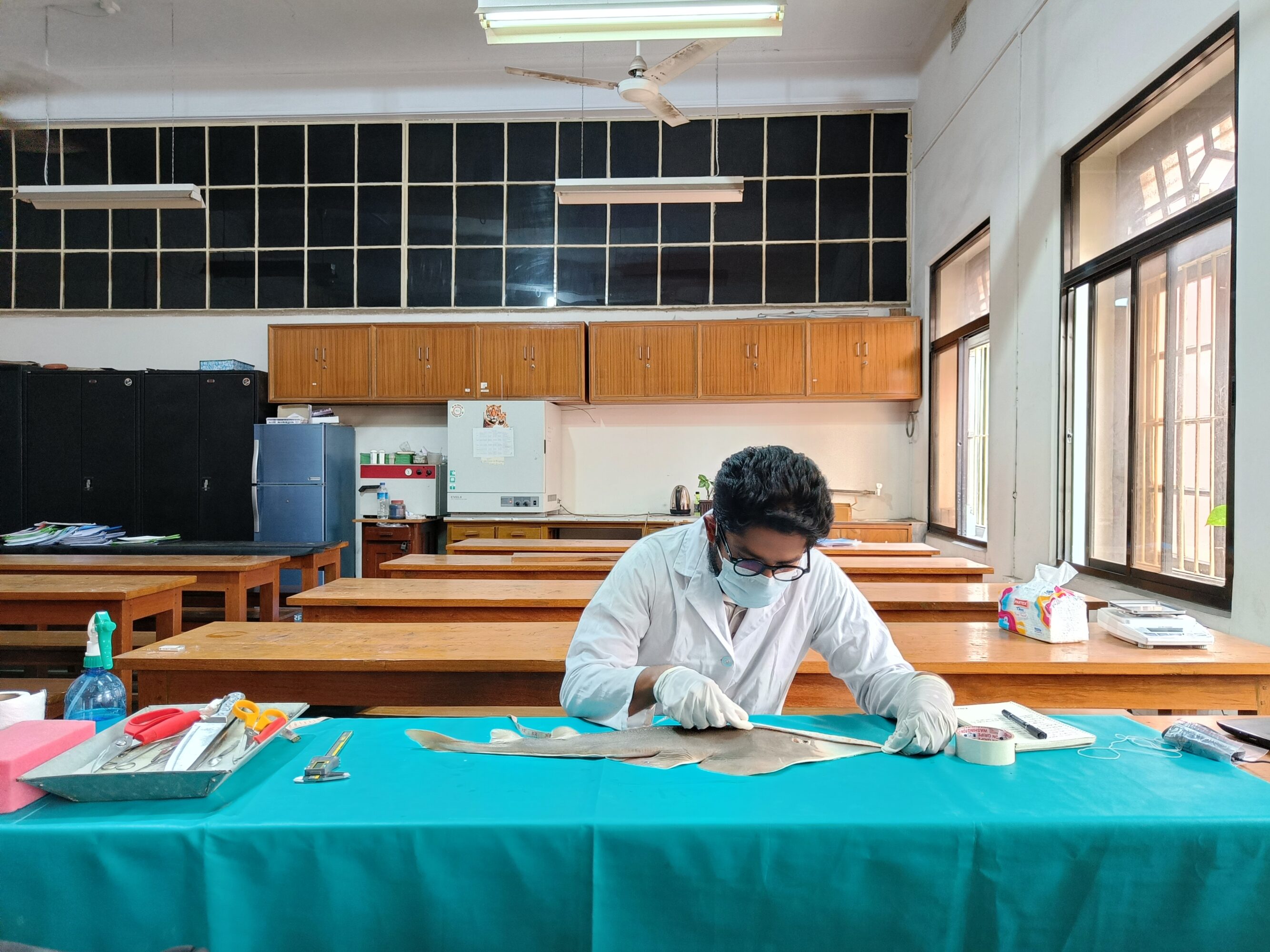
Measuring a Sharpnose Guitarfish specimen as part of the research. Photo © Antu Raha Durjoy
A Bridge Between Science and Policy
One of the most exciting outcomes of our research is its potential for policy change. By documenting the size at sexual maturity, for example, we can help establish size-based catch restrictions—ensuring individuals are not harvested before they’ve had the chance to reproduce.
Moreover, this information is vital for stock assessments and fisheries management plans. Without knowing how many offspring a species produces, how often they reproduce, or at what size they begin breeding, fisheries policies remain blind. Our research provides the eyes.
But research alone is not enough. Throughout this project, I’ve engaged closely with local fishers. Their knowledge, shaped by generations of observation, often complements scientific data. Many fishers, when informed about the species’ endangered status and low reproductive rate, expressed concern. They weren’t proud of catching juveniles or pregnant individuals—they were responding to economic need and lack of alternatives.
Conservation, therefore, must be inclusive. We need stronger enforcement of existing laws, yes-but also more education, co-management initiatives, and financial support for those on the frontlines of this crisis.
We carry the hopes of coastal communities, of children who deserve to see sharks and rays in their natural habitat, and of the species themselves—struggling quietly against a tide of extinction.
This project is just a step, but it’s a vital one. By investing in reproductive biology research, we’re not only unlocking the life cycles of threatened elasmobranchs, we’re building the foundation for a future where both marine life and human communities can thrive.
Let us not wait until the silence in the ocean becomes irreversible. Let us act now—with knowledge, with empathy, and with urgency.
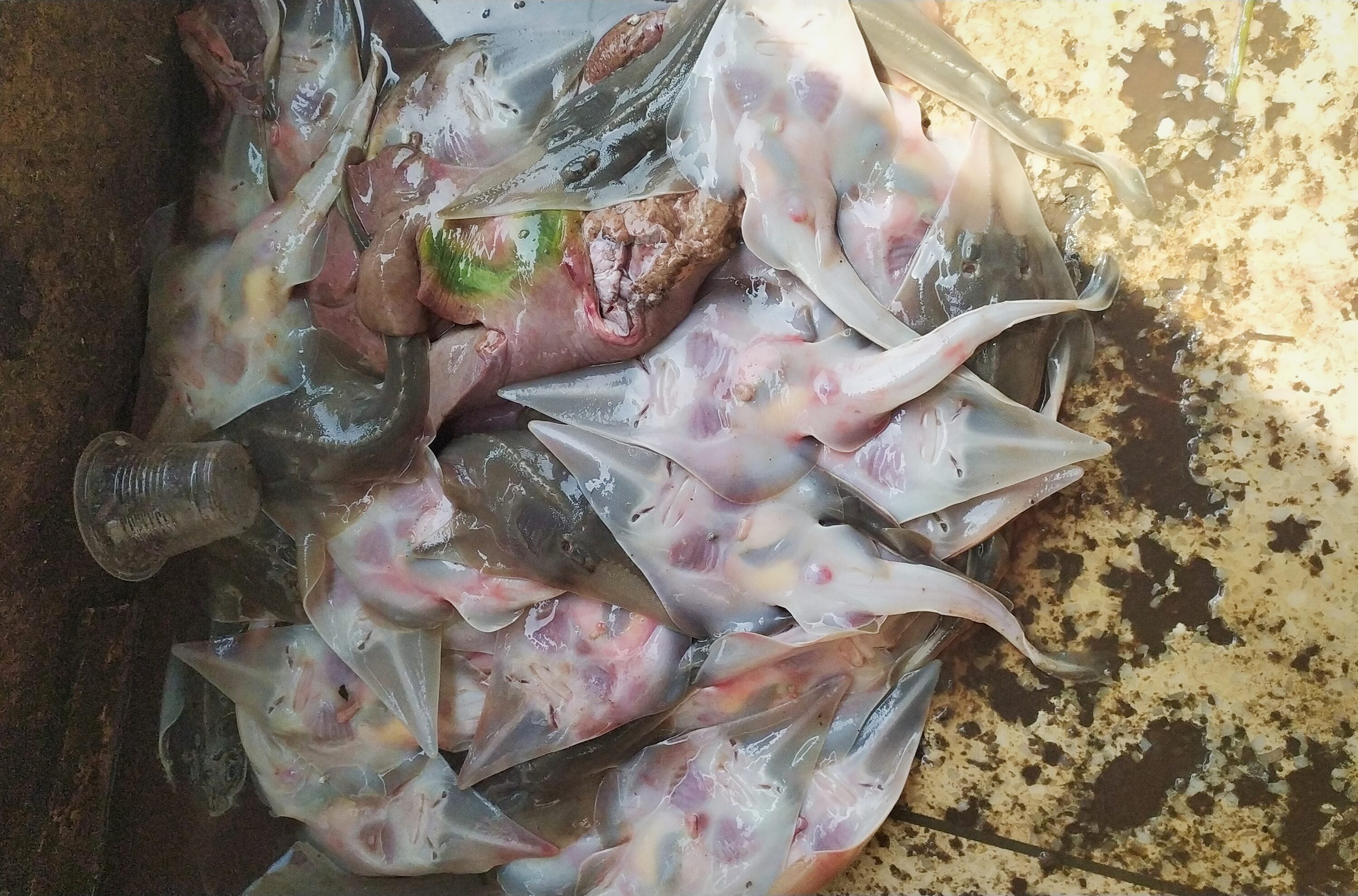
A pile of sharpnose guitarfish found at a landing site corner: evidence of unsustainable fishing practices driving the species towards extinction. Photo © Antu Raha Durjoy