
Why are large female Guitarfish key to the population?
In our project on the Freckled Guitarfish (Pseudobatos lentiginosus), we are trying to understand a simple but powerful question: how many offspring can a female produce, and what does that mean for the future of its population?
Fecundity is one of the most important traits in the biology of sharks and rays. Scientists estimate it by counting either the number of eggs developing in the ovaries or the number of embryos in the uterus. But there’s a complication: when animals are caught in fisheries, stress can cause females to abort their embryos. This means that counting embryos alone may underestimate their true reproductive potential.
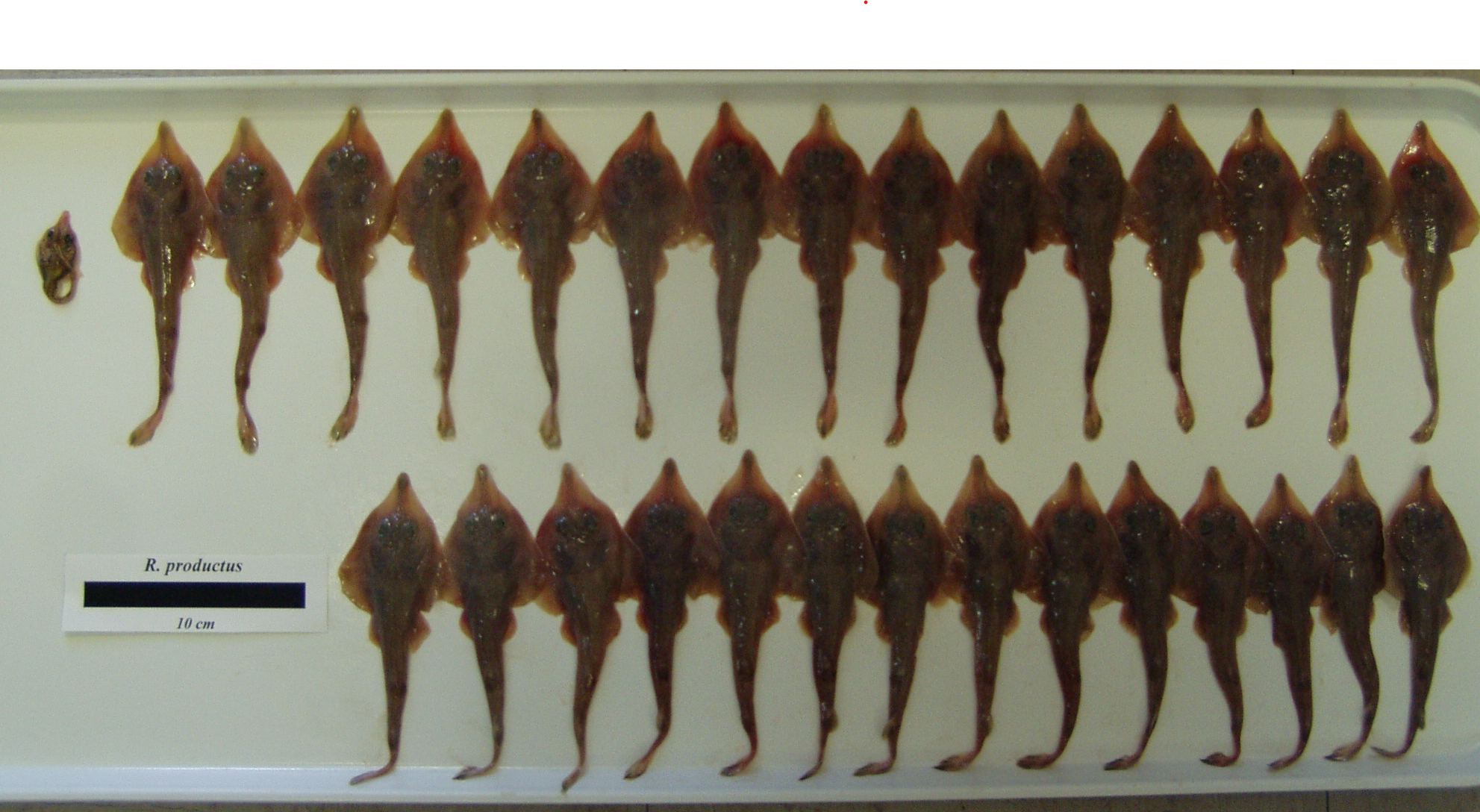
Entire litter of Pseudobatos productus from the Gulf of California, Mexico. Photo © Alfonsina Romo-Curiel | The University of Texas at Austin, Marine Science Institute
Compared to most bony fish, sharks and rays are slow reproducers. Some species produce only a few offspring per year. Even in extreme cases, like the whale or blue shark, numbers are high but still limited compared to other fish. This low reproductive output makes elasmobranchs particularly vulnerable to fishing pressure. When too many individuals are removed, populations struggle to recover.
Among guitarfishes, there is a clear pattern: bigger females tend to produce more offspring. This has been documented in several species, including Glaucostegus cemiculus, Rhinobatos schlegelii, and Pseudobatos productus. As females grow larger, their bodies can produce more eggs and carry more embryos.
This is where conservation becomes critical.
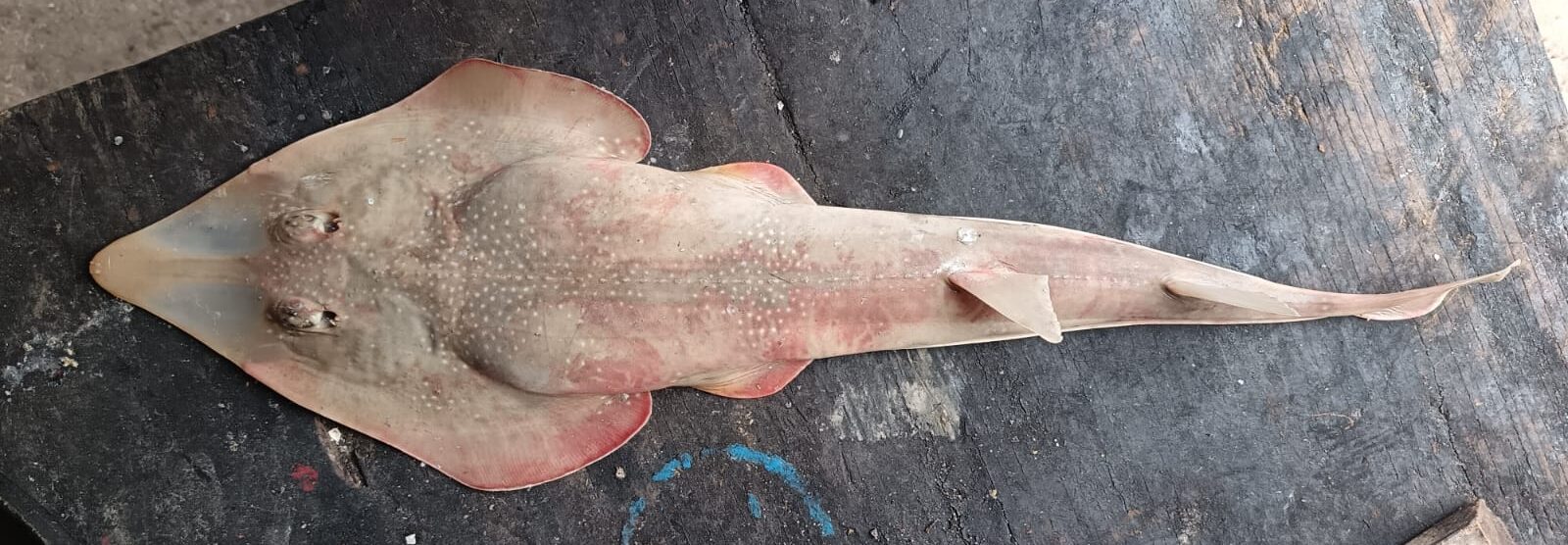
A pregnant female of Freckled guitarfish caught in Ciudad del Carmen, Campeche, México. Photo © Gammaliel Medina-Guzmán | Instituto Mexicano de Investigación Pesquera y Acuacultura Sustentable
Fishing often removes the largest individuals first. But in species like guitarfish, these large females are the most important for sustaining populations. Removing them can have long-term consequences, reducing the number of young entering the population and slowing recovery.
For the Freckled Guitarfish, this issue is even more pressing. This species is relatively small compared to other members of its family, rarely reaching more than 70 cm in length. Its smaller body size likely limits the number of offspring it can produce. In other words, it has less margin for loss.
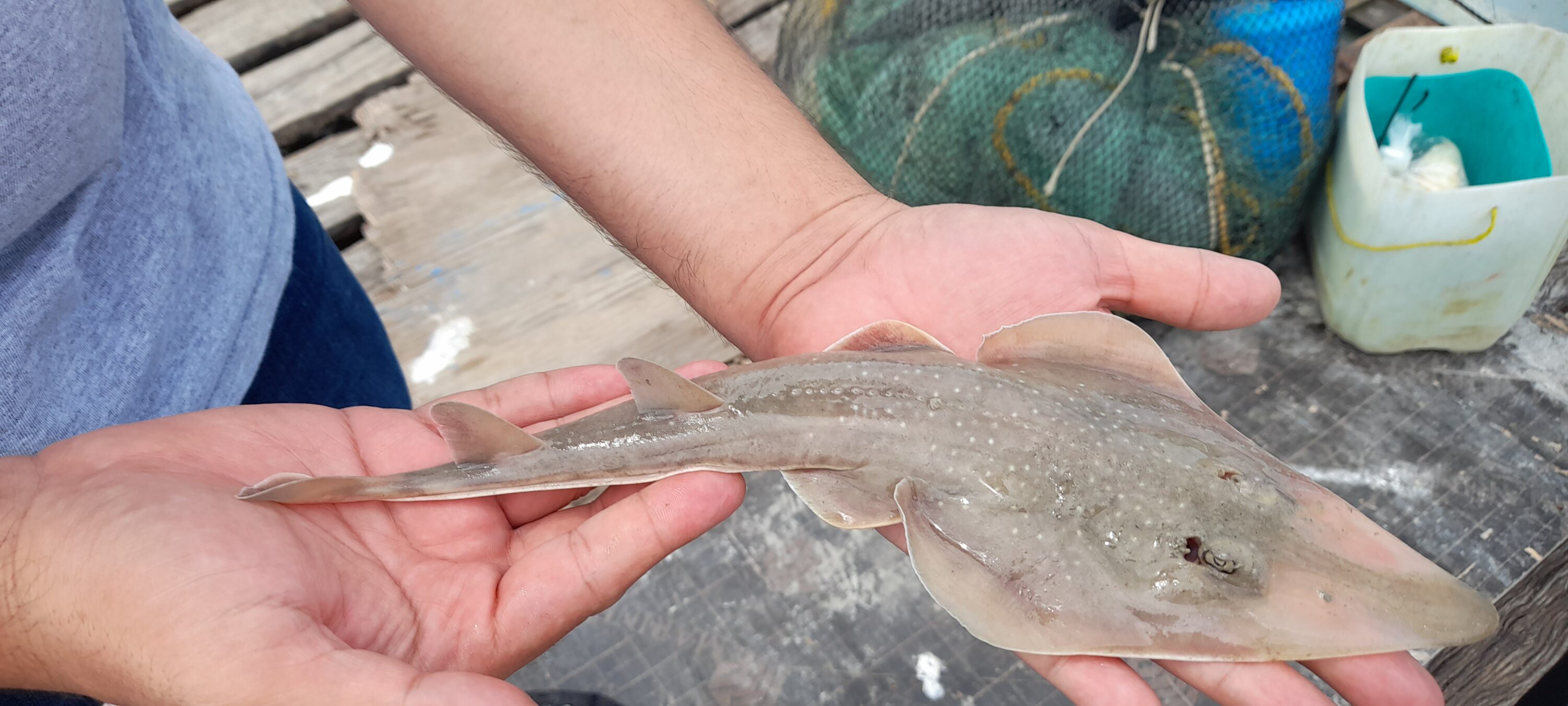
Juvenile of Pseudobatos lentiginosus from the southern Gulf of Mexico. Photo © Alfonsina Romo-Curiel | The University of Texas at Austin, Marine Science Institute
If fisheries disproportionately remove the largest females, the population may decline faster than expected, not because the species cannot reproduce, but because its most productive individuals are being lost.
Understanding these dynamics helps us ask better questions: Should we protect large females? Should size limits be part of management strategies?