
When there are sharks: Tsepo Mlambo, Research Technician
On the other side of the N2, where quenching waters no longer flow, KwaMakhutha Township is a crucible. Dreams, hopes, and desires rise from neighbourly chatter and the hours-long monologues of the television. They bubble together like the eager waters of a source lake carving out its river. Tsepo Mlambo, his surname meaning “river” in isiZulu and isiXhosa, is shaped by those bubbling contents. His source lake carved a river that led to a tributary called Camissa (Cape Town), the place of sweet waters, where sharks eventually became his profession.
Township life is layered. Community sits at the centre. Friends become family. The spaza shop becomes the hub of whispered news. The tavern down the road gathers men and women who come to loosen the knots in their minds. But it’s also a place where helplessness can take root so deeply that it takes a lifetime to unlearn. Escaping the cycle is far harder than crossing the N2 into Amanzimtoti, the “quenching waters.”
So when Tsepo graduated with a Bachelor of Social Science from the University of KwaZulu-Natal in 2015 and spent years being nourished only by rejection emails, the call to work with sharks broke the cycle. Even though it wasn’t what he studied, the salty water tasted sweet.
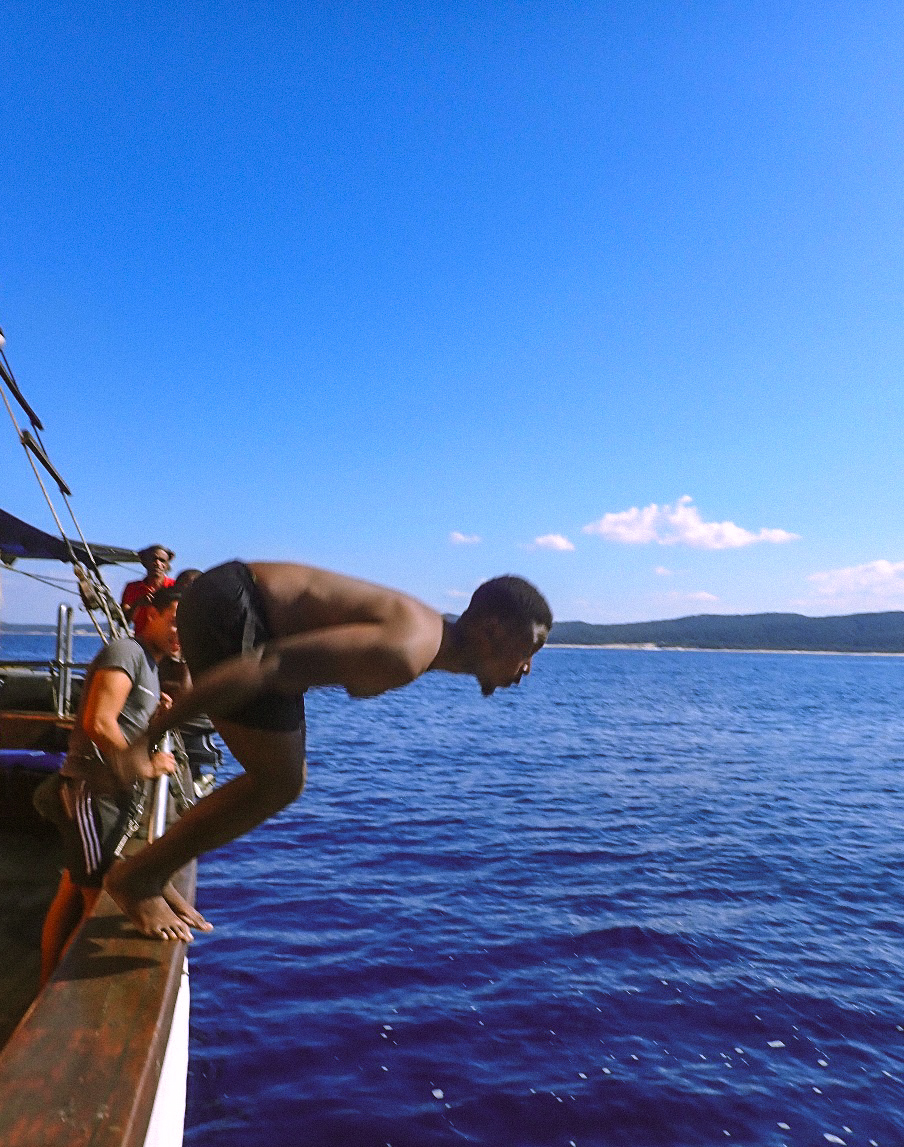
Tsepo Mlambo, a young research intern at the KZN Sharks Board, leaps from a research vessel into the warm waters of Sodwana Bay. Photo © Jamila Janna | Shark Spotters
“When I first heard I’d been accepted for a job, I was hopeful that I would have a good experience at that company and I did. I’ve heard horror stories from people who work, and that terrified me,” says Mlambo.
His river flowed to uMhlanga in 2018, where he joined the KwaZulu-Natal Sharks Board as a research intern, knowing only the sharks from Jaws and Deep Blue Sea. Two years later he left with the knowledge of a marine biology graduate. Then COVID-19 threatened to pull him back into the crucible he thought he had escaped. But his source lake had enough momentum to cut a new tributary through hard earth.
Shark Spotters arrived unexpectedly. After several failed attempts to submit his internship application in early 2020, he accepted his fate and that lockdown would make opportunities scarce.
Then, in 2021, the phone rang.
Four years later, the place of sweet waters continues to nourish dreams he never planned.
From joining established researchers tagging bronze whaler sharks, to searching for white sharks, dissecting stranded sharks for educational purposes, and attending science conferences — a world without sharks would never have carried him here.
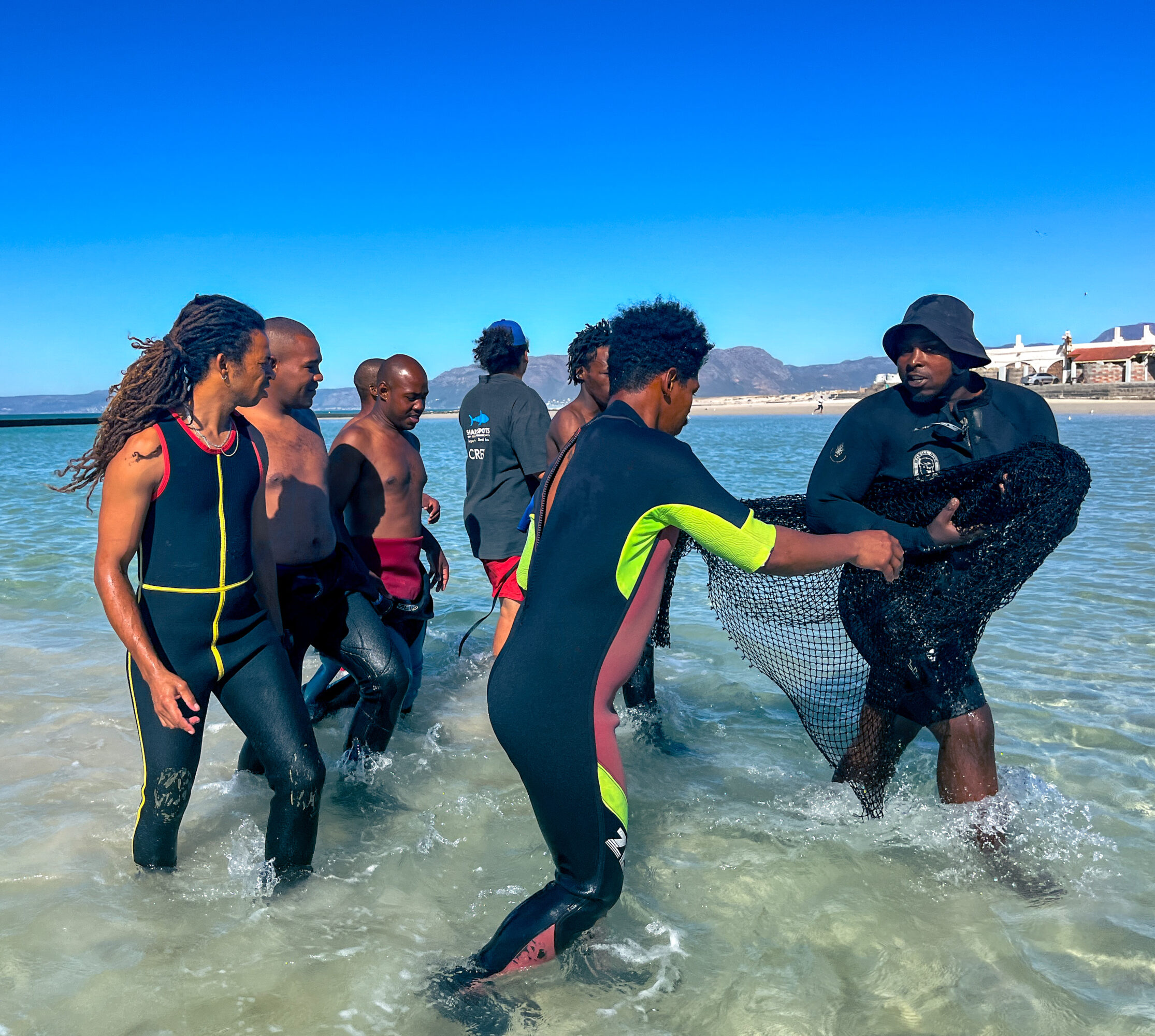
Tsepo Mlambo and the Coastal Conservation team relocate a stranded shark from the Strandfontein tidal pool. Photo © Jamila Janna | Shark Spotters
Tsepo enjoys all of it, even the data entry. “My work doesn’t feel like work. I get to be outside, installing telemetry devices and tagging fish. It might feel like work to others, but to me it’s like a weekend getaway. Being in nature, away from the hustle and bustle, keeps me going.”
Learning happens every day, surrounded by a team whose diverse skills and sweet banter make even long days lighter. He has faced fears and achieved far more than he imagined. Obtaining his skipper’s licence and commercial dive certification now allows him to dive with sharks and live up to his nickname, “shark boy.”
“The number of shark strandings due to orca predations surprised me. It has opened my eyes to how borderless the ocean is, and how sharks and orcas travel and cross paths in ways we rarely consider.”
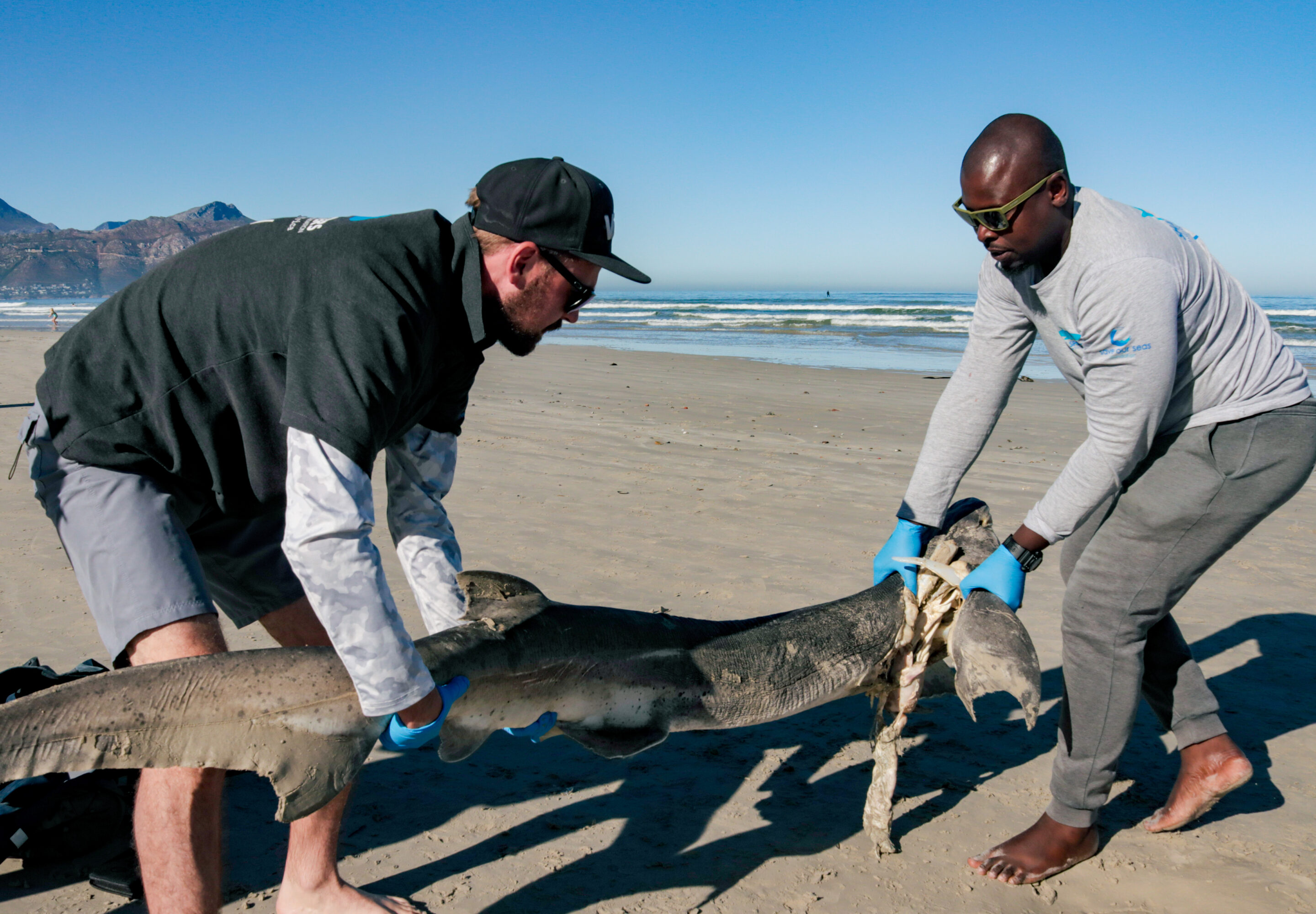
Tsepo Mlambo and Research Manager Dr Toby Rogers collect a washed-up bronze whaler showing signs of orca predation at Strand Beach. Photo © Jamila Janna | Shark Spotters
He advises young people not to fear dreaming, but to work for those dreams. “Leave your comfort zone. The Earth is expansive. Don’t fear the unknown. It’s scary, but it can be rewarding.”