
When the problem becomes the solution
Focusing only on a problem rarely leads to a solution. Sometimes, it is only when we shift perspective that unexpected answers begin to surface.
When I first began working to reduce the mortality of sharks and rays in small-scale fisheries, in the southern coastline of Cameroon, I carried assumptions with me. Like many conservationists, I saw fishers as part of the problem. Nets were catching juvenile sharks and rays. Populations were declining. The solution, I thought, would come from stricter rules, better enforcement, stronger awareness campaigns.
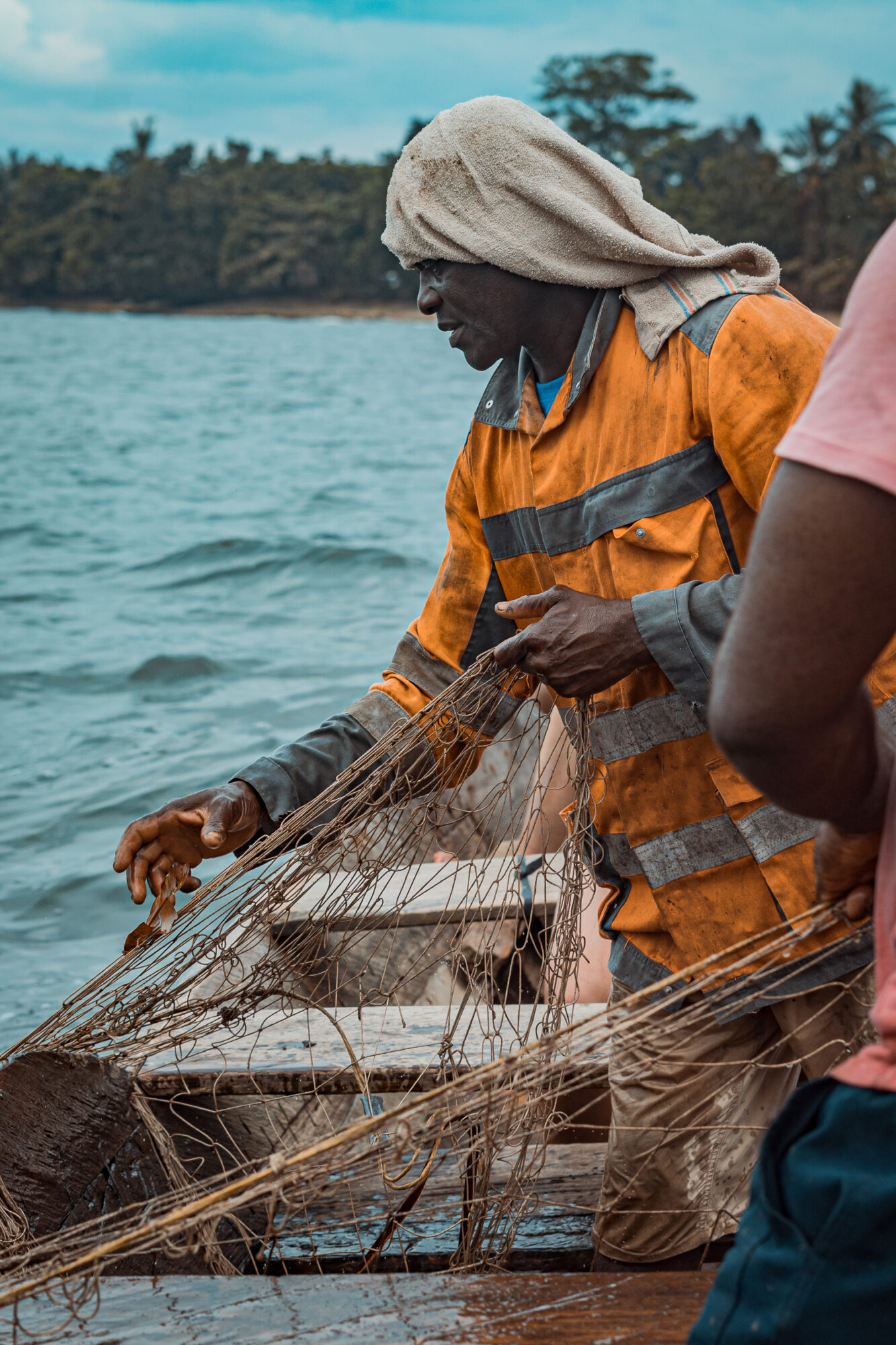
Artisanal fishers from Londji village in Kribi Cameroon, pulling back their nets. Photo © Hugues Karismatik
But working closely with the fishing community reshaped my understanding entirely. It taught me patience. It taught me humility. It taught me that things are rarely as simple as we imagine. Sometimes, the problem is not what we think it is. Sometimes, we are part of the problem because we fail to listen.
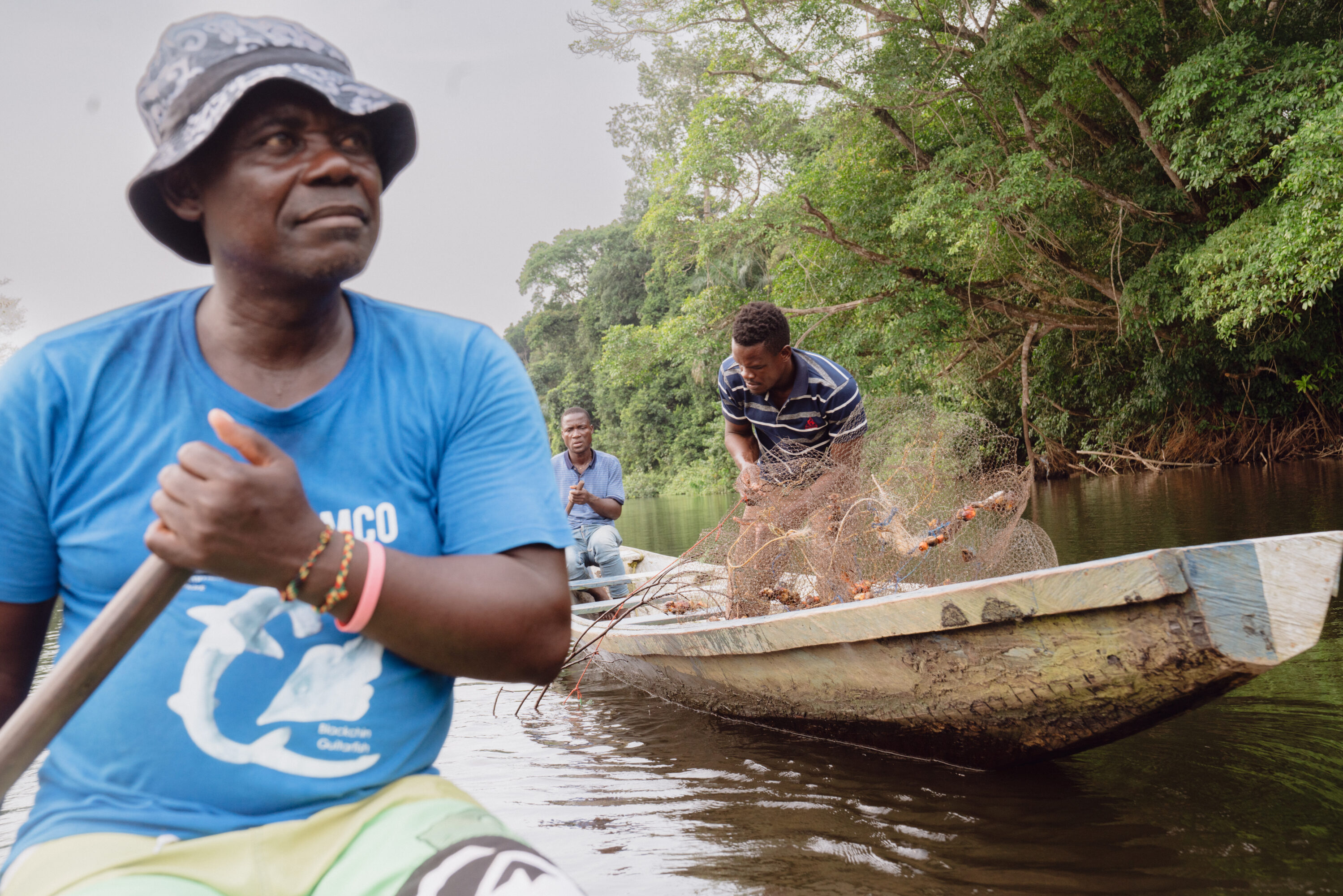
A leading fisher from Lobe Waterfall village in Kribi Cameroon "Leopold" the fisher behind the live-release initiative. Photo © Ghofrane Labyedh
During the socioeconomic interviews I conducted with fishers, I made a conscious decision to listen more than I spoke. One afternoon, a fisher shared a story that changed the course of my work. He told me that he once released a pregnant hammerhead shark from his net. Not because anyone told him to. Not because of a regulation. But because he believed she deserved to live and give birth to her offspring.
That story became my compass.
It inspired me to write my Save Our Seas and National Geographic proposals and to design an initiative centred on the live release of sharks and rays caught accidentally in fishing nets—especially juveniles and babies that still had a chance to survive. Instead of positioning fishers as offenders, I invited them to become partners.
Before launching any conservation action, I organised community meetings. Together, we discussed challenges and possibilities. We co-created solutions. Fishers participated in data collection, using GPS devices to record shark and ray catch locations. They were not just informants; they were collaborators.
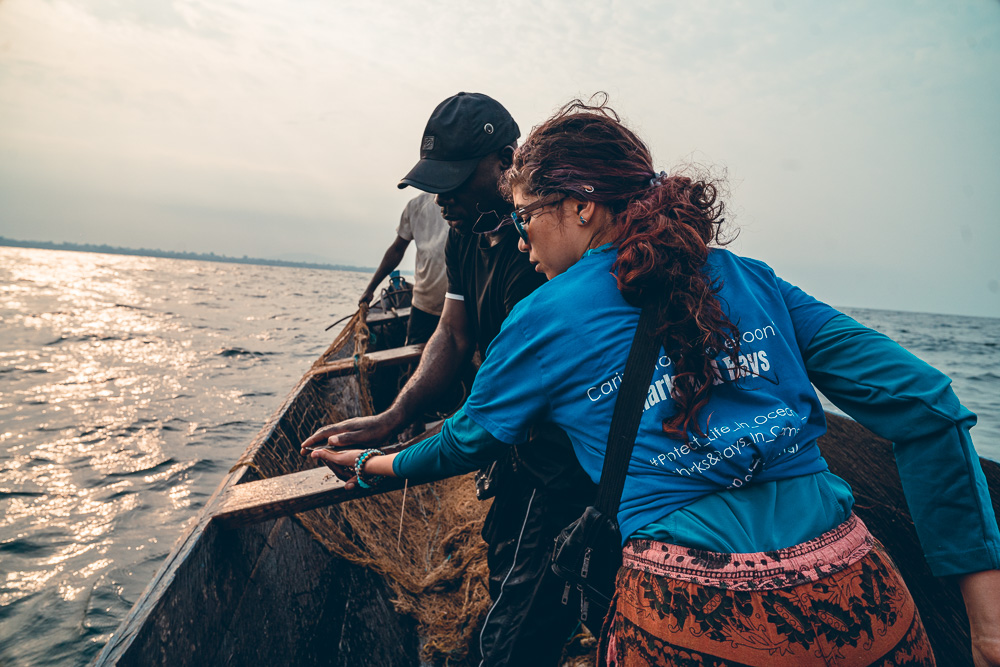
I joined fishers on eight sea trips across communities including Londji, Mboa Manga, and Lobe Waterfall. After conducting training sessions on how to safely handle and release sharks and rays, I accompanied them to put that knowledge into practice. Most of the time, their nets had been set the previous night. By morning, many sharks and rays caught as bycatch were already dead. Out of eight trips, we encountered only two live individuals.
Both were juvenile daisy rays (Fontitrygon margarita).
Those two encounters remain among the most powerful moments of my professional journey. As we carefully removed one ray from the net, I saw the fisher’s hands trembling. His voice was soft, almost anxious: “Is it still alive? Do you think it will survive?”
He cared deeply. I reassured him that the ray was alive and strong. At first, he hesitated. He did not trust his own hands. So I told him gently, “You are the one who will spend more time at sea. You should be the one to release it.”
A leading fisher from Moba Manga fish market in Kribi Cameroon releasing back a daisy ray back to the ocean after being caught in his nets. Photo © Hugues Karismatik
When he finally lowered the ray back into the water, something shifted. Pride replaced doubt. Responsibility replaced fear. In that moment, conservation was no longer mine—it was his.
I am certain he will tell that story to his children and grandchildren. For him, that release was not just an action; it was a transformation.
Today, the fishing community is taking the lead. They are becoming the first protectors of the very species once seen only as bycatch. And when change is led by the community itself, it becomes rooted. It becomes lasting. It becomes generational.
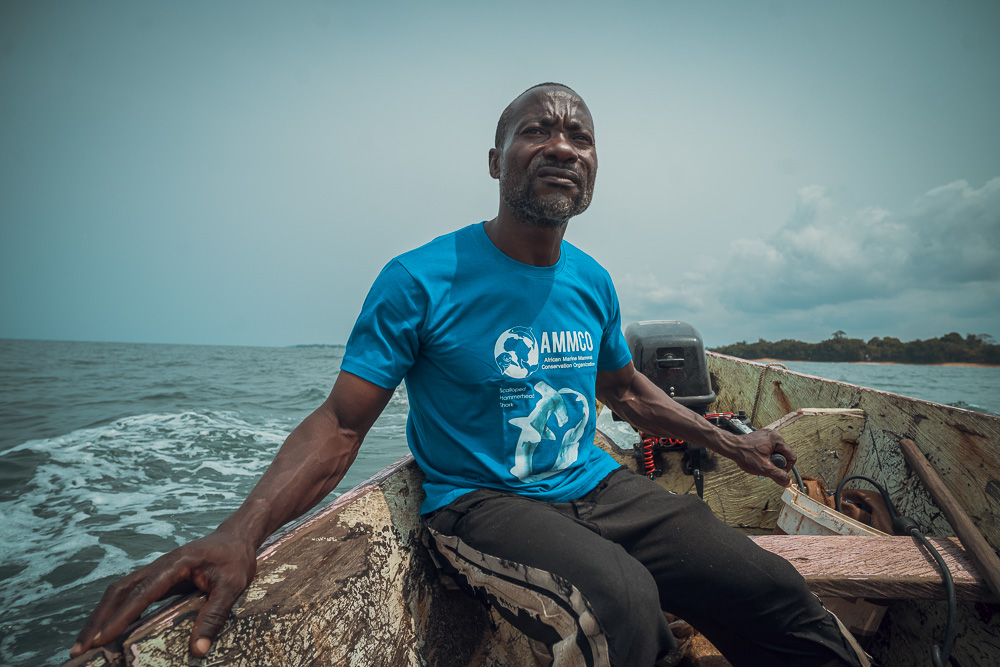
Artisanal fisher from Lobe Waterfall village in Kribi Cameroon, during a sea trip. Photo © Hugues Karismatik
This initiative has also begun to challenge broader narratives. Governments often view fishing communities as obstacles to conservation. But I have seen that they can be the solution. They are our eyes in the ocean, our bridge between science and reality.
Working closely with fishers has made our science more than data and reports. It has turned it into shared ownership, into lived experience, into stories worth telling.
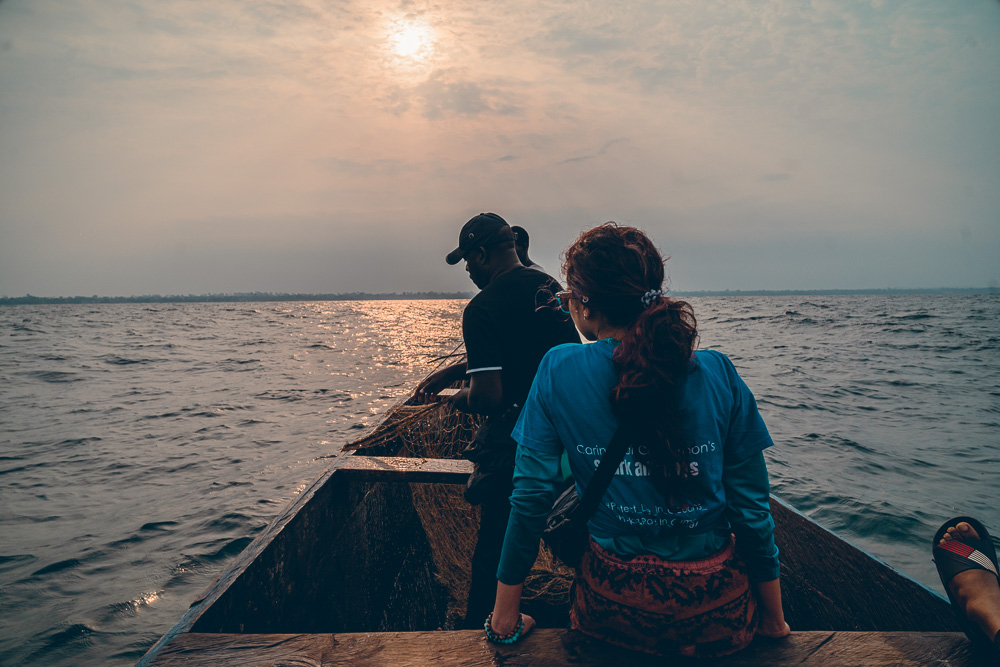
A leading fisher from Moba Manga fish market in Kribi Cameroon during a live-release sea trip. Photo © Hugues Karismatik
Sometimes, the solution does not lie in fighting the problem harder. Sometimes, it lies in standing beside those we once misunderstood—and discovering that they were ready to protect the ocean all along.