
What survives the heat: insights into Bahrain’s elasmobranch populations during its extreme heat
In August 2025, our team stood on a small research vessel in the waters of Bahrain under a sun that had pushed air temperatures past 45°C. The sea surface temperatures read between 35–36°C, one of the hottest marine environments on the planet at that time of year. Most people assume that little survives in Bahrain’s shallow waters at the height of summer. The waters we explored told us a different story.
Through our environmental DNA (eDNA) analysis (a technique that detects the DNA traces organisms shed into the water) we found evidence that sharks and rays are present in Bahrain’s waters in the peak of summer. They are using these habitats during this extreme environmental period: the seagrass meadows, the mudflats, the coral reefs, and the open sea. This was both remarkable and deeply important.
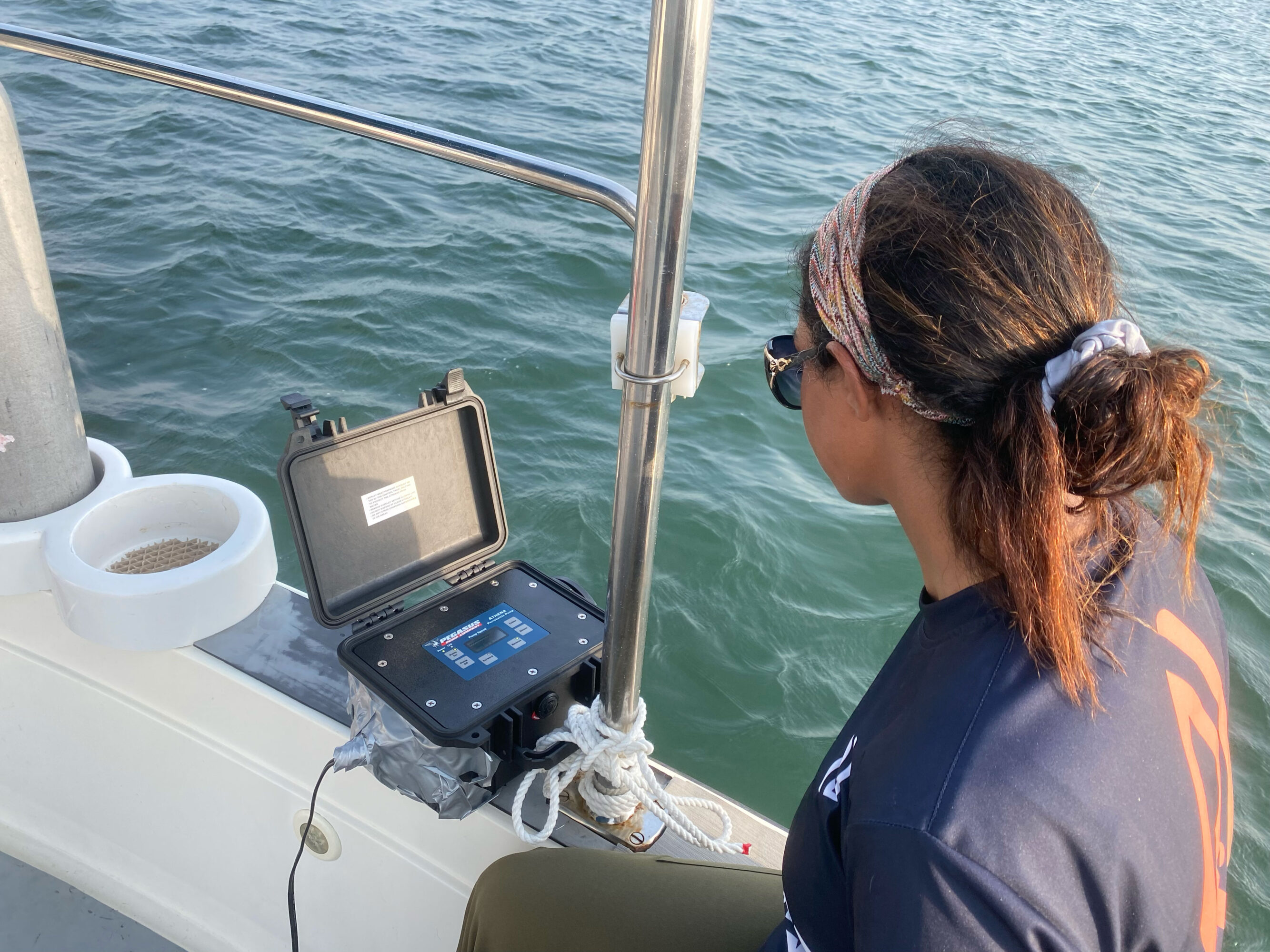
Reem monitoring the water filtering process. Photo © Dareen AlMojil | Nuwat for Environmental Research & Education
A fingerprint in the water
eDNA works like a biological fingerprint. Every organism (e.g., a shark, ray and/or fish), sheds cells, mucus, and DNA fragments into the water. By filtering seawater and sequencing these fragments in the laboratory, we can detect which species have been present, without ever needing to see them directly. In a sea where elasmobranchs are elusive and scientific data is almost non-existent, this is powerful.
We explored and sampled nine sites spanning various habitats including coral reefs, mangroves, seagrass meadows, mudflats, oyster beds and open-sea zones. Our first eDNA campaign has started revealing preliminary pieces of an important puzzle that we as researchers are trying to put together the presence of multiple elasmobranch taxa of which several are of critical conservation concern.
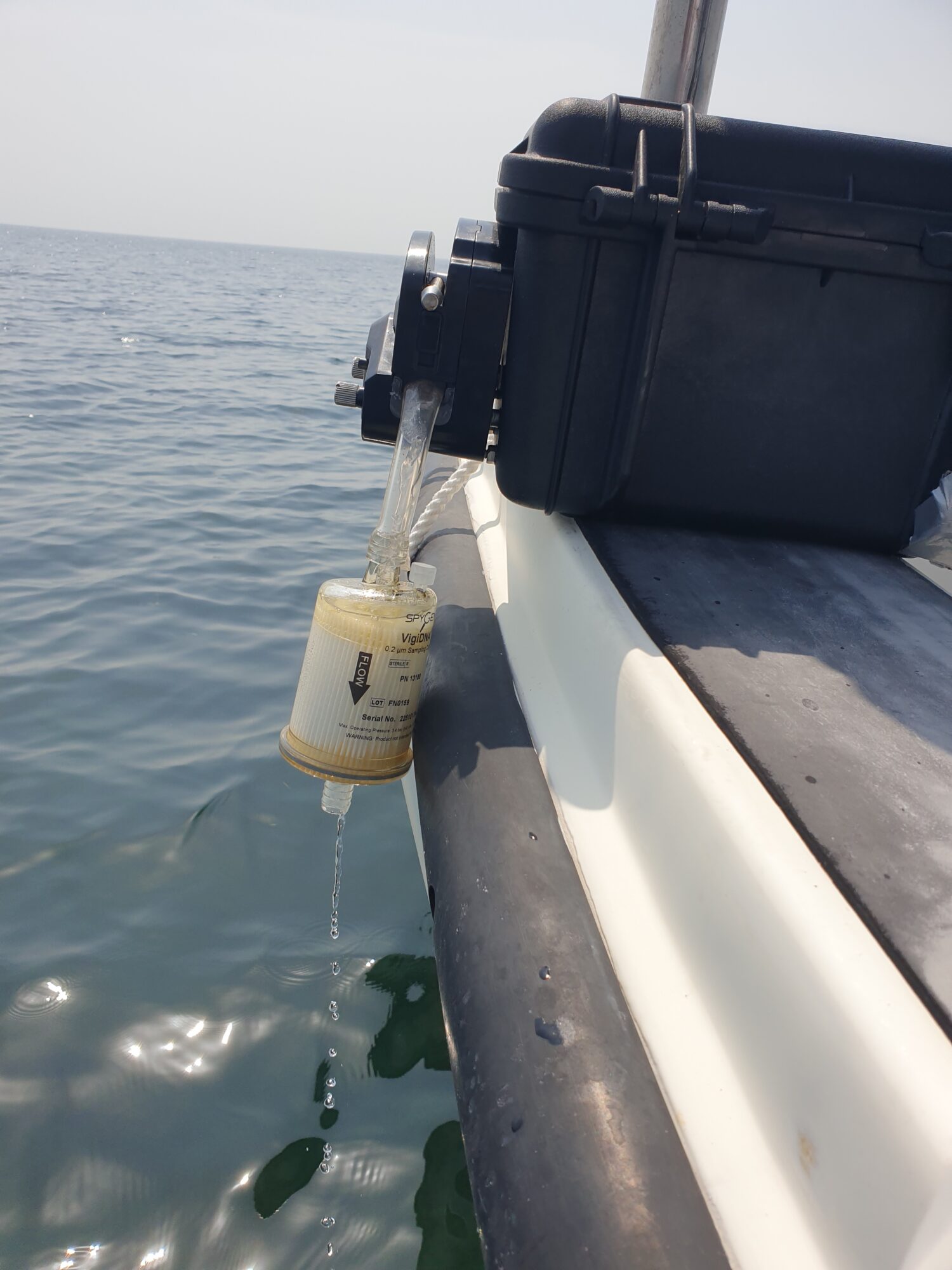
A close-up of the eDNA Filteration Process. Photo © Reem AlMealla |Nuwat for Environmental Research & Education
What our waters have revealed
Among our most significant findings was the presence of Himantura uarnak, the leopard whipray, classified as Endangered on the IUCN Red List. Its genetic fingerprint was found across three different sites and habitat types, from seagrass to mudflats to open sea, suggesting it moves broadly across Bahrain’s coastal zone and relies on these habitats in ways we are only beginning to understand.
We also detected the presence of sharks from the genus Carcharhinus, a group that includes several species listed as Vulnerable or Endangered globally, as well as eagle rays (Aetobatus sp.), another group facing significant pressure from overfishing, habitat loss and bycatch worldwide. Our eDNA results also detected the family Glaucostegidae. While the eDNA data do not allow us to confirm the species, we speculate that this signal may represent the Critically Endangered halavi guitarfish (Glaucostegus halavi), which we also encountered during our one-year fish market survey.
The fact that these animals are surviving in the exceptionally warm waters of the Gulf inspires us to seek more knowledge on: what can we learn from the resilience and adaptation of elasmobranchs in the Arabian Gulf, that can benefit elasmobranch elsewhere facing oceans that continue to warm up?
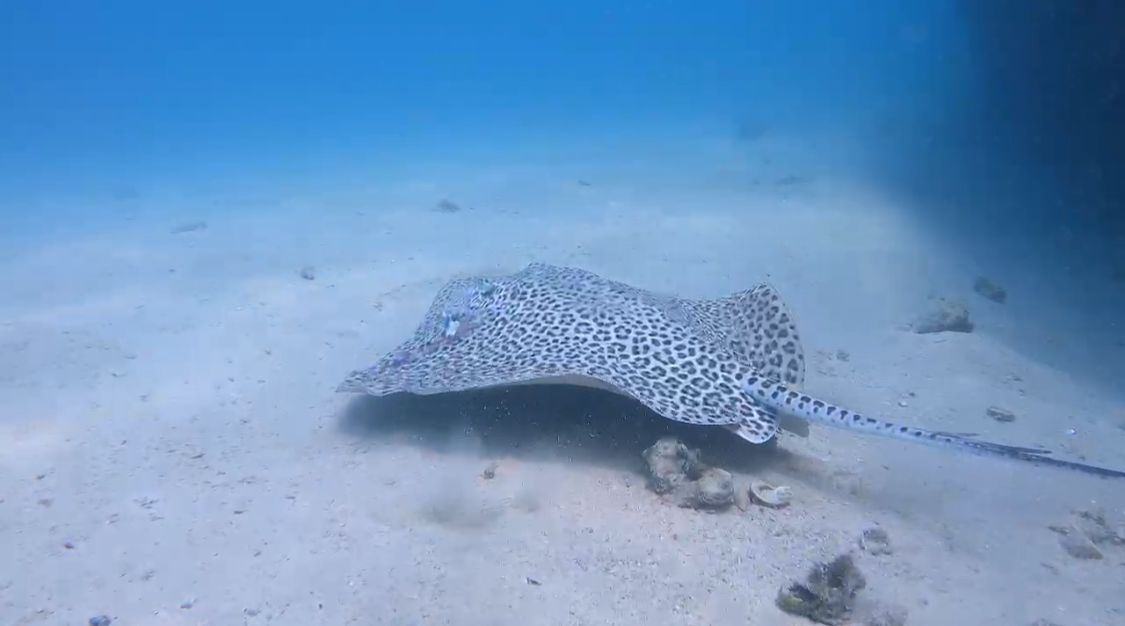
Encountering a leopard Leopard whipray (Himantura leoparda) ray at one of our sites during our scouting phase prior to the eDNA sampling commencement period. Photo © Mohamed Ali | Nuwat for Environmental Research & Education
What comes next
This is just the beginning. Our team is now working towards cross-referencing these preliminary eDNA findings with what we have observed through our Baited Remote Underwater Video Systems (BRUVs) and a year-long programme of weekly fish market surveys building a richer and more complete picture of elasmobranch seasonality and diversity in Bahrain’s waters.
We are also continuing the eDNA programme for two more sampling seasons, one when the water cools and one during the transitional period to ask a question that matters for the conservation of elasmobranchs in Bahrain: does species diversity shift with seasonality? Are certain sharks and rays retreating as seas warm? Are others moving in?
In a world where climate change is rewriting the rulebook for every ocean on the planet, the answers from Bahrain, which exists in one of the hottest seas, may offer an early window into what all seas could look like in the decades ahead.
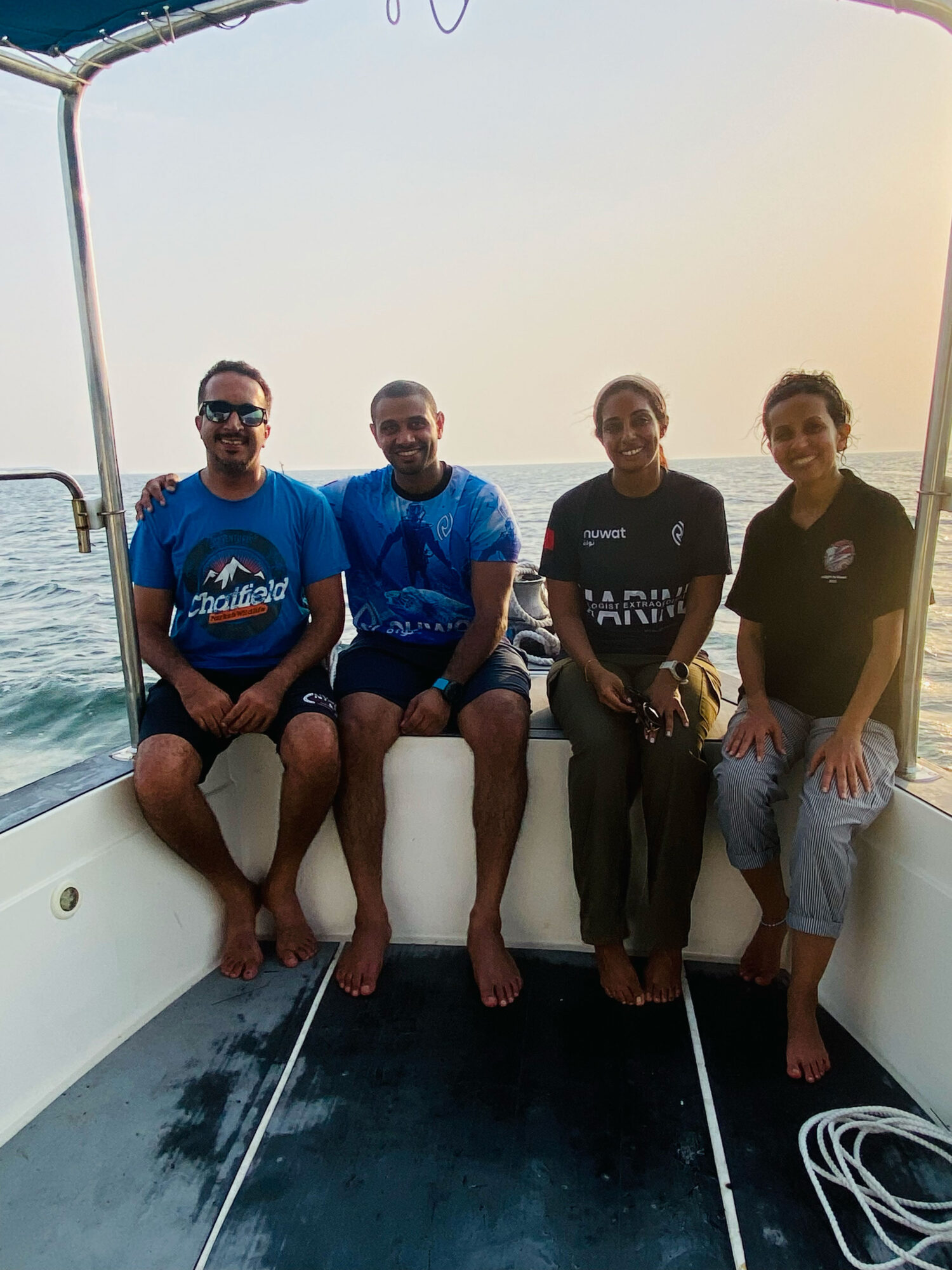
The team at the end of Bahrain's first dedicated elasmobranch eDNA expedition in August 2025. Exhausted, sun-drenched, and certain that something worth finding is out there. Photo © Prakash | Nuwat for Environmental Research & Education