
Uncovering the presence of a small and endangered devil ray hiding in the Canary Islands
The Mobula genus, comprising around ten species, presents a challenge for scientists due to the species’ cryptic nature and their pelagic and elusive behaviour. These factors have contributed to our limited understanding of these fascinating rays, and their taxonomy remains a subject of ongoing debate. As scientific knowledge progresses, new species are being described, and existing ones are being reclassified.
When we launched the Manta Catalog project in the Canary Islands, existing scientific literature indicated the presence of three mobulid species in the archipelago: the Oceanic Manta Ray (Mobula birostris), the Sicklefin Devil Ray (Mobula tarapacana) and the Spinetail Devil Ray (Mobula mobular). Being the first project focused on the family Mobulidae in the Canary Islands, we encountered significant knowledge gaps for the group in the area.
Citizen science, one of our project’s pillars, enables us to gather present and past mobulid sightings across the archipelago. While going through the sightings, a silvery shading on the ventral side of the pectoral fins of several individuals caught our eye.
Though similar to the Spinetail Devil Ray, certain features set the Bentfin Devil Ray apart, including the silver-brown sheen on the distal ends of the pectoral fins (Stevens et al., 2018). Species misidentification is common within this group, and this was indeed the case. The Bentfin Devil Ray was hiding under other species names in the Canary Islands!
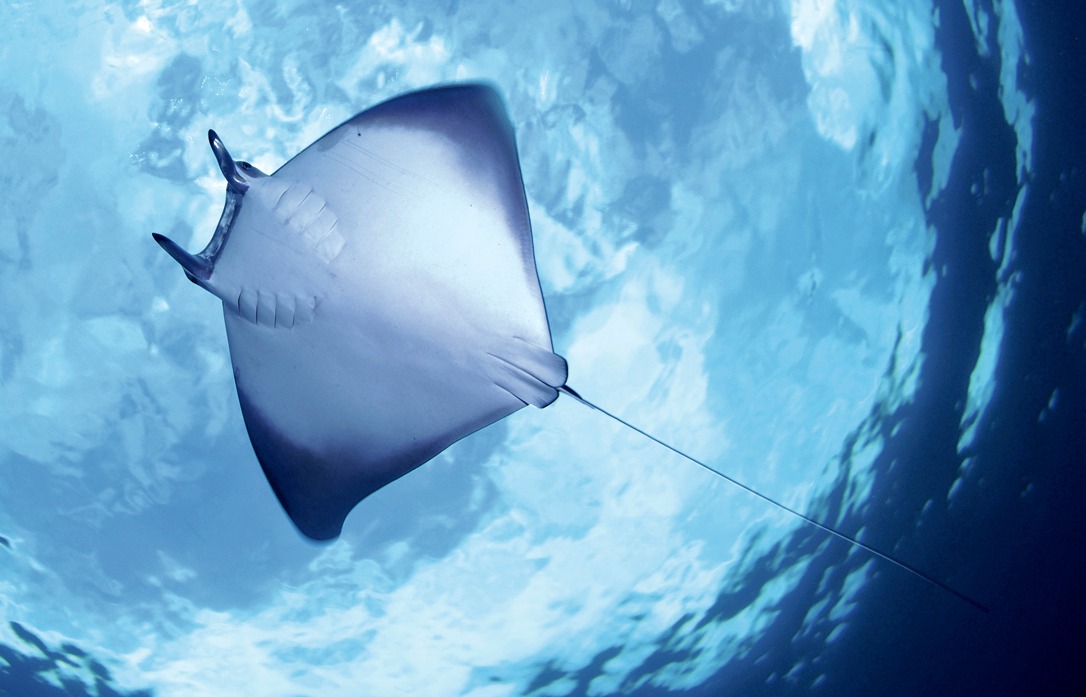
Ventral side of M. thurstoni, with silver shading on pectoral fins. Photo © Sergio Hanquet.
These sightings are not unique events in the archipelago, we have continued to encounter the Bentfin Devil Ray, including group gatherings, in both recent and past sightings. This suggests that the Bentfin Devil Ray has been present but unnoticed for quite some time.
Different sightings of solitary individuals and groups of M. thurstoni. VIDEO © A. Javier L. Gutierrez.
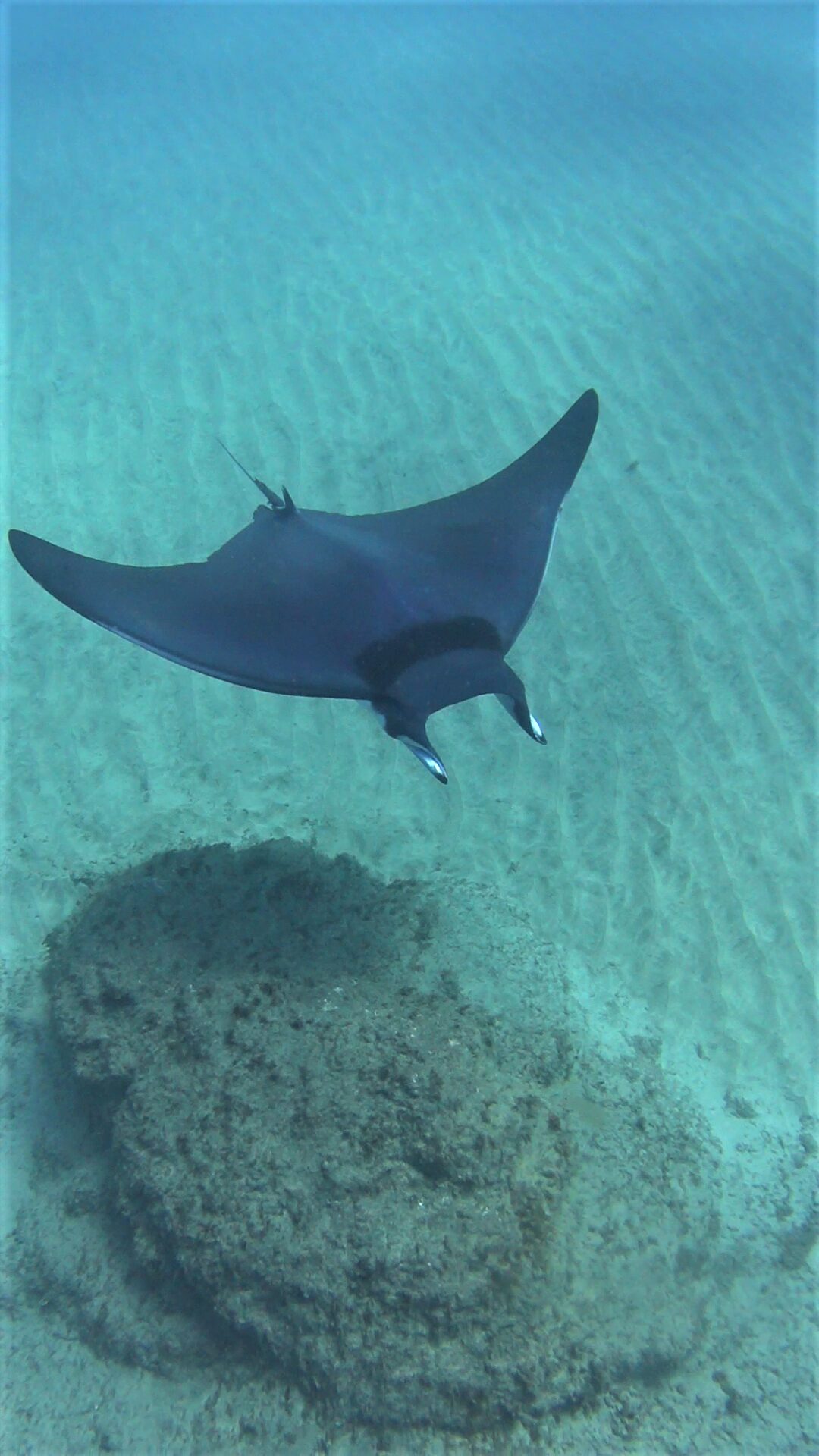
Dorsal side of M. thurstoni, with a dark collar but missing the white shoulders of M. mobular. Photo © Jose Landa
The presence of the Bentfin Devil Ray in the Canary Islands is not entirely surprising given its circumglobal distribution and previous documentation in nearby Cape Verde (Ratão et al., 2017). Additionally, the Bentfin Devil Ray is one of the main species captured in tropical tuna purse-seine fisheries in the Eastern Atlantic Ocean (Lezama-Ochoa et al., 2020).
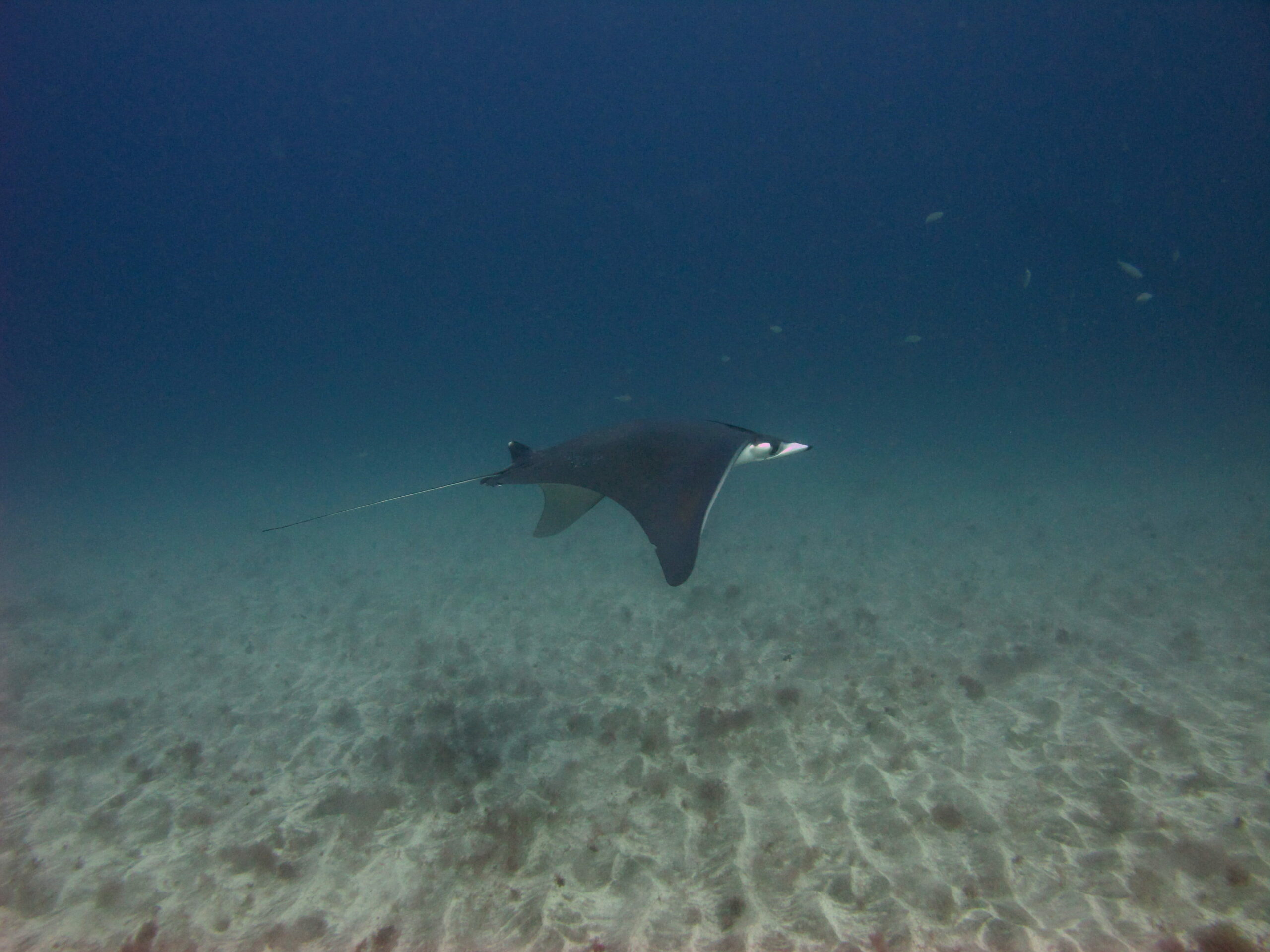
M. thurstoni sighted in sandy shallow waters during a dive. Photo © Davy Jones Diving Center
Accurate species identification and proper definition of species distribution are crucial for effective conservation. Mobula thurstoni adds to the list of endangered elasmobranchs occurring in the Canary Islands waters, highlighting the archipelago’s significance for this taxonomic group. Next step: pursue the protection of the Bentfin Devil Ray under national legislation!
REFERENCES
Lezama-Ochoa, N., Lopez, J., Hall, M., Bach, P., Abascal, F., & Murua, H. (2020). Spatio-temporal distribution of the spinetail devil ray Mobula mobular in the eastern tropical Atlantic Ocean. Endangered Species Research, 43, 447-460.
Ratão, S. S., Dias, D., & Stiebens, V. (2017). First record of smoothtail mobula Mobula thurstoni (Myliobatidae) in Cabo Verde. Zoologia Caboverdiana, 6, 11-14.
Stevens, G., Fernando, D., & Di Sciara, G. N. (2018). Guide to the Manta and Devil Rays of the World (Vol. 13). Princeton University Press.