
Too young to be caught: the hammerheads of Angola, southwest Africa
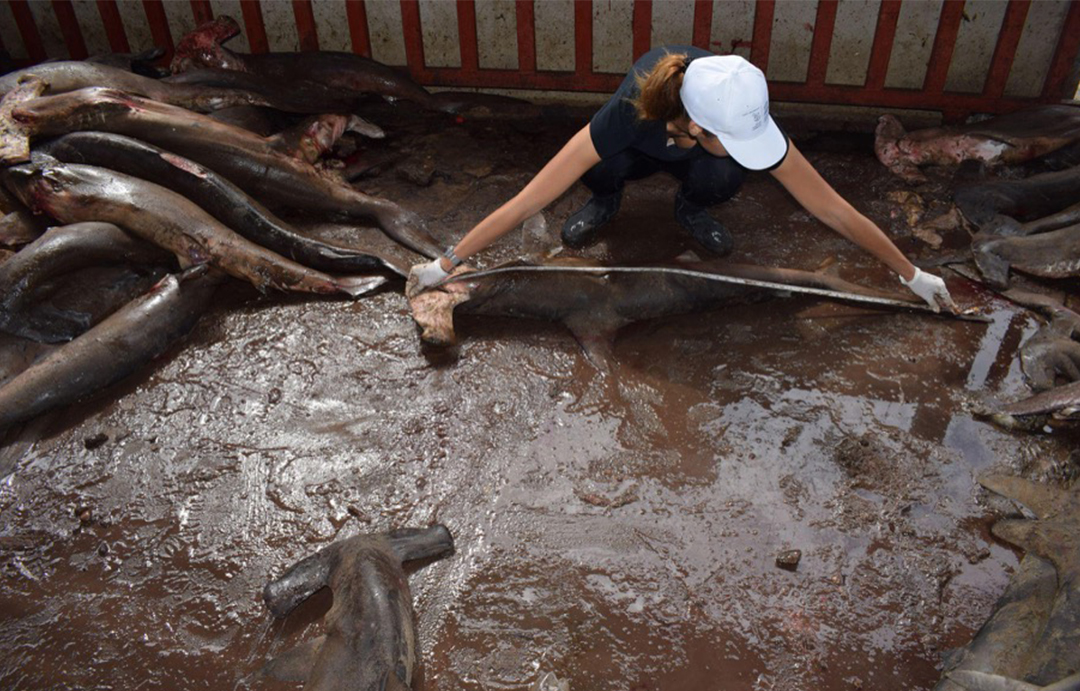
Measuring a shark among the day's catch at a landing site in Namibe. Photo by © Marcelo Calenga
The first time
I still remember my first encounter with them. It was early in the morning on a beach in Namibe, and the fishers were bringing the catch onto the sand. As I got closer, I realised that almost everything in front of me was hammerheads. Small ones. Dozens of them, then more, lying side by side in long rows. I had never seen a hammerhead landed before, and certainly not like this.
I had expected to see a few large sharks. Instead, they were all very young. They were smooth hammerheads (Sphyrna zygaena) and most of them were young of the year, born only a few months earlier. Smooth hammerheads are born at around 50 to 60 centimetres, and most of the animals on the beach were between 60 and 90 centimetres long, about the size of a small child. An adult can reach more than three metres.
Seeing them laid out like that, so still and so close together, was hard. Their size, the way they lay next to each in piles. For a moment they did not look like sharks. I stood there for a while before I could pick up my measuring tape and start working.
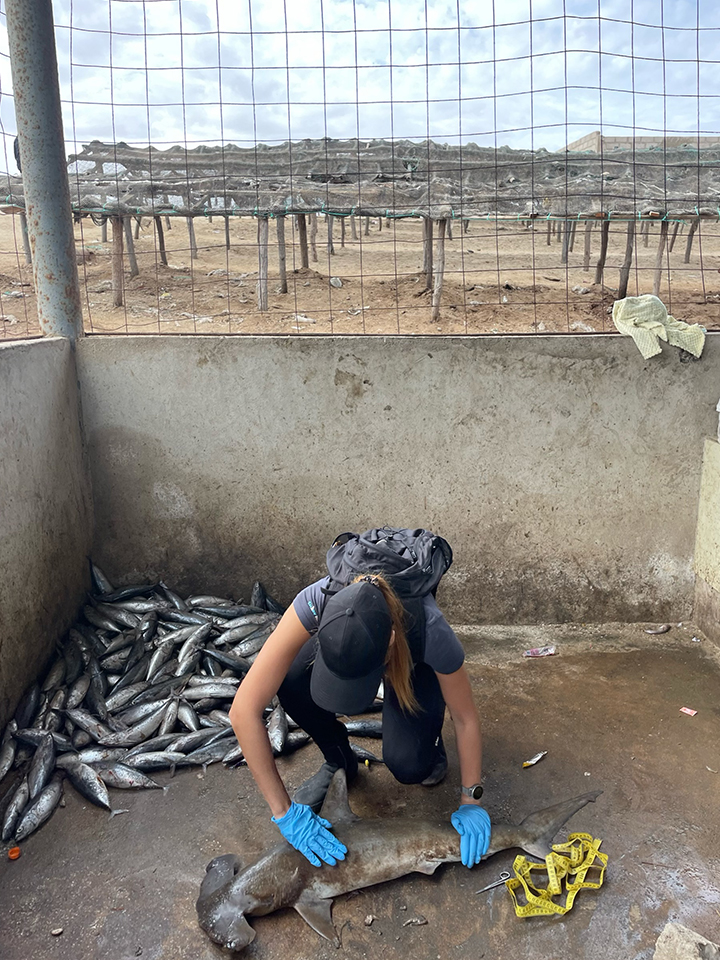
Measuring a young smooth hammerhead, Sphyrna zygaena, at a landing site in Namibe, with fish drying racks in the background. Photo by © Marcelo Calenga
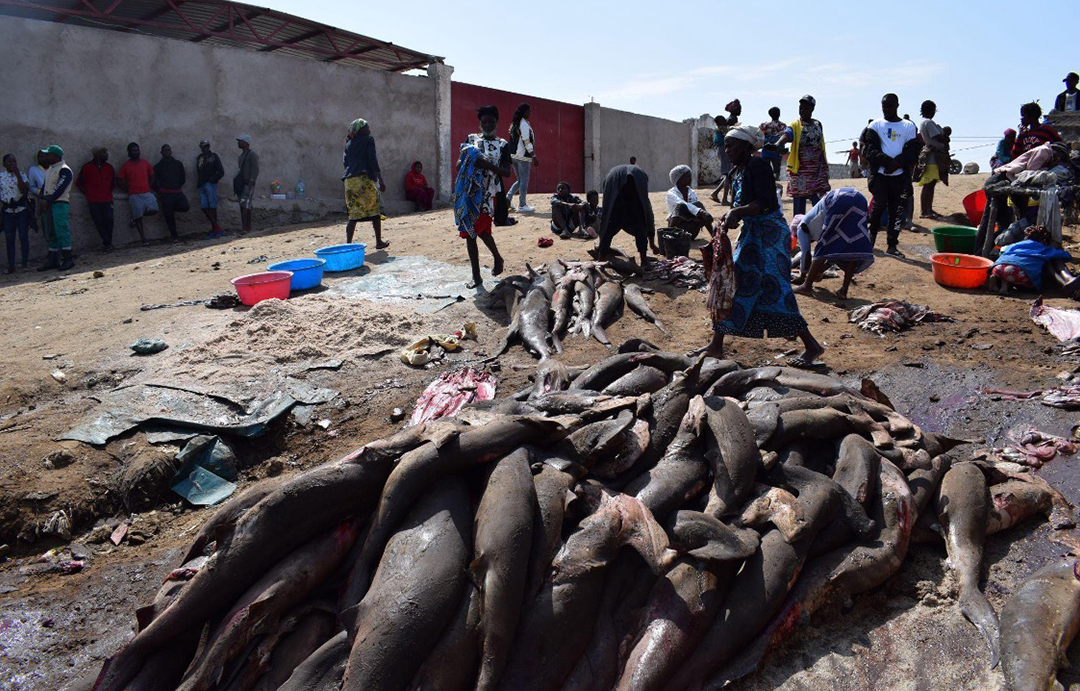
Smooth Hammerheads landed surrounded by fishers and fish traders. Photo by © Ana Lúcia Furtado Soares
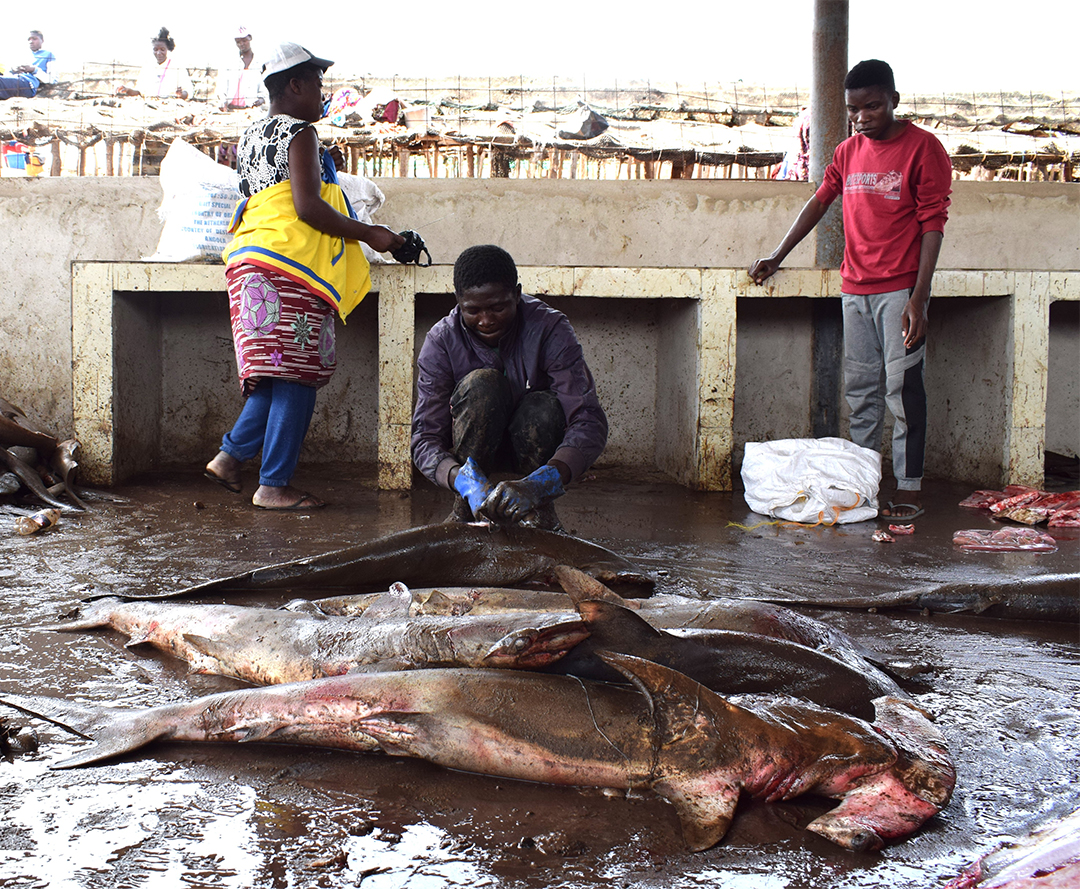
A very young fisher processes the catch at a landing site in Namibe, with hammerheads in the foreground. Photo by © Ana Lúcia Furtado Soares
A nursery on our coast?
Over the years, this has become one of the clearest patterns in our data. The smooth hammerhead is one of the most landed sharks in Namibe, and in some months the numbers are huge. Almost all the animals we measure are juveniles, and a large part are young of the year. Most of them are caught close to the coast by small-scale fishers, mainly in gillnets.
This tells us something important. If so many newborn and very young hammerheads are found in these waters, the coast of southern Angola is very likely a nursery area for the species. It is where females come to give birth, and where the young sharks spend their first months before moving into deeper water. Nursery areas are some of the most important places for a shark population, because this is where the next generation grows up.
The problem is that these young sharks are caught before they have any chance to reproduce. The smooth hammerhead is listed as Vulnerable on the IUCN Red List, and it grows slowly and has few pups. A population can only take so much pressure on its youngest animals before it starts to decline.
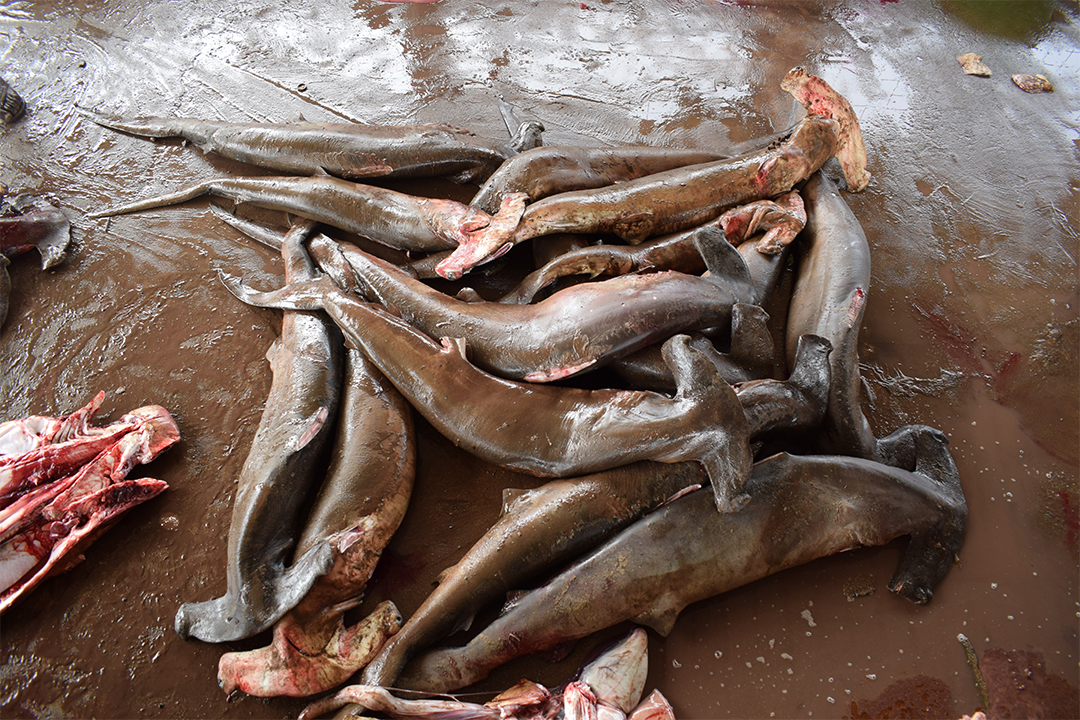
Juvenile smooth hammerheads landed in Namibe, most of them young of the year. Photo by © Ana Lúcia Furtado Soares
Giving them a chance to grow
But it is not that simple. The fishers are not the problem. They are working to feed their families, and nothing is wasted. The hammerheads are sold fresh or salted and dried, and they are an important source of food and income in Namibe. Many fishers have told us they see fewer big hammerheads than before. They notice it too. But most of them do not know that these are baby sharks of a threatened species, or what it means to catch so many of them. That is why our awareness work is so important. We talk with fishers, students and families on the beach, and little by little, people start to see these sharks differently.
This is why our data matters. By recording every animal, its size, sex and the month it was caught, we can show when and where the young hammerheads are most present. I have now seen hundreds, maybe thousands, of small hammerheads on the beaches of Namibe. It never becomes normal. But every time, I also see the fishers who help us measure them, the students who come to learn and the team that goes back to the beach every month. They are the reason I believe things can change, and that one day these young hammerheads will be given the chance to grow up.