
The Common Eagle Ray in Angola: A Critically Endangered Species Hiding in Plain Sight
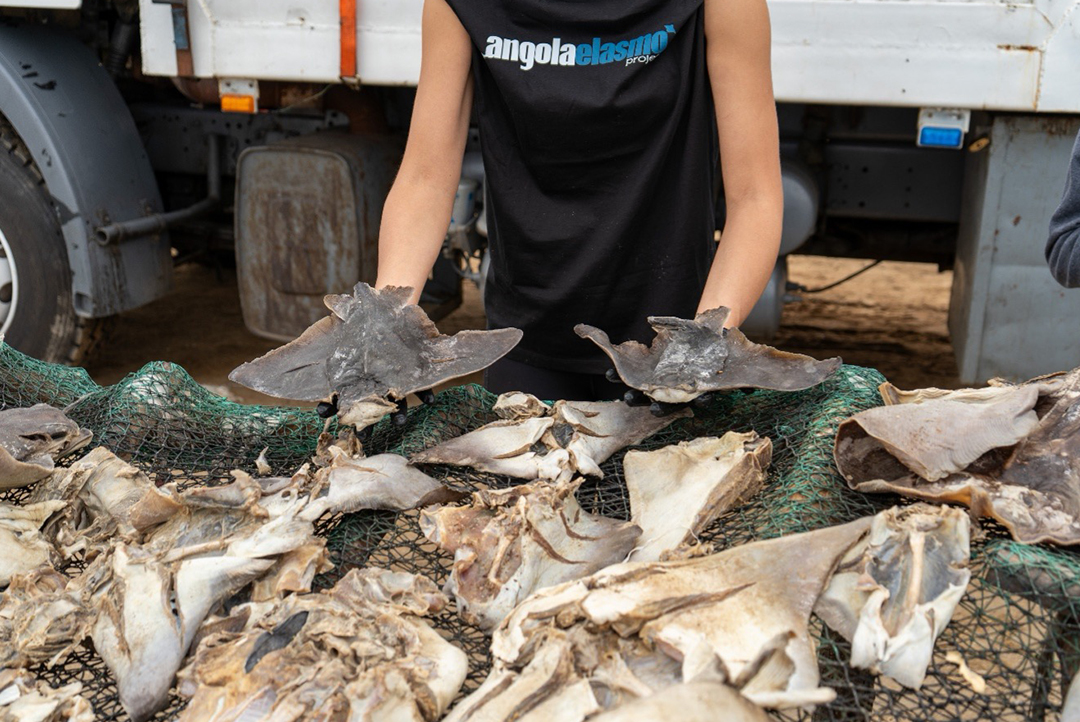
Common eagle rays (Myliobatis aquila) drying in the sun at a landing site in southern Angola. Photo by © Bernardo de Abreu Cotrim
For a long time, Angola was almost a blank space on the map of shark and ray research. Decades of limited scientific work meant that very little was known about which species were caught along the coast, in what numbers, or how they were used. Some species were landed every day, yet no one was recording them.
When we started the Angola Elasmo Project, one of our main goals was simply to find out what was there. What we found surprised us. Among the sharks and rays landed by small-scale fisheries were several species listed as Critically Endangered on the IUCN Red List. One of them quickly stood out: the common eagle ray, Myliobatis aquila.
Common Here, Critically Endangered Globally
The common eagle ray is one of the most frequently landed rays in our surveys. Walk along almost any landing site in southern Angola and you will see rows of them drying in the sun. Yet globally, this species is listed as Critically Endangered, while in the Mediterranean and in Europe it is assessed as Vulnerable.
That difference shows how much the global picture depends on the African coast, where data have long been missing. Until recently, the importance of Angola for this species was largely unknown.
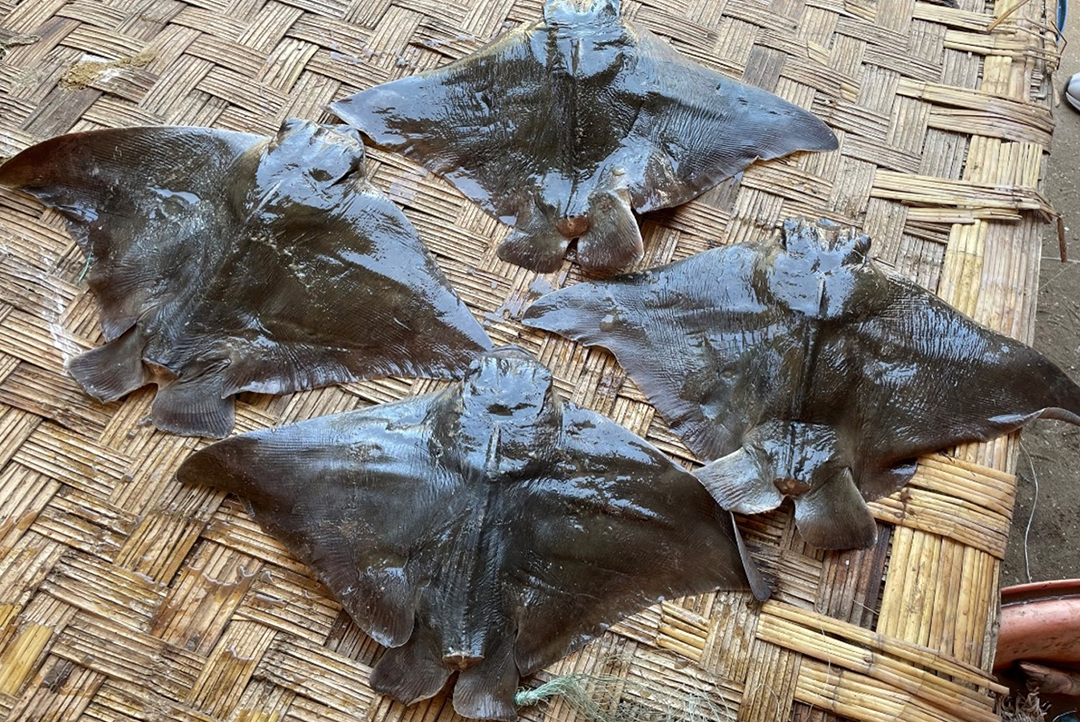
Myliobatis aquila is one of the most frequently landed rays recorded by the Angola Elasmo Project. Photo by © Ana Lúcia Furtado Soares
The name Myliobatis comes from the Greek words for “mill” and “ray”. Instead of sharp teeth, this species has rows of flat tooth plates that work like grinding stones, crushing the crustaceans, molluscs and small fishes it finds on the seabed. It is often seen in groups, and its disc can reach up to 183 cm wide.
Young being landed
In Angola, most eagle rays are caught in gillnets, which operate close to the coast in shallow waters. This matters, because many of the individuals we record are immature. Females only reach maturity at a disc width of about 43 to 60 cm, and males at 32 to 40 cm. Many rays are caught before they have had the chance to reproduce even once. For a species that matures late and produces few young, this makes recovery of the population challenging.
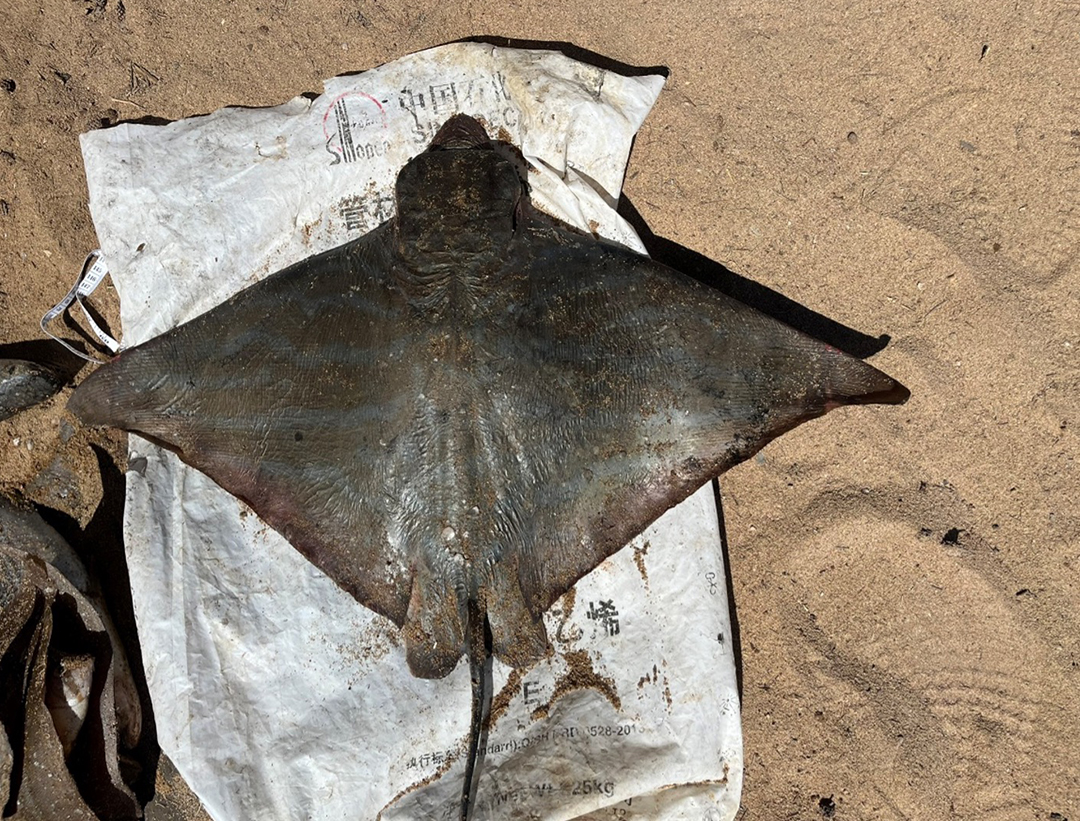
Measuring the disc width and assessing the clasper conditions of Myliobatis aquila helps us determine whether a ray is mature or immature. Photo by © Bernardo de Abreu Cotrim
Why Our Data Matter
Seeing so many eagle rays at our landing sites does not mean the species is doing well. It may simply reflect high fishing pressure. Eagle rays are also an important source of food in coastal Angola, and drying allows fishers to preserve them where there is no refrigeration. Any conservation measure must take this into account.
This is where our work comes in. By recording the sizes, maturity, fishing gear and catch locations of every eagle ray we find, we are building the first baseline for this species in Angola. These data can help identify practical solutions, such as protecting nursery areas or reducing the capture of juveniles, while respecting the communities that depend on the sea.
Without this research, the eagle ray’s story in Angola would have stayed invisible. Now, every record helps make sure it is told.
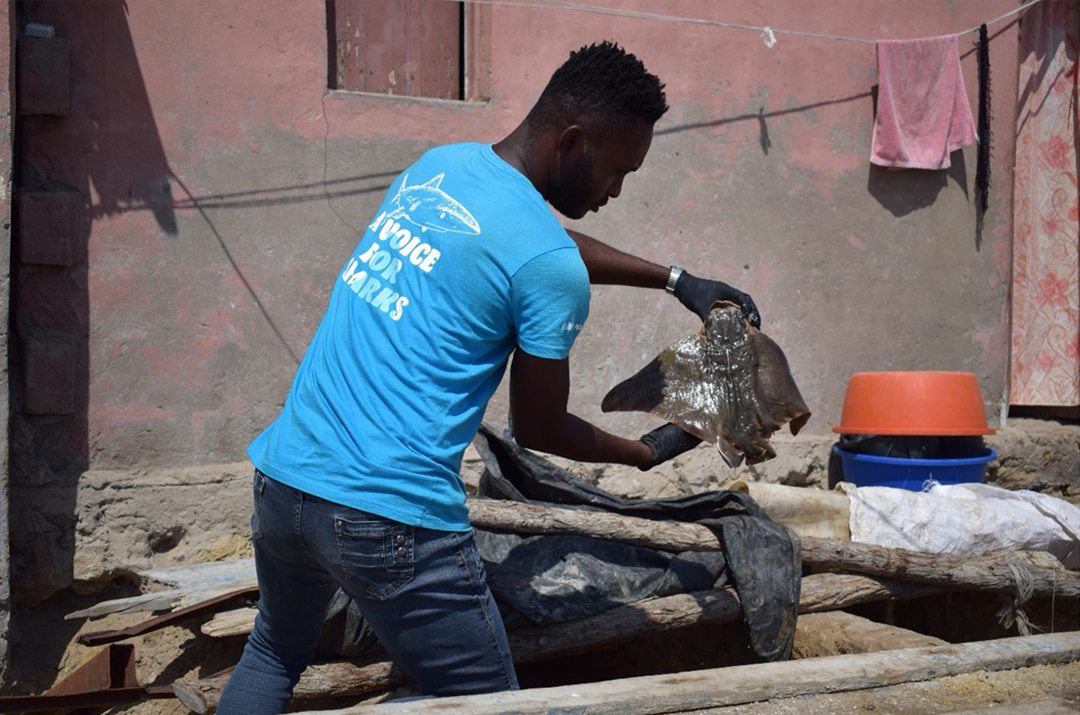
Angola Elasmo Project volunteer records a common eagle ray in Angolan fisheries. Photo by © Bernardo de Abreu Cotrim
You can learn more about our work at www.angolaelasmoproject.org.