
Strengthening Fisheries Managers’ Skills and Capacity to Conserve the Scalloped Hammerhead in Benin
As part of the project “Documenting Catches, Trade Network and Building Stakeholder Conservation Capacity to Save Sphyrna lewini in Benin,” funded by the Save Our Seas Foundation, NATURE ECOLOGIQUE (ECO-NATURE ONG) partnered with the Directorate in charge of Capture Fisheries and Aquaculture Production (DPH) to organise a hands-on training workshop focused on hammerhead shark identification. At the heart of the training was the scalloped hammerhead (Sphyrna lewini), a species classified as Critically Endangered on the IUCN Red List and one that urgently needs improved monitoring and conservation action in Benin.
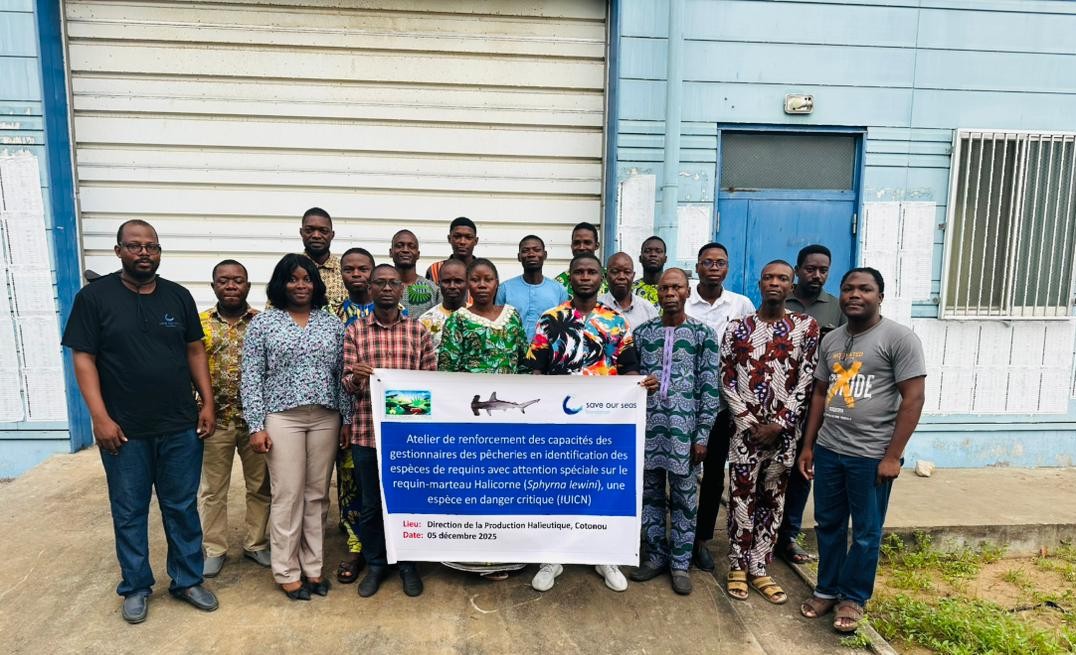
Group photo after the opening ceremony. Photo © Basile ADIDEKON
Why This Training Matters
Correct species identification is a cornerstone of effective fisheries management and marine conservation. Without the ability to distinguish between similar species, data collection becomes unreliable and conservation efforts suffer. Recognising this gap, ECO-NATURE ONG worked closely with the DPH to strengthen the capacity of fisheries managers who are directly involved in monitoring and data collection activities. Twenty-five (25) DPH officers were selected to participate in the workshop, based on the relevance of the training to their roles. Participants represented key departments, including artisanal marine fisheries, industrial marine fisheries, inland fisheries, fisheries statistics and the Artisanal Fishing Harbour of Cotonou (POPAC). Their shared goal was to gain the theoretical knowledge and practical skills needed to confidently identify the scalloped hammerhead during field operations.
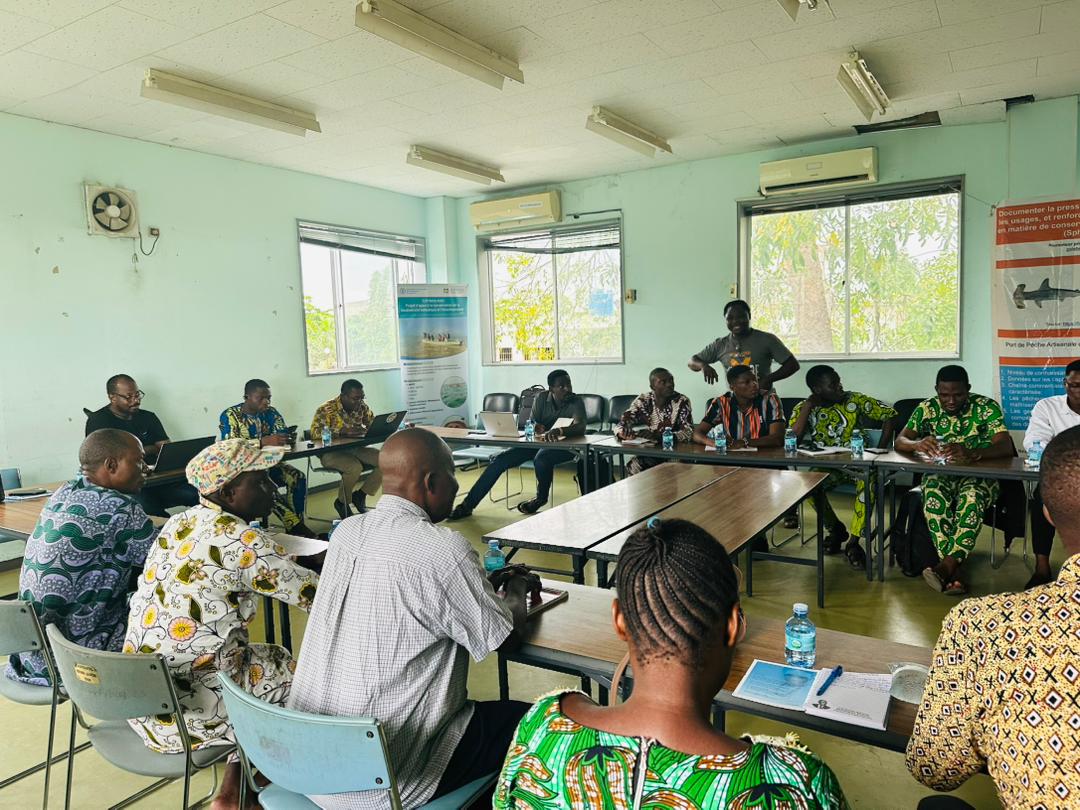
View of the workshop room. Photo © Anna Fat’ma ITOUA MBENGHOND
A Timely and Strategic Initiative
During the opening ceremony, the Head of the Fisheries Management and Planning Service, representing the Director of the DPH praised the initiative as both timely and necessary. The Directorate has recently recruited new officers who require foundational training. At the same time, more experienced staff rarely have opportunities to strengthen their expertise on shark species, as many past interventions focused primarily on other fish groups. This workshop therefore filled a critical gap in professional development. The Directorate also commended ECO-NATURE ONG and the Project Lead for their strong commitment to the sustainable use and conservation of threatened aquatic biodiversity in Benin.
Empowering Fisheries Managers with Practical Skills and Field Tools
The training followed a participatory and interactive approach. Carefully prepared modules combined theory with practical exercises, ensuring that participants could immediately apply what they learned. By the end of the workshop, participants reported high satisfaction with the organisation and content. More importantly, they are now equipped to accurately identify the scalloped hammerhead, a mandatory skill for improving monitoring systems and supporting conservation measures nationwide.To reinforce field application, each participant received essential equipment, including a weighing scale, an ichthyometer and a shark identification guide These tools will directly support data collection and marine biodiversity monitoring efforts across coastal Benin.
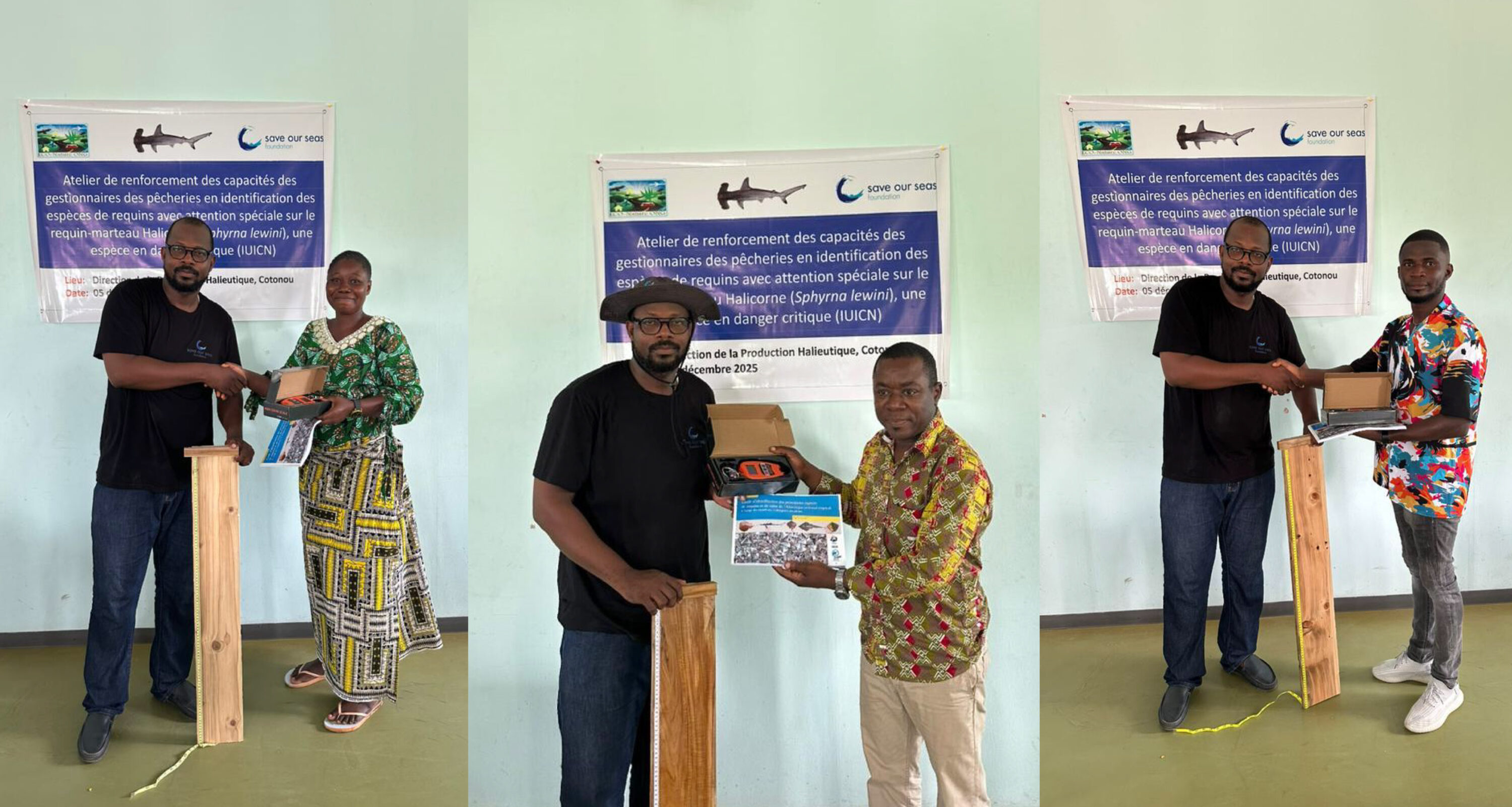
Equipment handover ceremony with participants. Photos © Anna Fat’ma ITOUA MBENGHOND
Building Momentum for Conservation
This workshop builds on previous activities conducted with local community stakeholders under the same project. By strengthening both community actors and institutional managers, the project is creating a more coordinated and informed conservation network. Public awareness efforts are also underway, with a radio program planned to engage the broader public on the importance of protecting the scalloped hammerhead and Benin’s marine biodiversity.
A Shared Commitment
ECO-NATURE ONG extends its sincere appreciation to the Save Our Seas Foundation for supporting this important initiative. The progress achieved so far underscores both the relevance and urgency of strengthening shark conservation capacity in Benin. This intervention goes beyond the protection of a single threatened shark species; it aims to reinforce systems, enhance knowledge, and foster strong partnerships that will help secure the long-term future of shark biodiversity in the country.