
Reducing bycatch of rays in the Colombian Caribbean: science, community, and innovation
A key ecosystem under pressure
Results obtained during 2026 reveal a clear picture. A total of 1,400 individuals were recorded, belonging to seven species of rays and three species of sharks, with a strong dominance of the family Dasyatidae, particularly the longnose stingray (Hypanus guttatus), which accounted for more than 68% of the catches. More than 63% of the total landed biomass corresponded to rays, far exceeding other groups of fish. This pattern is not coincidental: the shallow coastal areas where these fisheries operate overlap with key feeding, reproduction, and nursery habitats for these species.
In fact, the study highlighted something particularly important: the monitored areas function as essential birthing and nursery habitats. Pregnant females, neonates, and multiple life stages were found interacting simultaneously with fishing gear. This confirms that artisanal fisheries are not only capturing isolated individuals but are directly impacting the reproductive cycles of these species, affecting juveniles, subadults, and mature adults, which increases their population vulnerability.
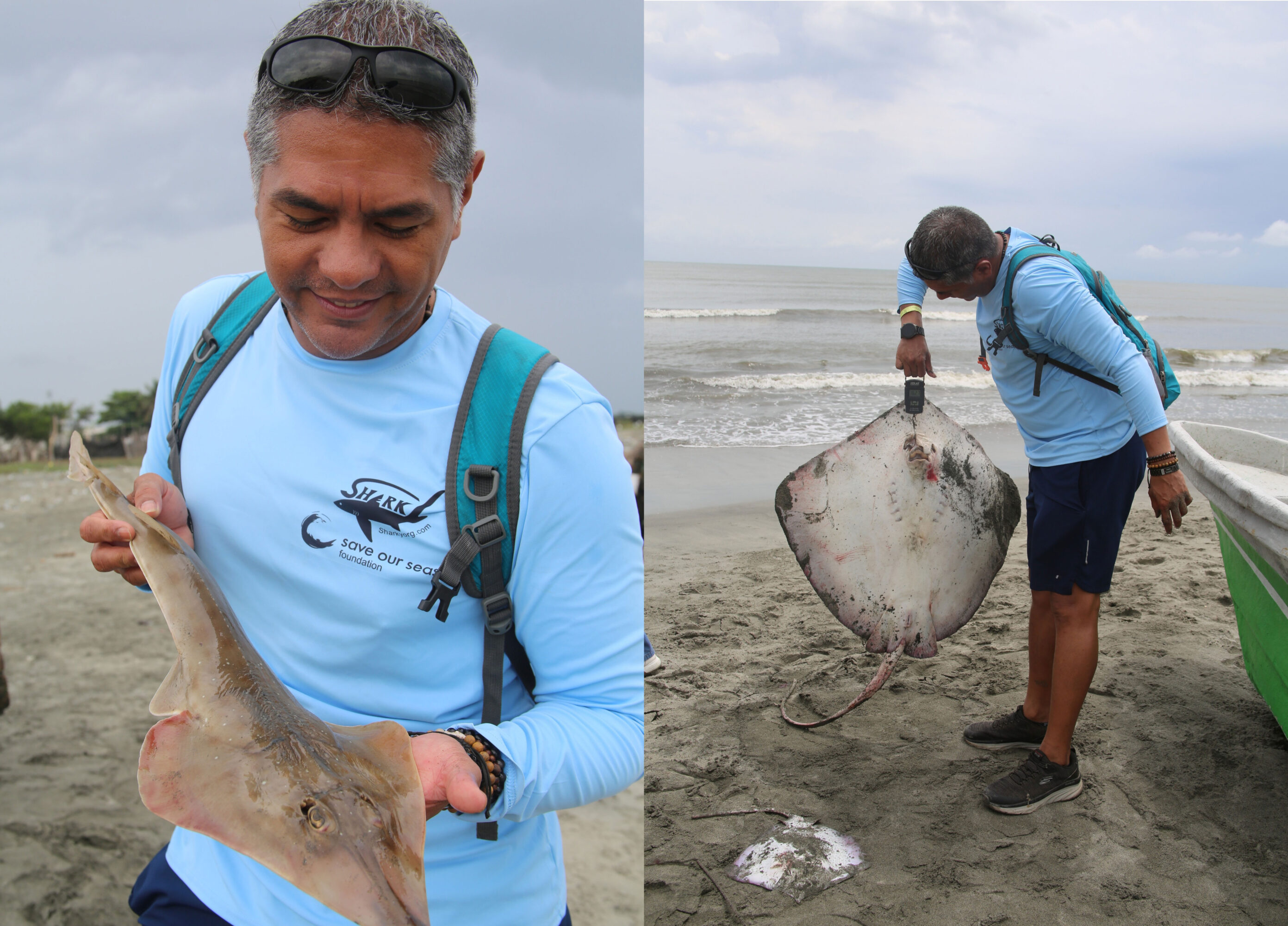
Rays documented at a fisheries landing site in the Colombian Caribbean. Photo © Oceanic_Preston
Innovation in progress: toward more selective fisheries
Pilot tests are currently being developed to reduce elasmobranch bycatch. Preliminary results show that the use of frozen bait has led to a decrease in ray captures, while at the same time there has been an increase in the catch of target species such as sea catfish. This type of simple yet effective innovation has the potential to become a key tool for balancing conservation with the food security and livelihoods of local communities.
Working with communities: key to success
Beyond the data, one of the project’s main pillars has been its human dimension. The Sharky team has developed direct engagement with fishing communities, creating spaces for dialogue, listening, and co-designing solutions. This type of collaboration is essential to ensure that management measures are practical and viable. Progress toward more sustainable fisheries cannot be achieved without fishers, they are essential allies in conservation.
Additionally, the project’s impact goes beyond scientific knowledge to include the development of human talent. By May 2026, four interns who actively participated in all phases of the project, supporting fieldwork, data analysis, and systematisation, successfully completed their final internships and are close to obtaining their professional degrees. Their involvement not only strengthened the research but also contributed to building new talent in marine sciences and conservation. This year, the project continues with a new intern, consolidating an ongoing process of training and knowledge exchange.
Preliminary monitoring results are clear and highlight that the coastal zones of the Colombian Caribbean are critical for the survival of multiple ray species, while also supporting the livelihoods of fishing communities. The challenge is to find a balance. This work demonstrates that effective conservation does not occur in isolation, it emerges at the intersection of science, communities, and practical solutions. In the Colombian Caribbean, that process is already underway.
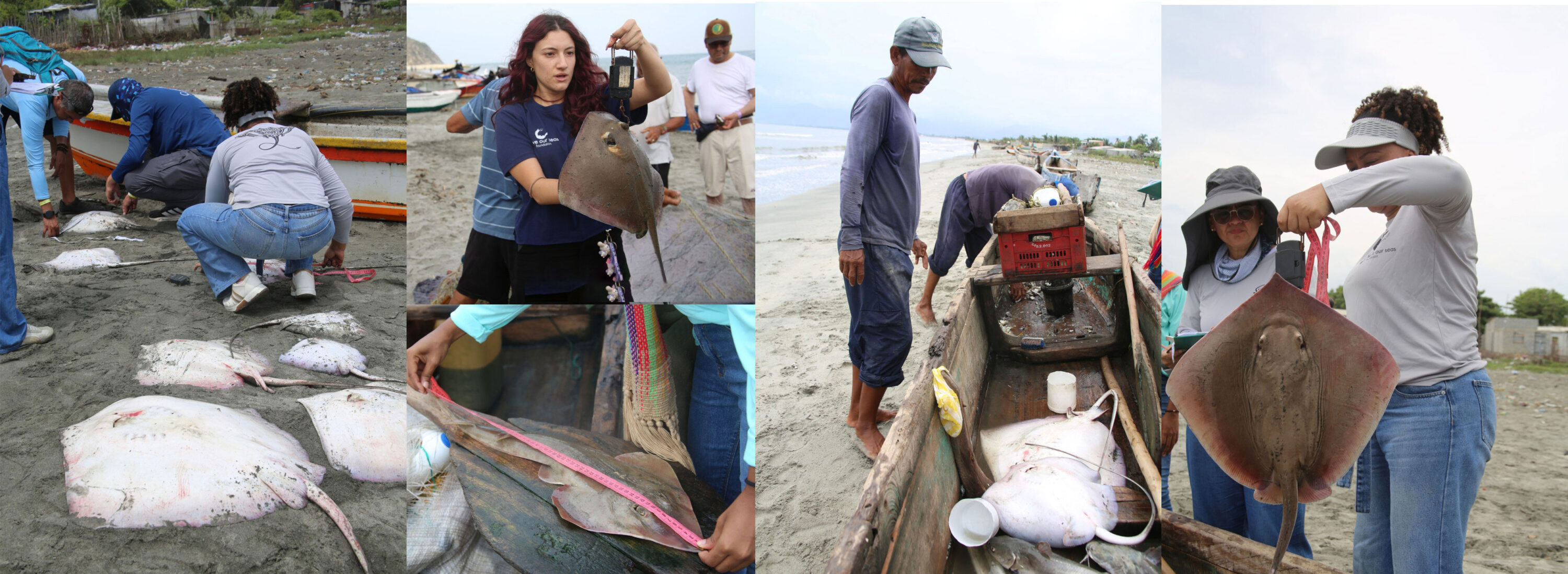
Documenting and recording species at a fisheries landing site in the Colombian Caribbean. Photo © Oceanic_Preston