
Project findings: A new approach for study and conservation of sharks in Vietnam
After collection, samples were analysed and ten shark species were determined. Of the ten species found in this study, the most abundant samples belong to the blue shark Prionace glauca. This finding is not unusual because the blue shark can be observed worldwide in deep temperate and tropical waters, and it is a common target for fishing. Another species with a high number of samples was the spot-tail shark Carcharhinus sorrah. This shark is usually exploited for its meat, liver and fin. Interestingly, a sample of the critically endangered species, the Indonesian angelshark Squatina legnota was collected from Vinh Luong port, Khanh Hoa Province. The available scientific document revealed this species is endemic to Indonesian water. The detection of Squatina legnota in Vietnam indicated this shark has a wider distribution than the previous report. Interviewing fisherman, he informed that the samples were collected in the offshore waters of Vietnam. However, he was not ready to provide the detailed coordinates of the sampling site.
It is concerned that all shark species detected in our project are listed on the IUCN Red List. The level of threat ranged from Near Threatened to Critically Endangered. The Indonesian angelshark Squatina legnota is listed at Critically Endangered level, while the pelagic thresher Alopias pelagicus, blackspotted catshark Halaelurus buergeri and Japanese spurdog Squalus japonicus are listed at Endangered level. Also, three species were listed in Appendix II of the CITES list, including the pelagic thresher Alopias pelagicus, the bigeye thresher Alopias superciliosus, and the spot-tail shark Carcharhinus sorrah. This finding suggested their trade is closely controlled because they may be extinct in the future.
Even though the number of samples collected in this work is not high, they provide important data on shark fishing in Vietnam. The findings of our project will be the basis for the management and conservation of sharks in the country. In fact, some fishery managers have contacted and asked the project leader to share the results. Of course, we are willing to share the obtained data that can support them in shark fishing management. Also, project results open a new direction for studying shark diversity in Vietnam. DNA barcoding will be a good tool for surveillance of illegal fishing of sharks in the county.
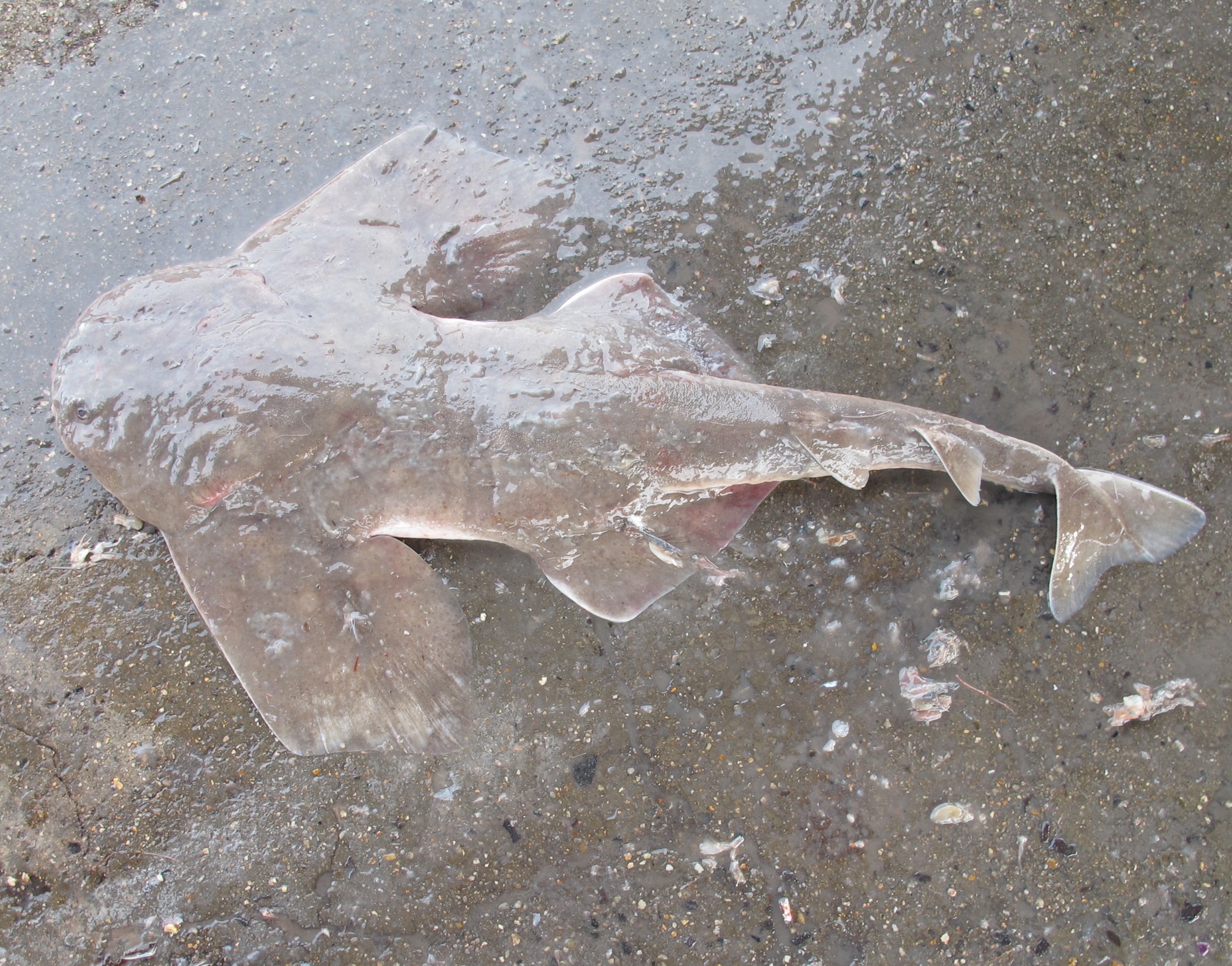
The Indonesian angelshark Squatina legnota collected from the present study. Photo © Thinh Dinh Do