
On the edge of extinction: the silent struggle of the sharpnose guitarfish in Bangladesh
My journey with this species began in early 2023, to uncover the secrets of its reproductive biology, the fishers perspectives, and the threats it faces. What I found was sobering — and urgent.
Over a two-year period, I conducted extensive fieldwork across multiple landing sites and fish markets in Bangladesh. I analysed a total of 228 specimens — 120 males and 108 females. The gender distribution was fairly balanced overall, but something alarming emerged: of the 108 female specimens, only 22 were mature. In some months, such as November and October, there were slight increases in mature individuals, but even these were small in number. Most of the females I encountered had yet to reach reproductive maturity.
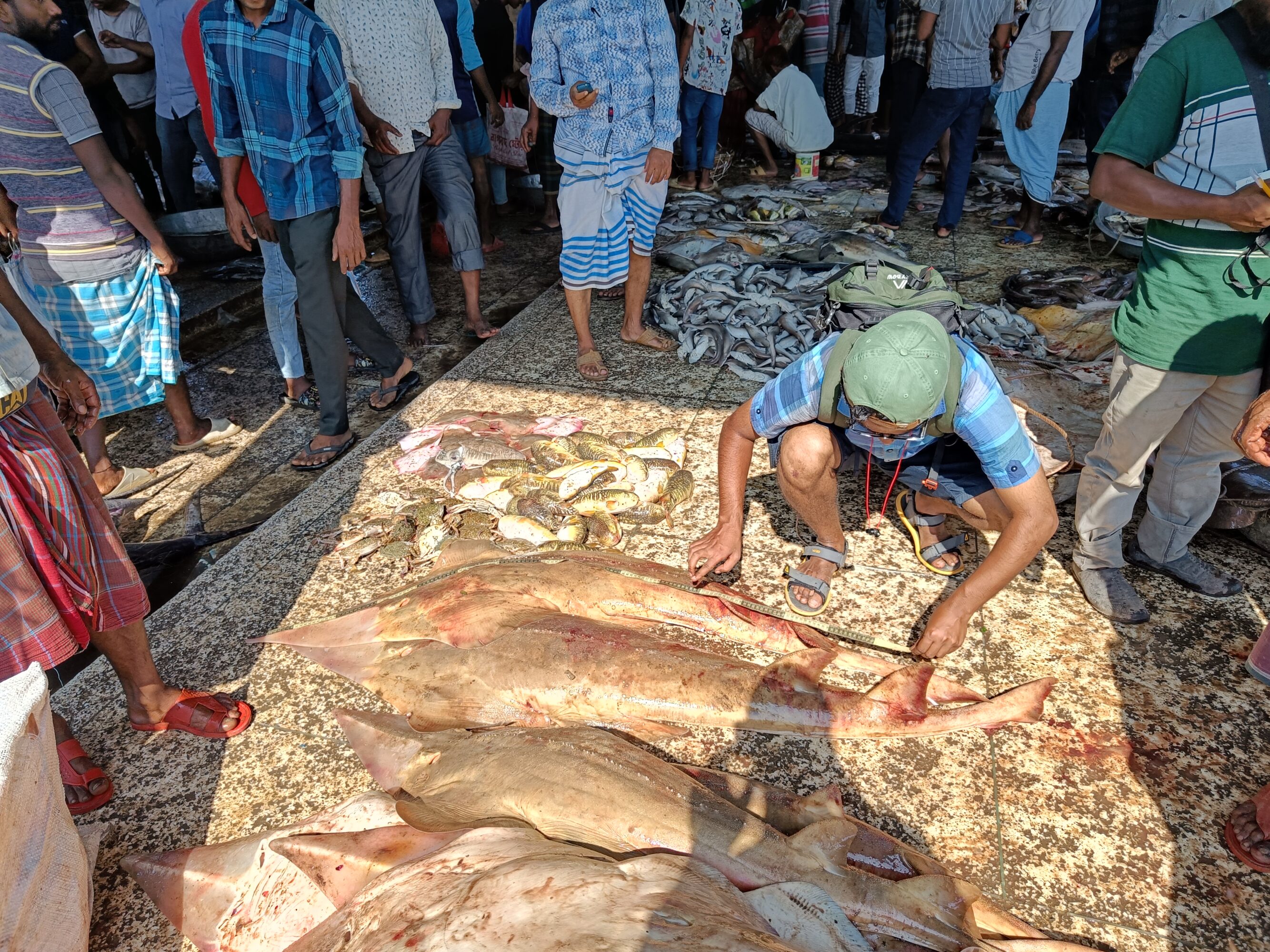
Sharpnose guitarfish continue to be landed and traded. Each specimen tells a story of silent extinction. Photo © Durjoy Raha Antu
Even more disturbing was the size of the individuals being landed. Many were juveniles or even newborn pups, some measuring as little as 28 cm. The fact that so many immature specimens are being caught reveals a worrying trend — we are harvesting this species before it has a chance to reproduce. This is a clear sign of unsustainable fishing practices.
Moreover, while analysing their reproductive biology, I discovered that even mature females carried very few embryos. This low fecundity means that once their population begins to decline, it will not recover easily. Their biological limits, coupled with intensive fishing pressure, make them highly vulnerable to extinction.
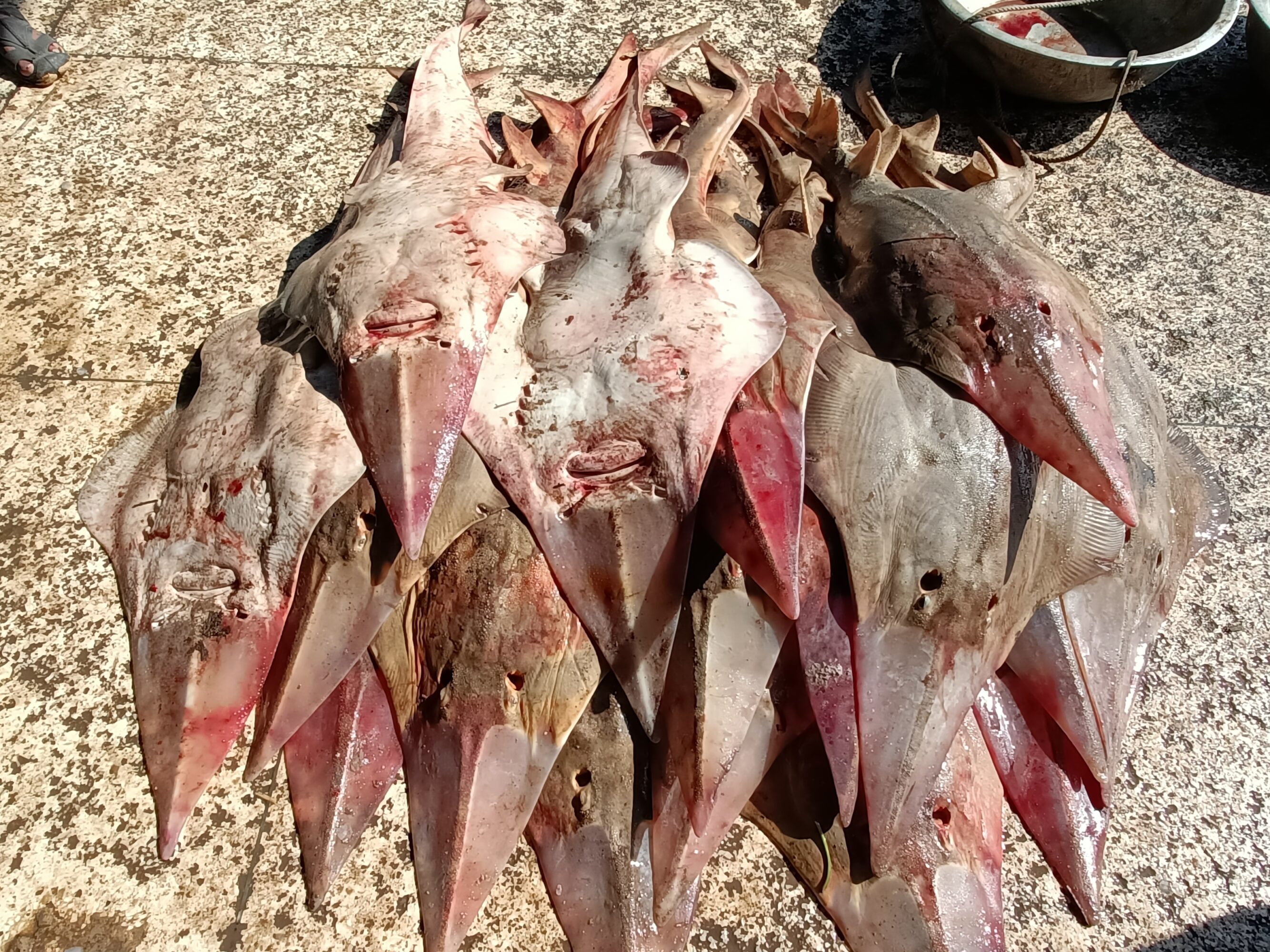
Sharpnose guitarfish laid together at a single landing site — a stark reminder that legal protection alone isn’t enough. Despite their critically endangered status, these rays are still being landed and traded daily. Weak enforcement, low awareness, and sustained market demand continue to drive the silent depletion of this vulnerable species. Photo © Durjoy Raha Antu
Hidden in Plain Sight
The threats to the Sharpnose Guitarfish are compounded by a troubling lack of awareness. Although the species is listed under CITES Appendix II, which regulates international trade to prevent over-exploitation, implementation on the ground is weak. During surveys in major landing sites like Cox’s Bazar and Kuakata, I interviewed dozens of fishers and traders. Alarmingly, 75% could not correctly identify the Sharpnose Guitarfish separately, and only 9% were aware that it was a protected species under national and international law.
Much of this stems from poor species identification training and weak enforcement of existing policies, including the Wildlife (Conservation and Security) Act, 2012 in Bangladesh. In practice, the Sharpnose Guitarfish often slips through regulatory cracks, bundled with other ray and shark species in the high-value fin trade. Its fins, prized on the global market, make it a lucrative catch — despite its endangered status.
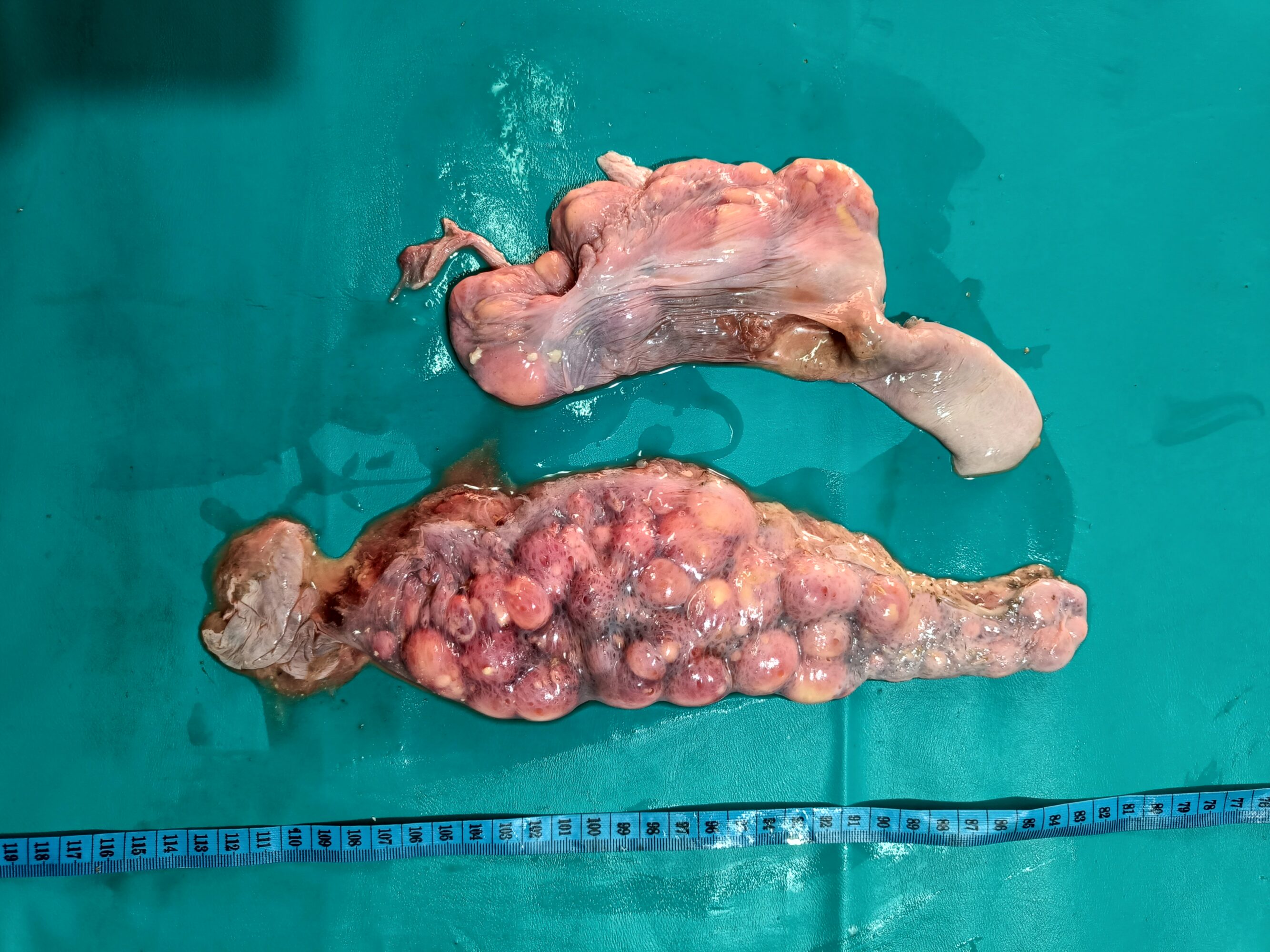
The exposed ovary of this pregnant guitarfish tells a tragic story. We preserved it for research, but urgent awareness is needed to protect what's left. Photo © Durjoy Raha Antu
A Call to Action
This project has been more than just a scientific exercise — it has been a call to conscience. Through this work, I’ve realised how critical it is to act swiftly, not only to protect the Sharpnose Guitarfish but also to safeguard the health of our oceans and the sustainability of local fishing communities.
Designate seasonal no-take zones in identified breeding areas to allow the population a chance to recover.
Educate fishers and traders about the species and the laws protecting it, especially in hotspots like Chattogram, Cox’s Bazar, and Kuakata.
Enforce policies rigorously, including regular inspections at ports and landing sites to ensure compliance with CITES and national wildlife laws.
Invest in long-term monitoring of guitarfish landings, reproductive trends, and trade networks, so that data can inform adaptive conservation strategies.
The Sharpnose Guitarfish is more than just another marine species; it is a symbol of our ecological balance, a link in the intricate food web of our coastal ecosystems. Its disappearance would mark not just a loss of biodiversity, but a rupture in the cultural and economic fabric of communities who depend on the sea.
We are nearing a critical tipping point — but it’s not too late. With collaborative efforts, targeted conservation, and better awareness, we can give this species a fighting chance.
Let’s ensure that the Sharpnose Guitarfish doesn’t disappear from our oceans, our nets, or our memories.

Local fishers engage in dialogue about the vital role this species plays in ocean health and biodiversity. Photo © Durjoy Raha Antu