
Mediterranean Guitarfishes: Balancing Conservation and Local Needs
One of the key goals of our project “Mediterranean Guitarfishes: Addressing Fisheries Pressure and Market Demand” is to better understand how the Common Guitarfish Rhinobatos rhinobatos and the Blackchin Guitarfish Glaucostegus cemiculus are affected by local fisheries in Tunisia. We’re also working with our local partners to identify ways to better implement existing protections for these species whilst taking into consideration the socioeconomic realities of the local fishing communities.
The project began with extensive data collection, including landings observations and market surveys, both of which help to build a baseline understanding of the current situation. More recently, we’ve added another important layer to the project: interviews with the local fishers. These conversations offer critical insights into the role of guitarfishes in local livelihoods and help to navigate the complex balance between conservation and socioeconomic interests.
Guitarfishes are regionally prohibited from catch, retention and sale in the Mediterranean (GFCM/42/2018/2), however this has not yet been transposed into national law in Tunisia. Meanwhile, anecdotal reports suggest that market demand for guitarfish meat continues to grow, driven in part by the decline of other commercial fish populations, which has created a strong economic incentive for fishers to continue targeting the species. Gaining insights from fishers helps to shape successful next steps for managing guitarfish populations and local needs.
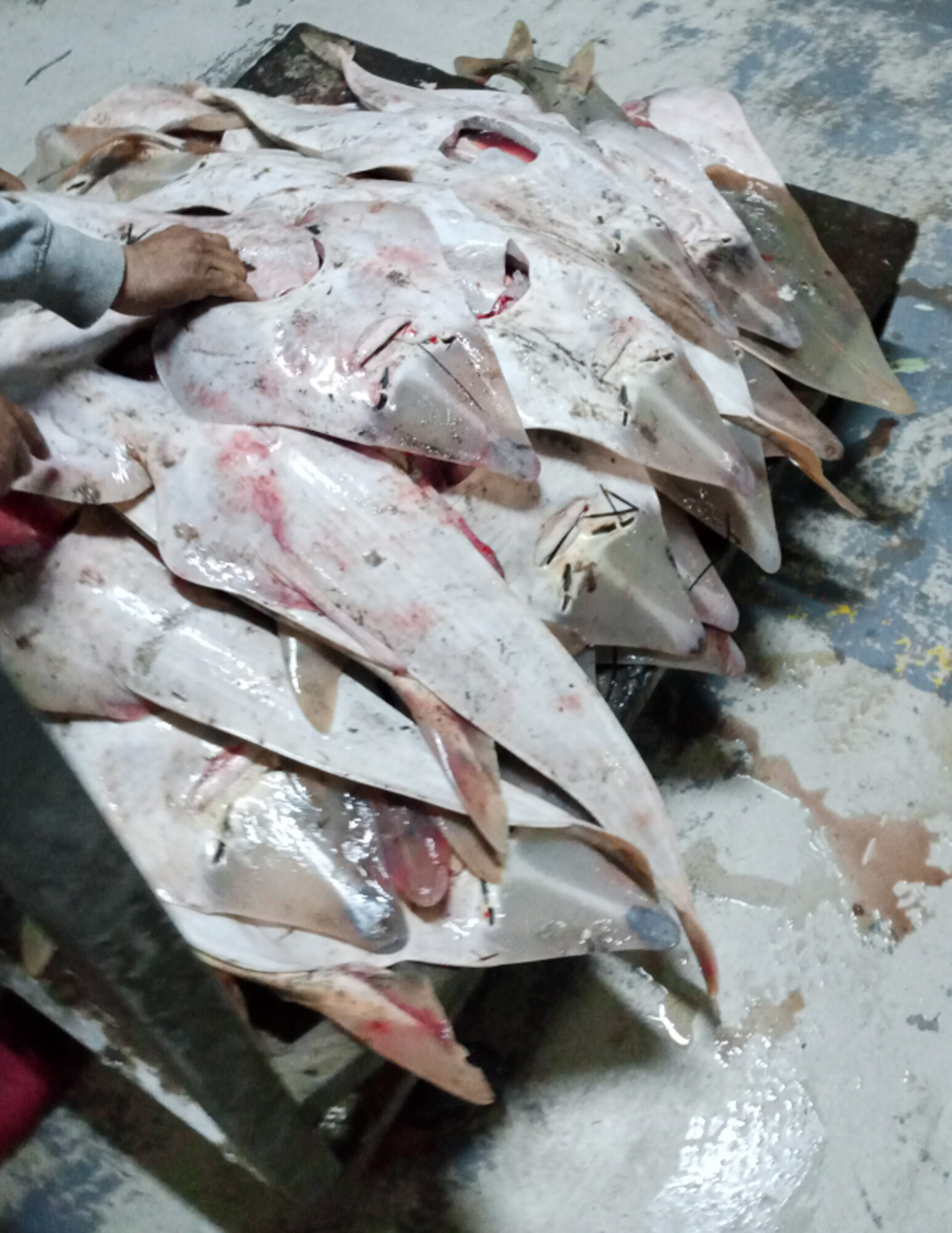
Guitarfish caught in local fisheries in Tunisia. Photo © Bechir Saidi
Interviews revealed that most fishers perceived guitarfish populations to be decreasing. And they attributed this to mainly overfishing, climate change and habitat degradation. Despite this, only a few fishers expressed a willingness to take part in conservation efforts.
But there is room for optimism! When local partners followed up with fishers to explain some of the biological traits of guitarfishes – their long generation lengths, low fecundity and late maturation, many fishers acknowledged the importance of releasing pregnant females and undersized juveniles to help sustain the population. It is outreach and education such as this, which is often the first step towards fostering fisher involvement and willingness to participate in conservation efforts.
Our ongoing efforts include further improving our understanding of fisheries interactions and fisher attitudes towards conservation. A priority will be to develop outreach and engagement workshops to raise the profile of guitarfishes in the region, both for fishers and for consumers. Alongside this, we will continue to encourage government to step up to their obligations, amending national laws and enforcing regional legislation.
Only with a coordinated approach – grounded in both science and community engagement – can we secure a future for Mediterranean guitarfishes while supporting the people who depend on the sea for their livelihoods.