
Little dogfish, big ocean
It has been over two years since our project on Pacific spiny dogfish first began. When we initially set out, we aimed to learn more about the movement patterns of this species to inform the next stock assessment, with the goal of identifying what habitats they choose to occupy, at what times of year, and under which environmental conditions. It was a slow start. Yet after a substantial amount of time at sea in various locations along the Oregon and Washington coasts, we finally found the dogfish and with them, some fascinating information.
First, based on our fishing efforts and resulting data from over 40 satellite tags and 10 acoustic tags, we observed that dogfish move…a lot! They occupy different areas seasonally and demographically. For example, we encountered them off the Oregon coast during primarily the winter months. We tracked these individuals using satellite tags all the way north to Alaska and south to central California, with no apparent pattern by sex.
For the acoustic tagging component of the project (funded directly by the SOSF), we targeted our fishing to two specific bays in Washington: Puget Sound and Willapa Bay, Washington, both of which offer suspected juvenile habitat. Unfortunately, though we aspired to learn more about this understudied age class, we caught zero juveniles after two summers of fishing. However, unlike in Oregon, we did capture almost exclusively adult females, ten of which (5 in Puget Sound, 5 in Willapa Bay) were acoustically tagged to learn more about the seasonality and environmental conditions under which these individuals are present in these bays. These capture patterns also allowed us to undertake an unexpected side quest: examining gestational stage using ultrasound – the first time this approach has been applied to this species!
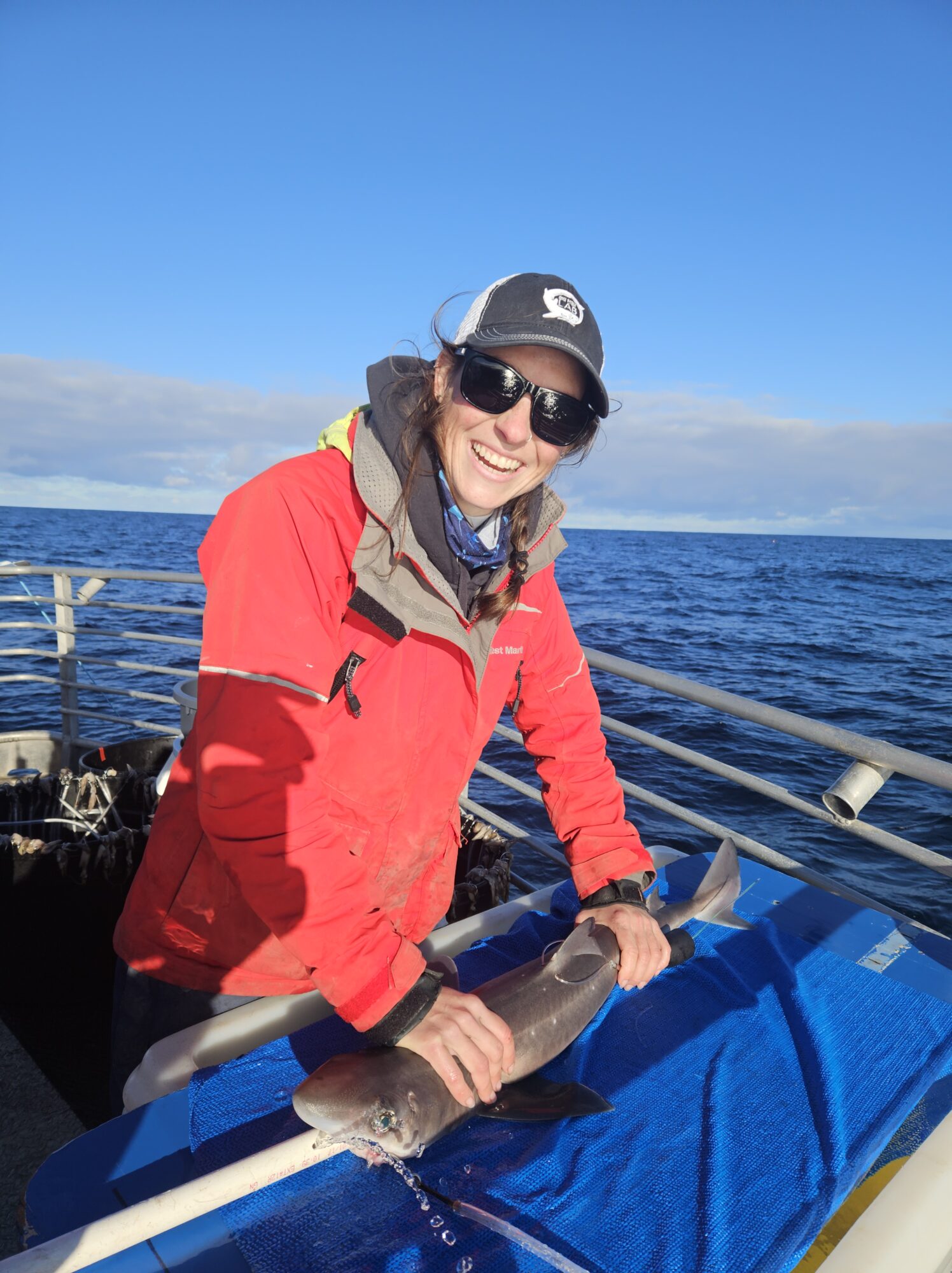
Project leader Dr. Alexandra McInturf conducting a “work up” on a Pacific spiny dogfish in the Northeast Pacific (including taking measurements and ultrasound videos and attaching a tag). Photo © Ryan Fields | Oregon Department of Fish and Wildlife
What else have we found so far? With the analytical help of Oregon State University undergraduate researchers Auggie Tveit and Isabella Garvin, we observed a pronounced seasonal difference between the two bays. Unlike the dogfish we captured offshore, adult females reside in the Puget Sound primarily during the summer months, and in Willapa Bay during the fall (although we are still collecting data, so we may learn more in subsequent years). Our environmental analysis suggests that temperature and salinity are correlated to dogfish presence in both bays, while chlorophyll-a (indicative of high primary productivity ) was only positively correlated to dogfish presence in the Puget Sound. Because Willapa Bay and the Puget Sound have vastly different environmental and bathymetric features (different amounts of mixing between fresh and saltwater, different temperature profiles, etc.), this collectively means that context matters when it comes to predicting where and when female dogfish may occupy these estuarine habitats.
We found some similar complexity when it came to dogfish gestational stage. Perhaps most importantly, the ultrasound proved to be a useful tool in successfully learning about dogfish gestation. All females that were captured in Willapa Bay, as well as offshore Oregon waters, were pregnant! Across all of our samples, we identified three main gestational stages: early candle stage (when embryos are located in a casing known as a “candle”), mid-stage (when embryos are free floating), and late stage (when vertebrae of pups are visible). We also found that there were differences in embryo size between month and location, with the smallest embryos present in females sampled in Willapa Bay and the largest embryos in those from Stonewall Bank in December. This was an important step to understanding the population dynamics of this species. However, we require much more data to determine if these differences are seasonal, annual and/or a result of the sampling site.
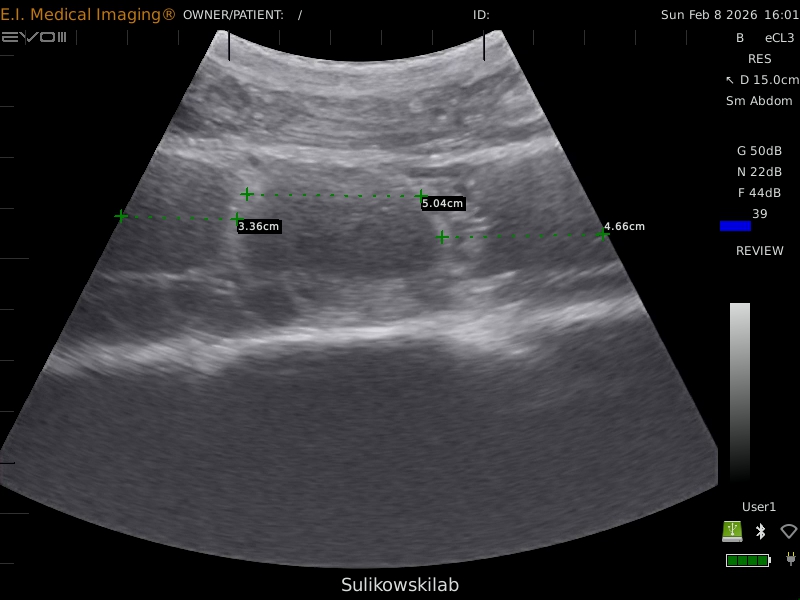
An example image of a dogfish ultrasound from a pregnant Pacific spiny dogfish. Photo © Big Fish Lab | Oregon State University
All in all, our results thus far indicate that dogfish are incredible animals, capable of occupying a variety of habitats, from coastal estuaries to the far reaches of the Northeast Pacific Ocean. They roam widely, and females do so with the added burden of carrying their pups for much of the time! It is therefore important to consider variation in habitat use within the population when determining how to take management action. Our results have been presented at the first of many meetings designed to create a new, improved stock assessment in 2027 or 2029. In the meantime, our tags will continue to collect data that will inevitably affect the way that we interact with this small but mighty species.