
Imagine seeing a deep-water chimaera releasing its egg cases in real life!
Before we dive into the second – and final – round of tagging for the Ghost Track project, here is a quick recap of where we left off. Between mid-December 2024 and mid-February 2025 we completed six field days and successfully tagged five chimaeras – which we were super happy about. In late November 2025, we headed back out as the chimaeras are more frequently observed by divers in the shallower bays during winter (at 30 meters or less). But despite our hopes, we were unsuccessful… Winter fieldwork also has its challenges: cold temperatures, wind, waves, rain and/or snow, that kept us from going back until mid-January 2026. And that is when it got very exciting!
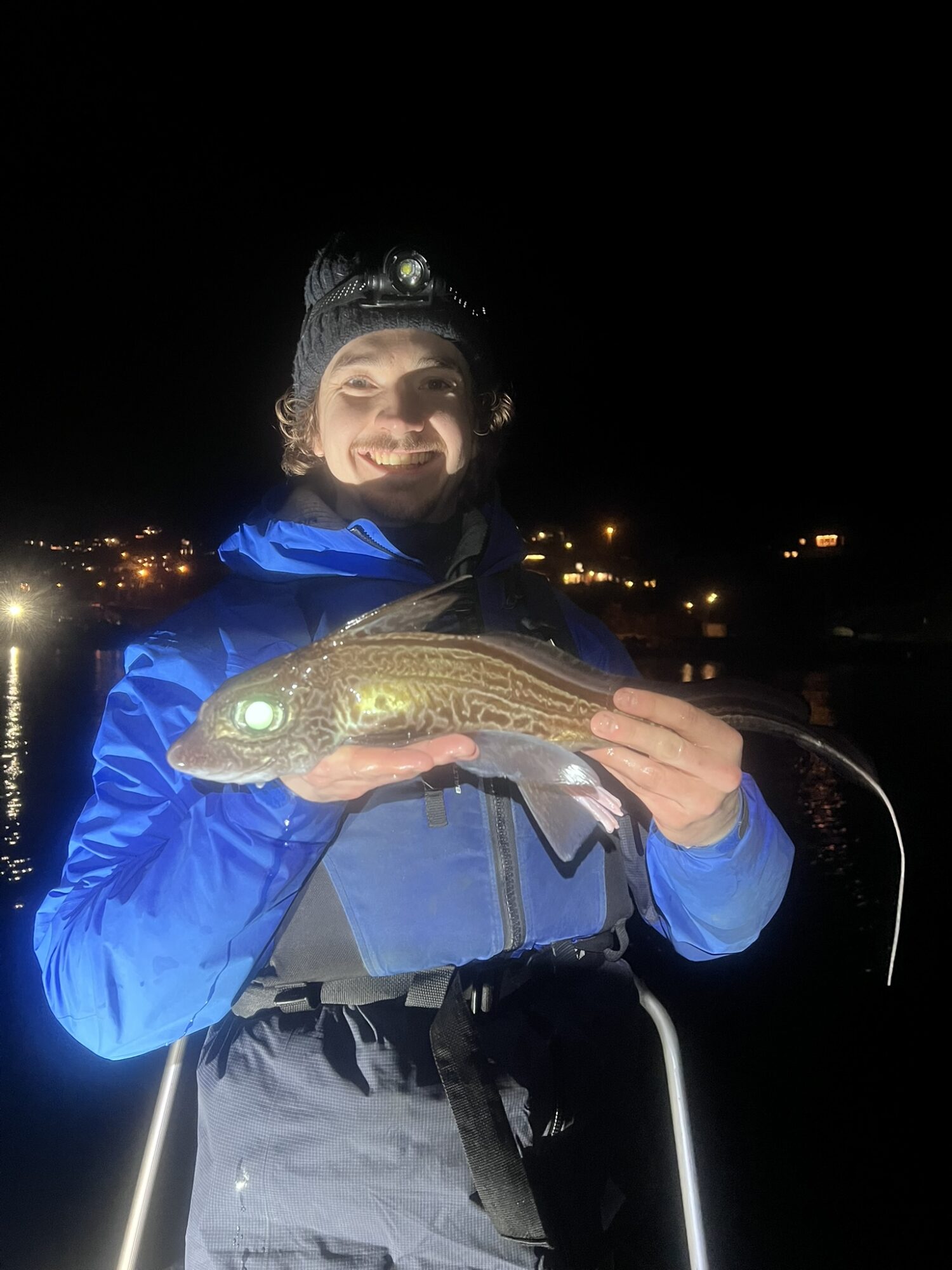
Lars Martin holding the first chimaera tagged for the second field campaign for Ghost Track project that he caught while angling. Photo © Lotte S Dahlmo
While the longlines were soaking for an hour or two, we tried some baited angling more for passing time than anything else, because we had been told chimaeras rarely take bait that is moving. Static fishing is key, which is tricky from a boat. So when Lars Marting began reeling in, none of us expected what appeared a few meters below the surface: two large, glowing eyes showing up in the pitch-dark water. A beautiful chimaera – and we were ecstatic! We quickly prepared the tagging equipment and successfully tagged the 6th individual – the first one for the season. Since the longlines still needed more time, we continued fishing, and unbelievably, Lars Martin caught another chimaera – wow! The longline unfortunately did not yield any chimaeras, but the night was still a huge success.
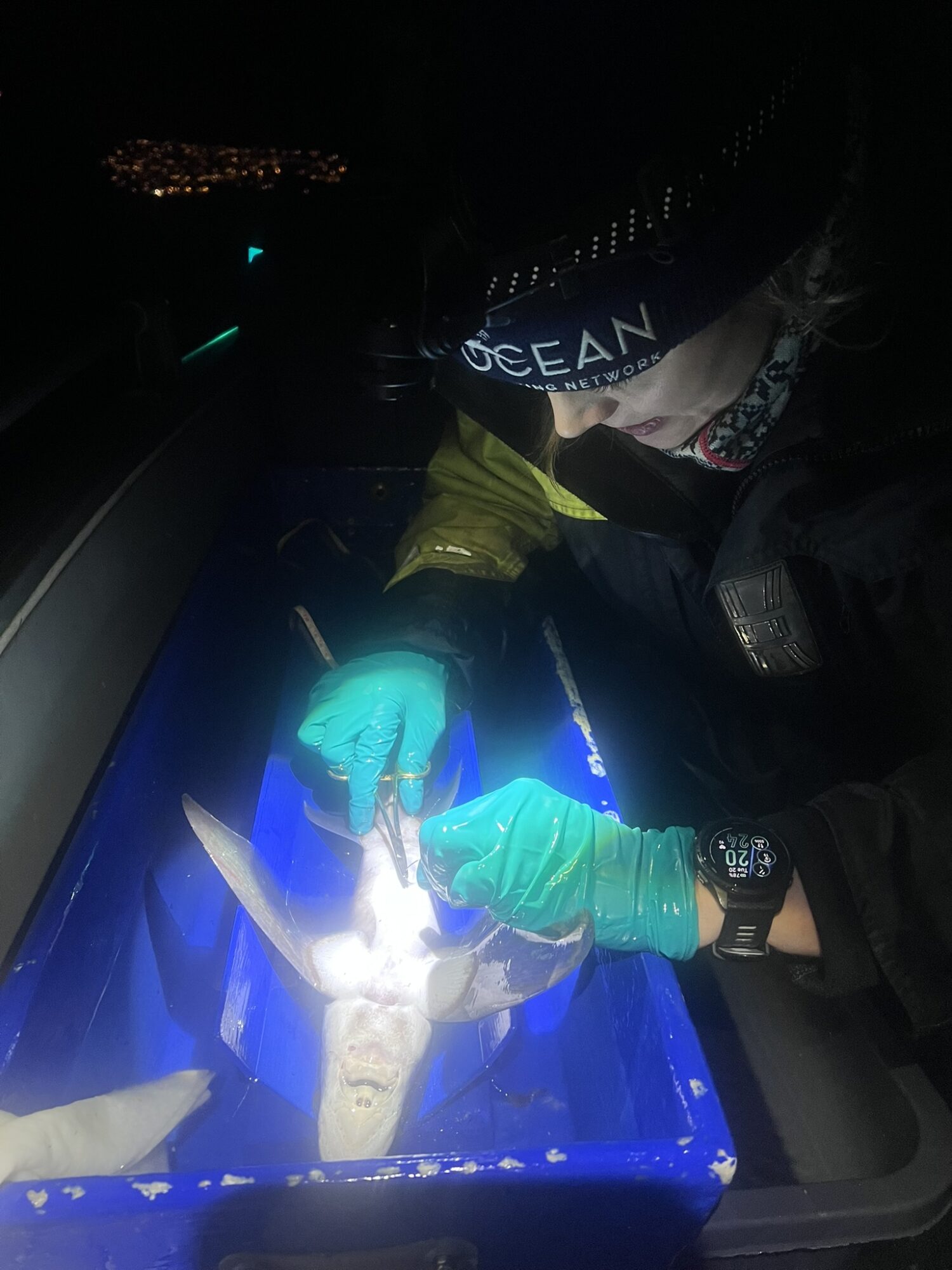
Tagging a chimaera monstrosa. Photo © Lars Martin Myhre
Over the next two days, the longlines came through: we captured and tagged six more chimaeras. By February 2026, we were back out again for what would be our last push of the season. On our first February evening, while the longlines soaked, Moritz recaptured a tagged chimaera from nearly a year earlier — in the exact same location. It was fantastic to see the healed tag site and to know the fish was doing well. Over the following hours, we captured five more individuals on longlines, making it a great night for the project.
On February 21st, we went out again and knew this would most likely be the final tagging evening for the Ghost Track project. And I know I keep saying this but, WOW, this must be one of the coolest experiences I have ever had in the field. After deploying two longlines and checking them, with no catches except for a crab, we contemplated whether to deploy another round because it was already 10:30 pm. But we did, and just as it passed midnight, we started checking the longlines. And sure enough there was a chimaera on the longline! As we placed it in the tank on the boat, Robert noticed another pair of big, shiny eyes deep in the water. Instead of tagging the chimaera immediately, we pulled in more of the longline and sure enough it was another chimaera. But not just any chimaera, it was a chimaera with its egg cases being released! What an amazing experience seeing a chimaera releasing its egg and maybe this bay is used for laying their eggs in? So with that, we can say that the tagging efforts this second round exceeded all expectations and we are now tracking 20 chimaeras tagged with acoustic transmitters that are swimming around in the fjords outside of Bergen City. We can’t wait for the data download in some months! Huge thanks to the Save Our Seas Foundation for funding the Ghost Track project and supporting research into this elusive, beautiful and rarely studied species.
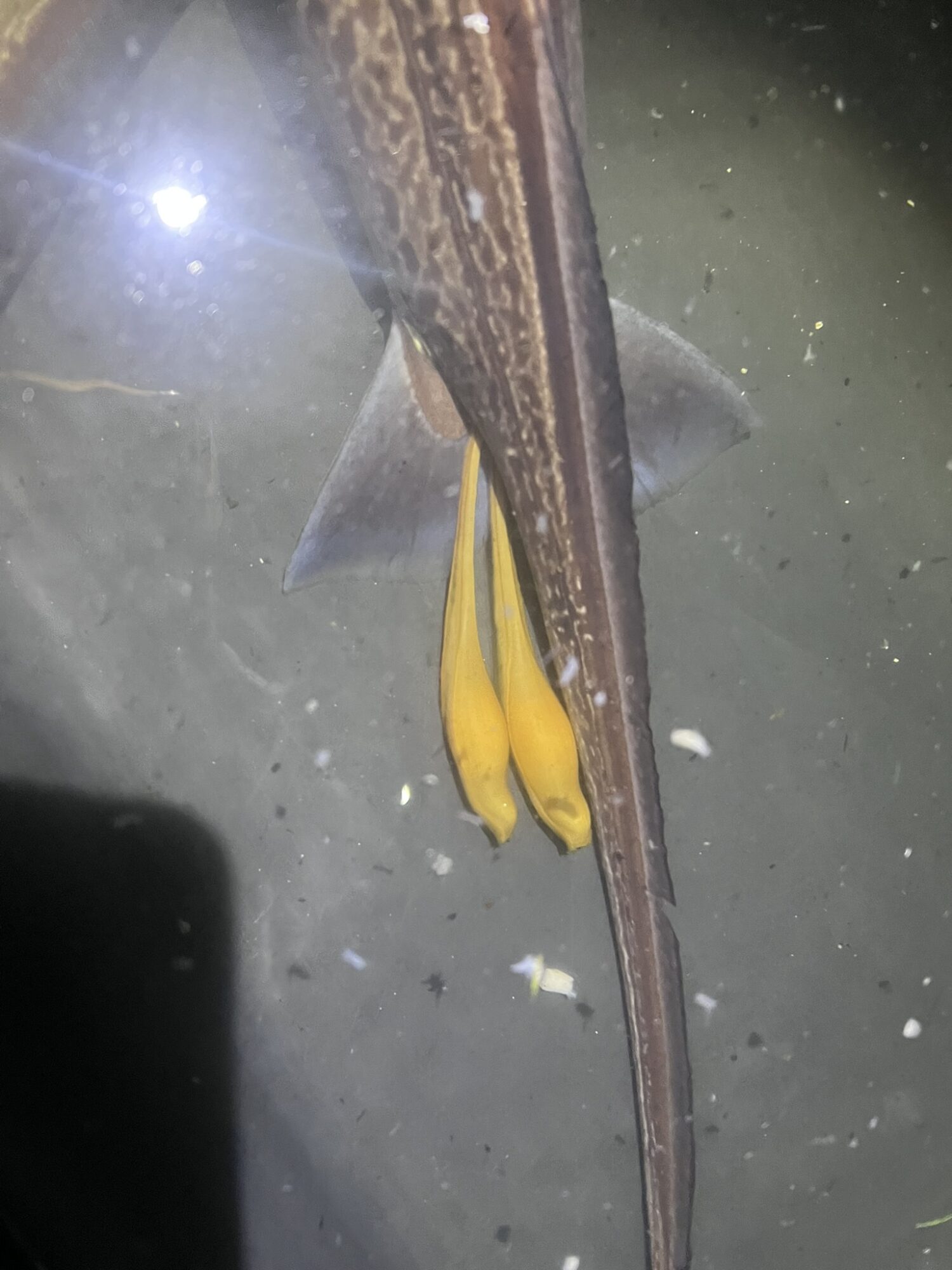
Chimaera monstrosa egg cases about to be released. Photo © Lotte S Dahlmo