
How community research and engagement are driving success in conserving scalloped hammerhead shark in Benin
After the reconnaissance surveys in the frame of our project supported by Save Our Seas Foundation, intervention sites were confirmed in three selected coastal municipalities in Benin: POPAC in Cotonou, Ahouandji in Ouidah, and Agoué in Grand-Popo. The project team, assisted by trained enumerators, collected data from 300 respondents, including fishermen and fishmongers, focusing on knowledge of the species, awareness of its conservation status, abundance and historical catch trends, as well as the trade network and uses of the species.
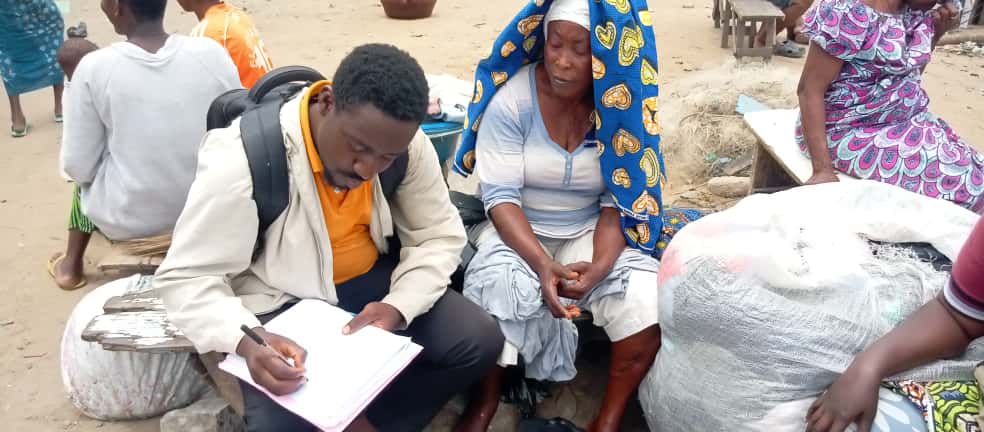
An enumerator collecting data from a fishmonger at the Artisanal Fishing Port of Cotonou (POPAC). Photo © LODEHOU C. Alain
Only 3% of respondents did not recognise the species, while the majority, about 71%, were aware that the Scalloped Hammerhead Shark is a threatened species. This awareness was attributed to the observed decline in its abundance over the years. According to the surveys, the main threats identified by respondents are habitat destruction, overfishing (including increased fishing effort), and illegal, unreported, and unregulated (IUU) fishing.
It was reported that targeted fishing of the species was common in the past, but today it is mostly caught accidentally due to its rarity in Benin waters. Even when fishers attempt to target it, there is no guarantee of encountering a Scalloped Hammerhead Shark. Many fishermen reported that seeing one during a fishing trip has become a rare event. To have any chance of encountering the species, they must travel long distances, well beyond the usual artisanal fishing coastal areas. This scarcity is viewed as an alarming sign of the decline in local populations of the species and sharply contrasts with the situation one or two decades ago, when Scalloped Hammerhead Shark catches were a regular part of fishing activities. Fisherfolk have called for research to determine the current population size of the species in Benin waters and to better understand its migration patterns into and out of the country’s waters.
Respondents also noted that accidentally caught sharks have little chance of survival; however, they requested training in safe release practices to help protect and conserve the species in case they accidentally catch live individuals.
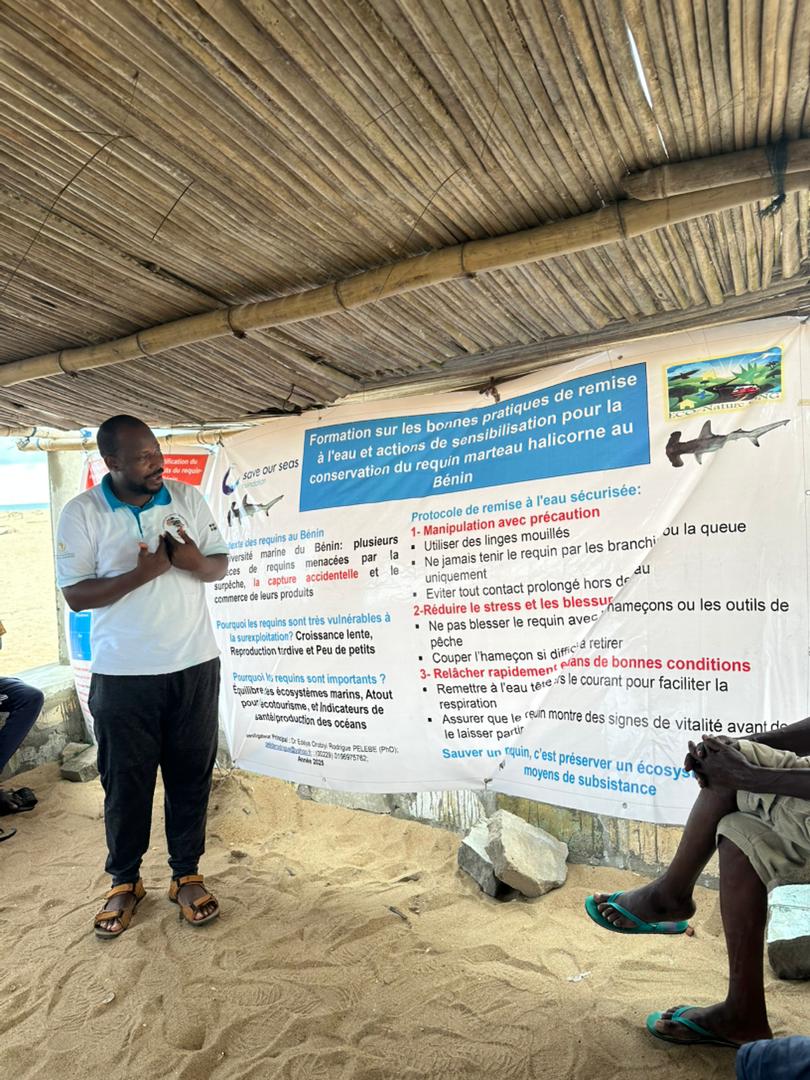
Dr. Rodrigue PELEBE giving a training on best practices for shark release to increase post-release survival rates in Agoué, Grand-Popo. Photo © ONIBON Chabi
The fins and meat are the two most exploited parts of the animal. Final destination for fins tends to be neighbouring countries, with the meat mostly consumed locally. It is eaten either fresh or after traditional processing, and in many cases, it is smoked or dried to extend its shelf life and facilitate sale in local markets.
Findings from the socio-economic research informed the development of visual materials for training and awareness-raising campaigns at each project site. Overall, the sessions emphasised the need for the sustainable use and conservation of these species while promoting local stewardship of marine resources. These activities were also instrumental in educating fisherfolk about the biological vulnerability of sharks, their ecological importance in marine waters, and their connections with other commercially exploited teleost fishes caught by artisanal fishers. In response to their request during the socio-economic surveys, training was provided on best handling practices and the safe release of live sharks.
Fisherfolk expressed the need for continued awareness-raising activities on shark conservation and showed willingness to collaborate with ECO-NATURE to achieve a long-lasting impact in favour of threatened shark species in Benin.
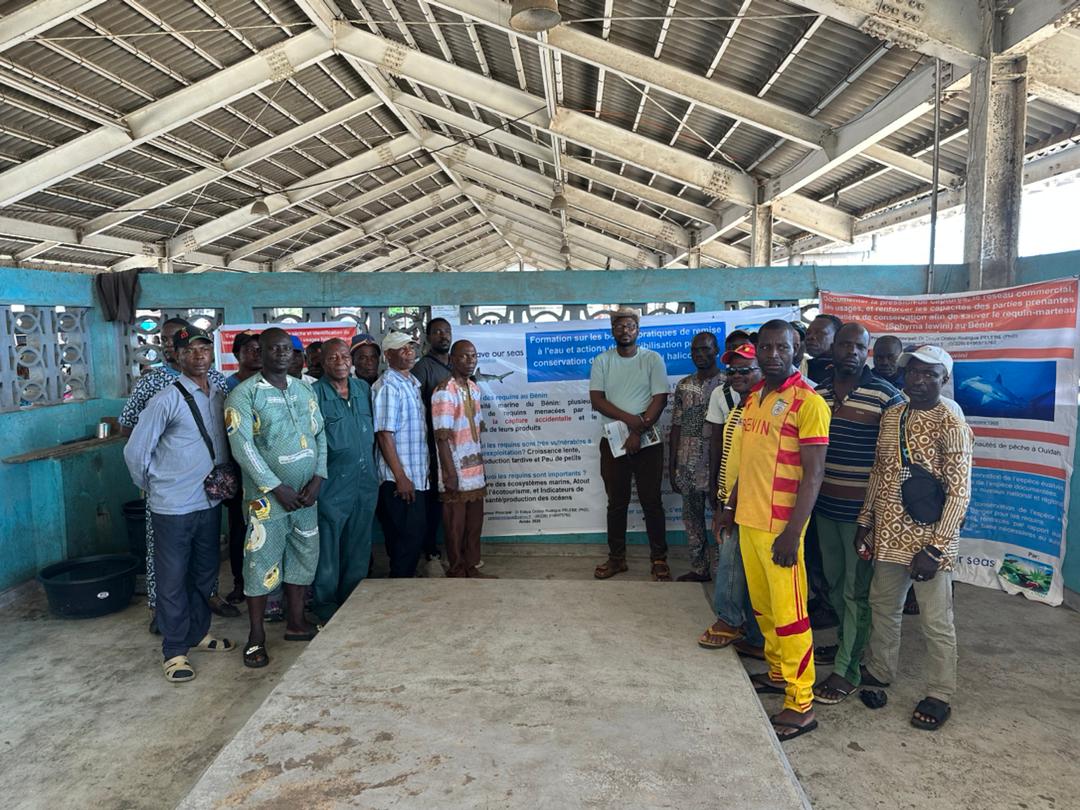
Group photo after the training and awareness-raising session for fishermen at POPAC in Cotonou. Photo © SOURABIE Aboubacar