
From the quay to the open sea
In the Gulf of Hammamet (Central Mediterranean Sea, Tunisia), the shortfin mako shark Isurus oxyrinchus is frequently caught as bycatch by various fishing gear operating in the area. Therefore, it is essential to understand when and where this species is most susceptible to being caught, and by which fishing gear, in order to reduce its incidental capture.
Landings off different fishing gears are regularly inspected to detect the occurrence of Isurus oxyrinchus and gather information on the captured specimen. Based on questionnaires and observation data, we will map the fishing grounds in the Gulf of Hammamet according to seasons and fishing gears.
The preliminary monitoring results indicate that shortfin mako are caught as solitary individuals, predominantly juveniles by pelagic longlines.
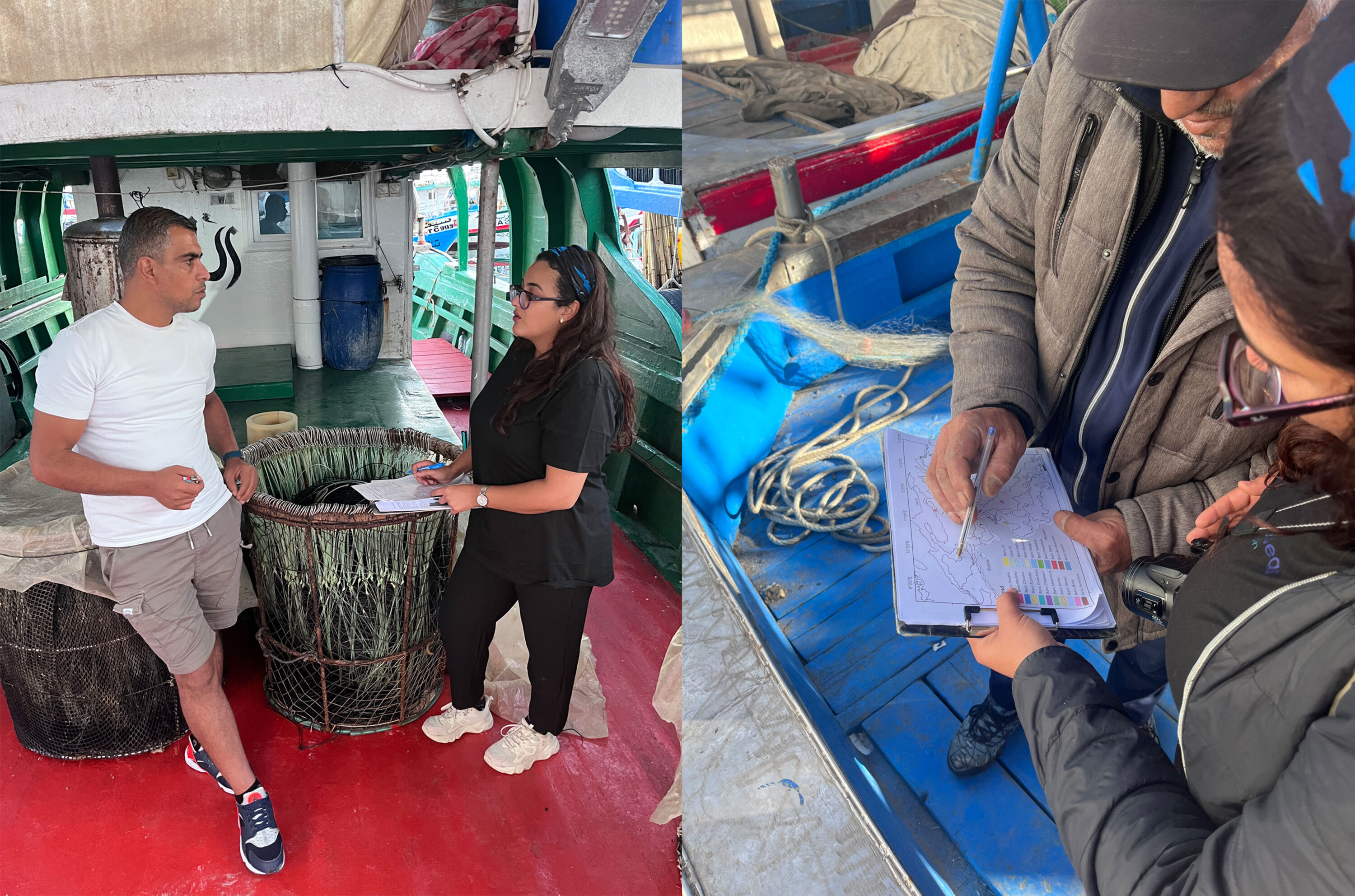
Ongoing questionnaire surveys with fishers operating in the Gulf of Hammamet. Photo © Ichrak BOUZIDI
Landing monitoring has been reinforced with on-board observations to gather more data on species bycatch. On selected vessels operating in the Gulf of Hammamet, we record details on fishing grounds, the coordinates of the sets, the depth ranges, the soak time and other operational details. The composition of the catch, including any elasmobranch species was noted. These observations allow us to observe closely the status of sharks and rays during capture, in order to encourage best-practice release where possible.
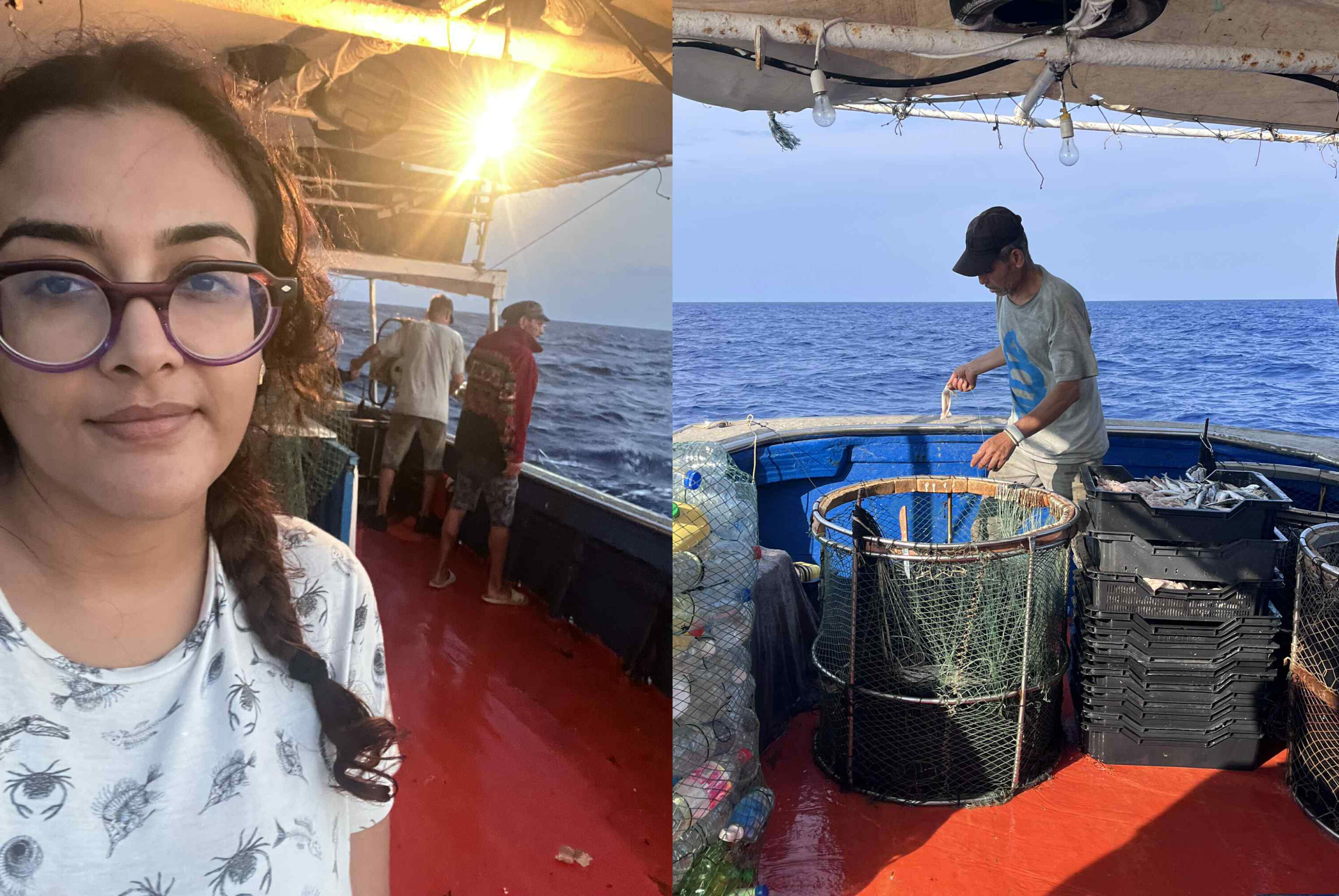
Onboard monitoring of shortfin mako bycatch in the Gulf of Hammamet. Photo © Ichrak BOUZIDI
Although the project primarily focused on shortfin mako, we documented the bycatch of other elasmobranch species, such as the pelagic stingray Pteroplatytrygon violacea, during on-board observation. This species has been recorded and, in some cases, released alive. These observations expand the scope of the project by demonstrating how different vulnerable species interact with fishing gear in the Gulf of Hammamet.
Release of the stingray Pteroplatytrygon violacea back into the sea. Video © Ichrak BOUZIDI