
From fish markets to the world stage: how the Gulf of Sirt earned its place on the map
In May 2023, I joined an IUCN workshop focused on identifying Important Shark and Ray Areas, which are critical habitats that deserve special recognition for the survival of these threatened species. While the meeting took place in Thessaloniki, Greece, with shark scientists gathered from across the Mediterranean and beyond, I participated online, contributing to the discussions and sharing insights from Libya’s waters.
When Libya’s turn came, I presented with our partners, what we’d found: pregnant females, juveniles, all three species of angel sharks still swimming in waters where scientists had assumed they’d vanished. Data from fish markets in Tripoli and Misrata and Benghazi. Records from fishers who’d been catching these sharks for decades without anyone asking them about it.
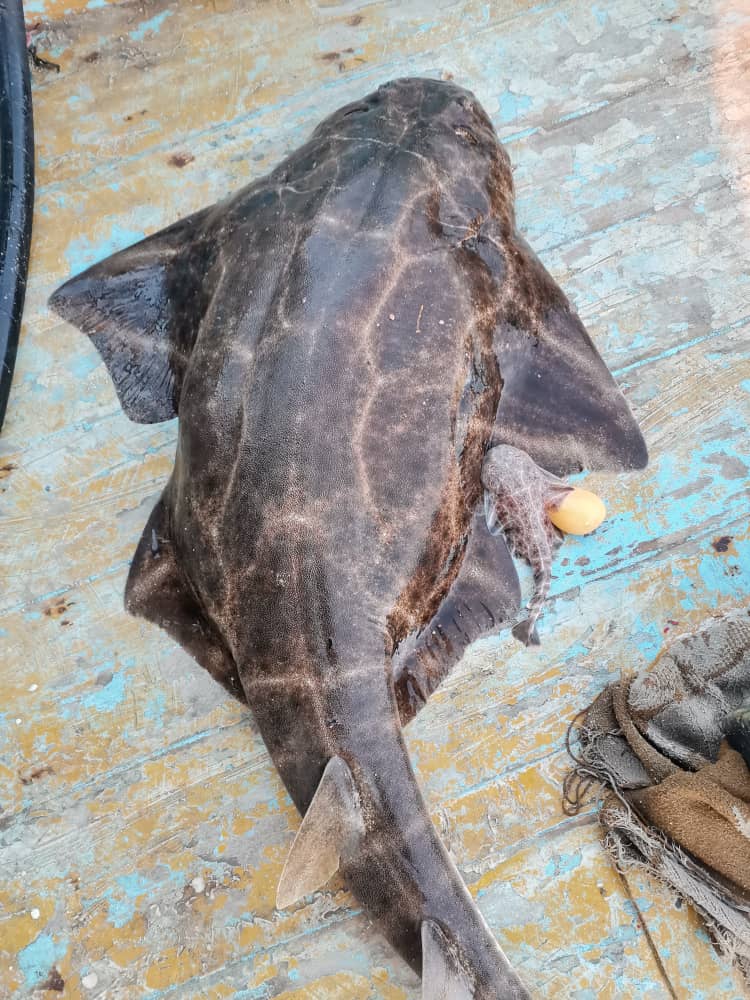
An angel shark caught in Benghzi, with an aborted pup by its side. Photo © Sarah Al Mabruk
The Gulf of Sirt that great bay sweeping along Libya’s central coast was designated an Important Shark and Ray Area that day.. After years of work that started with social media posts and conversations in harbours, our angel sharks were officially on the international conservation map.
What We Found in the Gulf
The Gulf of Sirt stretches more than 40,000 square kilometres along Libya’s coast a vast expanse of sandy bottoms, seagrass beds, and shallow waters that warm to 30 degrees in summer. It’s been recognised as a biodiversity hotspot for years. But until we started looking, nobody knew what it meant for angel sharks.
Over half of all the Smoothback Angelsharks we recorded came from the Sirt Gulf. We found juveniles, which suggests young sharks are using these waters as a nursery. We documented pregnant females. One was caught near Sirt city carrying pups that she aborted after capture, which was heartbreaking, but also evidence that these sharks are still reproducing here.
In the shallow coastal waters near Sirt, fishers caught a young-of-the-year shark. A baby, newly born, trying to survive in waters that its ancestors have used for generations.
These findings tell a story. The Gulf of Sirt isn’t just a nursery, a breeding ground, a place where angel shark life begins. That makes it irreplaceable.
Why It Matters
Angel sharks used to live throughout the Mediterranean. Historical records mention them from Spain to Greece, from Tunisia to Croatia. Fishers caught them for centuries flat, strange sharks that lay buried in sand and lunged at passing fish.
Today, they’ve rare sights from most of those places. Decades of trawling, habitat destruction, and bycatch have reduced them to scattered remnants. The populations that once existed in the northern Mediterranean are functionally gone.
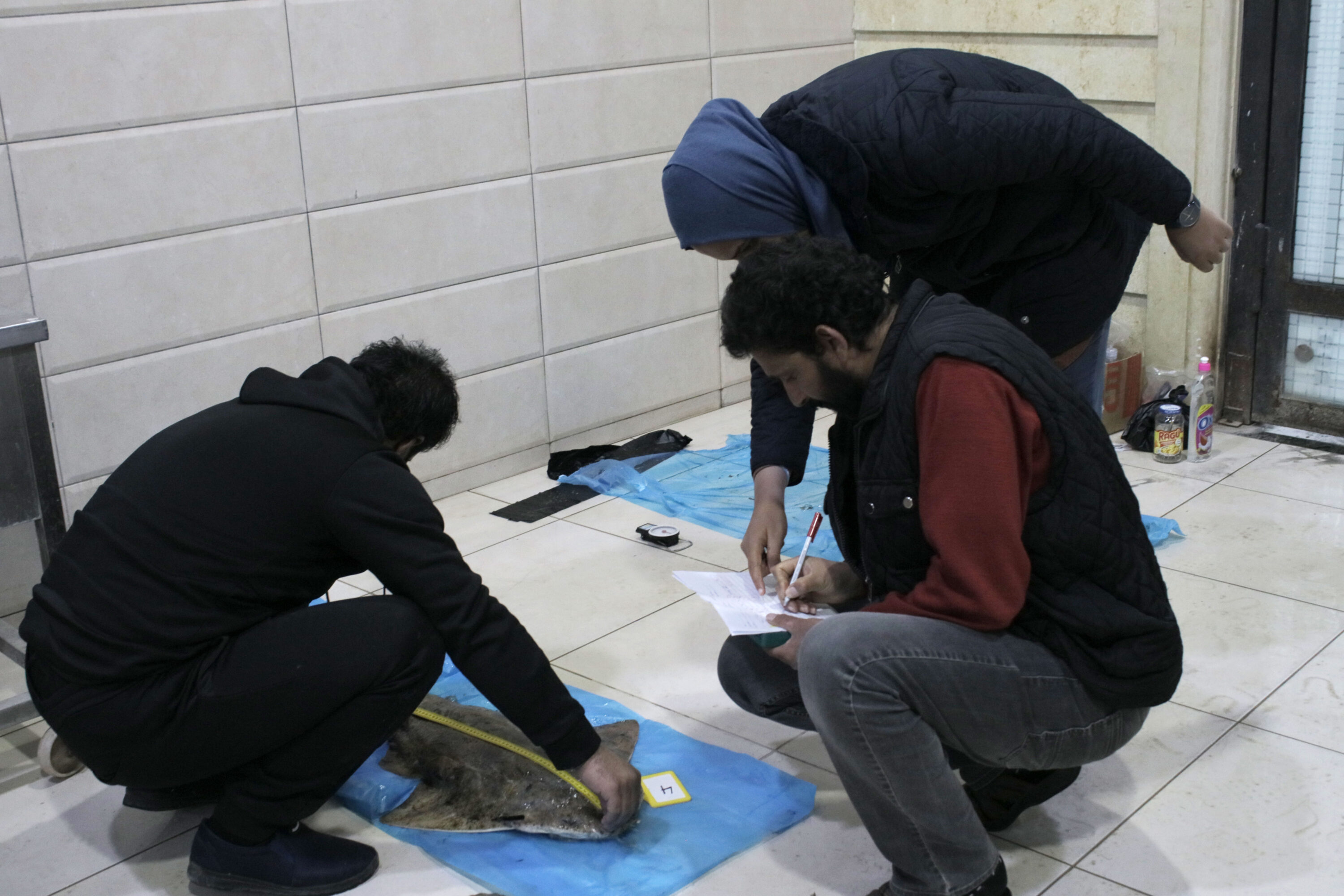
The team processesing and measuring an angel shark caught in Benghazi. Photo © Abdulghani Elkaloushi
That’s why Libya matters so much. Our waters still hold what others have lost. When I walk through the fish markets here and see angel sharks laid out for sale, I see both tragedy and hope that they’re being killed, hope that they’re still here at all.
The ISRA designation recognises this. It says to the world: this place is special. These waters harbour Critically Endangered species. What happens here matters beyond Libya’s borders.