
From fish landings to the international stage
This May, I took that question from Seychelles’ fish landings to Sharks International in Colombo, Sri Lanka. My presentation explored how long-term monitoring can inform management — and how our Save Our Seas Foundation Keystone project is taking the next step: assessing whether legal protection translates into changes in catches.
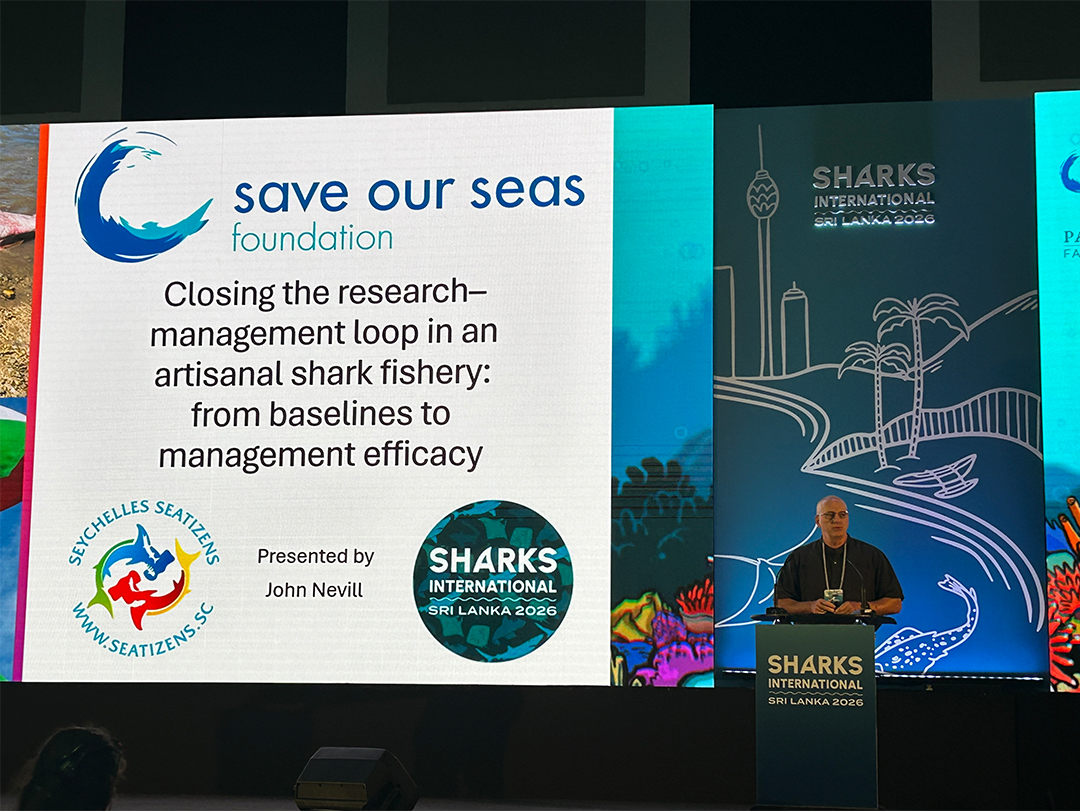
John Nevill presenting “Closing the Research–Management Loop in an Artisanal Shark Fishery: From Baselines to Management Efficacy” at Sharks International in Colombo, Sri Lanka, in May 2026. Photo by © Chris Mason-Parker
What years of monitoring reveal
Since 2012, I have monitored Seychelles’ artisanal shark fishery, identifying and measuring individual animals. The dataset presented in Colombo contained more than 35,000 records.
Behind those records are years of examining catches and working with fishers. Together, they reveal patterns that total catch weights alone cannot show: which species are landed, their sizes, their seasonality and changes over time.
One comparison in my presentation examined catches from 2013 and 2023, adjusted for differences in where and when monitoring took place. The number of species recorded fell from 20 to 17, and catch diversity declined significantly, although the four most commonly caught species remained the same.
Size comparisons also revealed smaller average lengths in 2023 for scalloped hammerheads, grey reef sharks and spottail sharks. These findings show why looking beyond total catches matters: familiar species can still dominate the landings while important changes occur within the catch.
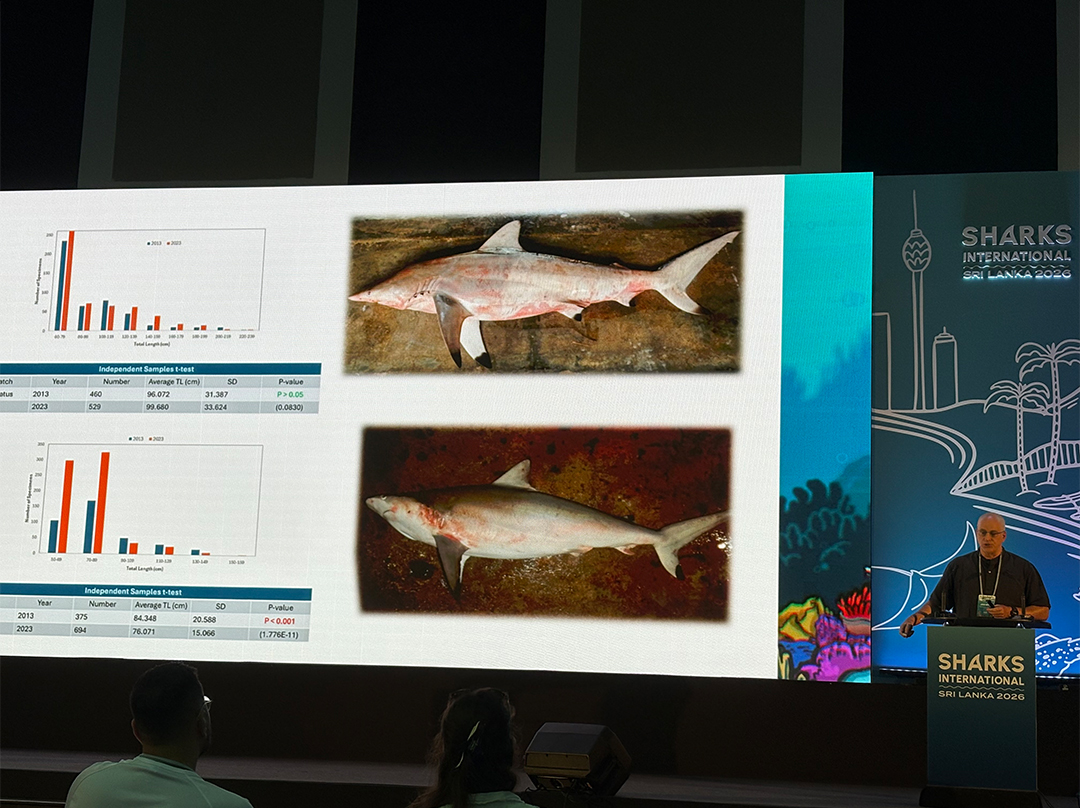
Long-term monitoring reveals more than the quantity of sharks landed. Comparisons presented in Colombo examined changes in species composition, catch diversity and the sizes of individual species. Photo by © Sophie Berloius
Protection needs implementation
At the time of the conference, Seychelles was moving to introduce legal protections for threatened sharks and rays, including hammerheads, oceanic whitetips, mobulid rays and wedgefishes. The proposed changes also included strengthening the wording of existing restrictions on net fishing for sharks and rays.
But legislation alone is not enough. My presentation highlighted a substantial implementation challenge: in the catches monitored during 2025, approximately 55% of sharks and wedgefish, and 98% of the other rays recorded, had been taken using illegal fishing methods. These figures describe the monitored animals, not an estimate of every catch in Seychelles.
They underline why our SOSF Keystone project examines fishing methods as well as species. Evaluating new protections must go hand in hand with understanding compliance with existing rules.
Closing the loop
The project continues standardised catch monitoring through these legislative changes, comparing new records with the long-term baseline to assess implementation and develop recommendations for the authorities.
It also extends beyond data collection. Species-identification training for Seychelles Fisheries Authority technical staff and support for University of Seychelles student research help build local monitoring capacity. Planned identification materials, posters and media outreach will help communicate the species concerned and the changes in the law.
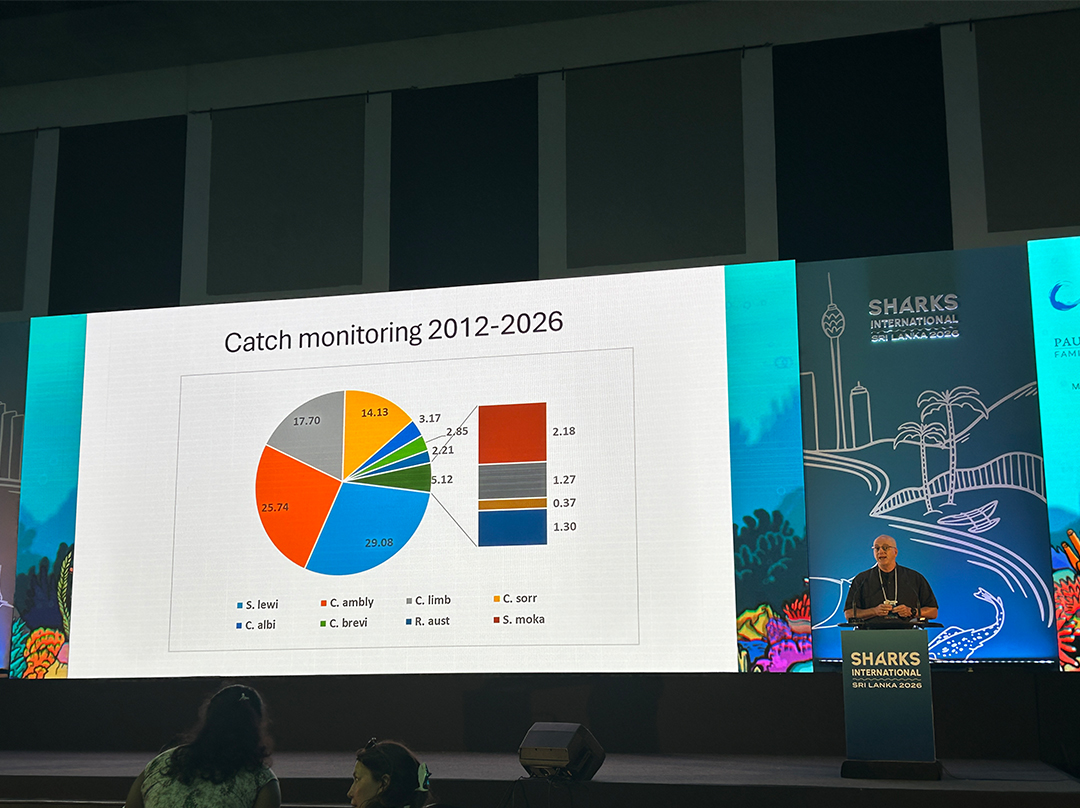
Presenting the SOSF Keystone project’s approach: combining continued catch monitoring, species-identification training and public awareness work to support implementation of shark and ray protections in Seychelles. Photo by © Chris Mason-Parker
Presenting this work in Colombo brought Seychelles’ experience into an international discussion about shark conservation.
The central message was simple: research should not stop when it informs a management decision. We need to keep observing, assess what changes and use that evidence to improve implementation.
That is the research–management loop our Keystone project aims to close — from individual animals recorded at fish landings to informed decisions, and back again to assess the results.