
From Fieldwork to Long-Term Monitoring: Sharks and Rays in Southern Angola
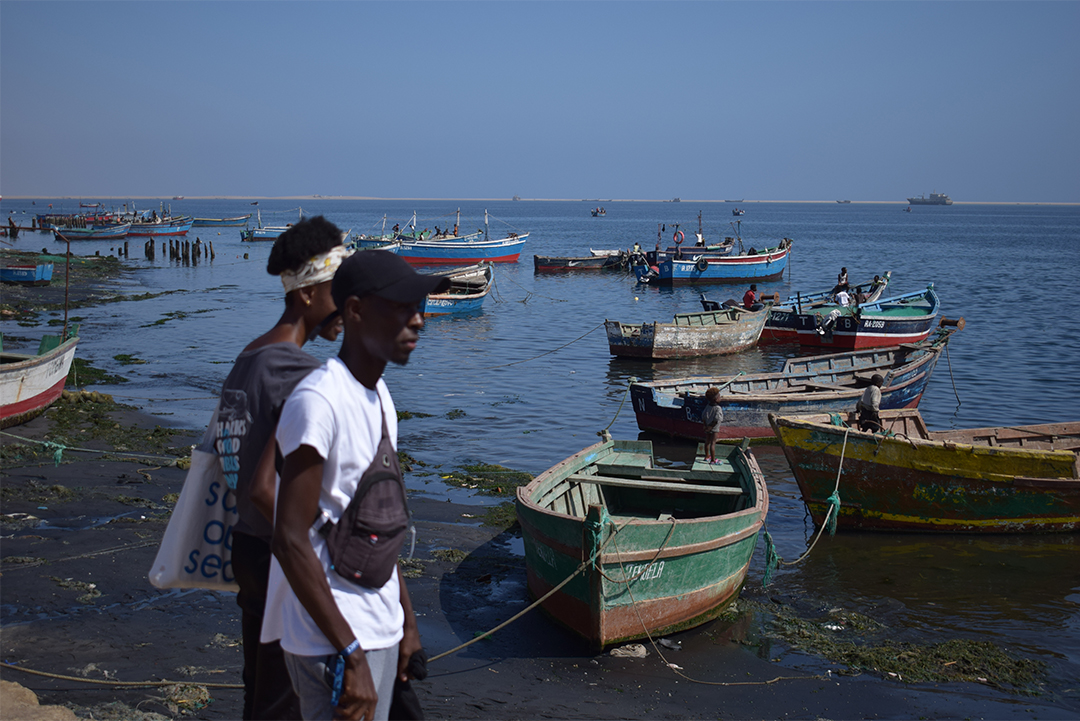
Early morning at a landing site in Namibe, where our team records sharks and rays alongside local fishers. Photo by © Ana Lúcia Furtado Soares
In Namibe, our working day often starts early. By the time we arrive at the landing sites, fishing boats are coming ashore, and the catch is being sorted. Among the fish are sharks, rays and guitarfishes. We work alongside the fishers, recording species, taking measurements and collecting tissue samples for DNA whenever possible, while listening to people who have fished these waters for years. These visits have taught us a great deal. They have also made one thing clear to me: if we want to understand what is happening to these populations, we need to keep coming back.
Why Being in Angola Matters
Southern Angola lies within the Benguela Current Large Marine Ecosystem, known for its productive waters and important fisheries, yet information about many of its sharks and rays remains limited. A shark recorded at a landing site, a tissue sample or a conversation with a fisher tells us little on its own, but their value grows as the records build up over time.
As I approach the end of my PhD, staying in Angola feels like the natural next step. It is a bold move and not an easy one, but it is the only way I can see this work truly making a difference. Support from the Save Our Seas Foundation has helped us strengthen our presence in Namibe as the project enters this new phase.
Building a Baseline, One Landing at a Time
Our database now holds more than 50,000 records of sharks and rays caught by small-scale fisheries, collected between 2021 and 2025. Behind that number are many early mornings, long days at the landing sites and hours spent organizing data. Conditions can be difficult and catches vary from one visit to the next, which is exactly why consistent monitoring matters. Without a baseline, it is much harder to detect change or identify which species need attention.
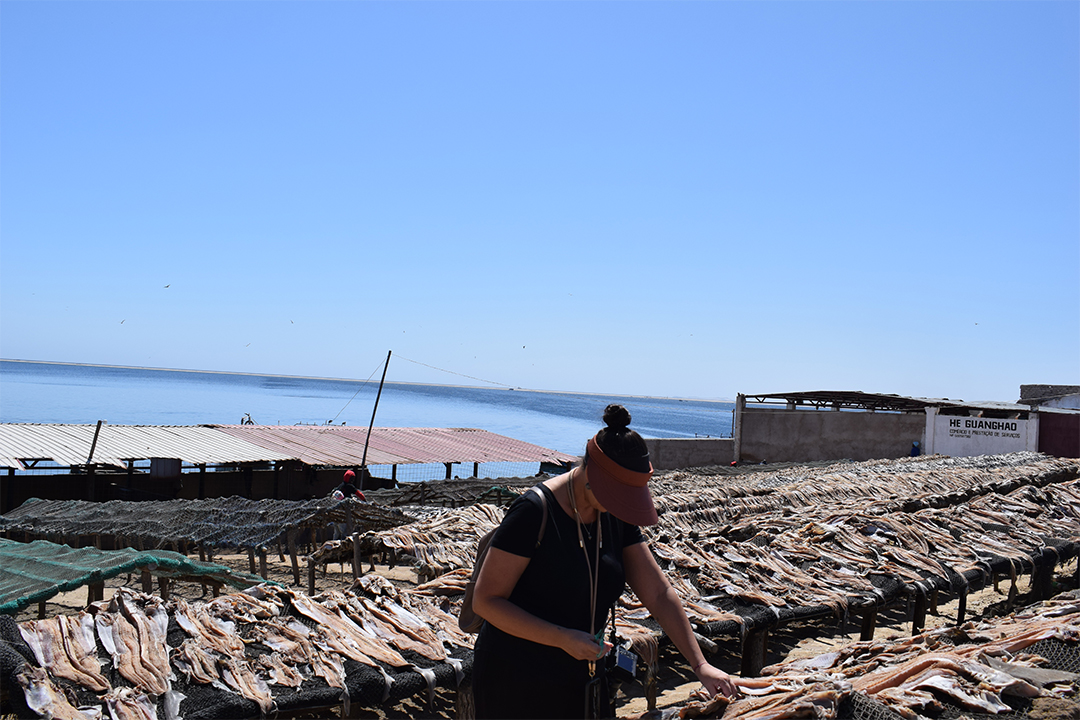
Dr. Rima Jabado, supervisor and advisor of the PhD involving the Angola Elasmo Project, during her first visit to Angola, observing landed sharks and rays as part of our ongoing field surveys. Photo by © Ana Lúcia Furtado Soares
From Data to Change
Data alone will not protect sharks and rays. Change happens when knowledge reaches the people who can act on it. Our awareness campaigns in schools and fishing communities help people see sharks and rays as part of the ecosystems and livelihoods they depend on.
Being present in Namibe also allows me to build stronger ties with local communities and government institutions, the people who can make change happen. By sharing our results with decision makers, we hope our data can help inform fisheries policy and the management of threatened species. A permanent presence lets this network grow, and with it, our impact.
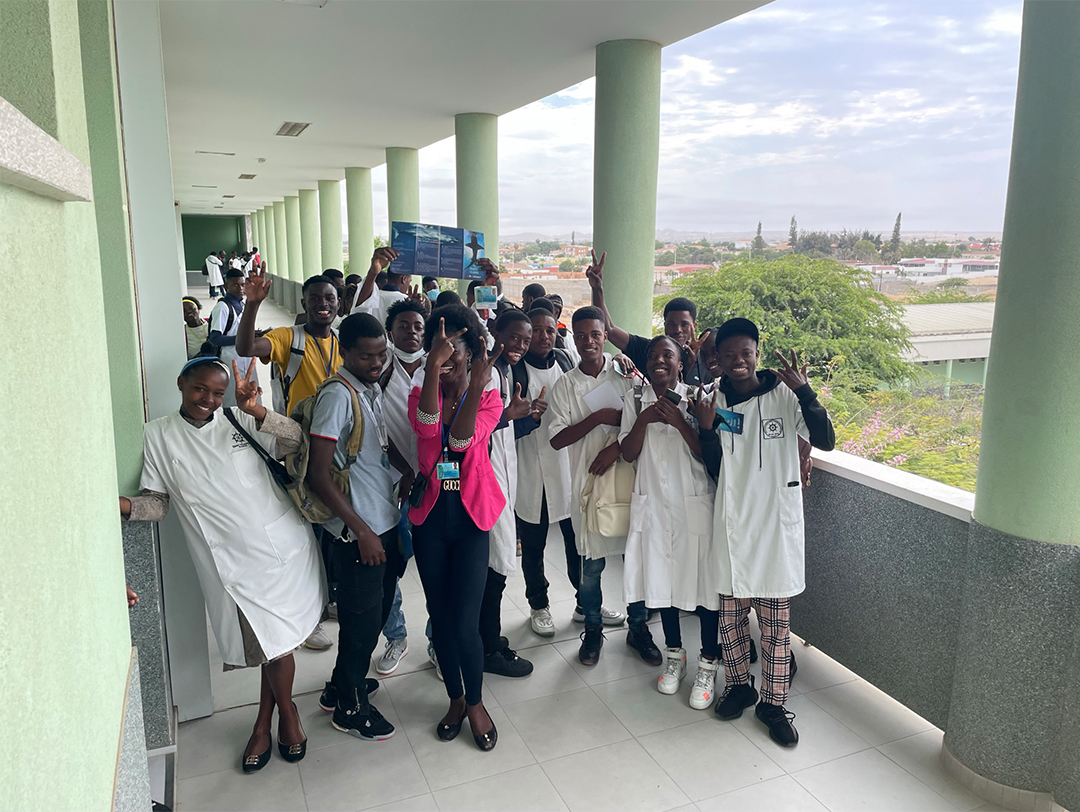
Awareness activities connect our research with the communities that live alongside sharks and rays. Photo by © Ana Lúcia Furtado Soares
A Growing Team
That impact also depends on people. Marcelo and Milena first joined us as volunteers and, after years with the project, have now moved into research roles. For me, their progress is just as important as the data we collect.
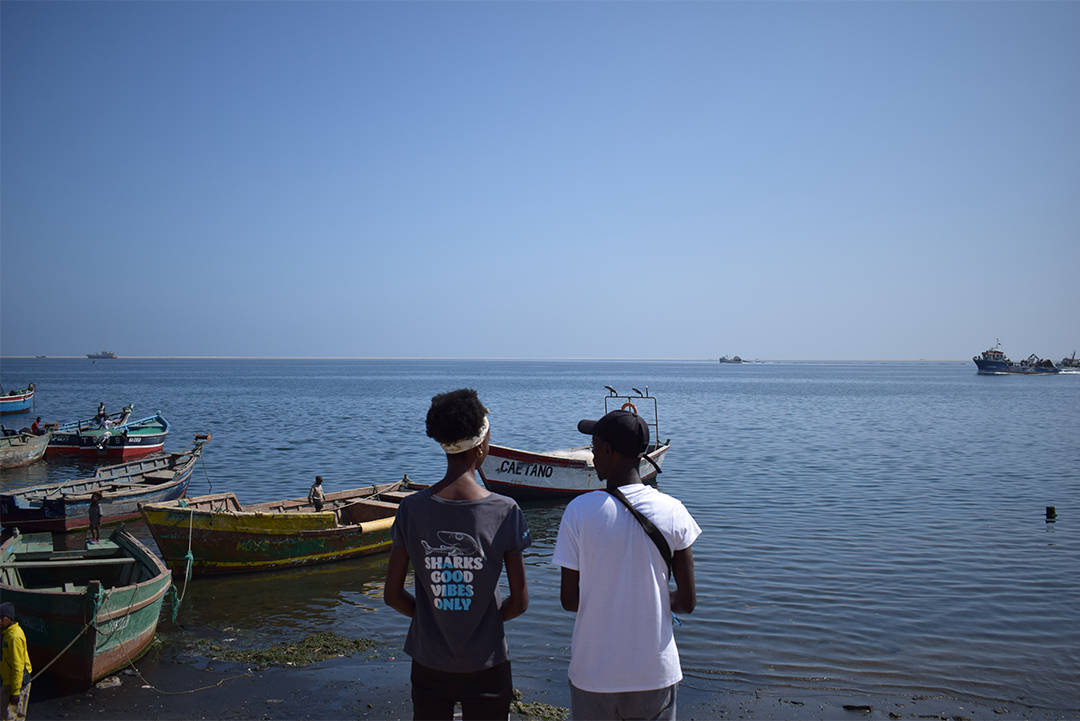
Marcelo and Milena, who progressed from volunteering to research roles with the Angola Elasmo Project. Photo by © Ana Lúcia Furtado Soares
A Permanent Home for Marine Science in Namibe
Looking ahead, I hope we can establish a permanent marine science, research and education centre in Namibe, where researchers can work all year, young Angolans can train, and fishers and scientists can share knowledge. We are preparing the path towards it now. Things like this take time, but we are heading in the right direction. Stay tuned!
A New Home Online
As the project grows, we also wanted a place where anyone can follow our work. We have launched the Angola Elasmo Project website, where you can learn about our research, see the impact of our work so far and read updates from the field. It is also a way to get involved: people can become members of our association, volunteer with us or support the project through our online shop. For a project built on community, it felt important to open our doors a little wider. I am grateful to the Save Our Seas Foundation for supporting this next stage, as my PhD comes to an end and the project grows beyond it.
You can learn more about our work at www.angolaelasmoproject.org.