
Fishers report declining abundance of sharks and rays from a diversity hotspot in coastal Kenya
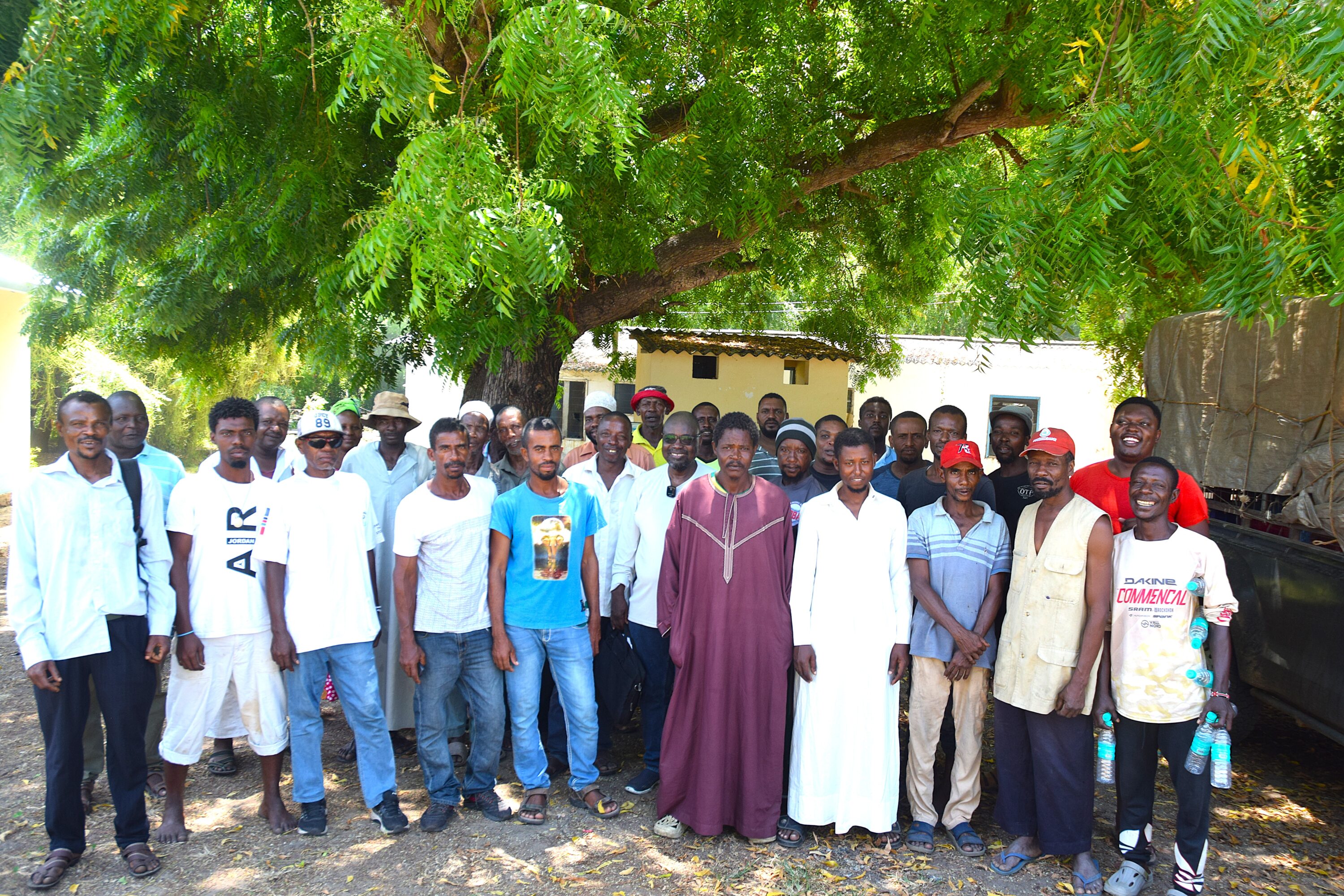
Fishers from Kipini fishing village, Kenya, following a dialogue session on shark conservation. Photo © Milton Apollo
Fishers in Kenya’s hotspot for shark and ray species, the remotely located Kipini fishing village on the north coast, acknowledge a drastic decline in shark and ray numbers in their landings. Interviews with about thirty fishers showed general consensus on the decline of shark and ray volumes and species diversity being landed in the village, and they attribute various factors to the declining catches. In this fishing village dominated by the indigenous Bajuni tribe, fishers mostly blame foreign fishers from outside the village who use destructive fishing methods and only come in the monsoon season when “a lot of fish is available “off Kipini. Fishers also blamed the activities of the prawn trawlers and noted that “they take everything from the ocean and leave us poor”. Although there is consensus on the decline of shark volumes landed in this village of about 300 fishers, there are variable views on what should be done to conserve the shark populations. All fishers interviewed acknowledged that sharks and rays provide a source of cheaper protein, they are a source of income, and have cultural values. They observed that young sharks dominate the landings from shallow grounds, and most of them can’t venture into deep waters where “large sharks and other fishes have moved due to fishing pressure”.
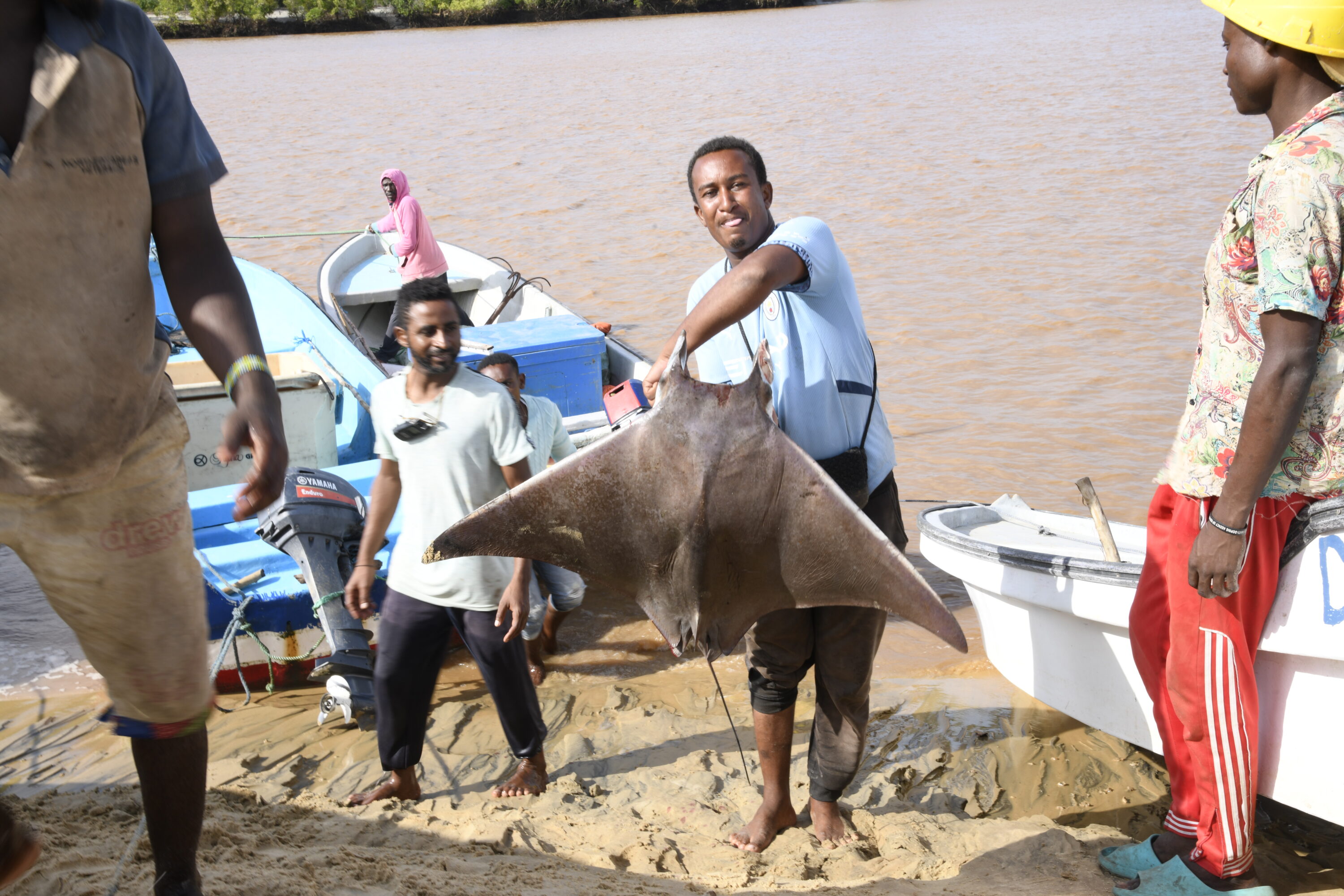
A rare mobulid ray landed at Kipini, Kenya: the Endangered shortfin pygmy devil ray. Photo © Milton Apollo
Nearly all the fishers interviewed have a poor knowledge on the ecological roles performed by sharks in the ocean. Fishers became more positive towards conserving sharks and rays when sensitized on how sharks help maintain their fish catches. The older fishers (> 50 years) at Kipini are more supportive of enforcement of severe fisheries regulations (like species bans) as they observe that species like hammerhead sharks, rhino rays and the mobulid rays have become rare in the landings. On the contrary, the younger ones (> 30 years) are insensitive to the decline in shark landings and the majority maintain that shark and ray abundance has remained nearly constant in the landings. During a dialogue session, most fishers supported the creation of locally protected areas (LPAs) called Tengefu in the Kiswahili language. They acknowledged the importance of these ocean areas as shark nurseries and pupping grounds. However, they asked that the government provide them with alternative sources of livelihood as “most of us live below the poverty line and have no other sources of catering for our families”. Fishers wanted facilitation to engage in other nature-based alternative sources of livelihoods like lobster and crab fishing, fish and seaweed farming, among others, in order to support the creation of community-protected conservation areas or Tengefus. They called for more dialogue. The project will compare the knowledge and views of fishers from other villages along the coastline.