
Fishers can complete what science misses
Scientific surveys are essential for understanding how fisheries interact with marine ecosystems. Through research vessels, onboard observations, and long-term monitoring programmes, scientists have built a strong foundation of knowledge that guides conservation and management efforts.
However, even the best-designed surveys cannot observe everything. The sea is highly dynamic, fishing activity changes constantly, and research efforts always operate within limits of time and resources. As a result, some local patterns and short-term events can remain unnoticed.
This is where the knowledge of fishers becomes particularly valuable.
Fishers spend most of their working lives at sea. Over years of experience, they observe seasonal changes, unusual catches, and variations in fishing grounds that may not appear in periodic scientific surveys. When this knowledge is shared through interviews and conversations, it can reveal details that scientists might otherwise overlook.
In our project, information gathered through interviews with fishers proved crucial in complementing existing scientific knowledge.
Although scientists have been working in the Eastern Mediterranean for many years, the available studies did not clearly reveal this specific interaction between trawl fisheries and juvenile guitarfishes. This is where communication with fishers helped fill an important gap in our understanding.
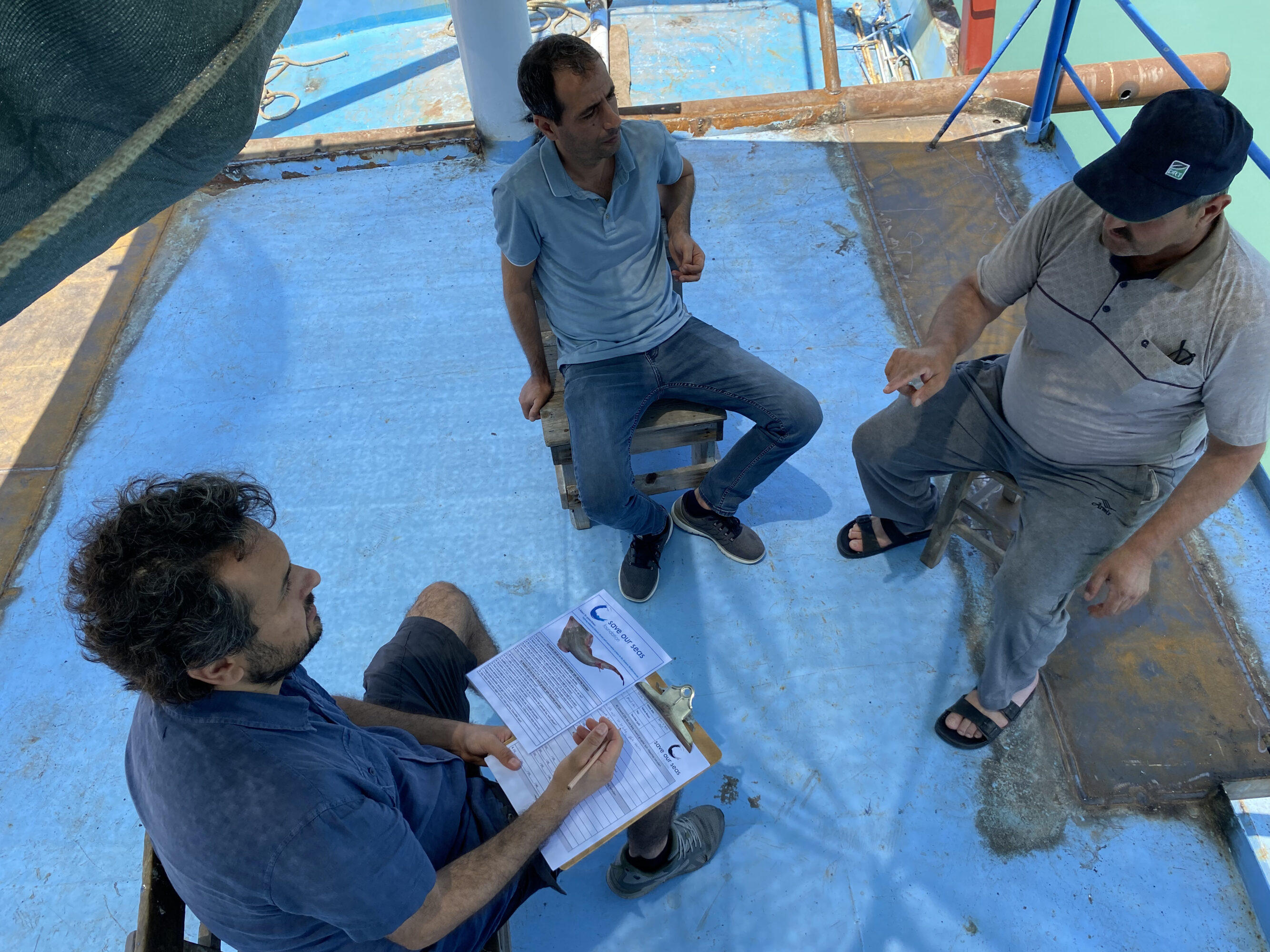
Discussing fishing grounds with local fishers during a field interview. Photo © Ismet Saygu
However, interviews with trawl fishers repeatedly pointed to a specific fishing ground where juvenile guitarfishes are frequently encountered. As described in our previous blog posts, this area is sometimes used for shrimp trawling, often during night operations. It is not a fishing ground where the fleet particularly concentrates its effort, nor is it known as an area experiencing unusually high fishing pressure compared to other grounds.
Nevertheless, even a small number of vessels operating in this area may pose a serious risk to juvenile guitarfishes. Because young individuals appear to concentrate there, limited fishing activity can still result in high numbers of accidental captures. Such localized risks can easily remain unnoticed in largescale surveys designed to represent fishing activity across wide regions.
This example shows how fishers’ knowledge can reveal important details that scientific surveys alone may miss. Once such areas are identified, targeted scientific studies can then quantify the risk and help us better understand the ecological processes involved.
For us, this experience highlights an important lesson: conservation science is strongest when different sources of knowledge work together. Scientific surveys provide the broader picture, while fishers’ experience helps reveal critical details within it. Together, they allow us to better understand how endangered species such as guitarfishes interact with fisheries and how effective conservation measures can be designed.