
Connecting the dots: sharks, science, and stakeholders
Every conversation I have about my research on Fiordland’s sharks feels different. Sometimes it’s a chat on the bus with visitors seeing Fiordland for the first time:
Other times, it’s after a 360° video presentation of broadnose sevengill sharks tugging at a baited remote underwater video (BRUV) unit, when a visitor leans in and asks:
And then there are the moments at outreach events, surrounded by curious families and wide-eyed children, asking:
These encounters remind me that research doesn’t exist in a vacuum. It’s not just about collecting data — it’s about communicating it.
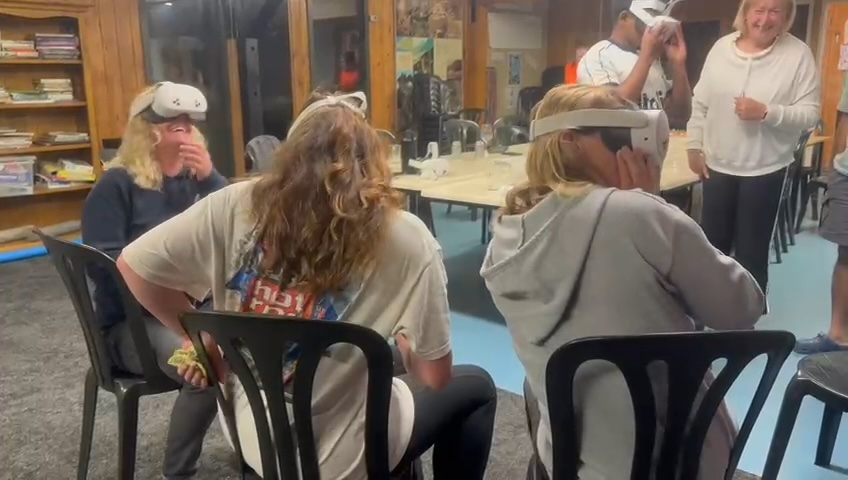
Watching a 360 video of broadnose sevengill sharks through a VR headset. Photo © John Carter
Equally important are conversations with local stakeholders. Presenting about my project to the Fiordland Marine Guardians, I was inspired by the knowledge shared by local experts: patterns they have observed over the years, shark sightings in different fiords, and insights that no dataset alone could provide. Experiences like these underscore how intertwined research, conservation, and management truly are.
Fellow researchers also offer new perspectives. While my work may focus on prey availability for sharks, others immediately see applications for fisheries management or evaluating the effectiveness of marine reserves for other species. It’s a powerful reminder that science can, and should, inform a broad range of management decisions.
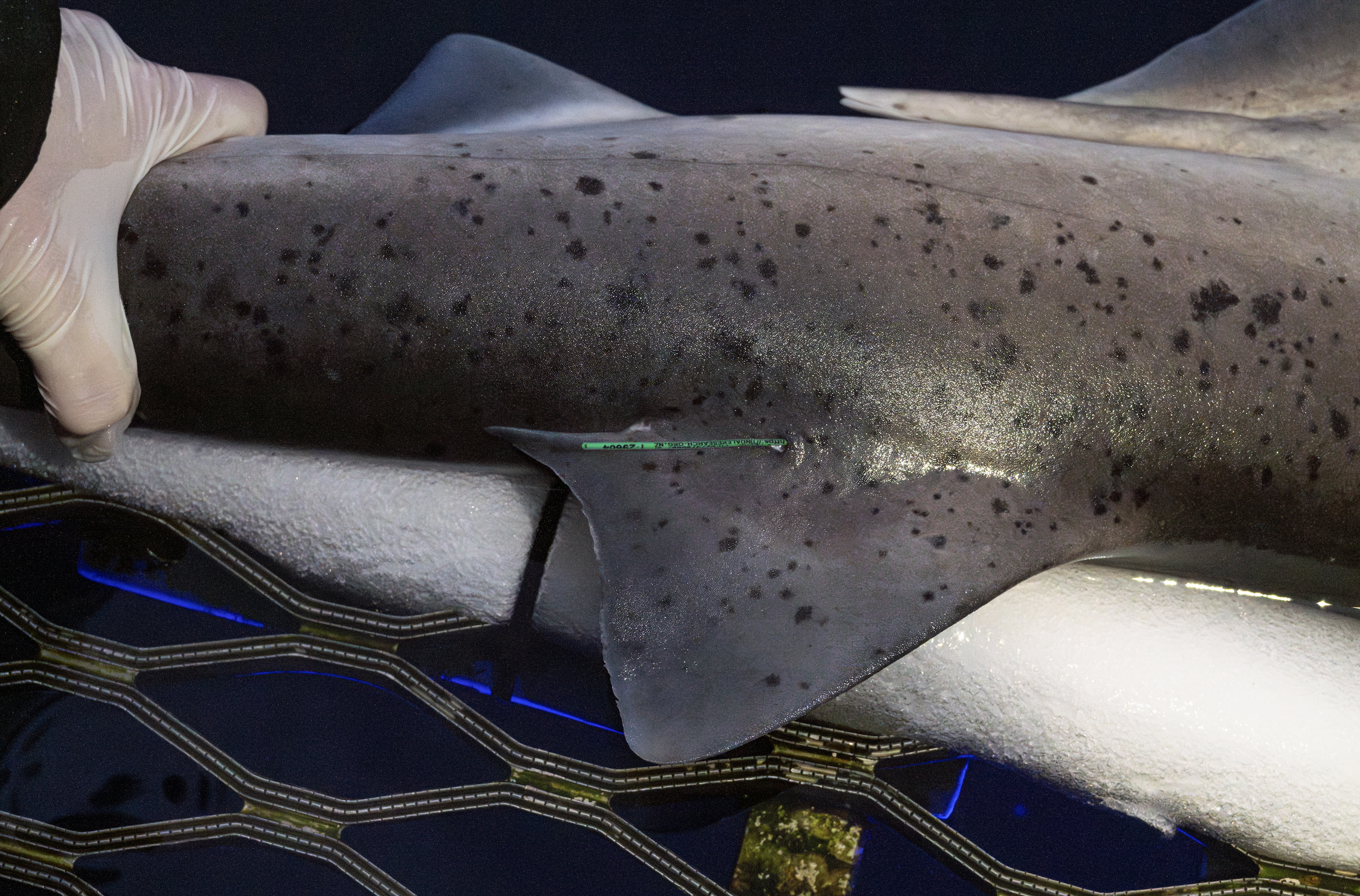
Small external tag in the dorsal fin of a broadnose sevengill shark identifying that it has been fitted with an acoustic transmitter. Photo © Matteo Collina
For me, these experiences highlight the energy and motivation that comes from science communication. Sharing research, listening to local knowledge, and engaging stakeholders creates a bridge between data and real-world conservation outcomes. It’s this connection that gives purpose to the work we do on the water, and in the community: science that can inform conservation and help protect the ecosystems we study.
In Fiordland, sharks are more than data points – they are part of a living, dynamic ecosystem. Communicating what we learn about them ensures that science does more than generate knowledge; it drives conservation action, informs management, and inspires the next generation of marine biologists.
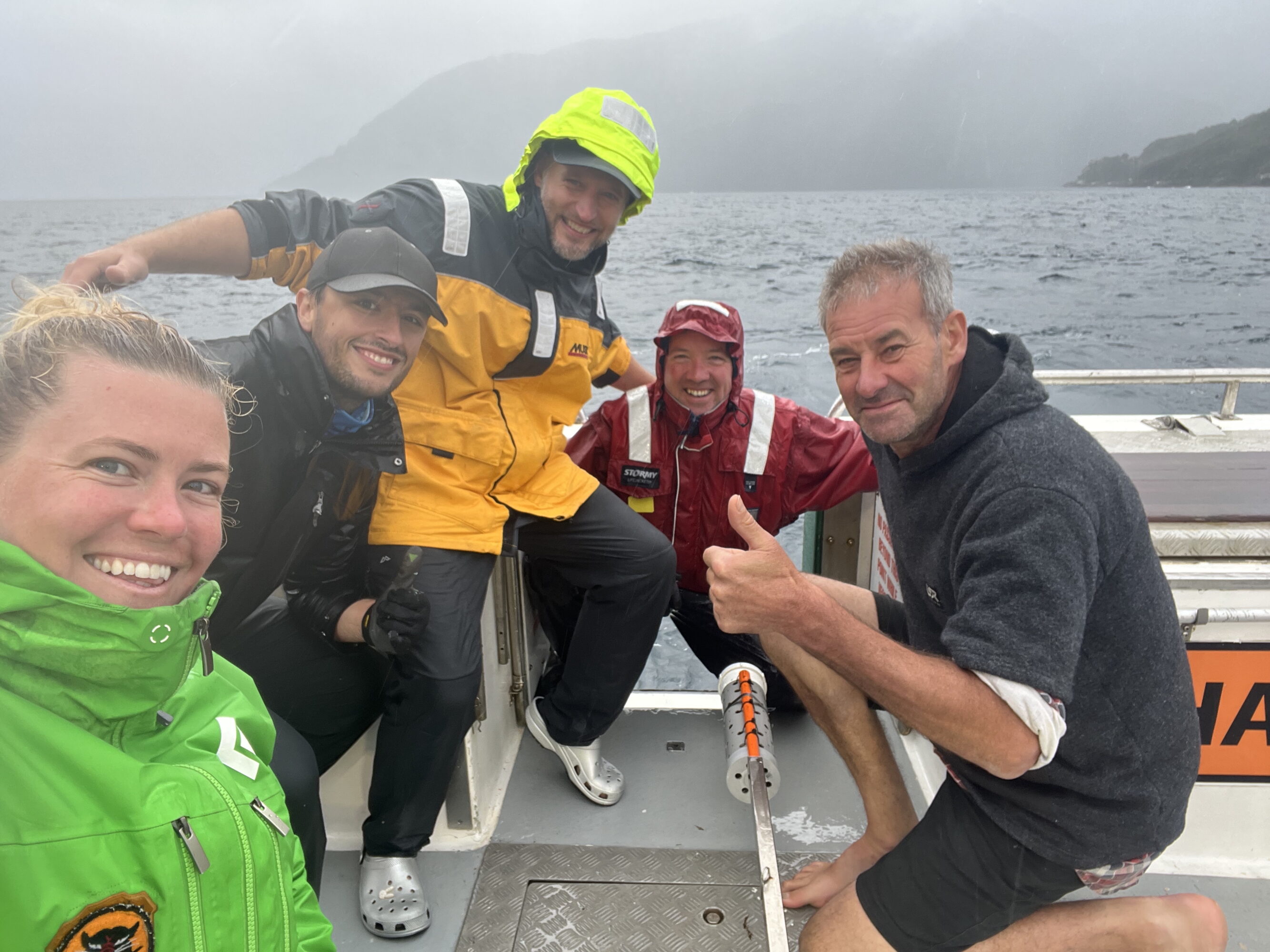
Preparing for the last BRUV unit deployment with collaborators from Sea Through Science, Department of Conservation and Fiordland Marine Guardians. Left to right: Eva Ramey, Alex Burton, Adam Smith, Richard Kinsey and Peter Young. Photo © Eva Ramey