
Beyond the Exhibit: Empowering Coastal Guardians of the Sea
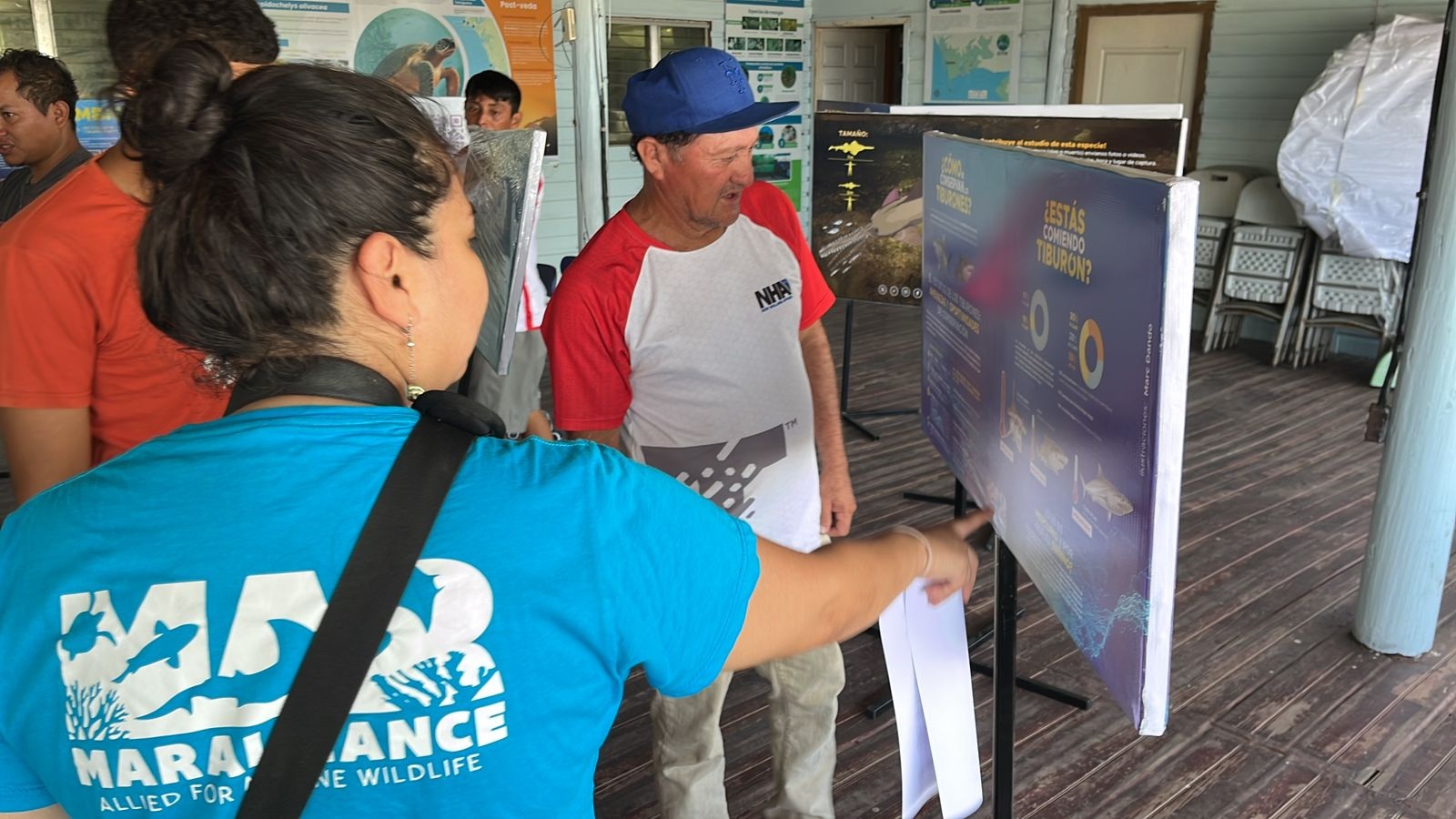
Project Coordinator, Ana Lucía López, explaining the content to the community and the Olive Ridley Sea Turtle Research Center volunteers. Photo © Amilcar Flores
Being part of the design and installation process of an exhibit goes beyond logistics; it involves finding meaningful ways to connect with the community, to engage with people, and above all, to transfer knowledge and inspire action. In this case, the goal is to promote the conservation of sharks and rays.
Our main exhibit has successfully reached over 4,000 people across three cities in the country within six months. However, what about the more remote communities?
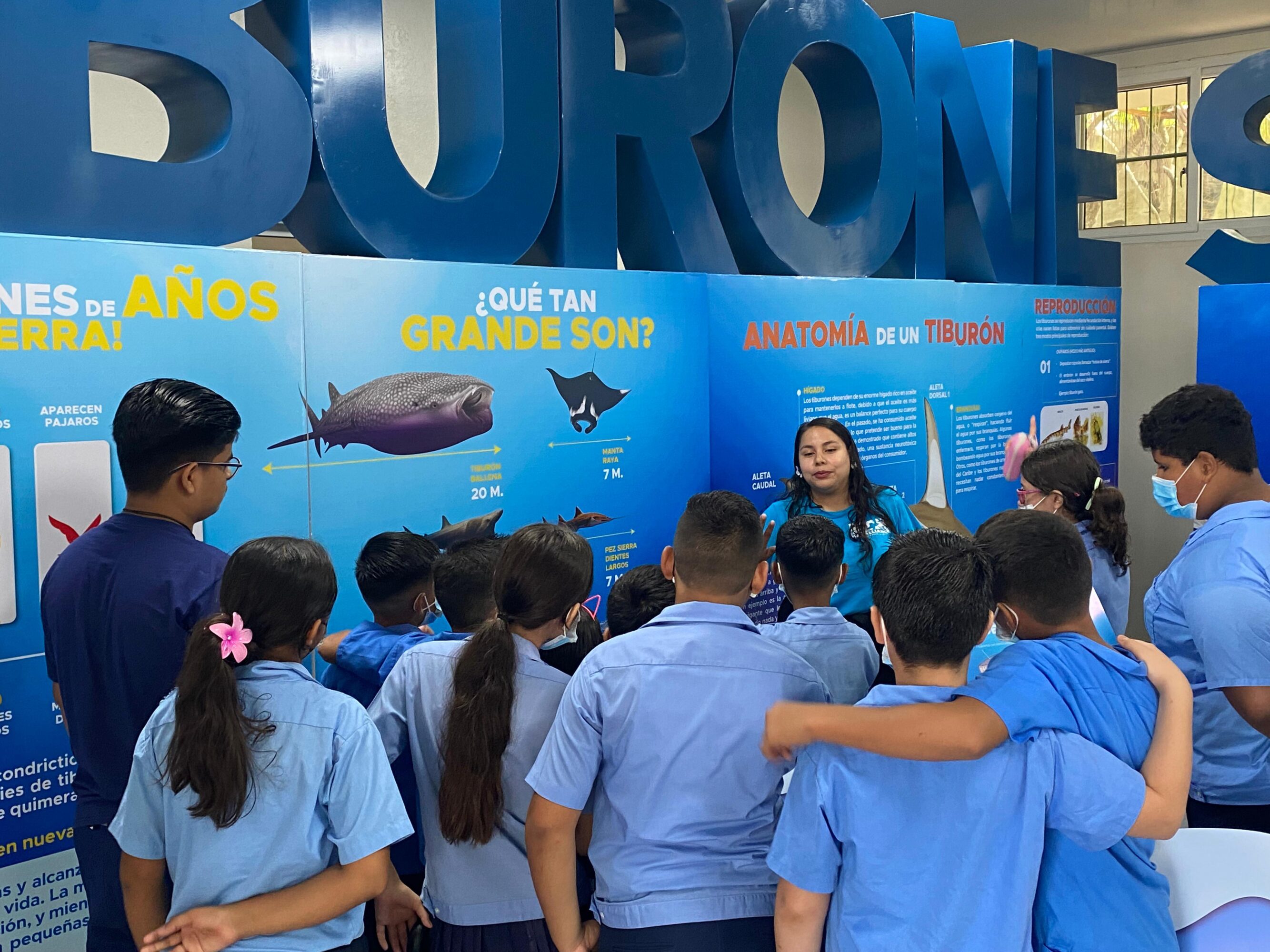
Our research officer, Sobeida Nuñez, as she leads an engaging tour of the exhibit in its third city. Photo © Digepesca
To address this gap, we have developed a secondary exhibit, more accessible and portable. This version was recently installed in the Olive Ridley Sea Turtle Research Center on the Pacific coast of Honduras. Bringing a marine conservation exhibit to coastal areas is essential, as it enables direct engagement with the very environments where many of the environmental issues we aim to address are actively unfolding. These regions, being the natural habitats of a rich diversity of marine species, provide a tangible and real-world context that enhances the educational experience.
Moreover, involving local communities, such as El Venado, where over his 200 inhabitants have actively participated in conservation activities alongside marine ecosystem experts living nearby, allows for the collection of more accurate data on the current status of these species, their threats, and the necessary actions to protect them. This fosters a more authentic and contextualised dialogue.
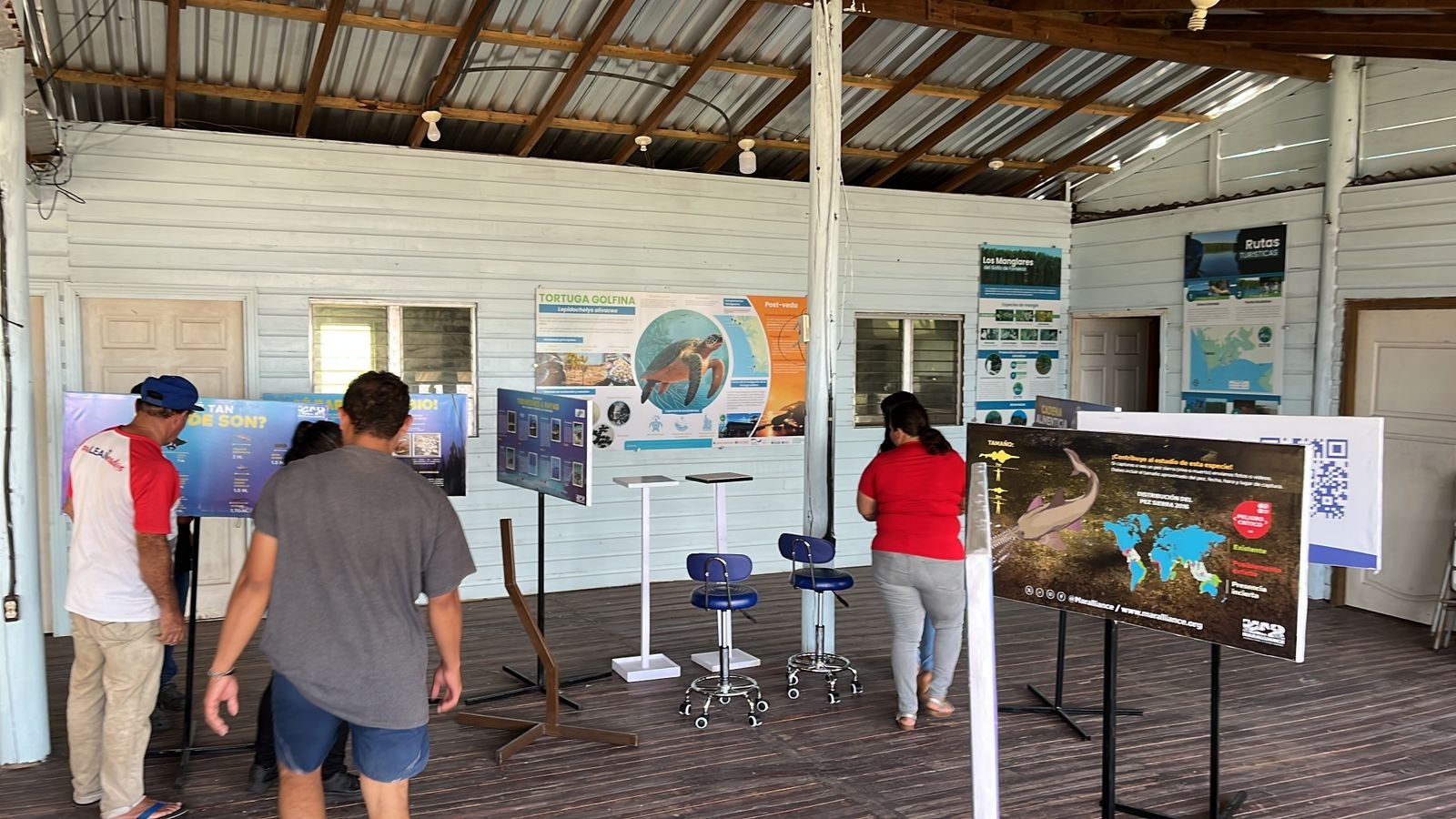
People from El Venado Community at the Olive Ridley Sea Turtle Research Center, contributing with the installation of the permanent exhibit. Photo © Ana Lucía López
Additionally, coastal zones are often key tourist destinations, presenting a unique opportunity to raise awareness among a broad and diverse audience. Through these exhibits, visitors, especially tourists, who are often unaware of the environmental impact their presence may have, are given the chance to become informed, to reflect, and to adopt more sustainable practices during their stay.
In this way, conservation ceases to be an abstract concept and becomes an immersive educational experience, encouraging environmental responsibility on both a local and global scale.
When we brought the exhibit to the community, it was deeply moving to witness the excitement of residents as they learned scientific information about species they had grown up with — species they themselves have seen gradually disappear.
At the heart of this mobile exhibit project is the desire to build a connection between people and these species; one strong enough to awaken the urge to protect them and give them a voice in a world where they cannot speak for themselves.
But more importantly, we aim to involve local communities meaningfully, for them to become active participants in the conservation efforts, so that they can pass on this message to visitors, students, and tourists, and help spread the importance of this collective work.