
A sanctuary no more: reopening of gulper shark fishing in Maldives
The Maldives has been celebrated globally as a shark conservation success story since shark fishing was prohibited within its waters in 2010. Last year, the Maldives again made headlines in shark conservation news; this time for the opposite reason — when the president announced the reopening of the gulper shark fishery, softly reversing the Maldives’ status as a shark sanctuary.
A brief history
Gulper sharks are deep water sharks valued for their liver oil which is used in many ways, from purported health benefits and wound healing to use in cosmetics and skin care products as the ingredient ‘squalene’. Around the world, deep sea sharks, including gulper sharks, have experienced dramatic declines. The decision to reopen gulper shark fishing has been controversial, drawing criticism from local and international conservation organisations and scientists. However, it did not emerge out of the blue. Disagreements over how shark populations should be managed are occurring within a history of social conflict between conservation and fishing—including residual fisher frustration over the way the shark fishery closure was handled in the first place. Additionally, there is growing concern over increasing negative human-shark interactions among fishers, which many attribute to rising shark populations as a result of the shark sanctuary.
Reopening the gulper shark fishery fulfils a campaign promise by current president, Dr Mohamed Muizzu, and follows multiple administrations’ attempts to reopen tuna longlining, which have included discussions to allow the sale and export of sharks as longline bycatch. These discussions were abandoned in 2021 and then again in 2024 due to public outcry, including strong opposition from conservationists and traditional yellowfin tuna fishermen, led by the Bodu Kanneli Masveringe Union (Yellowfin tuna fishermen’s union).
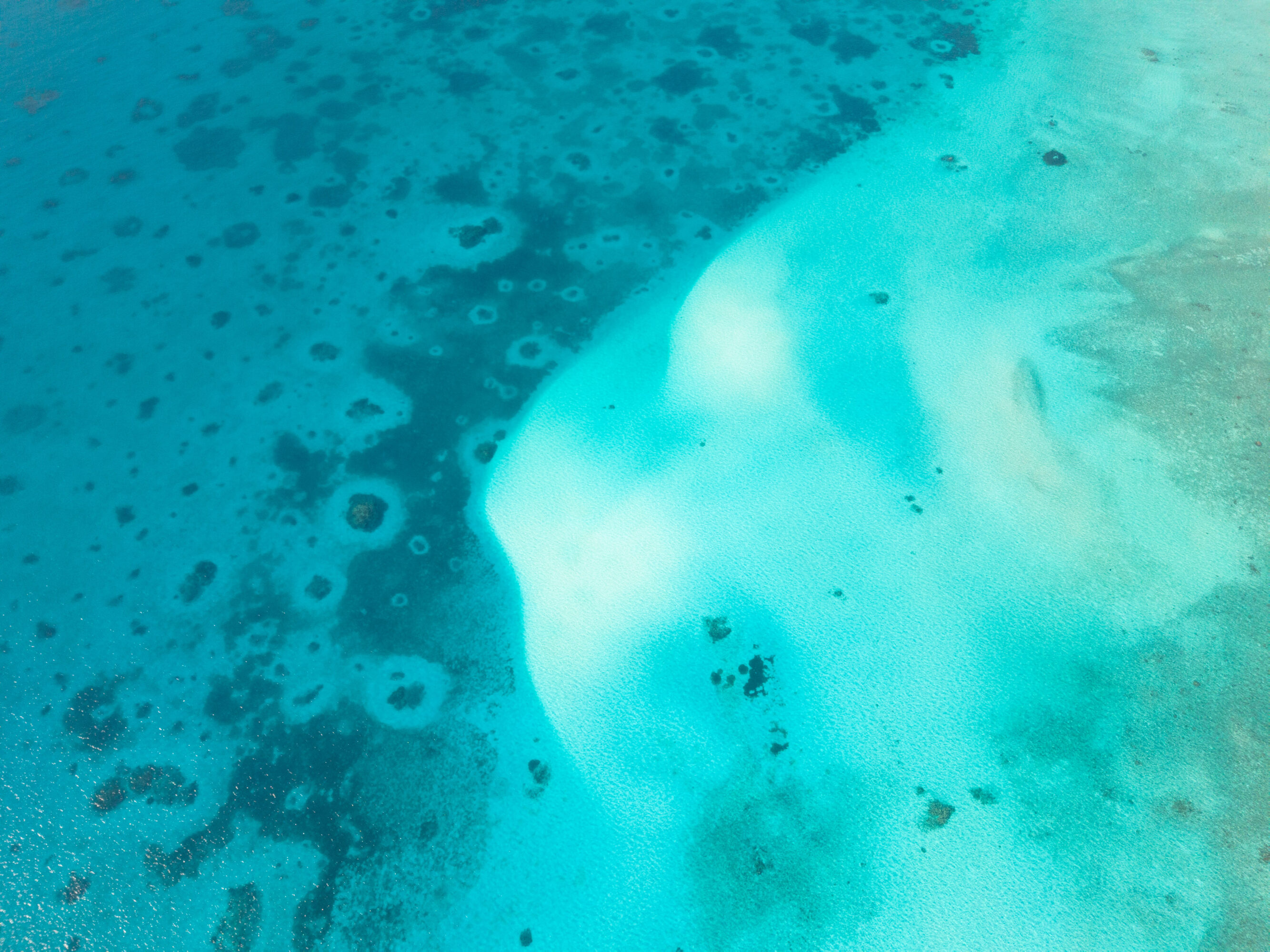
Aerial shot of the reef. Photo © Mina Hatayama
Detangling attitudes around shark fishing
In 2022, a study reported loss of support among reef fishers for the shark sanctuary as a result of increasing fisher-shark interactions, specifically depredation, where sharks damage or take catch from fishing lines. During recent fieldwork investigating shark depredation, we asked reef fishers what they thought of the reopening of the gulper shark fishery and were met with mixed reactions.
Some fishers expressed displeasure over the decision to allow gulper shark fishing while continuing to prohibit fishing of the shark species they were experiencing problems with. ‘It’s a joke’, one reef fisher said. Tiger sharks, bull sharks, and various reef sharks are commonly implicated as the species fishers experience negative interactions with—interactions which occur within relatively shallow waters– while gulper sharks reside in deeper water. One fisher voiced:
‘That’s like very rarely we can catch a shark like that. They are not possible, like if I go, I cannot catch that shark each time. But if I go to catch black tip and other kinds of sharks then 100% sure we can catch it.’
However, others felt that while it didn’t solve their problems, it was a step in the right direction and indicated a willingness from the government to listen to their concerns. Some denied it would solve their problems with sharks but approved of reopening the fishery for creating new livelihood opportunities, which they believed would be positive for the economy. A minority of fishers we spoke to were against shark fishing and believed that reopening gulper shark fishing would have consequences for other vulnerable shark populations.
Reef fisher opinions surrounding the gulper shark fishery are diverse, demonstrating the danger in treating fishers as one homogenous group when it comes to shark conservation. Indeed, some fishers we spoke to were extremely specific in their requests to reopen shark fishing, approving fishing of certain species, but not others.
Addressing conservation conflicts
Following reopening of the fishery, gulper sharks were successfully listed on Appendix II on the Convention on International Trade in Endangered Species of Wild Fauna and Flora (CITES). This means after a probationary period, the government will have to provide a Non-Detriment Finding to ensure the fishery complies with trade restrictions. This may prove challenging given gulper shark populations were overexploited in the 1980s and 90s and there has been a lack of local population data since. Thus, the future of this fishery is unclear.
Given the complex social and political history surrounding sharks, decisions around this fishery could further undermine support for shark conservation and trust among those who already feel marginalised by fisheries decisions. Conservation is only sustainable when solutions works for both animals and people. Complex attitudes surrounding the gulper shark fishery are only one example of the depth of the conflict, and demonstrate the need to understand different perspectives surrounding sharks and the factors which shape them. Through this research we hope to begin to detangle social and political factors contributing to shark conservation conflicts in the Maldives.