
A missing spot reveals a rare shark
Sometimes, the clue to an unusual discovery is not what you see, but what is missing.
While examining a large catch of sharks from Seychelles’ artisanal fishery, I noticed something different about one animal that I had sorted with the spottail sharks, Carcharhinus sorrah. It lacked the dark spot on the lower lobe of its tail.
That small detail prompted a closer look — and led to the first confirmed record of Human’s whaler shark, Carcharhinus humani, in Seychelles waters.
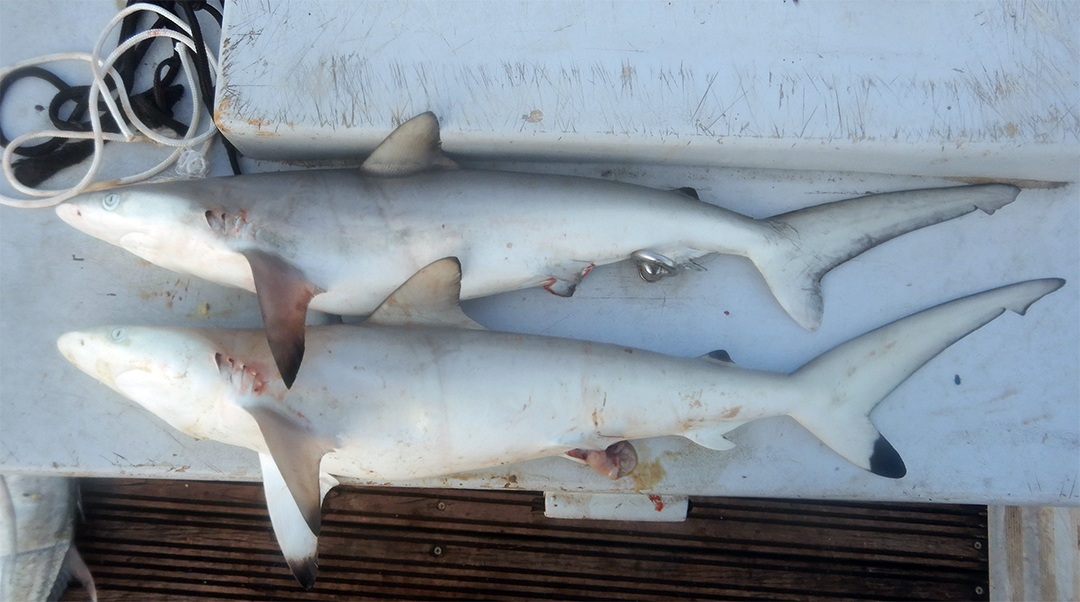
Similar at first glance: Human’s whaler shark (Carcharhinus humani) alongside a spottail shark (Carcharhinus sorrah). Comparing their features helped establish that the unusual specimen warranted closer examination. Photo by © John Nevill
I have monitored Seychelles’ artisanal shark catches since 2012, compiling records of nearly 38,000 sharks. Familiarity with the species regularly encountered helps make an unexpected individual stand out. Here, the missing tail spot was only the beginning: the lower tail lobe also had a rounded rather than pointed tip, and the ridge between the dorsal fins was only partially developed.
Crucially, I could examine this shark intact because of the collaboration with shark fishers enabled by the Save Our Seas Foundation Keystone grant. Had it already been dressed for sale, the distinguishing tail features would no longer have been available, and the presence of an interdorsal ridge would have led me to record it as a spottail shark.
Instead, I photographed its distinguishing features and secured the whole specimen from the fishers for further examination.
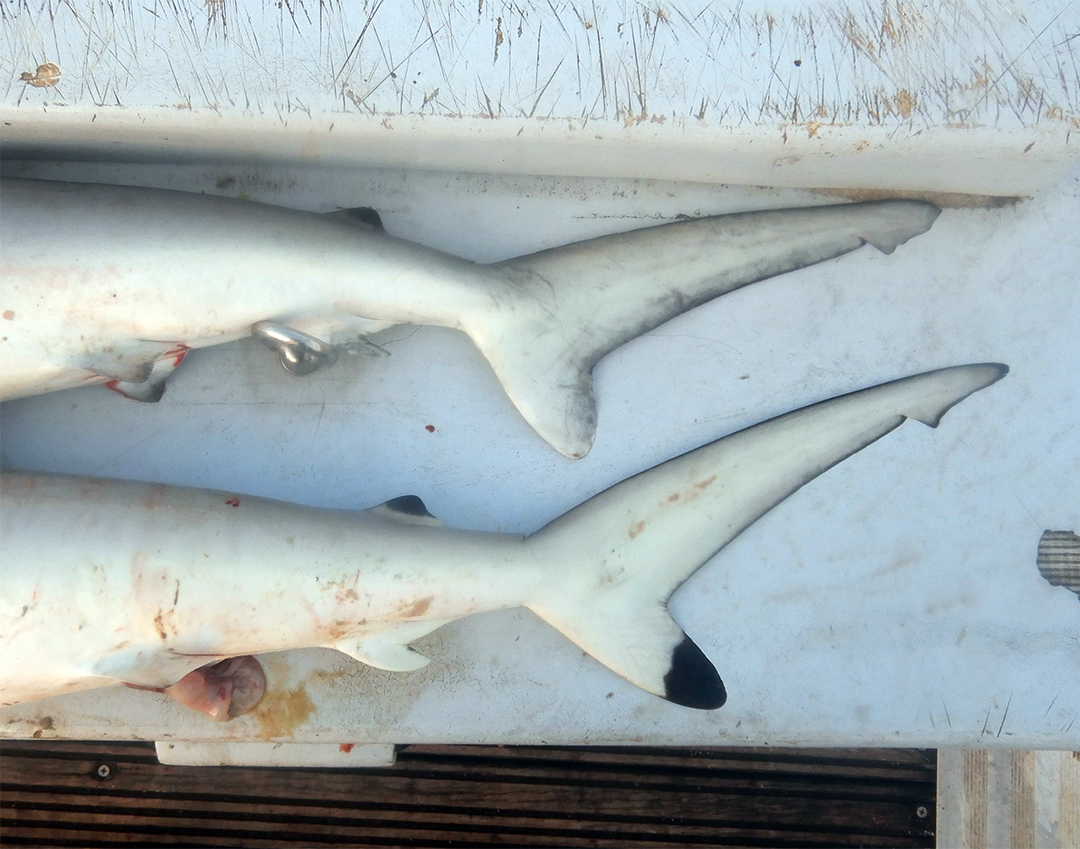
The tail provided the first clue. Unlike the spottail shark (Carcharhinus sorrah), this Human’s whaler shark (Carcharhinus humani) lacked a dark spot on the lower tail lobe, which also had a more rounded tip. Photo by © John Nevill
A shark with a history
I sent the photographs, including side-by-side comparisons with a spottail shark, to Dr William T. White at CSIRO in Australia. He confirmed the identification as Carcharhinus humani — a species he and Dr Simon Weigmann had formally described in 2014.
There was a Seychelles connection already waiting in the scientific literature. In their description, White and Weigmann had revisited a shark photograph in J.L.B. Smith’s 1969 book, The Fishes of Seychelles. Although labelled as another species, they considered the pictured shark likely to be C. humani. However, no preserved specimen had been documented to confirm its presence.
More than half a century after that photograph appeared, this catch provided the missing physical evidence.
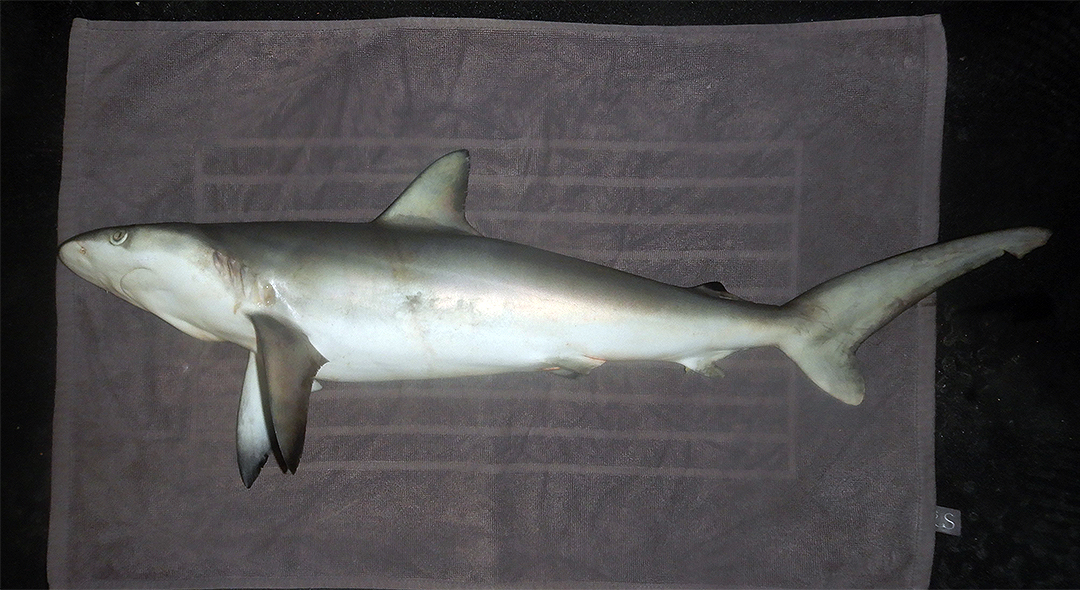
The intact Human’s whaler shark (Carcharhinus humani) that provided the first confirmed record of the species in Seychelles waters. Collaboration with shark fishers, enabled by the SOSF Keystone grant, allowed examination before processing, preserving the features that first revealed it was not a spottail shark. Photo by © John Nevill
Fishers make the science possible
This discovery shows why collaboration with fishers matters. The Keystone grant supports not only catch monitoring, but also the cooperation that makes it possible to examine sharks before processing removes important identification features.
In this case, that access made the difference between another spottail shark entry in the database and the recognition of a species not previously confirmed from Seychelles. Careful observation and then help from a taxonomic specialist allowed the identification to be resolved.
One record, new questions
This is the first C. humani I have encountered in more than a decade of monitoring. That does not establish how rare it is throughout Seychelles waters, but it raises questions about its occurrence and whether other individuals have passed unrecognised in processed catches.
Confirming its presence helps clarify the species’ western Indian Ocean distribution. I am now looking for additional specimens that could help investigate how these sharks relate to populations elsewhere in the region.
For now, one intact shark, a missing spot and cooperation with fishers have helped put a long-suspected species firmly on Seychelles’ shark list.