
WAVES: Widening Access to Versatile Education in Shark Sciences
India’s waters host more than 150 species of sharks and rays, many of which are small-bodied, endemic and data-deficient, but still caught as bycatch and sold anonymously, misidentified or discarded without record. Meghana is worried about these socially and scientifically invisible species. She is using advanced imaging and anatomical visualisation to illuminate the hidden anatomy and species diversity of small-bodied sharks, rays and chimaeras. She is also developing outreach tools to place knowledge directly in the hands of fishers, students and educators who have historically been excluded from science but remain closest to the species she hopes to protect.
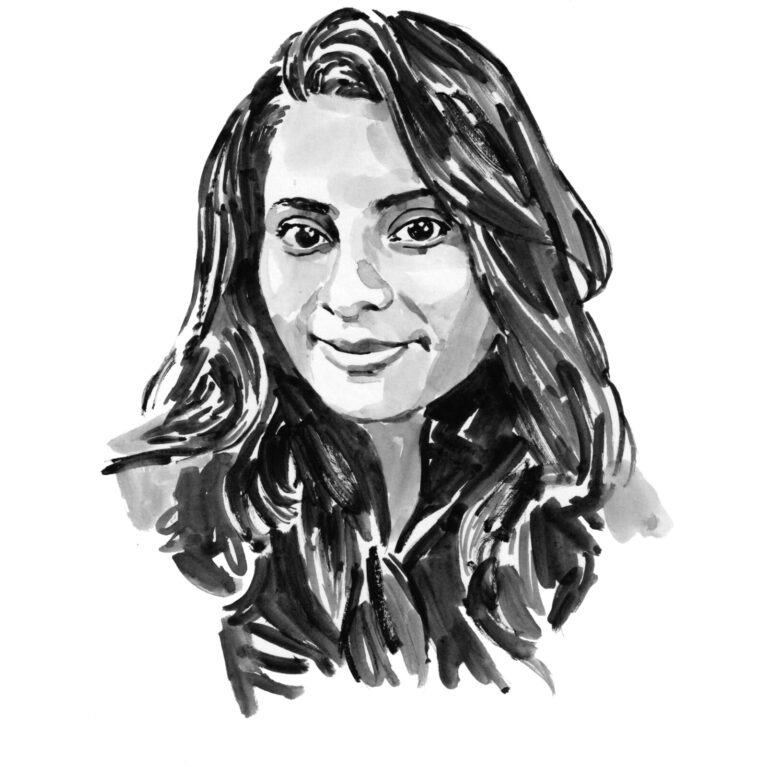
Meghana Binraj
I’m a conservation practitioner, explorer, systems thinker and educator who has been shaped as much by people and places as by theory. My work spans disciplines and borders, and is drawn to where science and ecology meet culture, decision-making and lived reality. At the core of it lies a simple curiosity: how do values, world views and access to knowledge shape the ways we relate to the natural world and to one another?
A decade ago, my path into marine science began when I volunteered at the first Moving Waters Film Festival in Bengaluru, an initiative that...
WAVES: Widening Access to Versatile Education in Shark Sciences
WAVES is a living studio where scientific inquiry fosters collaboration between fishers, scientists and communities to advance conservation and scientific understanding. It offers immersive, anatomy-based study of diverse elasmobranch species that leads to appreciation and inspiration.
Hundreds of shark and ray species caught daily in Indian waters are undocumented, misidentified and discarded, which means that they are invisible to science and the public. This invisibility in a complex system is driving their decline. By making interactive education accessible and focusing on the anatomical features of different species, we can help communities, students, researchers and decision-makers identify them. We can also use this process of identification to spark curiosity and empathy.
In a tropical nation such as India, with its multi-species, multi-gear, multi-craft fisheries, bycatch is inevitable. More than 150 species of sharks and rays occur in Indian waters, and many are small-bodied and endemic, with little known about them. Often caught as bycatch, they may be misidentified, sold anonymously or discarded. They are not recorded in landing data, threat assessments or policy frameworks. Although physically present, they remain invisible to science – and this is the core threat they face.
Conservation in the Global South has often been driven by metrics that, from the outset, overlook local knowledge systems, socio-economic realities and lived experience. In India, where coastal communities are shaped by generational poverty, climate stress and caste-class exclusion, marine life is usually seen through the lens of survival, not science. Time and tools for ecological reflection are rare luxuries. With knowledge at our disposal, common sense, humanity and public engagement will help reconnect people and science through these overlooked species.
WAVES transforms discarded bycatch into opportunities for learning, empathy and action. By building an anatomical library, both digital and physical, we make small-bodied, data-deficient elasmobranchs visible. By developing tactile, multilingual outreach tools and mobile exhibits, we place that knowledge directly in the hands of fishers, students and educators – people who have historically been excluded from science but remain closest to the species we hope to protect.
- To illuminate the anatomy and diversity of small-bodied shark, ray and chimaera species that are usually overlooked in bycatch by means of advanced imaging and anatomical visualisation.
- To facilitate public understanding of cutting-edge research across languages and regions by transforming routinely discarded bycatch specimens into accessible physical and digital forms, and thereby sharing knowledge and advancing scientific understanding.
- To encourage coastal fishing communities, researchers and educators not just to see elasmobranchs as bycatch and a commodity, but also to appreciate their diversity and natural history, and the need to conserve them.