
Teah Burke
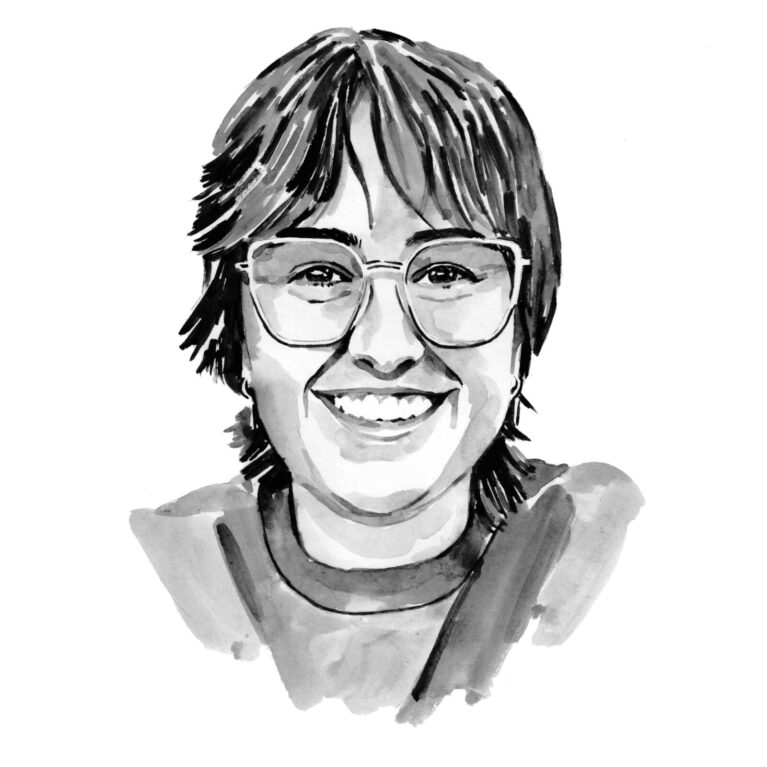
Who I am
I grew up in Ontario, Canada, never far from the freshwater expanse of the Great Lakes. From an early age I always loved spending time outside, and my curiosity about the natural world was encouraged by my parents. It wasn’t until my undergraduate studies at the University of Windsor that I discovered my passion for saltier water (the ocean) while volunteering in a lab dedicated to understanding the movement and trophic ecology of fish from the poles to the tropics. While doing my Master’s degree I worked with species from both of those spectrums. I fished for Greenland halibut through ice 1.5 metres (five feet) thick and spent a month living at sea in the high Arctic; this is where I was first introduced to the deep sea. My own research focused on the ecological role, population dynamics and life history of Australian white sharks and was my first experience in shark research. Now, for my PhD, I have combined these two and joined the incredible, weird and understudied world of deep-sea sharks.
Where I work
My project takes place on New Zealand’s Chatham Rise, a submarine ridge that extends more than 1,000 kilometres (620 miles) off the east coast of the South Island. In this region, warm waters from the north meet cooler waters from the south, creating a unique and critical habitat that supports the highest species richness of demersal fish in New Zealand. It is also home to one of the most productive deep-sea fisheries in the world. Alongside commercially important species such as hoki and orange roughy, deep-sea sharks are caught, primarily as bycatch. Because they have little value, this leads to high discard rates. Sharks are considered to be important players in maintaining ecosystem stability, but there is little information about deep-sea sharks in general, let alone about their role in deep-sea communities and how they are coping with threats such as commercial fishing. This is why, for my PhD project, I am investigating the role of sharks in deep-sea food webs and how, or whether, this has changed over the past two decades in an intensely fished area.
What I do
As a PhD student I spend a lot, if not most, of my time reading, writing and analysing data. However, every once in a while I get to go on the most incredible field trips, where I live on large research vessels hundreds of kilometres offshore with no land in sight. When studying remote, logistically challenging environments such as the deep sea, field work usually takes place aboard large ships where you live for several weeks to months and work alongside an experienced crew and team of scientists to collect as much data as possible, not only for your own project but for collaborators around the world. The days are long, and it might take a while to get your sea legs, but it is the most rewarding experience. I have previously worked aboard ships where I serviced and deployed acoustic mooring stations and tagged Greenland halibut in the Arctic. I am now preparing for my next field trip, where I will spend a month at sea aboard RV Tangaroa in New Zealand. Here, I will collect data for my PhD and assist fisheries scientists with the sampling of key commercial species in the country’s territorial waters.