
Segun Oladipo
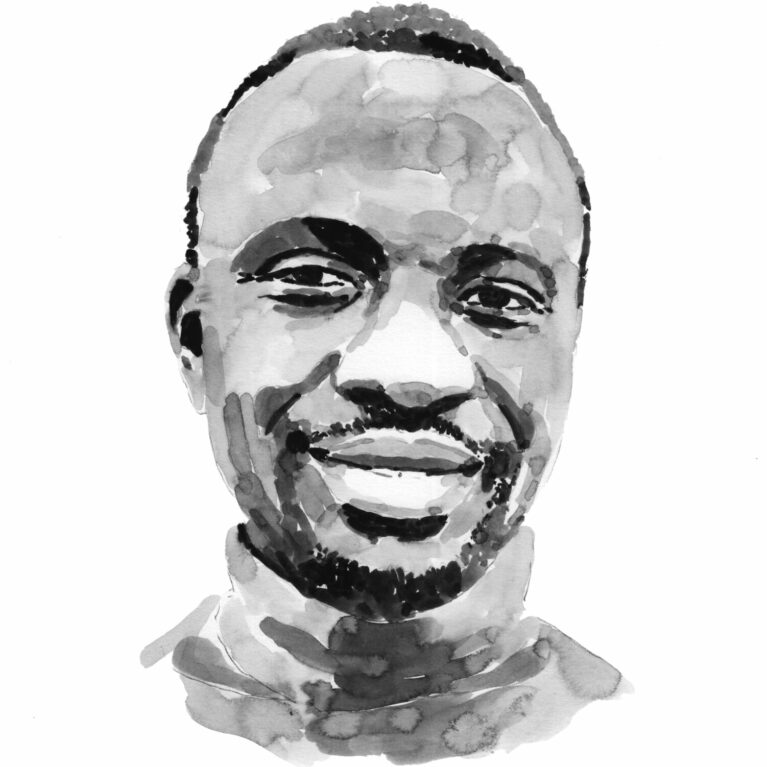
Who I am
I am a young and emerging leader in ray conservation in Nigeria. My interest in fish biology and conservation dates back to when I was 12 years old. Growing up in rural Nigeria, I was exposed to many life-changing experiences that drove my passion to become a fish scientist and conservationist today. At home, my parents would buy fish from the local market and I couldn’t help wondering how there were still fish in the sea because more and more were being caught, and how fish withstood environmental degradation. Such thoughts sparked a strong interest in animal science and I enrolled for a Bachelor’s degree in zoology from the University of Ilorin in Nigeria. After achieving that, I pursued a Master’s degree in zoology, specialising in ecology and environmental biology, at the University of Ibadan. Then I returned to the University of Ilorin for a PhD in fishery ecology and learned how to use ecological and genetic tools to study the diversity and conservation status of fish.
Through these studies I have acquired significant expertise in fish taxonomy, biodiversity and ecology. My goal is to use combined social and ecological surveys as well as genetic tools (DNA barcoding) to improve our understanding of the diversity, distribution, ecology, socio-economic value and conservation status of marine and freshwater fish species in Nigeria, particularly those that are poorly known and highly threatened.
I also actively engage in conservation programmes that have a positive impact on rays, including ones that raise awareness in schools and communities about these species. I have successfully surveyed more than 10 aquatic ecosystems in Nigeria and engaged in various community-based conservation programmes across the country.
Where I work
I am currently a lecturer in the zoology unit of the Department of Bioscience and Biotechnology at Kwara State University in Malete, Nigeria. The unit’s research makes use of ecological and genetic data to investigate the biodiversity and evolutionary history of wild and domestic animals, from insects, fish, amphibians and reptiles to mammals. We also explore how best our research results can be applied to improve the conservation and sustainable utilisation of animal resources. Among the department’s research priorities are conservation genetics and conservation biology. My team and I focus on understanding the biodiversity and conservation status of freshwater and marine fish and we have conducted several projects to protect these species in Nigeria. One such project sought to determine the distribution, conservation status and environmental associations of the daisy stingray and to enhance community support for conserving the species via outreach programmes. A current project focuses on the African wedgefish, and another is to sequence the whole genome of all the marine rays in Nigeria by means of next-generation sequencing.
What I do
As a post-doctoral researcher and conservation geneticist, I use DNA barcoding and eDNA metabarcoding to document fish – and especially elasmobranch – species. In this way I help to resolve identification challenges and work towards the recovery of rare and threatened species by analysing genetic data. By documenting species we can track changes in species diversity within ecosystems over time, and this in turn means that we can protect elasmobranchs through informed, community-driven conservation. I have led DNA barcoding and conservation projects on West African wedgefish and stingrays, and have generated the first COI barcodes for Fontitrygon stingray species in West Africa.