
Paola Vivian Vásquez
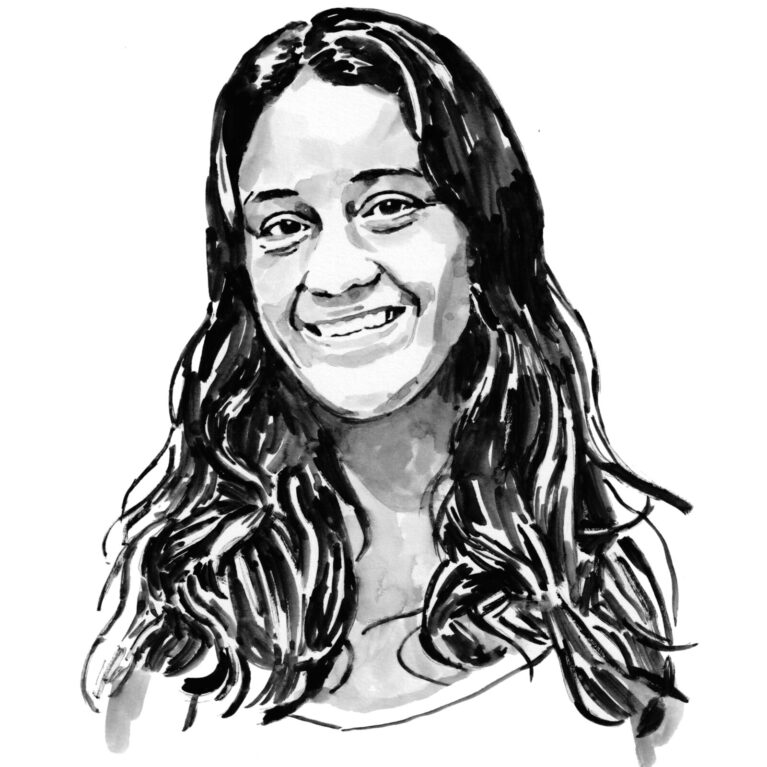
Who I am
I grew up in central Chile near the coast and when I was a child my dad taught me how to swim in the sea. That’s when I fell in love with the ocean. I used to love playing with sea toys, especially sharks. As I got older, I started watching the Discovery Channel and my favourite shows were always the ones about sharks, especially the white shark and the studies conducted around Guadalupe Island. I remember telling my mom that I wanted to become a shark researcher one day. Later, my uncle taught me how to snorkel in Brazil, specifically at Ilha Bela in São Paulo. That experience marked a turning point in my life: I decided for certain that wanted to study marine biology. I went on to do so and during my studies I began working with elasmobranchs. It was an incredible experience. I had opportunities to study habitat use, behaviour in captivity and the development of embryos, and I participated in many projects in Chile and Brazil. So now I am studying for a Master’s degree in biology in Costa Rica and am continuing to learn about how species occupy and interact with their habitats.
Where I work
My journey into shark and ray research began in Chile, where I worked with Chondrolab, a research group that focuses on the biology and conservation of chondrichthyans. There I learned about critical nursery areas and developed a strong interest in how species interact with both biotic and abiotic environmental factors. Currently I am based in Costa Rica, studying a tropical coastal system influenced by seasonal upwelling. This unique setting offers a natural laboratory to investigate how environmental variations like changes in water temperature, salinity and productivity shape the behaviour and habitat use of local species. The area I work in is near tourist destinations and coastal communities. Human–nature interactions create both challenges and opportunities for conservation, which is why it is so important to understand the ecological dynamics of this system. My research is in Bahia El Jobo, in the Pacific north-west of Costa Rica, near the border with Nicaragua. It is a site rich in marine life and crucial for rays and other coastal species, yet still understudied. By connecting science with local communities and conservation efforts, I hope to contribute valuable knowledge that can better support the sustainable management of marine ecosystems in the region.
What I do
My Master’s research focuses on tagging round rays to study how natural environmental events like upwelling affect their behaviour and habitat use. Every four months, our team visits El Jobo Bay to download data from acoustic receivers and collect new biological samples. During these trips, we also capture rays to assess species diversity, population structure and morphology. Beyond the research itself, I am deeply involved in environmental education. We work hand in hand with the NGO Equipo Tora Carey, giving talks in schools and local groups in the El Jobo community to raise awareness about the rays living just steps from their homes and tourist beaches. Many people have never heard of these species or their importance to the local ecosystem. By sharing knowledge and stories, we hope to inspire pride in this rich marine biodiversity and a desire to protect it. Our data will help fill critical knowledge gaps on these little-studied species, contributing to a better understanding of their life history and how they respond to environmental change. In turn, this information can be used to inform local conservation efforts and sustainable coastal management. Every trip to the field strengthens my connection to the ocean and reminds me of why I chose this path. Science, conservation and community engagement all play a role in my work, and I believe this combination is essential for protecting both marine life and the people who depend on it.