
Owen Exeter
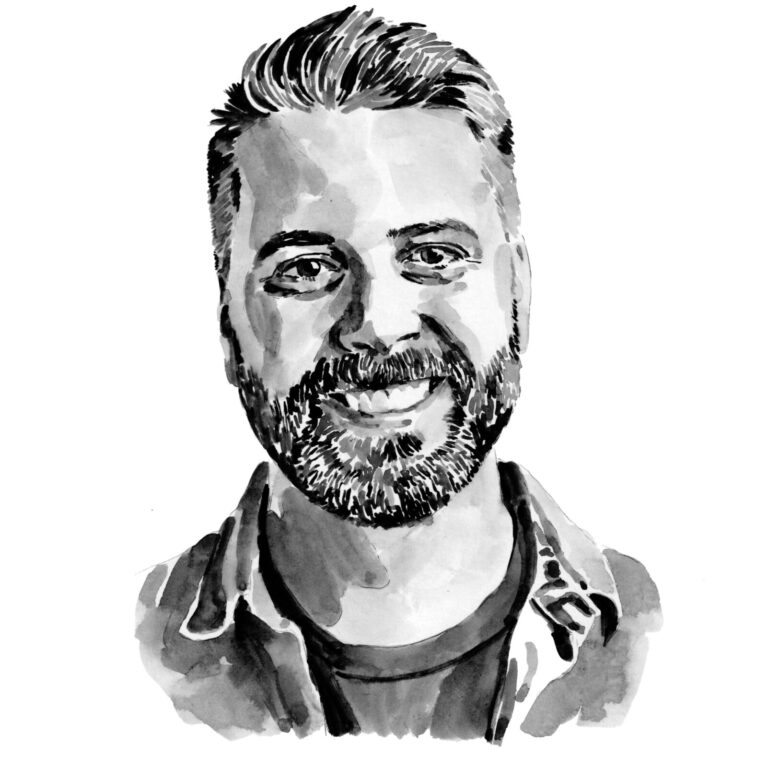
Who I am
Growing up in London, I didn’t have the instant connection to the ocean that many people do. I also struggled with maths and science in school, so marine research wasn’t an obvious career path. Instead, I spent years travelling and working in hospitality and eventually ended up flipping burgers in New Zealand. On my days off, the wild seas and incredible wildlife of the South Island really captivated me. I became hooked on the sound of stormy seas and the hardy species that thrived in the cold but vibrant waters. So I decided to take a chance and explore a career in marine science. I didn’t really know what to expect, but after enrolling for a Master’s degree in Cornwall, UK, I discovered that I wasn’t an awful researcher. Since then, I’ve been incredibly fortunate to work with inspiring people in amazing places. My research career began in Scotland, helping to deploy camera tags on basking sharks in the Outer Hebrides and gaining rare insights into their lives and breeding behaviour. In recent years I’ve used baited cameras and tags to study remote reefs in the Isles of Scilly and helped conduct benchmark ecological surveys that supported Côte d’Ivoire’s first marine protected area. Now I am excited to continue this journey in the Arabian Sea region, working to map biodiversity and hopefully support shark and ray conservation in a region where these species face urgent threats but where knowledge is relatively limited.
Where I work
I have been fortunate to work on sharks around the UK, in West Africa and now in the Arabian Sea. Through a new partnership between the University of Exeter and the University of Khorfakkan, I am currently helping to establish marine research projects at the Sharjah Marine Science Research Centre (SMSRC), a new institute dedicated to advancing marine knowledge and conservation in the region. While some areas of the Arabian Sea have been well studied, I was struck by how little is known about coastal sharks and rays along the east coast of the United Arab Emirates and western Oman. This contrasts sharply with the Arabian/Persian Gulf, where numerous ecological surveys have identified critical areas for coastal species. In the Gulf of Oman, by comparison, we face a near blank slate. This lack of knowledge is particularly concerning given the region’s rapid coastal development, widespread habitat loss and the presence of many endangered species. Historically, giant wedgefish, large rays and benthic sharks were abundant here, but today records are scarce. Without evidence of where these species still survive and the habitats they rely on, effective conservation is impossible. By beginning to fill this gap, we can start building the evidence base needed for protection and management, ensuring that the Gulf of Oman’s remaining natural habitats continue to support these iconic but imperilled species.
What I do
I’m passionate about research that makes a real difference for ocean conservation and I especially enjoy training others in marine survey techniques. I’m also motivated by the opportunity to explore remote, little-known marine environments and document species and habitats that are often overlooked. Much of my work has focused on improving how marine protected areas are designed and monitored, using tools like underwater cameras and animal tracking. During my PhD, I worked closely with local management groups in the Isles of Scilly, testing practical and affordable methods to monitor marine life in this unique north-eastern Atlantic archipelago. By deploying baited underwater cameras, I recorded sharks, fish and crustaceans across habitats ranging from sea-grass beds and kelp forests to deep reefs. These surveys provided the first baseline of marine health for the region and helped shape indicators to measure how well marine protected areas are working. This research also created a blueprint for cost-effective monitoring in other regions. Later, I supported local NGOs in carrying out the first ecological surveys for Côte d’Ivoire’s new marine protected area. What excites me most about camera technology is the way it reveals the ocean in unexpected ways. You never know what will appear when you lower a camera into the sea or attach one to a free-swimming shark. Just as importantly, it allows people, especially those who rarely experience the underwater world, to see its wildlife and understand why protecting it matters.